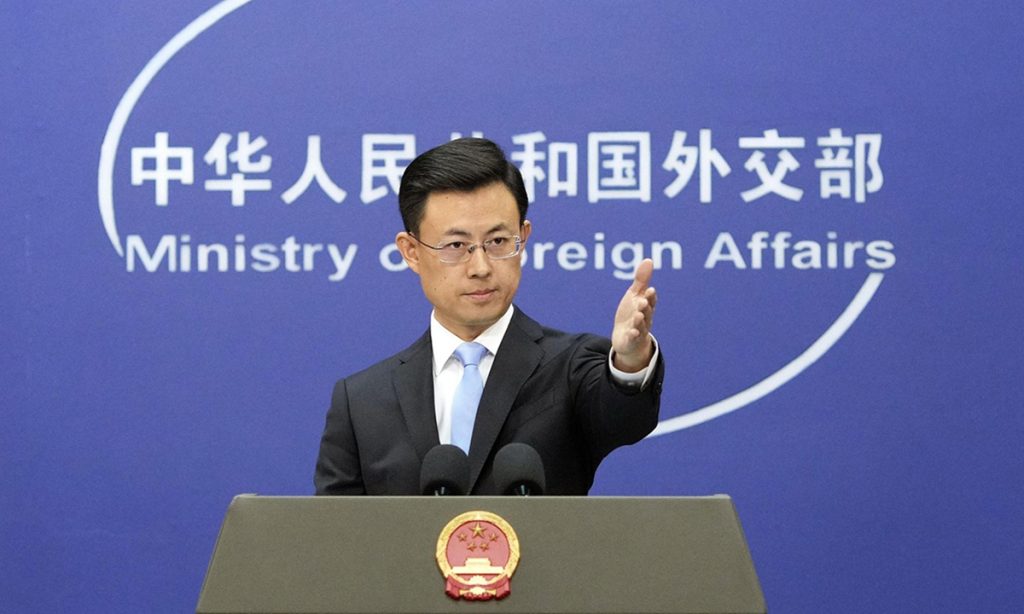
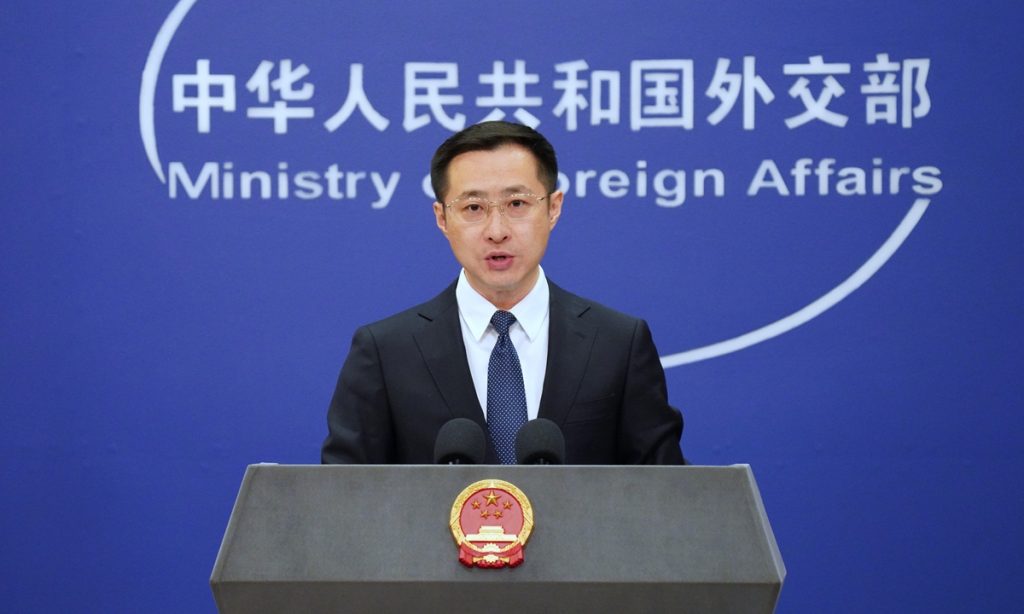
China has repeatedly made its solemn position clear, and we wish to reiterate that China has an exclusive economic zone and continental shelf in the waters east of Taiwan Island. Relevant activities carried out by Chinese authorities in those waters are legitimate, lawful and beyond reproach, Guo Jiakun, a spokesperson for China's Foreign Ministry, said at a regular press conference on Monday.
The spokesperson's remarks were made in response to a media inquiry that a Japanese government spokesperson claimed that activities by the China Coast Guard (CCG) in Japan's exclusive economic zone south of Yonaguni Island, as well as China's sovereignty position over those waters, are unacceptable.
Guo said that Japan and the Philippines bypassed China and unilaterally launched so-called maritime "delimitation talks," which seriously violate international law, including the United Nations Convention on the Law of the Sea (UNCLOS), as well as the basic norms governing international relations, and seriously infringe upon China's maritime rights and interests. China will never allow this.
China’s Ministry of State Security (MSS) warned on Sunday that foreign spy agencies are exploiting pop-up ads for intelligence collection, target identification and ideological infiltration activities, posing a threat to national security.
The MSS has ordered relevant online platform operators to immediately cease providing advertising and promotional services for unidentified overseas links, promptly blocking the spread of potential security risks, according to an article released by the MSS on Sunday.
According to the MSS, intrusive pop-up ads prompted when internet users open a webpage or launch an app are often difficult to skip and prone to accidental clicks that redirect users to another page, which creates opportunities for criminals to exploit.
The MSS reminded that some of the advertisement companies use “personalized advertising recommendations” as a cover for collecting user data. After a user clicks on a pop-up advertisement, the application transmits personal data, interest profiles, and other information stored in its database back to the advertising company. The advertising company then uses “microtargeting” algorithms to deliver personalized advertisements.
Recently, the state security authorities have discovered that foreign spy agencies have colluded with certain advertising companies to set up surveillance platforms, integrate and analyze data returned by advertising companies together with social media information, high-precision location data, and other sources to accurately identify targeted individuals’ home addresses, workplaces, and daily activity patterns, building comprehensive profiles of those individuals, so as to make tailored strategies to induce them.
The state security authorities have also found that foreign intelligence agencies use pop-up ads containing links to anti-China websites, bypass China’s internet regulatory system through nodes in neighboring regions, covertly distribute ideological infiltration content within China’s online environment, posing a serious threat to state security.
According to the MSS, relevant authorities have in recent years issued regulations on pop-up information services and internet advertising, established clear regulatory boundaries at the institutional level, and explicitly required pop-up ads to be clearly labeled as advertisements and easily closed with a single click. Amid increasingly covert online infiltration tactics by foreign intelligence agencies, the MSS has urged platforms and users to remain vigilant and take stronger precautions against potential compromise.
Zhu Wei, a professor at the China University of Political Science and Law and a member of the Law and Ethics Committee at China Advertising Association, told the Global Times on Sunday that one of the flaws of pop-up ads is that the entity displaying the advertisement often does not review its content, while users may not know who placed them, creating opportunities for malicious actors to exploit the platform.
Zhu suggested strengthening oversight by requiring demand-side platforms to review ad content, landing pages, and safety, while also holding display platforms responsible for initial screening, rapid removal of problematic ads, and reporting to relevant authorities.
Shenzhou-23 spaceflight mission's three astronauts have conducted their first in-orbit medical rescue training since arriving at China's Tiangong space station, a video released by the China Manned Space Agency (CMSA) has shown.
The training aimed to help the astronauts, Zhu Yangzhu, Zhang Zhiyuan, and Li Jiaying, familiarize themselves with rescue operation techniques and force application characteristics under microgravity conditions, the CMSA said in the video Sunday.
In addition to the medical training, the crew has been engaged in a wide range of scientific experiments. They utilized a space Raman spectrometer to study the relationship between gut microbiota and nutritional metabolism under long-duration spaceflight conditions.
Behavioral experiments on visual motion processing and intuitive physics in microgravity were performed, exploring how gravity affects visual information processing and how long-term spaceflight impacts intuitive physics perception. The crew also conducted in-orbit emotion recognition and emergency decision-making capability assessments.
China launched the Shenzhou-23 crewed spaceship on May 24. The mission is notable for including a one-year in-orbit stay experiment, which will provide crucial data for future long-duration space exploration.
Chinese top diplomat Wang Yi on Tuesday emphasized the role of BRICS countries in countering terrorism and safeguarding cybersecurity at a high-level BRICS meeting on national security held in New Delhi, India.
Wang, a member of the Political Bureau of the Communist Party of China Central Committee and director of the Office of the Central Commission for Foreign Affairs, is in New Delhi for the 16th Meeting of BRICS National Security Advisors and High Representatives on National Security.
At present, the world is witnessing a new wave of international terrorist activities, said Wang. He noted that the root cause of this is the intensifying confrontation caused by unilateral actions and the increase in inter-civilization and inter-religion tensions.
All BRICS countries are victims of terrorism, said Wang. He said that the bloc should focus on addressing both the symptoms and root causes, adopt comprehensive measures, strengthen counter-terrorism cooperation, make good use of the working group mechanism, and deepen intelligence sharing, coordination of operations, and experience exchange. It is also necessary to advance the full implementation of the United Nations Global Counter-Terrorism Strategy.
The Chinese side will continue to organize training sessions, seminars and other activities under the framework of the BRICS Counter-Terrorism Working Group, said Wang.
Speaking of cybersecurity, Wang pointed out that new technologies, including artificial intelligence, are profoundly reshaping the cyberspace landscape. Cybersecurity has become a global concern, and the global digital governance deficit is increasing.
BRICS countries should jointly safeguard international rules in cyberspace, oppose the deliberate creation of division and confrontation, promote the signing and ratification of the United Nations Convention against Cybercrime by all countries as soon as possible, and actively participate in the international alliance against telecommunications and internet fraud, he said.
Wang called on BRICS countries to act on the basis of the BRICS Roadmap of Practical Cooperation on Ensuring Security in the Use of ICTs and its progress reports, further leverage the role of the BRICS working group, and make plans for cooperation in the next five years.
He also noted that it is necessary to give full play to the positive effects of the "BRICS Plus" model, and continuously consolidate the common position and joint actions of the Global South on cybersecurity issues.
China is willing to enhance communication and cooperation with other countries in the fields of counter-terrorism and cybersecurity, promote the quality and efficiency of greater BRICS cooperation, better benefit the people of BRICS countries, and continuously contribute to global security governance, said Wang.
In response to statements issued by some overseas organizations claiming that the Ethnic Unity and Progress Promotion Law is intended to "assimilate ethnic minorities" and calling for sanctions against China over human rights, a senior Chinese official from the country's top legislature, on Wednesday called on people to visit the country's ethnic regions and see for themselves, as facts speak louder than prejudice and fabrication.
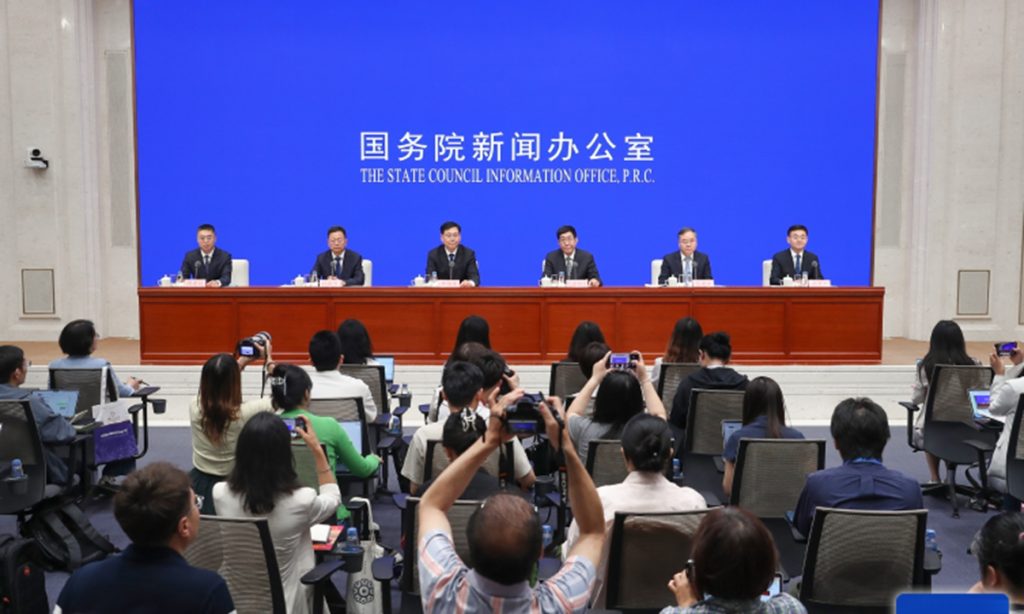
The enactment of the law reflects the common aspirations of people of all ethnic groups in China. Since the beginning of the new era, NPC deputies have submitted more than 700 motions and proposals calling for the formulation of such a law. This demonstrates the strong demand among NPC deputies for this legislation, Bayanqolu, member of the Standing Committee of the National People's Congress (NPC) and chairman of the NPC ethnic affairs committee, said at a press conference.
The State Council Information Office (SCIO) held a press conference on Wednesday regarding the Ethnic Unity and Progress Promotion Law and China's work on ethnic affairs.
Since being passed, the law has received broad recognition and firm support from people of all ethnic groups across the country. It has also been positively evaluated by many international friends, media outlets, and institutions. They believe that the law is consistent with China's national conditions, modern governance principles, and global trends in state governance, and provides a valuable reference for multiethnic countries seeking solutions to ethnic issues, the senior official said.
However, some Western institutions and overseas forces continue to smear China's human rights situation under the guise of ethnic issues, spreading falsehoods that reflect ignorance and prejudice toward China, Bayanqolu said.
The so-called statements issued by these organizations disregard the tremendous achievements made in China's ethnic regions and ethnic affairs, make unwarranted accusations against China's ethnic policies and rule-of-law development, and constitute blatant interference in China's internal affairs. We express our strong dissatisfaction and firm opposition, he noted.
He further elaborated several examples that demonstrated the Communist Party of China has consistently attached great importance to resolving ethnic issues and advancing ethnic affairs and China has successfully forged a path with Chinese characteristics for addressing ethnic issues.
First, in terms of economic development. As mentioned earlier, remarkable achievements have been made in ethnic regions and ethnic affairs. All 31.21 million impoverished people in 420 impoverished counties in ethnic autonomous areas, five autonomous regions and in Southwest China's Guizhou, Yunnan, and Northwest China's Qinghai provinces, were lifted out of poverty on schedule. Ethnic minorities and ethnic regions joined the rest of the country in building a moderately prosperous society in all respects. In the fight against poverty and the realization of a moderately prosperous society, not a single ethnic group was left behind, and not a single person was left behind. As China advances Chinese modernization today, the same principle applies: no ethnic group and no individual can be left behind.
What other country or political party has achieved such results? The official asked.
As everyone can see, basic public services and infrastructure in ethnic regions - including education, healthcare, transportation, water and electricity supply - have been significantly improved. Even in the most remote and border areas, information networks are now available. These achievements are visible to all. The Chinese government, including local officials, has introduced them on many occasions, including during the annual sessions of the NPC and the Chinese People's Political Consultative Conference. We encourage people to visit and see for themselves, because facts speak louder than prejudice and fabrication. What is the point of fabricating stories and hyping issues based on prejudice? These achievements form the very foundation for achieving equality and shared development among all ethnic groups. Can't they really see these accomplishments? Bayanqolu asked.
He also cited examples in terms of cultural preservation. China has invested substantial resources in protecting cultural heritage sites such as the Potala Palace, Jokhang Temple, and Norbulingka. Ancient works on the verge of being lost, including Wisdom of Royal Glory (Kutadgu Bilig) and the Compendium of Turkic Dialects, have been translated, compiled, and published in Chinese and Uyghur. More than 3,000 precious cultural relics have been rescued and restored, Bayanqolu said.
Among the 45 Chinese entries inscribed on UNESCO's Representative List of the Intangible Cultural Heritage of Humanity, more than one-third are related to ethnic minority cultures.
Both history and present reality fully demonstrate that the path with Chinese characteristics for addressing ethnic issues is entirely correct, the official said.
The law responds to the historical trend of the Chinese nation moving from the past toward the future, from tradition toward modernity, and from diversity toward unity. Its purpose is to promote ethnic unity and progress, he noted.
The law fully implements the principles and spirit of the Constitution, focuses on fostering a strong sense of community for the Chinese nation, incorporates mechanisms and measures that meet the needs of the new era, clarifies the overall framework and key tasks of ethnic unity and progress, and establishes a comprehensive, clearly defined, and efficient institutional system for safeguarding equality, unity, and progress among all ethnic groups, he continued.
It can be said that this law is a legal codification of the successful practical experience accumulated through China's path of addressing ethnic issues with Chinese characteristics, Bayanqolu said.
China's efforts to promote ethnic unity and progress through the rule of law not only benefit its own people, but also provide Chinese wisdom and Chinese solutions for countries around the world in dealing with ethnic issues, the official said.
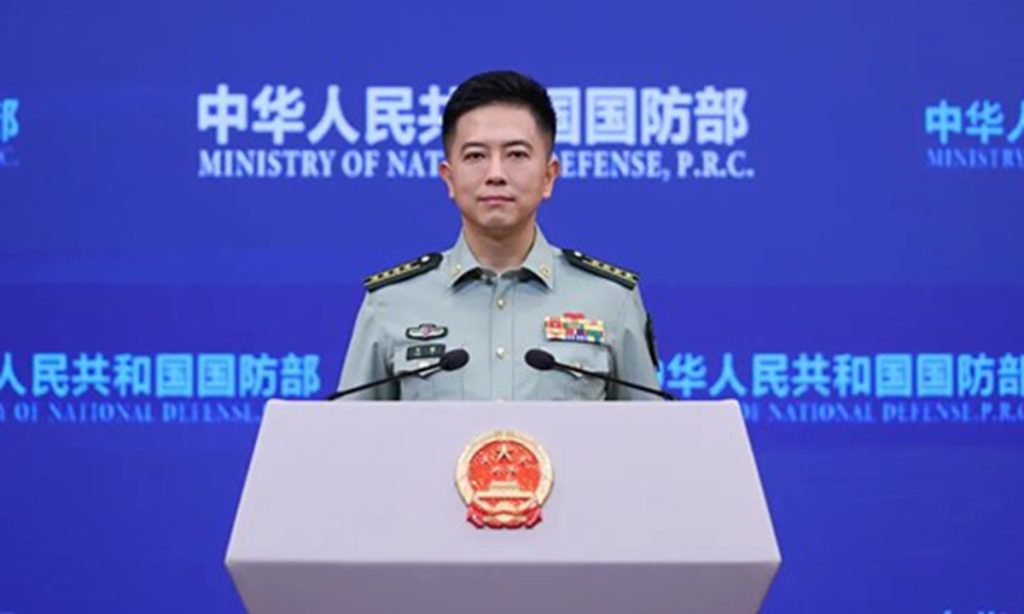
Senior Colonel Chen Xi, the newly appointed spokesperson for China's Ministry of National Defense, made his debut at the Tuesday's press conference. Chen is the 10th spokesperson for the Chinese defense ministry and the first to have risen through the ranks from the ministry's "press spokesperson team."
Meanwhile, the introduction of press spokespersons on the official website of the Ministry of National Defense has also been updated. Currently, the Ministry of National Defense has three press spokespersons: Zhang Xiaogang, Jiang Bin, and Chen.
According to the biography published on the ministry's website, Chen was born in 1983. In 2001, he was admitted to the former PLA International Relations Academy. After graduating with a master's degree in 2008, he successively served as a staff officer. In December 2025, he was appointed deputy director of the information bureau of the international military cooperation office of the Central Military Commission, holding the military rank of Army Senior Colonel.
Unlike the resumes of the previous nine spokespersons, Chen is the first spokesperson to have grown out of the ministry's "press spokesperson team." Chen was selected and transferred to the ministry's information bureau as early as 2013, becoming a member of the spokesperson team.
In September 2007, the Ministry of National Defense Information Bureau was established; on May 18, 2008, the first spokesperson for the Ministry of National Defense made their public debut. In the initial stage of the establishment of the Ministry of National Defense press spokesperson system, press conferences were generally held when major tasks, major operations, or major policies were introduced. In April 2011, the regular press conference system of the Ministry of National Defense was established, with a regular press conference held once a month.
"It was during this period that Chen was selected to become a member of the spokesperson team," a former colleague of Chen told the Global Times, noting that this was a period of rapid development for the press release undertaking of the Chinese military. "The spokespersons and their team members all started from scratch, moving forward through exploration. To run a successful press conference, the entire team would undergo intense yet very fulfilling preparations, which also meant rapid growth for an individual."
"Every member of the team, including Chen, is very hardworking, excellent, and highly passionate. Chen's traits are clear: he is serious and responsible in his work, handles every task in an orderly manner, and is good at thinking critically and innovating," this former colleague introduced.
A media professional who has attended the Ministry of National Defense press conferences for many years noted that "as the image representatives for the 2 million officers and soldiers of the Chinese PLA, spokespersons for the Ministry of National Defense need to demonstrate a firm stance yet flexibility, as well as a steady, composed demeanor combined with approachability. Up until now, all past spokespersons have possessed these qualities. Now that Chen has become one of them, it is believed he will better showcase an open and confident military."
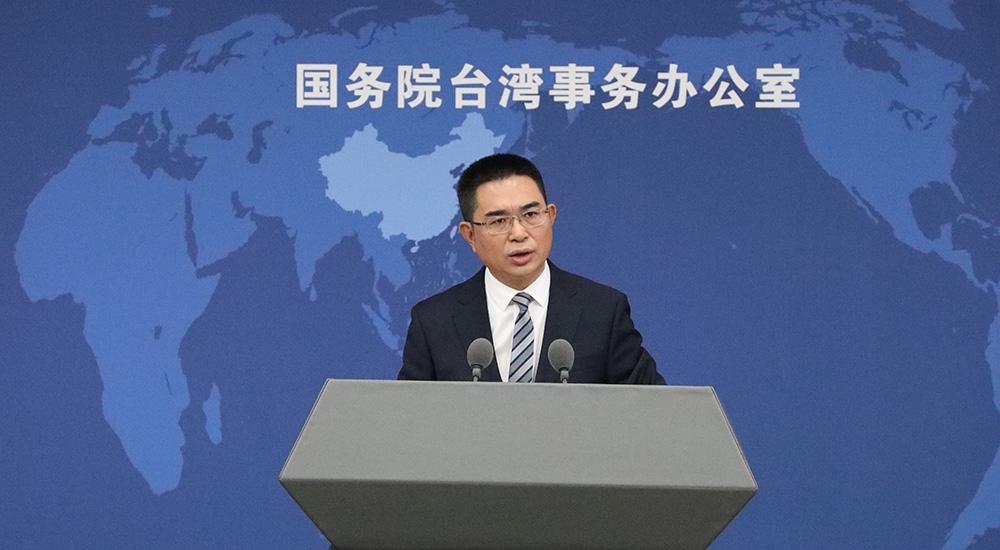
The Democratic Progressive Party (DPP) authorities in Taiwan island have bowed to Japan and the Philippines despite their serious infringement on Chinese maritime rights and interests, betraying the interests of the Chinese nation and becoming scum of the nation, Chen Binhua, spokesperson for the State Council Taiwan Affairs Office, said at a regular press conference on Wednesday.
Chen made the remarks in response to a question about the mainland's special maritime law enforcement operation in waters east of Taiwan island, after the DPP had claimed that the mainland has no right to assert law enforcement jurisdiction over the waters.
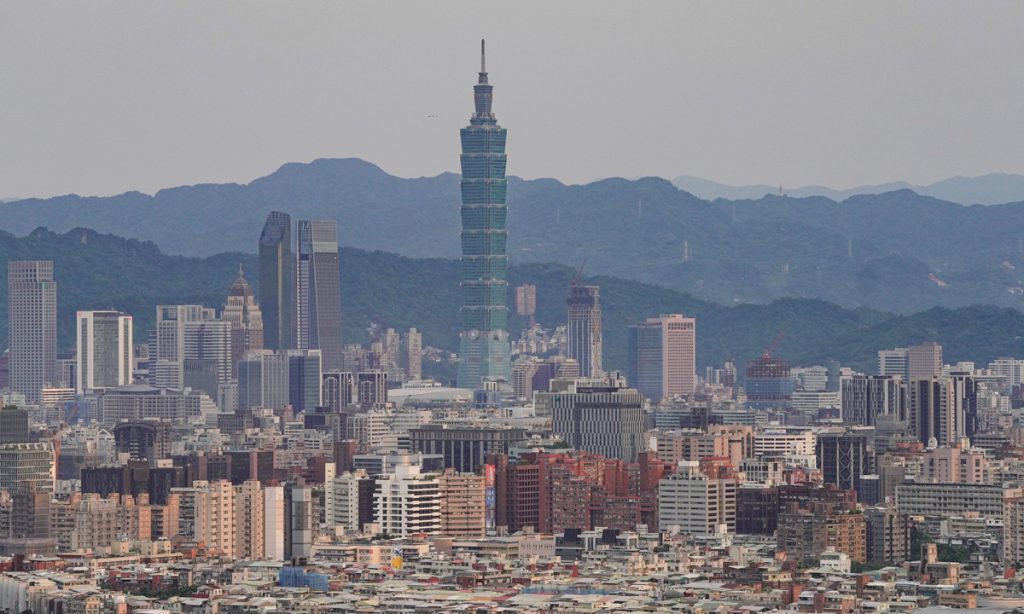
Chen said there is only one China in the world and Taiwan is part of China. The waters involved in the so-called delimitation talks announced by Japan and the Philippines are located east of Taiwan island, where China has an exclusive economic zone and continental shelf.
By bypassing China and arbitrarily launching the so-called delimitation talks, Japan and the Philippines have seriously violated international law and basic norms governing international relations, and have severely infringed upon China's maritime rights and interests. Such moves are completely illegal and invalid, Chen said.
The mainland coast guard's law enforcement patrols in waters east of Taiwan island are necessary actions taken in accordance with law in response to Japan and the Philippines' serious infringement of China's territorial sovereignty and maritime rights and interests. The mainland will continue to strengthen management and control over the relevant waters, Chen said.
Chen said the DPP authorities' attempts to escalate cross-Straits confrontation are merely aimed at deflecting pressure and deceiving the public, and have been opposed and rejected by people on both sides of the Taiwan Straits, including Taiwan compatriots.
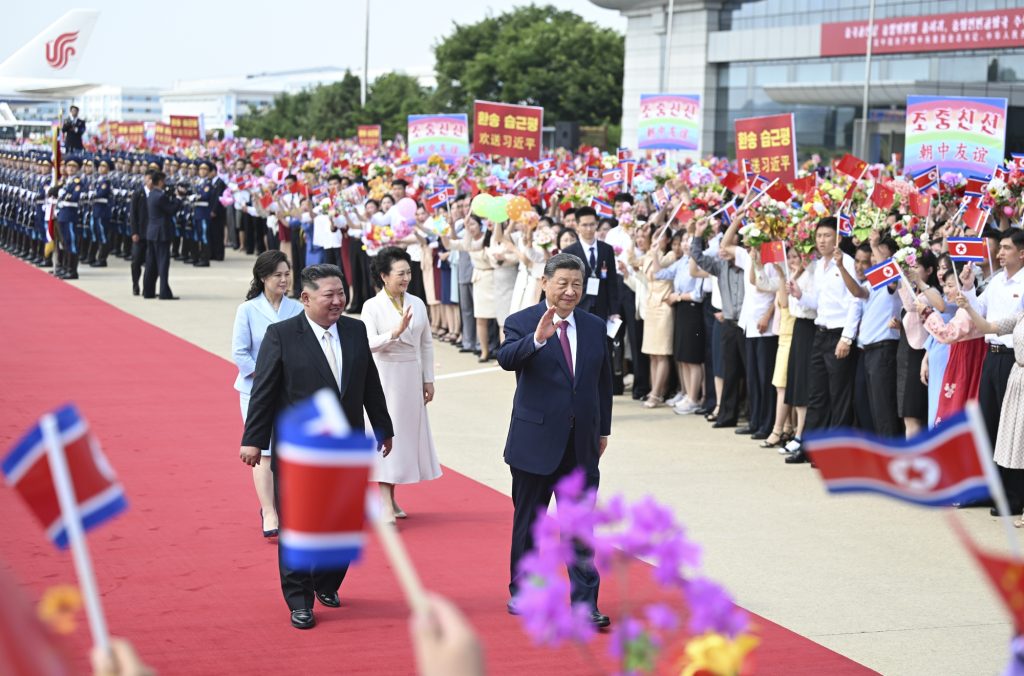
Xi Jinping, general secretary of the Communist Party of China (CPC) Central Committee and Chinese president, returned to Beijing on Tuesday afternoon after concluding his state visit to the Democratic People's Republic of Korea (DPRK), the Xinhua News Agency reported on Tuesday.
On Tuesday afternoon local time, Xi departed from Pyongyang. Kim Jong-un, general secretary of the Workers' Party of Korea (WPK) and president of the State Affairs of DPRK, and his wife went to the airport to see Xi and his wife off and held a grand farewell ceremony in their honor, per Xinhua.
This year marks the 65th anniversary of the signing of the China-DPRK Treaty of Friendship, Cooperation and Mutual Assistance. In recent years, under the strategic guidance of the top leaders of the two parties and the two countries, China-DPRK traditional friendly and cooperative relations have maintained sound and steady development, Xinhua wrote in an article published on Monday.
Exchanges and cooperation in areas including the economy, culture, education, and youth affairs have produced fruitful outcomes, delivering benefits to both countries and their peoples, injecting new vitality into the traditional friendship between the two nations, and making positive contributions to regional peace and development, per Xinhua.
China-DPRK relations in new era
Xi said on Tuesday that he reached important consensus with General Secretary Kim on developing relations between China and the DPRK in the new era, the Xinhua reported on Tuesday.
The two sides also had in-depth discussions on safeguarding peace and stability in the region and the world, Xi said when he and his wife Peng Liyuan attended the luncheon hosted by Kim and his wife Ri Sol-ju, per Xinhua.
Xi thanked Kim for the warm hospitality and thoughtful arrangements for the visit, noting that through the visit, the warmth and friendship extended by the DPRK party, government and people toward the Chinese party, government and people is felt even more deeply.
The mutual understanding between China and the DPRK has become deeper and more comprehensive, and the future development direction has become clearer and more definite, Xi said.
Xi said that he is ready to work with Kim to jointly lead China-DPRK relations to greater development and inject new and strong impetus into the socialist cause of the two countries.
For his part, Kim said that Xi's visit was a complete success, sending a positive message to the world that the DPRK and China are further strengthening their friendly cooperation, and attracting widespread attention from various sides.
Xi's visit was of great significance to bilateral relations and the future development of the region, Kim said, noting that the DPRK side stands ready to earnestly implement the important consensus reached during the visit, promote new tangible outcomes in bilateral cooperation, and advance DPRK-China relations to a new and higher level.
Great friendship through generations
Xi and Kim agreed on Tuesday that the two countries should carry forward their great traditional friendship from generation to generation.
Xi paid homage to the China-DPRK Friendship Tower with his wife Peng, in the company of Kim and his wife Ri.
Xi and Kim also agreed that the years when China and the DPRK fought side by side in the 1950s are an eternal historical memory shared by both sides.
The Friendship Tower was built in 1959 to honor martyrs of the Chinese People's Volunteers in the War to Resist US Aggression and Aid Korea.
Three massive gilded Korean characters reading "Friendship Tower" adorned the facade of the stately monument, gleaming in the summer sunlight.
After the national anthems of China and the DPRK were played, and honor guards laid the flower basket, Xi approached the flower basket and arranged the ribbon, which read, "The martyrs of the Chinese People's Volunteer Army live forever."
In a solemn atmosphere, all present paid silent tribute to the martyrs. Afterward, Xi and Kim watched a march-past by the honor guard.
Since the tower's erection, it has been expanded by the DPRK and renovated several times. Commemorations have been held at the site on key occasions, including anniversaries of the CPV's entry into the DPRK to fight in the War to Resist US Aggression and Aid Korea, the Korean War armistice, and China's Qingming Festival, also known as Tomb-Sweeping Day.
The two leaders pledged to jointly maintain memorial facilities dedicated to the Chinese People's Volunteers martyrs, carry out distinctive programs on revolutionary traditions and youth education, and carry forward the great spirit of the War to Resist US Aggression and Aid Korea.
On Tuesday morning, Xi, accompanied by Kim, visited the Central Cadres Training School of the WPK in Pyongyang.
In the wooded area between teaching buildings, Xi and Kim jointly planted a fir tree. The fir tree remains evergreen throughout the year, symbolizing the enduring and ever-renewing friendship between China and the DPRK.
In recent years, China-DPRK economic and trade cooperation has shown a positive development momentum. According to Chinese official statistics, bilateral trade volume reached $2.735 billion in 2025, according to Xinhua on Monday.
The Guomenwan trade zone in Dandong, a city in Northeast China's Liaoning Province, has witnessed increasingly close economic and trade exchanges between China and the DPRK. In 2025, the zone recorded 168 million yuan ($24.8 million) in imports through border residents' trade, with a total of 22,000 participants engaged in such transactions over the course of the year.
Prior to this, on March 12, an international passenger train from Dandong arrived in Pyongyang, marking the resumption of international passenger train services between China and the DPRK.
On March 30, an Air China passenger plane from Beijing arrived at Pyongyang International Airport, signaling the formal resumption of the Chinese carrier's passenger flight operations between the capitals of China and the DPRK. Road, rail and air links between the two countries have all been resumed thus far.
Cultural and artistic exchanges are an important component of China-DPRK friendship and serve as a key means of fostering mutual understanding and emotional connection between the two peoples. Multiple Chinese films have received awards at the Pyongyang International Film Festival, while the DPRK's April Spring Friendship Art Festival has repeatedly invited Chinese art troupes to participate.
China supports Thailand in trying the case in accordance with the law and severely punishing the perpetrators, Chinese Foreign Ministry spokesperson Lin Jian said on Thursday when asked to comment on reports that a Thai court has issued death sentences to two men who were involved in the 2015 Bangkok bombing case.
"We have noticed that the Thai side has delivered a verdict on the relevant case. The terrorist bombing that year killed 20 people, including seven Chinese citizens, and injured more than 100 others. The attackers were utterly inhuman and their crimes were heinous," Lin said.
A cross-party group of pro-Taiwan Japanese lawmakers decided on Thursday to adopt a new name that explicitly includes the word "Taiwan," Japanese media outlets reported on Friday. A Chinese expert said that this move indicates certain right-wing Japanese lawmakers, emboldened by the Takaichi administration's hostile attitude toward China, are meddling in Taiwan-related issues more blatantly, which constitutes a malicious provocation against China and reveals their attempt to collude more closely with Taiwan separatists.
According to the Japan Today, the group approved the name change at a plenary meeting in Tokyo. In English, the group has been called the Japan-ROC Diet Members' Consultative Council. Discussions on the name change were held behind closed doors. The new name is not available in English at this point, according to the group.
The Japanese media outlet claimed that the renaming is "apparently intended to showcase the lawmakers' resolve to strengthening exchanges" with Taiwan. In announcing the new name, Keiji Furuya of the ruling Liberal Democratic Party, who serves as the head of the council, said the group now has more than 300 members, claiming it proof of the "unshakable bond" between Japan and the Taiwan island.
According to a report republished on Yahoo Japan from the Japanese edition of the South Korean media outlet JoongAng Ilbo, Furuya is a representative right-wing politician in Japan. In March, China announced countermeasures against Furuya for his egregious moves including collusion with "Taiwan independence" separatist forces for provocative moves.
Lü Chao, a professor at the Liaoning Academy of Social Sciences, told the Global Times on Friday that there is a bloc of right-wing Japanese lawmakers who lean toward "Taiwan separatists," attempting to keep tight political and economic collusions with them. The act of renaming the group is an open political provocation over China regarding the Taiwan-related issues, sending wrong and dangerous signals to "Taiwan independence" forces, the expert noted.
The expert noted that since the Takaichi's administration took office, anti-China sentiment has grown stronger in Japan, emboldening these pro-Taiwan groups to act without any restraint.
Regarding the name change, Furuya claimed that "under the tenure of the Sanae Takaichi administration, we decided the time was ripe to push through this renaming," according to the Asahi Shimbun.
"These remarks lay bare that the right-wing Japanese lawmakers are emboldened by the Takaichi administration's hostile stance against China to advance their agenda. They dare to stage such blatant provocations since the Japanese government turns a blind eye and indulges them," Lü said.
This makes it clear that these anti-China lawmakers see eye-to-eye with the cabinet's hardline China policy, working hand in glove while attempting to deepen ties with "Taiwan independence" separatists, Lü said. "Their moves amount to deliberate provocations against China. Japan should be well aware that challenging China over the Taiwan question crosses a red line and will definitely draw a firm response from China," he said.
In response to Furuya's visit to China's Taiwan region in August 2022, a Chinese Foreign Ministry spokesperson said at the time that to seek selfish political gains, certain Japanese politician has colluded with the "Taiwan independence" forces to make a political stunt just like some others have done. The Japanese government connived at such political manipulation to undermine China's sovereignty and territorial integrity. Such behavior of reneging on one's commitment with sinister intention is doomed to fail and will not stop the historic process of China's complete reunification.
"We urge the Japanese side to deeply reflect on the events of history, abide by the principles of the four China-Japan political documents and the commitments it has made, stop making provocation and stop stirring up trouble on the Taiwan question. Japan must not wade in muddy water and seek selfish gains in the Taiwan Straits. It must stop going further down the wrong path," the Chinese spokesperson said.