Blue Momentum: From seawater to green hydrogen, and beyond, Qingdao charts a new growth path
China has stressed that advancing Chinese modernization requires promoting the marine economy's high-quality development and forging a Chinese path of leveraging marine resources to achieve strength. With a mainland coastline stretching 18,000 kilometers and a sea area under its jurisdiction of around 3 million square kilometers, China is a major maritime nation with vast potential for developing its marine economy. To document the high-quality development of China's marine economy, the Global Times is launching the "Blue Momentum" series of in-depth articles from local marine economic powerhouses. The second installment focuses on Qingdao, East China's Shandong Province.
On a clear day at the sprawling coastal industrial park of Sinopec Qingdao Refining & Chemical Co, a major oil refiner in the country, a modest but groundbreaking facility hums quietly by the shore.

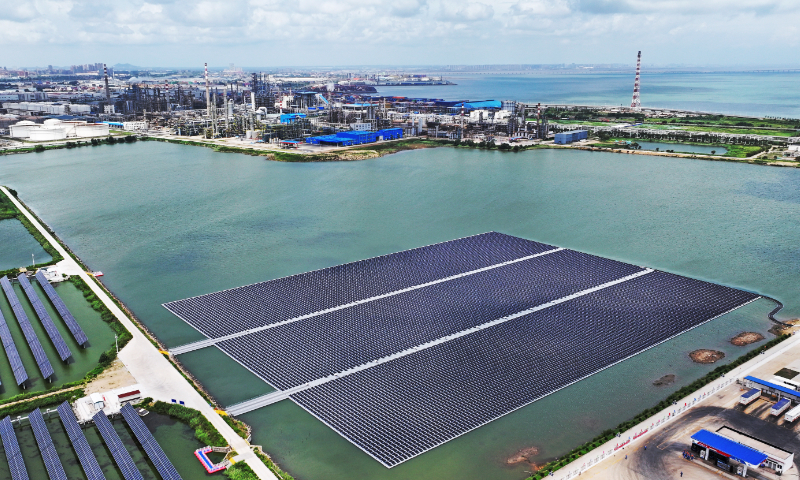
Against the backdrop of a massive industrial complex that stretches for several kilometers stands a shipping-container-sized assembly of pipes and meters arranged in a maze-like structure - the heart of China's first 100-kilowatt factory-scale seawater-to-hydrogen direct electrolysis project, which is turning seawater and sunshine into green fuel.

"After more than a year of research and development, the project has completed over 1,000 hours of cumulative operation and is ready to scale up from research to mass production of green hydrogen," Qin Weilong, a process expert at Sinopec Qingdao Refining & Chemical and technical director of the "Oriental Hydrogen Island" project, told the Global Times.

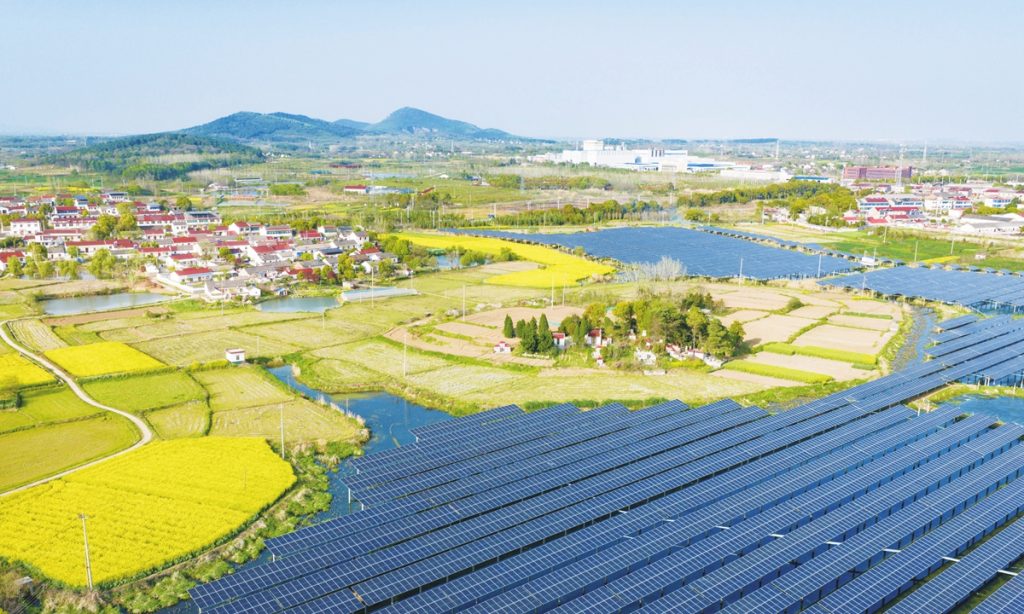
Unlike conventional industrial hydrogen production, which often relies on purified freshwater or fossil fuels, this project uses pre‑treated seawater directly, powered entirely by renewable electricity generated from offshore solar photovoltaic panels at a nearby solar farm.

In 2025, China's total marine economy output reached nearly 11.02 trillion yuan ($1.62 trillion), with a year-on-year growth of 5.5 percent, and accounting for 7.9 percent of the country's GDP. Utilizing its inherent resources and technological innovation, Qingdao is a prime example of China's efforts to promote the high-quality development of the marine economy.

Green energy from the blue ocean

The "Oriental Hydrogen Island" produces 20 cubic meters of green hydrogen per hour. The electricity comes from 13 megawatts of installed offshore solar capacity - enough that one hour of sunlight can generate roughly 2,600 standard cubic meters of green hydrogen. By consuming renewable power on site, the project dramatically cuts electricity costs for hydrogen production.

Pointing to a container-sized device covered with pipes and meters, Qin said, "This is our photovoltaic green power plus seawater hydrogen production unit."
The term "green hydrogen" refers to hydrogen produced with near-zero carbon emissions, typically via electrolysis of water using renewable energy. This distinguishes it from "gray hydrogen" that comes from fossil fuels and "blue hydrogen" that is extracted from industrial byproducts, making it dependent on petrochemical processes. The Oriental Hydrogen Island project represents a clean break: all its input energy comes from solar.

"These solar panels produce enough green electricity in one hour to make about 2,600 standard cubic meters of green hydrogen," Qin said, pointing to the offshore array. "Direct seawater electrolysis saves both freshwater and the high cost of desalination. It's a game-changer."

This project has fully demonstrated the technical feasibility of using intermittent renewable power for green hydrogen production, opening a new path for large-scale consumption of renewable electricity in the future, Qin said.

Yet Qin remains measured about the journey ahead. "We have validated the feasibility of directly obtaining hydrogen from seawater," he said. "The ocean offers an endless source of raw materials and power for green hydrogen. We are full of confidence for the future."

Less than two kilometers away stands China's first carbon-neutral hydrogen refueling station, which sources its green hydrogen from the "Oriental Hydrogen Island."

A special hydrogen tanker from Shandong-based Sino Hydrogen Co, a hydrogen supply solutions provider, slowly entered the station. "Refueling 35 kilograms of hydrogen takes only 15 minutes," said Gao Gang, a station worker. The tankers deliver green hydrogen to downstream users. "We also refuel some of Qingdao's hydrogen fuel‑cell buses - that process takes about eight minutes and provides enough energy for a full day of operation."

Experts note that fast refueling and zero emissions, as only water vapor is released when power is generated, are key advantages of hydrogen energy. When applied to urban transportation, hydrogen fuel cell vehicles can add significant "greenness" to the city's mobility transition.

The outline of China's 15th Five-Year Plan (2026-30), recently released, calls for focusing on key areas that will drive future development, building a full-chain cultivation system for future industries, and promoting hydrogen energy and nuclear fusion as new economic growth points.

Shandong Province, a major energy and chemical hub, stands to benefit greatly from this technology. A Sinopec Qingdao manager said that seawater-based hydrogen production can support deep decarbonization efforts at coastal steel and petrochemical sectors, enable zero-carbon scenarios for hydrogen-powered heavy trucks, ocean-going vessels, and island energy supply, and help create zero-carbon industrial clusters.

An innovation park that hears the sea's call

Qingdao, China's second-largest foreign trade port, is not only harnessing the sea for clean energy but also leveraging its coastal location to attract global talent, technology, and investment. Just a short drive from the port, in the city's West Coast New Area, lies an elegant business park set against a backdrop of hills and water. On a black marble pedestal by a waterfront terrace, some 30 national flags flutter in the breeze - a visible sign of the park's international character. This is the Sino-German Ecopark.

Amid the greenery and birdsong, the rumble of container trucks can be heard if sea winds blow from the direction of the nearby Qingdao Port. "Proximity to the port is a top consideration for our tenants," Kerstin Kaehler, branch manager of the German Enterprise Centre Qingdao, told the Global Times. Kaehler, who is in her early 50s, has spent 27 years in China fostering business communication and helping German and other foreign companies successfully establish themselves in the country.
The center currently houses 44 tenants, most of them small and medium-sized enterprises (SMEs). Half are Chinese companies; the other half come from Germany, the US, Japan, the UK, Singapore, and other nations. "At the end of 2019, we had 27 tenants. Now we have 44," Kaehler said.

Despite changing market dynamics, she noted that foreign companies' interest in the Chinese market has not waned. Notably, demand for co-working spaces or small offices is strong, a trend she expects to continue.

"If a company is a world market leader, it is usually also innovative. If they are, then they are willing and able to learn and draw inspiration from everything happening in China in that field," Kaehler said. "Especially now, as China is rolling out its new five-year economic plan, I believe that foreign companies - especially German SMEs - have a big role to play in China's efforts to build a modern industrial system."

From extracting green hydrogen from the sea to attracting foreign expertise and investing in coastal health and wellness resources, Qingdao is steadily implementing the central government's strategy to advance Chinese modernization by efficiently utilizing marine resources, promoting the high-quality development of the marine economy, and forging a Chinese path of leveraging marine resources to achieve strength.
HK IPO momentum accelerates into 2026, underpinned by hard tech, new economy: report

Manycore Tech, the first company of "Hangzhou Six Little Dragons" to list on Hong Kong, saw its stock surge 101.29 percent at close on Monday, with its marketing value reaching HK$63.652 billion ($8.13 billion).

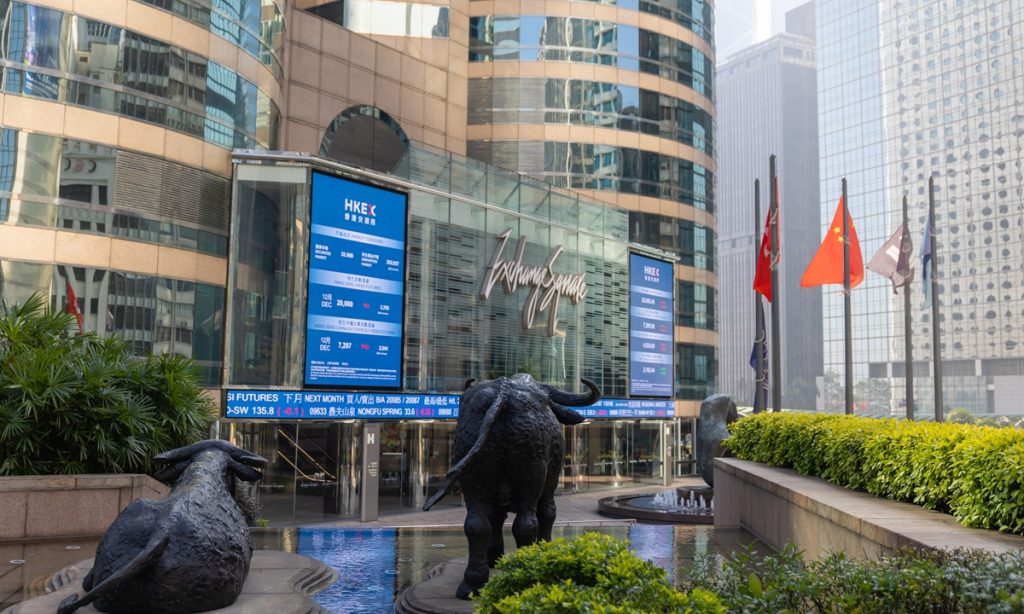
On April 17, Manycore officially listed on the Hong Kong Exchanges and Clearing (HKEX). On its debut, the stock opened more than 170 percent higher. The performance of the tech company mirrors the vigorous development of the Hong Kong capital market since this year.

According to a statement sent to the Global Times on Monday, Goldman Sachs said that Hong Kong IPO momentum has accelerated into 2026, with 40 listings year to date, raising $14 billion, up 488 percent year-on-year, after reclaiming the top equity fund raising spot in 2025.

The resurgence is underpinned by a shift towards "Hard Tech" and "New Economy" (Biotech, New Consumption), alongside a significant rise in A-to-H listings. Investor appetite remains robust, reflected by strong demand for new offerings and resilient post-IPO performance, up 40 percent one month post listing. A long queue of around 400 active applications underscores high issuer confidence, said the statement.

"For the full year 2026, we project a total equity supply of $110 billion, comprising $60billion in new IPOs and $50 billion in post-IPO financing," Goldman Sachs noted.

Bonnie Y Chan, CEO of the HKEX, said on April 15 that Hong Kong's new share fundraising activities this year have already reached approximately 40 percent of last year's full-year total, according to Yahoo Finance.

The number of companies queuing for listing is at a record high, with more than 10 multinational corporations currently preparing to list in Hong Kong. Against the backdrop of international capital reassessing regional allocations and rising attention on Asian markets, the vibrancy of Hong Kong's IPO market continues to draw significant interest, Chan was quoted as saying in the report.

A report headlined "Hong Kong reasserts role as safe haven in global finance amid Middle East turmoil" published by the South China Morning Post on Monday also echoed the trend.

The report said that, with the conflict destabilizing the Middle East - at one point forcing the closure of the Dubai International Airport and sending stocks in the Gulf region plunging - Hong Kong has re-emerged due to its geographical location, a pegged exchange rate, free capital flows and support from China's economic strength.

"The Hong Kong market has been steadily trending upward thanks to its stability supported by the Chinese mainland, especially amid the increasing external uncertainties, while lobal capital accelerates its allocation into high-quality assets amid the weak dollar cycle," Wang Peng, an associate researcher at the Beijing Academy of Social Sciences, told the Global Times on Monday.

Wang noted the positive role that technology companies listing in Hong Kong can play in promoting its development, particularly the choice by Chinese mainland tech firms to pursue dual-listing between the two places.

"By listing premium assets concurrently in the two markets, companies can alleviate the pressure of market expansion in a single venue and stimulate greater vibrancy across the entire technology sector," Wang said.

Hong Kong has long been regarded as the gateway and platform for mainland enterprises to access international markets, Paul Chan, financial secretary of the Hong Kong Special Administrative Region (HKSAR) government, said during the Global Investment Summit, local media RTHK reported on April 15. 

The outline of the 15th Five-Year Plan (2026-30) proposes supporting Hong Kong and Macao to better integrate into and serve the overall development of the country, and leverage their professional service advantages to assist enterprises in "going global."

The HKSAR government has established a dedicated task force, which assists mainland enterprises in expanding into overseas markets by providing support in areas such as risk management, while also creating new opportunities for Hong Kong, said Paul Chan.

With mainland industries shifting toward digitalization and greening, Hong Kong serves as the "first springboard" for these new quality productive forces to go global, Wang said, noting that as a super connector, the city is welcoming a historic opportunity for "new economy spillover" this year.

Solar powers global energy supply growth, China leads renewable push: IEA

Global renewable energy capacity maintained double-digit growth in 2025 despite headwinds such as supply chain constraints, with China continuing to drive global renewable deployment, according to the International Energy Agency's (IEA) latest annual assessment.

The findings underscore a broader shift in the global energy landscape. As the share of new energy continues to rise, analysts say China is emerging as a key force behind changes in the global energy structure.

According to the IEA's Global Energy Review 2026, released on Monday, global renewable capacity additions rose 16 percent in 2025 despite supply chain strains, grid delays, financial pressures and policy shifts, marking a 23rd consecutive year of record expansion.

Solar PV and natural gas led the growth. Solar PV alone met more than one-quarter of global primary energy demand growth, marking the first time on record that a modern renewable source accounted for the largest share of global energy demand growth, according to the report.

Natural gas followed, meeting around 17 percent of global demand growth. In all, low-emissions sources - including solar, wind, nuclear, hydropower and other renewables - together contributed nearly 60 percent of the increase in global energy demand.

Within this broader trend, China remained central. As in 2024, the country accounted for the largest share of global energy demand growth in 2025, although its growth rate slowed to 1.7 percent, reflecting the rapid expansion of renewables and gains in energy efficiency.

At the same time, strong growth in renewable power generation in China helped curb coal consumption, with a knock-on effect of improving primary energy intensity, the IEA noted.

Zhou Mi, a senior research fellow at the Chinese Academy of International Trade and Economic Cooperation, told the Global Times on Tuesday that the global energy system is accelerating its shift from fossil fuels to renewables — a transition that has entered a substantive phase. This is reflected in the rising share of renewables in new power generation, a trend that is beginning to reshape the existing energy mix.

Once renewables surpass conventional sources, they will trigger broader structural changes in both the energy system and industrial landscape, Zhou said. He added that China plays a particularly important role in this process, reducing its reliance on fossil fuels while scaling up renewables and helping drive changes in the global energy mix.

The IEA report also showed that renewable capacity expansion in China continued to accelerate in 2025, reaching a record level with nearly 500 gigawatts (GW) of new installations, accounting for more than 60 percent of global growth.

Meanwhile, global coal-fired power generation declined in 2025 for the first time since 2019. China led this trend, with coal power generation falling by about 1.5 percent, the report said.

Developments in other low-carbon sources further reinforced the shift. Global nuclear capacity stood at 420 GW at the end of 2025, while nuclear generation rose by around 1.2 percent to a record high. Of the 10 construction starts worldwide in 2025, nine were in China, and the country's total installed capacity is expected to reach around 100 GW by 2030, according to the IEA.

In parallel, growth in global energy-related carbon dioxide emissions slowed further in 2025, increasing by about 0.4 percent. Emissions in China declined by around 0.5 percent, reflecting reductions in both industrial processes and electricity generation.

This was mainly driven by rapid growth in renewables and nuclear energy, which reduced coal use in power generation, while strong growth in electric vehicles helped curb oil demand. A relatively limited increase in cooling degree days also tempered the rise in electricity demand, according to the IEA report.

Zhou said that as resource constraints tighten and environmental pressures mount, China's rapid scaling-up of renewables offers a practical and replicable path for other countries, urging stronger international cooperation and long-term, multi-stakeholder frameworks to sustain the global energy transition.

Capybara in Beijing munching catkins dubbed 'fluff cleaner' online

As Beijing entered its peak willow and poplar catkin season, a capybara at the Beijing Wildlife Park was spotted calmly nibbling on the floating fluff – almost like little fluff cleaner helping people clean up the seasonal fuzz.
A video posted by a netizen shows Beijing Wildlife Park, surrounded by woods, covered in floating poplar and willow catkins. The wind blew the fluffy seeds toward a group of capybaras, with one filmed slowly chewing the catkins, looking totally relaxed and carefree.

The video drew nearly 130,000 likes and over 140,000 shares on Chinese social media platform Douyin. In the comments, netizens joked that the capybara truly lives up to their reputation as the “epitome of emotional stability” by helping eliminate catkins. Some humorously wondered, "Will the capybaras develop hay fever and get stuffy noses from catkin allergies?"

Some netizens also expressed concern that swallowing catkins might cause health issues for the animals. A park staff member explained that catkins themselves are non-toxic, composed primarily of plant fibers and seeds, and that capybaras are large herbivorous rodents naturally equipped to digest high-fiber plants, Science Daily said.

"It's fine for capybaras to occasionally eat a few catkins – they can pass through their digestive systems normally," the staff member said, adding that the park runs a professional veterinary hospital, where vets conduct regular health checks on the animals, according to the report.

Capybaras are not particularly attracted to catkins — they simply eat whatever drifts close to their mouths, Science Daily reported, citing the staff member.

The staff member also said that the capybaras are currently in good health, and keepers will continue to monitor their condition closely, per the report.

To tackle the catkin issue, the park has deployed high-pressure water sprayers to routinely flush the canopies of willow and poplar trees at scheduled times each day, reducing the production of catkins at the source, the park said on its official WeChat account. Cleaning staff have also increased their sweeping frequency, promptly clearing catkins in high-traffic visitor areas to minimize their spread in the air, according to the park.

China’s vote ‘objective and impartial,’ will ‘stand the test of time:’ FM spokesperson on UNSC veto of Strait of Hormuz draft resolution

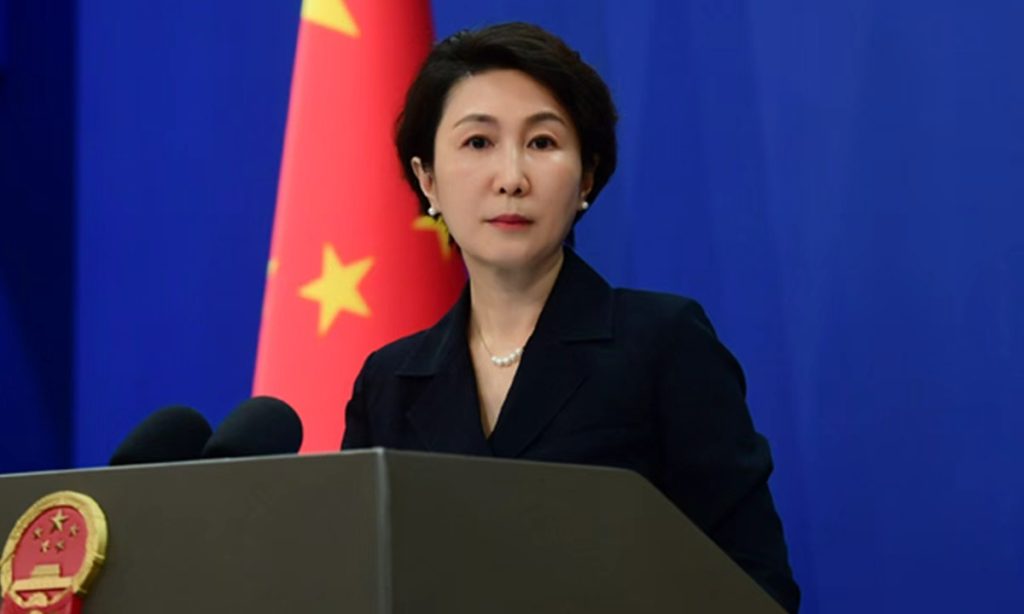
China maintains that the sovereignty, security, and territorial integrity of Gulf countries should be fully respected, and the safety of shipping lanes and energy infrastructure must be ensured. The root cause of the obstruction to navigation in the Strait of Hormuz lies in the illegal military actions by the US and Israel against Iran. The fundamental solution to restoring navigation in the strait is to achieve a ceasefire and end the conflict as soon as possible, the Chinese Foreign Ministry spokesperson Mao Ning said on Wednesday in response to a question about the UN Security Council (UNSC) vote on Tuesday local time on a draft resolution concerning the Strait of Hormuz proposed by Bahrain, during which China and Russia voted against it and exercised their vetoes, resulting in the draft resolution failing to pass.

Actions by the UNSC should aim to de-escalate tensions, and must not provide a legal cover for unauthorized military actions, grant a license for the use of force, or add fuel to the fire and escalate the conflict, Mao said. China's vote is objective and impartial and will stand the test of time, the spokesperson said. 

The draft resolution on the Strait of Hormuz jointly proposed by China and Russia has been formally circulated among UNSC members, the spokesperson said as China and Russia have put forward a new draft resolution on the Middle East situation and maritime security. 

The draft is objective and impartial, aims to ease tensions, calls for dialogue and negotiations, and seeks to safeguard the rights and freedoms of navigation, in line with the expectations of the international community. China stands ready to continue working with relevant parties to make unremitting efforts to promote de-escalation at an early date and to restore peace and stability in the strait and the Middle East region, Mao said.

Early arrival of Yiwu’s Christmas export season shows how global trade evolves

Christmas may still be months away, but the Christmas goods section of the Yiwu International Trade Market in East China's Zhejiang Province is already buzzing with activity. According to Yiwu Fabu, vendors report that international buyers have been arriving at least a month earlier than usual. "The change is noticeable," remarked the manager of a factory producing Christmas apparel and gifts in Yiwu.

This trend is also reflected in export figures. Local customs data show a 23.3 percent year-on-year increase in Yiwu's Christmas goods exports during the first two months of the year. This early uptick further reflects changes in the timing of Yiwu's Christmas sales, pointing to a gradual shift toward earlier purchases.

Yiwu is an important representative of the global Christmas goods market, given its prominence as a major hub for small commodities trade. According to a report from the Xinhua News Agency, Yiwu exports more than 20,000 categories of Christmas products, accounting for nearly 80 percent of the global market and reaching more than 100 countries and regions.

Despite ongoing uncertainties in global trade, Yiwu's Christmas product exports have continued to grow, with a 22.9 percent year-on-year increase, reaching 5.17 billion yuan ($756.99 million) in the first three quarters of 2025, according to Xinhua. This sustained growth highlights both the enduring global demand for Christmas products and Yiwu's role in the supply chain.

Given Yiwu's crucial role in the global Christmas goods market, the move toward an earlier procurement season is becoming increasingly understandable. According to Yiwu Fabu, the trend of placing orders earlier is not incidental, but rather the result of a complex interplay between global trade dynamics and the evolving industry landscape. In response to fluctuations in shipping capacity and uncertainties at ports, international buyers are placing greater emphasis on risk management by adjusting their procurement timelines.

This trend further underscores the deep integration between Yiwu and the global Christmas goods market, emphasizing the impracticality of any potential "decoupling." With the market's broad product range, rapid adaptability, and a highly efficient trade model, Yiwu's Christmas goods have become an integral part of the global holiday economy, consistently setting trends in the small commodities trade worldwide.

Yiwu's deep integration with the global market is driven by a range of key factors. First, innovation is central to the enduring global competitiveness of Yiwu's products. By continuously incorporating emerging technologies and introducing new products that exceed customer expectations, local manufacturers maintain fresh and dynamic offerings.

Second, Yiwu's competitiveness in international markets is bolstered by a diversified distribution network, which helps mitigate risks arising from external uncertainties. For example, in the first three quarters of 2025, exports to Latin America grew by 17.3 percent and exports to the EU grew by 45 percent, together accounting for more than 60 percent of Yiwu's total Christmas product exports, according to official data.

Here is a case in point. According to the Yiwu Cross border E-Commerce Association, some Yiwu manufacturers developed singing Santa Claus toys, leading to a surge in orders. These products are available in four foreign languages, and each additional language effectively opens up a new market.

These factors, along with China's robust industrial and supply systems and others, have cemented Yiwu's long-standing and resilient connections to the global market. This bond has evolved over time and is likely to endure for the foreseeable future. In this context, the trend toward earlier procurement of Yiwu's Christmas goods is hardly surprising.

When placed within a broader context, Yiwu's story offers insights into the current state of global trade. The realignment of global supply chains is driven by market forces, not by political agendas. When international buyers use various means to secure a stable supply from China, they are making pragmatic business decisions that gradually counter the political narratives surrounding "decoupling."

At the same time, China's industrial and supply chains are actively adapting to the evolving dynamics of global trade. In Yiwu, innovation is evident across various sectors - whether in product development, trade practices, international logistics, or digitalization. This flexibility has allowed Yiwu's goods to reach further across the globe, fostering a closer two-way exchange between foreign buyers and Chinese producers.

History has shown that trade protectionism rarely addresses underlying issues and often exacerbates uncertainty. The early arrival of Yiwu's Christmas export season offers a tangible example of how global trade continues to adapt in an unpredictable environment. Yiwu's ability to navigate these complexities highlights the resilient forces driving progress in global supply chains.

US FCC’s new curbs on Chinese telecom firms seen as abusing national security concept, eroding US market credibility: expert

The US is considering further restrictions on Chinese telecom companies, in what analysts describe as a continued expansion of Washington's tech-related curbs on China under the pretext of "national security," warning that the move could further undermine the stability of bilateral economic and trade ties.

According to a Reuters report on Thursday, the Federal Communications Commission (FCC) of the US claimed it may bar major Chinese carriers including China Mobile, China Telecom and China Unicom from operating data centers in the US, and also could ban telecom carriers from connecting with these Chinese carriers.

The FCC claimed that it has tentatively concluded it should prohibit American and other telecommunications carriers operating in the US from interconnecting with companies on the so-called "Covered List" that it says pose "national security" concerns, according to a fact sheet published by the FCC on Thursday. This includes China Mobile, China Telecom, and China Unicom.

The agency claimed that it is also considering barring Chinese telecom firms that operate data centers or so-called Points of Presence at internet exchange points from interconnecting with other companies. It added that it may extend the existing ban on providing telecom services in the US to certain affiliates of companies on its national security list, according to Reuters.

The FCC could also bar telecommunications carriers from interconnecting with companies that use equipment from firms on the list, including Huawei and ZTE, the Reuters report said.

Li Yong, a senior research fellow at the China Association of International Trade, told the Global Times on Friday that the move, at its core, reflects an irrational expansion of the US' so-called national security concept, driven less by genuine security concerns than by political motives to push decoupling in the China-US technology and telecommunications sectors - a course that ultimately benefits no one.

The FCC plans to take an initial vote on the proposal at its April 30 meeting.

Responding to the agency's move, the Chinese Embassy in Washington said that China "consistently opposes the overstretching of the concept of national security and the abuse of state power to suppress Chinese enterprises," according to Reuters.

The latest proposal is not an isolated move but part of a broader escalation of US restrictions targeting Chinese technology firms across multiple segments of the communications supply chain.

Last Friday, the FCC has proposed banning imports of telecom and surveillance equipment from Chinese firms already on its "Covered List," widening a previous action targeting China, according to Reuters. 

On Wednesday, the agency said it will also vote April 30 on a proposal to bar all Chinese labs from ⁠testing electronic devices for use in the US.

These measures build on earlier actions. In December, the FCC claimed that it could bar China Mobile, China Telecom and China Unicom from connecting to US networks, following a series of earlier moves that effectively shut them out of the market, including rejecting market entry and revoking operating authorizations in recent years.

"In fact, Chinese telecom operators and related firms already have only a limited presence in the US following a series of politically driven restrictive measures, and such discriminatory curbs are unlikely to have a significant impact on their actual operations or business performance," Li noted.

Chinese telecom carriers have already seen their US footprint significantly reduced, with Reuters previously noting they now maintain only a "small presence," mainly through cloud services and wholesale internet traffic routing.

Li warned that the repeated and erratic restrictions have eroded the credibility of the US market. "By invoking vague and loosely defined concepts to justify broad curbs, the US is making its business environment increasingly unstable and unpredictable, undermining multinational companies' confidence in investing there," the expert said.

In response to a question about the FCC's plan to vote on a proposal that would ban all Chinese labs from testing electronic devices used in the US, Chinese Foreign Ministry spokesperson Mao Ning said on Thursday that, "China firmly opposes the US overstretching the concept of national security." 

This type of action has severely impeded the normal economic and trade exchanges between Chinese and US companies and does not serve anyone's interests, including those of American companies and consumers, Mao said, adding that China will continue to firmly safeguard its legitimate and lawful rights and interests.

China-provided Type 056 corvette part of co-op program with Cambodia, not directed at third party: Chinese Defense Ministry

The Type 056 corvette China provided to Cambodia, which has reportedly arrived at the Ream Naval Base, is part of an existing cooperation program between militaries of the two countries, a spokesperson for Chinese Defense Ministry said on Thursday in response to a related question. A Chinese expert told the Global Times that the Type 056 corvette, a light multi-purpose vessel, is expected to enhance Cambodia's maritime security and rescue capabilities, marking further advancement in China-Cambodia defense cooperation.

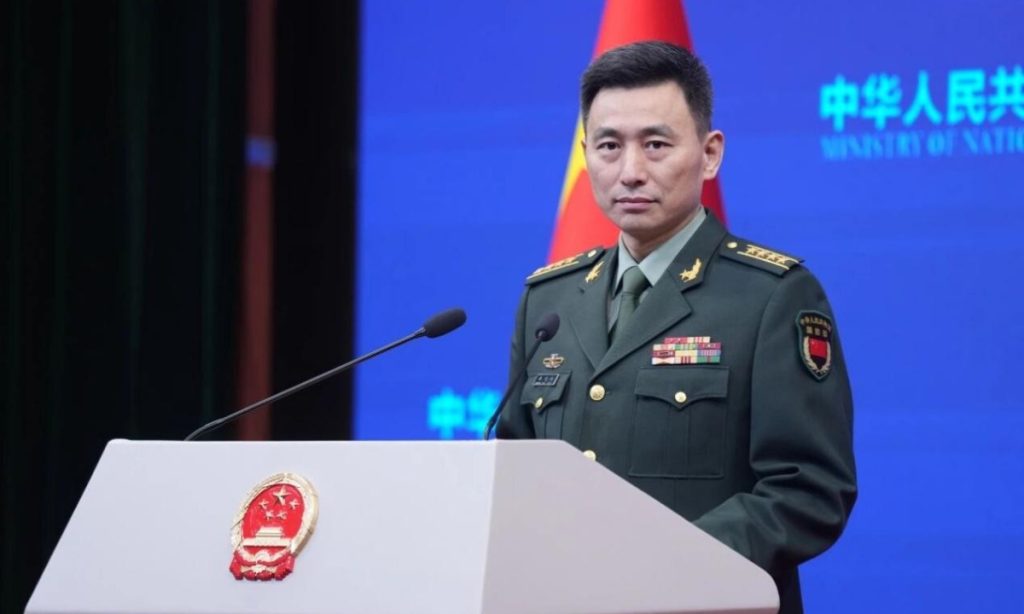
At a regular press briefing on Thursday, Chinese Defense Ministry spokesperson Zhang Xiaogang responded to a question regarding the recent arrival of the first Type 056 corvette China provided to Cambodia at the Ream Naval Base, with reports suggesting that amid regional tensions, countries such as Thailand are closely watching maritime security developments. The Chinese spokesperson said that this is part of an existing cooperation program between the Chinese and Cambodian militaries, which is not directed at any third party, and has no bearing on the current regional situation.

Zhang Junshe, a Chinese military affairs expert, told the Global Times on Thursday that the Type 056 is a light multipurpose combat vessel with a displacement of approximately 1,500 tons and a powerful propulsion system. It is primarily designed for daily patrols and surveillance missions, making it well-suited for coastal operations.

Despite its modest displacement, the Type 056 is equipped with a range of missile systems, known for their rapid response and high guidance accuracy. The vessel also features a close-in air defense system, anti-ship weaponry, and a naval gun, giving it strong comprehensive combat capabilities. Its anti-ship missiles have long ranges, while its air defense missiles can effectively intercept low-flying targets such as incoming anti-ship missiles. The corvette also possesses certain anti-submarine warfare capabilities, Zhang said.

Dozens of Type 056 corvettes are in service with the Chinese armed forces, official Chinese media reports show.

Ream is also home to a Cambodia-China Joint Support and Training Center. The center at Port Ream in southwestern Cambodia was put into operation in April, 2025, according to the Xinhua News Agency.

At a ceremony at the time, the Chinese and Cambodian sides emphasized that the construction and operation of the center were the result of mutual respect and equal consultation between the two countries, which is conducive to further strengthening the practical cooperation between the two militaries, better fulfilling international obligations and providing international public security products, Xinhua reported.

Both sides expressed willingness to continue to work together to comprehensively deepen cooperation in joint exercises and training, talent training, equipment technology and other fields, continuously consolidate and develop the relationship between the Chinese and Cambodian militaries, and jointly maintain regional security and stability, reported Xinhua.

In conjunction with the inauguration ceremony, the Chinese and Cambodian militaries organized the launch event for the "Golden Dragon-2025" joint exercise at the center. This marked an important demonstration of the center's role in promoting China-Cambodia friendship and deepening military cooperation, the military channel of CCTV News reported on April 6, 2025.

During the exercise, vessels from both sides conducted training exercises, including formation maneuvering, maritime communication, and equipment drills, further enhancing their joint command and coordinated operational capabilities. This has laid a solid foundation for future multi-service joint training involving land, sea, and air forces, reported the military channel of CCTV News.

Zhang explained that the center provides logistical support for counterterrorism, disaster relief, and humanitarian assistance operations conducted by both sides, helping fulfill international obligations and contributing to global public security.

With the latest arrival of the Type 056 corvette at the Ream base, the vessel is expected to effectively strengthen Cambodia's capacity to safeguard national security and peace, while also enhancing its capabilities in maritime rescue and humanitarian operations. It marks a deepening and upgrading of China-Cambodia military cooperation, from joint exercises and training to equipment and technology collaboration, Zhang added.