China calls on Thailand, Cambodia to resolve conflict through dialogue

A Chinese Foreign Ministry spokesperson expressed deep concern over current developments between Thailand and Cambodia on Thursday, urging both parties to resolve the issue through dialogue and negotiation after fresh clashes broke out along their border.

Thailand and Cambodia exchanged fire on their border Thursday in a sharp escalation of their conflict that killed at least 11 civilians, according to the Al Jazeera update. Both nations accused each other of starting the military clashes and have downgraded their diplomatic relations since Wednesday, according to the media reports. 

Thailand is closing all border crossings with Cambodia, a spokesperson of Thailand's Ad Hoc Center for Thailand-Cambodia Border Situation told a press briefing on Thursday, the Xinhua News Agency said. 

The two countries' foreign ministries issued statements condemning the situation "in the strongest terms," while calling on each other to cease the hostile acts.

Cambodia's Ministry of Foreign Affairs and International Cooperation issued a statement condemning Thailand's aggression. Since the early morning of Thursday, Thai armed forces launched "unprovoked, premeditated and deliberate attacks" on Cambodian positions along the border areas, including Tamone Thom Temple, Ta Krabey Temple and Mom Bei, in the provinces of Preah Vihear and Oddar Meanchey, it said.

The Thai government also condemned on Thursday "in the strongest terms the violations of Thailand's sovereignty and international law" and urged Cambodia to cease its repeated act which constitutes a severe violation of international law, according to a statement issued by the Thai foreign ministry.

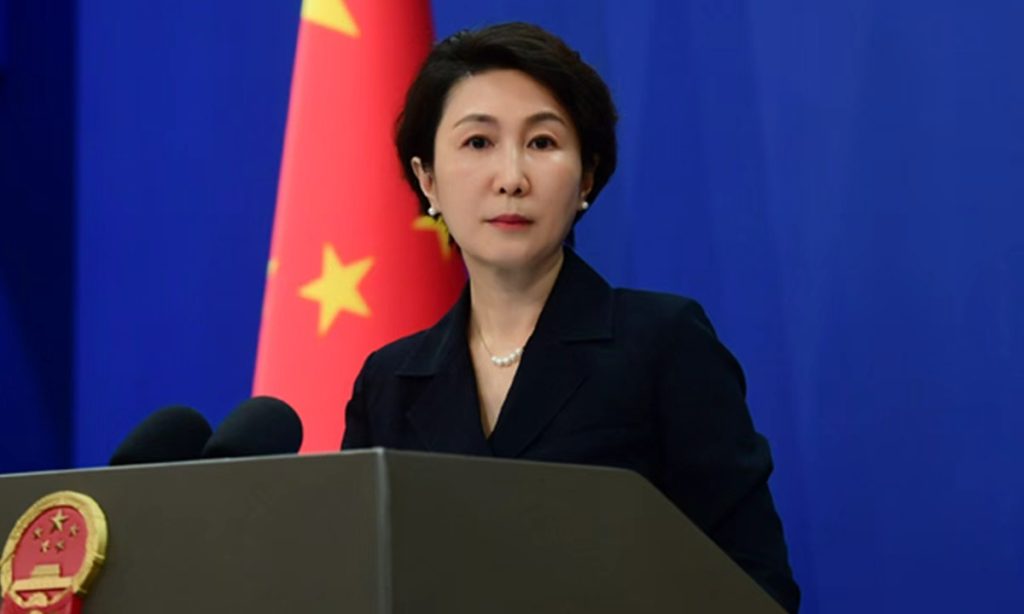
At a press conference on Thursday, Chinese Foreign Ministry spokesperson Guo Jiakun, when responding to a question on the Thailand-Cambodia border clash, stated that Thailand and Cambodia are both China's friendly neighbors and important members of ASEAN. Good-neighborliness and properly settling differences serves the fundamental and long-term interests of the two sides.

He added that we are deeply concerned over the ongoing developments and hope that the two sides will properly address issues through dialogue and consultation. Bearing in mind the common interest and concerns of regional countries, China upholds a just and impartial stance. We have and will continue to promote talks for peace in our own way and play a constructive role in promoting deescalation.

The strikes come a day after a Thai soldier lost his leg to a landmine on the border, prompting a downgrade of diplomatic ties by both Bangkok and Phnom Penh as relations collapse to their lowest level in years, CNN said. 

Worrying escalation

The Chinese Embassy in Cambodia on Thursday reminded Chinese citizens in the country, especially those near the conflict zones, to closely monitor the local security situation, remain vigilant, take precautions, and stay safe. They should also avoid traveling to the Cambodian-Thai border areas, according to a statement issued by the embassy.

A Chinese citizen living in Bangkok, surnamed Qian, who had planned to fly back to Beijing in two days, told the Global Times on Thursday that after learning the conflict had escalated to airstrikes, she was worried that if the situation worsened further, Thai airspace might close, leaving her unable to return home. 

Zhou Yingping, General Manager of China Southern Airlines Company Limited's Phnom Penh Office, told the Global Times on Thursday that the company has contacted Cambodian air traffic control authorities and confirmed that there are no disruptions so far to current flight operations. However, Zhou expressed worries about the conflict escalating out of control and said they are closely monitoring the situation.

Cambodian media outlet Khmer Times described the clashes on Thursday as having "escalated into one of the most serious military standoffs between the two countries in recent years," drawing regional and international concern.

Thailand's Ministry of Education ordered all 582 schools on Thursday in the Thai-Cambodian border conflict zone to temporarily suspend classes, according to CCTV News. 

The ministry said the suspension was for safety reasons, with all students currently returning home. If the situation continues to worsen, students will be instructed to seek shelter in bunkers, CCTV News said. 

With the conflict escalating through the deployment of heavy weapons such as fighter jets and rocket artillery following landmine incidents along the disputed border, a Chinese military affairs expert said the clashes were intensifying, and warned of further escalation between China's two neighbors. 

Ritcha Suksuwanon, Thai military deputy spokesperson, said six Thai F-16 fighter jets were deployed from Ubon Ratchathani province, hitting two "Cambodian military targets on the ground", according to the Al Jazeera. The report also said that Cambodia fired artillery shells and rockets into Thailand, per the update report. 

Both countries seek to communicate with the UN urgently on Thursday. Thai Foreign Minister Maris Sangiampong arrived at the UN Headquarters in New York City on Thursday afternoon to urgently communicate with the international community regarding "Cambodia opening fire on Thailand," Bangkok-based media Khaosod English reported. 

Cambodian Prime Minister Hun Manet has formally requested the UN Security Council to urgently address what he described as a "premeditated military aggression" by Thai armed forces along the Cambodian-Thai border, Khmer Times reported.

CNN, citing an analyst, predicted on Thursday that the conflict between Thailand and Cambodia is "likely to get worse before it gets better," and the next few days could see more "confrontation, clashes, escalation."

Thailand and Cambodia have had a complicated relationship of both cooperation and rivalry in recent decades, CNN said, pointing out that the two countries share an 817-kilometer land border — largely mapped by the French when they controlled Cambodia as a colony — that has periodically seen military clashes and been the source of political tensions.

"Many of the issues are not due to deep-rooted animosity between Thailand and Cambodia themselves, but rather stem from the lingering problems left behind when French colonialists withdrew," Song Zhongping, a Chinese military affairs expert, told the Global Times on Thursday. 

The border dispute between Thailand and Cambodia involves complex historical issues. The two countries should actively seek more dialogue and communication, and work together to create favorable conditions for easing the situation, Bao Zhipeng, an assistant researcher at the Department for Asia-Pacific Studies of the China Institute of International Studies, told the Global Times on Thursday. 

Farmer from East China’s Anhui Province builds submarine capable of 8-meter dives

A 60-year-old farmer from Maanshan, East China’s Anhui Province, has successfully built a submarine on his own, the China Central Television (CCTV) reported. The five-ton homemade vessel, named "Big Black Fish," is capable of diving to a depth of eight meters.
The farmer, named Zhang Shengwu, has been passionately devoted to invention since childhood, habitually engaging in small creations.

Over 20 years ago, Zhang built a sand dock in his hometown, spending his days watching cargo ships come and go.  

In 2014, Zhang watched a television program featuring submarine construction, which gave him an idea to pursue. "Having spent years near water, I'd seen vessels of steel and wood – but never one capable of descending beneath the waves,” he said.  

“If others can do it, so can I," said Zhang.

Though his family didn’t support him, it didn’t dampen his dream of building a submarine. He began conceptualizing the submarine’s structure in his mind. 

As a seasoned carpenter, he possesses expertise in structural design, complemented by first-hand maritime work experience understanding propulsion systems, the state broadcaster CCTV News said. 

“Once I calculated material requirements, the timeline became clear," Zhang noted.

With the blueprints mapped out in his mind, Zhang spent 5,000 yuan ($699) on steel plates, batteries, engines, and other materials, and started building the submarine. After six months of effort, his first submarine was completed.

Measuring six meters long, 1.2 meters high, and weighing two tons, this submarine earned him a national utility model patent, starting his inventive journey, according to the report.

By 2016, he had developed a surface vessel, winning another utility model patent certificate, CCTV News reported

Zhang didn’t stop there. He invested over 40,000 yuan to build his second upgraded submarine. The new vessel increased in length to seven meters and height to 1.8 meters, featuring a two-person cockpit.

To enhance stability, he poured approximately two tons of concrete into the hull base and installed dual ballast tanks fore and aft. For superior watertight integrity, Zhang welded all joints tightly and made the inlet and outlet circular.

Weighing five tons with seven tons of displacement capacity, the submarine achieves an eight-meter diving depth and a minimum speed of four knots. 

Zhang expressed profound satisfaction, "A single small battery powers an electric motor propelling such substantial craft underwater. It remains completely watertight during 30-minute submersion cycles and possesses reverse maneuverability."  

Regarding future endeavors, Zhang plans to construct larger submarines while helping enhance national defense awareness among youth.

US plays 'villain strikes first' game as it hypes Chinese research vessel inside its self-claimed territory

US Coast Guard claimed that a China-flagged research vessel was detected on Friday off the coast of Alaska "in the US' Extended Continental Shelf, or ECS," and that the US Coast Guard has responded to it while released a photo of the vessel. However, The ECS itself is a unilateral territorial claim which saw the US suddenly expanding by 1 million square kilometers in size. Such a "villain strikes first" game and hyping up of "China threat" rhetoric is only to justify the US' evil deeds in the Arctic, revealing itself as a rule-breaker and global troublemaker, Chinese expert said.

The US Coast Guard asserted Saturday that the Xuelong-2, a Chinese icebreaker, was detected about 290 nautical miles north of Utqiagvik, Alaska, in the North American Arctic.

The US State Department claimed the ship was in the US' Extended Continental Shelf, or ECS, which is a portion of the continental shelf that goes beyond 200 miles nautical miles off the coast, CBS News reported.

"The US has exclusive rights to conserve and manage the living and non-living resources of its ECS," the Coast Guard claimed in its news release. A Coast Guard C-130J Hercules, a long-range surveillance aircraft, responded to China's Xue Long 2. The Coast Guard also released a photo of the vessel.

Xuelong-2 is China's first domestically built polar icebreaker delivered in 2019. With its two-direction icebreaking capabilities and the ability to sail on 60-day expeditions to all regions of the globe, it is a major platform for China's oceanic environmental survey and scientific research in the polar regions, according to Xinhua News Agency.

Previously, the Chinese Foreign Ministry spokesperson Guo Jiakun had stressed that China carries out normal research activities at sea in accordance with international law, including UNCLOS, and hopes the relevant parties will have a right understanding of this and stop the groundless suspicion and speculations.

Ironically, however, the ECS that US claimed the Chinese vessel has passed was a self-drawn area, a unilateral claim of its territory, Chinese expert noted. 

In December 2023, the US Department of State released the geographic coordinates defining the outer limits of the US continental shelf in areas beyond 200 nautical miles from the coast, known as the ECS. It covers an area approximately one million square kilometers spreading across seven regions, about twice the size of California.

Grigory Karasin, chair of the Russian Federation Council Committee on Foreign Affairs, has responded by stating that "we have taken and will continue to take all measures that are necessary for our national interests in this geographical area." Similarly, Nikolai Kharitonov, head of the State Duma Committee on the Arctic, said that unilaterally expanding boundaries on this area is "unacceptable" and could lead to "increased tension."

Under international law, the Arctic and its surrounding waters in the Northern Ocean do not belong to any single country. Apart from the US, nations including Canada, Denmark, Norway, and Russia have all made sovereignty claims over sections of the Arctic seabed. This is driven by the region's vast resources, estimated at 83 billion tons of standard fuel equivalent, with nearly 80 percent concentrated in the Barents and Kara Seas, according to media reports.

Moreover, there is a high likelihood of discovering major new oil and gas reserves in unexplored continental shelf areas. The US, through its claims, seeks to secure critical minerals needed for electric vehicle battery production, further intensifying the geopolitical competition in the Arctic.

"China's position on Arctic maritime rights and interests has been made clear that they must be handled in accordance with the United Nations Convention on the Law of the Sea (UNCLOS), and China opposes any country's unilateral self-interpretation. The US, not even a party to the Convention, imposes its domestic laws on other nations through a typical long-arm jurisdiction, which is a blatant disregard for international law," Li Haidong, a professor at China Foreign Affairs University, told the Global Times on Sunday.

Its latest groundless accusations against Chinese research vessel once again reveal the extremism, irrationality, and recklessness in Washington's China policy, Li said. 

This "villain strikes first" tactic is essentially about stoking anti-China sentiment at home and peddling the "China threat" narrative abroad to create confrontation. By politicizing and turning the Arctic - a region meant for shared development - into an arena of geopolitical rivalry, the US fully exposes its habitual rule-breaking behavior and its role as a global troublemaker, Li noted.

Beijing announces temporary no-fly restrictions in nine districts for WWII victory commemoration events

The People's Government of Beijing Municipality on Tuesday announced temporary no-fly restrictions across nine districts from July 16 to September 3, in order to ensure the aviation safety of the upcoming commemorative activities marking the 80th anniversary of the victory in the Chinese People's War of Resistance Against Japanese Aggression (1931-45) and the World Anti-Fascist War.

According to a notice released by Beijing's local government, nine administrative districts, Dongcheng, Xicheng, Chaoyang, Haidian, Fengtai, Shijingshan, Tongzhou, Changping and Mentougou, will apply no-fly restrictions, which is stipulated in accordance with related law and regulations.

Unless part of authorized commemorative events or specific releases, such as peace doves or balloons, the launch of any airborne objects that could jeopardize flight safety is strictly prohibited, with phased restrictions on releasing birds, reads the notice. 

In the restricted airspace, the release of drones, kites, balloons, sky lanterns, or any other objects that could affect flight safety, are strictly prohibited, it added. 

In Tongzhou district, pigeon and bird breeders are asked to keep their birds caged from 6 am to 5 pm starting July 16 to September 3 daily. Similar restrictions will be applied to the other eight districts from August 15 to September 3, from 6 am to 4 pm daily, according to the announcement. 

The government of China's capital also asked local pigeon associations and clubs to make its members strictly abide by relevant regulations and ensure that flight safety is not affected.

The relevant district government must organize related departments, including public security, urban management law enforcement and market supervision, along with sub-district offices and township governments, to thoroughly investigate potential hazards affecting flight safety, reads the notice. 

Furthermore, military facility protection committees at all levels, as well as public security, urban management law enforcement and market supervision departments, must impose penalties on illegal activities in accordance with the law. Where such actions constitute a crime, criminal liability shall be pursued according to the law, according to the notice.

Australian PM visits Great Wall, saying it is in Australia’s interest to have a stable relationship with China

On Wednesday, Australian Prime Minister Anthony Albanese, who is visiting China this week, visited the Great Wall in Beijing and said in a post on X that "It was an honour visit the Great Wall of China today. It is in Australia's interest to have a stable relationship with China. Being here to advocate for our national interests directly is critical for maintaining and developing those ties." 

Albanese visited the Great Wall to draw a comparison with former prime minister Gough Whitlam who walked the wall in 1971, opening dialogue with China before Australia's ally the United States had done so. Albanese said on Wednesday that it was in Australia's interest to have a positive relationship with China and not be defined by differences, according to Reuters. 

Syria’s sovereignty and territorial integrity should be respected, says Chinese FM spokesperson in response to Israeli airstrikes

According to media reports, Israel intervened in the armed conflict in southern Syria starting on July 14 and launched heavy airstrikes on Wednesday targeting areas near the "presidential palace" and other locations. When commenting on the situation, Chinese Foreign Ministry spokesperson Lin Jian said that Syria's sovereignty and territorial integrity should be respected.

Especially amid the ongoing turbulence in the Middle East, actions that could further escalate tensions should not be taken, said Lin.

Chinese Embassy in Panama rebukes US ambassador’s lies on China, criticizes him for exposing ‘Neo-Monroe Doctrine’ mentality

The spokesperson for the Chinese Embassy in Panama rebutted recent remarks by the US Ambassador, criticizing him for exposing “Neo-Monroe Doctrine” mentality that oversteps his diplomatic mandate. In a statement released by the Embassy on Saturday, the spokesperson reaffirmed that the Panama Canal remains Panama’s asset and reiterated China’s respect for canal’s neutrality.

In recent days, the US Ambassador to Panama has relentlessly repeated lies about China and China–Panama relations in interviews with local media, claiming that China exerts a “malign influence” over Panama and the Canal. The spokesperson for the Chinese Embassy in Panama responded that the Panama Canal is and will remain Panama’s, and emphasized that China has consistently affirmed its respect for the Canal’s sovereignty and neutrality.

President Jose Raul Mulino has repeatedly debunked the alleged “malign influence” of China on the Canal and on Panama. It was, in fact, the US that once closed the Canal, and now seeks free passage” and even attempt to “retake” it, said the spokesperson.

The spokesmen also refuted the US ambassador’s claim that the Belt and Road Initiative (BRI) is neither good for Panama nor for the Western hemisphere, stating that China’s cooperation with Latin American and Caribbean countries under the BRI has been more than fruitful. More than twenty countries in the region have joined the BRI family—most recently Colombia and Ecuador, each of which has signed cooperation plans with China under this initiative. “They are voting with their feet,” said the spokesperson. 

In response to the US ambassador smear that China provides “predatory loans” to countries in the region, leaving them in distress, the spokesperson said that China always follows the principles of mutual respect, reciprocal benefit, openness and inclusiveness, and win-win cooperation when investing in and partnering with countries worldwide, respecting each nation’s choices. This approach has vigorously propelled economic development and improved people’s livelihoods in those countries, bringing tangible benefits to local populations. Chinese investments are creating significant development opportunities across diverse regions and nations. 

Regarding the US ambassador’s accusation that China conducts “cyberattacks” against countries in the region and his spreading slanders about Chinese devices, the Chinese embassy spokesperson said that everyone knows that the US is the world’s single largest source of cyberattacks—a recognized “empire of hacks.” 

For a long time, it has carried out unfettered eavesdropping, surveillance, and large-scale cyberattacks in this region. Its criticism of China is a vivid example of a thief crying “Stop thief,” said the spokesperson.

“We reiterate that China always requires its companies operating overseas to comply with local laws and regulations, and we always oppose any coercive economic measures or hegemonic, abusive practices that harm the legitimate rights and interests of other countries,” said the spokesperson. 

The US Ambassador’s irresponsible remarks on China-related matters in Panama and elsewhere in the region not only embody the US “Neo-Monroe Doctrine” mentality, but also exceed the proper scope of his responsibilities, said the spokesperson, 

China’s actions should be judged solely by the governments and peoples of those countries. US interference will only fuel even broader rejection among the people of Panama and other regional nations, the spokesperson said.

Australian PM to visit China; interaction important amid global uncertainties: expert

Australian Prime Minister Anthony Albanese will pay an official visit to China, which an expert said reflects Australia's effort to seek and shape a sense of certainty aligned with its national interests amid increasing global uncertainties to the international order and security, while the two sides still have more areas open for bilateral cooperation to spur regional free trade growth.

At the invitation of Premier of the State Council Li Qiang, Albanese will pay an official visit to China from July 12 to 18, according to Chinese Foreign Ministry.

When asked to introduce the background to Albanese's visit to China and China's expectation for the visit, Chinese Foreign Ministry spokesperson Mao Ning said on Tuesday that this visit is taking place just as the China-Australia comprehensive strategic partnership enters its second decade. Under the guidance of the leaders and the joint efforts of the two countries, China-Australia relations have continued to improve and grow.

China hopes that through this visit, the two sides will strengthen communication, enhance mutual trust, expand practical cooperation and further advance the comprehensive strategic partnership, Mao added.

This will be Albanese's second visit to China as prime minister, following his visit in November 2023, according to a media release from the official website of Australian Prime Minister on Tuesday.

The visit, shortly after Albanese's re-election in May this year, is not merely a reciprocal visit following Premier Li's trip to Australia last year but also underscores the high priority Albanese places on China-Australian relations, Chen Hong, a professor and director of the Australian Studies Center at East China Normal University, told the Global Times on Tuesday.

Amid increasing global uncertainties to international order and security, Australia aims to seek and shape a sense of certainty that aligns with its national interests, and it is in this context that Australia has turned its attention to China, the expert said.

The expert highlighted that Albanese's visit, which is longer than the usual two or three days, is expected to play an important role in regional stability and development, including upholding multilateralism and free trade. It also carries special significance as the start of the second decade of the China-Australia comprehensive strategic partnership.

Albanese told reporters in Hobart that he is looking forward to going to Shanghai, Beijing and Chengdu [in Southwest China's Sichuan Province], according to Reuters. Leaders will exchange views on global and regional issues as well as bilateral cooperation in areas including trade and tourism, according to the media release from Prime Minister official website.

Chen noted that Shanghai is a key hub for China-Australia economic, financial, and service ties, while his planned stop in Chengdu signals a broader, more substantive approach toward China, reflecting a comprehensive and forward-looking vision to deepen bilateral relations beyond symbolic gestures.

China remains Australia's largest trading partner, accounting for almost one-third of its total trade, and will remain so for the foreseeable future, Albanese said, according to the media release. "We will continue to patiently and deliberately work toward a stable relationship with China, with dialogue at its core," he added.

Economic and trade ties have always been not only a cornerstone but also a booster of China-Australia relations, the expert said. Traditional trade will be further consolidated and upgraded, including China's high-quality, competitively priced manufactured goods, such as electric vehicles and household appliances, alongside Australia's energy, mineral and agricultural exports to China. At the same time, under the new economic landscape, bilateral cooperation can expand into emerging areas like the green economy, the expert noted.

More areas remain open for bilateral cooperation, Chen added, which can in turn spur regional free-trade growth.

Tourism has also been a vital area of China-Australia cooperation, especially after China's visa-free policy included Australia, which has brought more Australian visitors to China. Such people-to-people interaction also fosters mutual understanding and is particularly important for bilateral ties, Chen said.

Chinese Ambassador to Australia Xiao Qian published an article in the opinion section of The Australian Financial Review on Monday, which said the two sides should strengthen high-level guidance and consolidate institutional dialogue and exchanges, expand practical cooperation across all fields, deepen people-to-people exchanges and sub-national ties, and advance cooperation on international and regional affairs.

China stands ready to work with Australia to strengthen high-level guidance, enhance political mutual trust, properly manage differences, focus on common interests and promote greater development of the China-Australia Comprehensive Strategic Partnership, the ambassador said.

Chinese envoy to UN urges ‘seven must-to-do’ on Middle East situation

China’s deputy permanent representative to the UN Geng Shuang urged the Houthi forces to safeguard the security of navigation in the Red Sea when spoke at a UN Security Council open meeting on the Yemen issue on Wednesday local time. 

Geng expressed China’s deep concern over the recent attacks on two cargo ships in the Red Sea and once again called on the Houthis to respect the rights of commercial vessels from all countries to navigate in the Red Sea in accordance with international law. He urged them to cease attacks on commercial ships and to help ensure the safety of maritime routes in the region, according to a statement published on the website of the Permanent Mission of China to the UN. 

China is also concerned about the renewed exchanges of fire between the Houthis and Israel, and the worsening trajectory of the situation. Geng called on all parties to remain calm and exercise restraint, and to avoid actions that could further escalate tensions.

The resolution of the Yemen and Red Sea issues cannot be achieved without a broader de-escalation and stabilization of the regional situation, Geng noted. 

The conflict in Gaza must come to an end as soon as possible, the humanitarian crisis there must be alleviated without delay, and the two-state solution must be implemented at the earliest opportunity. The long-delayed high-level meeting on implementing the two-state solution must be convened promptly, he said. 

The ceasefire agreement reportedly reached between Israel, the US, and Iran must be respected. The sovereignty of every nation must be upheld, and the purposes and principles of the UN Charter must be strictly observed, Geng noted. 

Protecting civilians and civilian infrastructure is an international obligation that all parties must uphold. Respecting the sovereignty, security, and territorial integrity of all countries is a fundamental principle that must be observed by all sides, Geng said. 

China welcomes the recent agreement on the management of the water supply system in Taiz City and Al-Hawban, reached with the assistance of the UN. This positive development demonstrates that peace, development, and cooperation are the shared aspirations of the Yemeni people, Geng said. 

We hope all parties to the conflict in Yemen will show political will, enhance dialogue and communication, and gradually build mutual trust to create conditions for the eventual political resolution of the Yemeni issue. China supports UN Special Envoy to Yemen Hans Grundberg in intensifying his mediation efforts and looks forward to greater contributions from regional countries in this regard, Geng said. 

China also calls on the international community to increase humanitarian assistance to Yemen and help alleviate the humanitarian crisis there. In this process, the safety and security of UN personnel and humanitarian workers must be effectively guaranteed, Geng said. 

Chinese patient obtains 170-degree spinal correction after four surgeries, stands upright

Jiang Yanchen, a young man suffering from a debilitating condition, was medically classified as a reverse-folded posture patient. After undergoing four exceptionally complex surgeries, his body was corrected by approximately 170 degree overall, allowing Jiang to finally stand upright, the Paper reported.

Jiang's head and hips were once separated by barely the width of a palm, according to the report.

Liang Yijian, an expert in extreme spinal deformity correction, who performed Jiang's surgeries, said that the final surgery lasted more than 12 hours. A viral online clip captured the doctor kneeling while performing surgery on Jiang during the procedure. Liang said that this position allowed him to better adjust the patient's posture.

Following the successful surgery, Jiang's body achieved approximately 170 degrees of correction, ultimately enabling him to stand upright, the Paper reported.

Jiang's condition was not congenital. At just over two years old, he was diagnosed with ankylosing spondylitis - a form of arthritis causing severe inflammation in the joints and ligaments of the spine, and he underwent tendon lengthening surgery. 

Subsequently, his head began tilting backward uncontrollably, his neck progressively stiffened, and his head could no longer be repositioned, according to the report.

Multiple physicians attributed the condition to genetic abnormalities, though the specific genetic defect remains unidentified. With no therapeutic target established, Jiang's continued to deteriorate. By junior high, his neck had arched backward until his head pressed against his spine, the report said.

Despite these daunting physical challenges, Jiang never faltered in his resolve. In 2022, he took the national college entrance exam lying on a yoga mat and later gained admission to Dezhou University in East China's Shandong Province, the Paper reported.

According to Liang, the patient underwent a total of four surgeries, each extraordinarily difficult — reaching what he described as the "pinnacle" of surgical complexity.

In May 2023, Jiang successfully completed the first-stage surgery, reducing his 180-degree reverse fold to 90 degrees. On December 5, 2024, he underwent reverse osteotomy correction. Further procedures followed a cervical osteotomy with orthopedic revision, and a hip joint release surgery, respectively.

Now that he has successfully completed the surgery, many netizens expressed their joy and sent their blessings, "The winding detours of life are all behind him; what awaits him is a straight and unimpeded life ahead."