Czech Republic: Exhibition ‘My Room’ opened in Beijing

The Embassy of the Czech Republic in China and the Czech-China Contemporary Art Gallery jointly inaugurated the exhibition "My Room," which was opened at the Czech Embassy in Beijing on August 20.

Featuring artists Feng Runde, Li Lang, Jiri Straka, Wu Zixian and Yang Yuzhe, the exhibition provides a platform for young artists from the Czech Republic and China to learn and exchange ideas, and has won unanimous praise from Chinese and foreign visitors.

The people-to-people exchanges between the Czech Republic and China are expected to continue to expand into new areas. The exhibition aims to help young artists and show the public their ideas and experiences in the face of a complex world independently. 

"The works of the five artists have some common features that impress me: The appearance of their works is very different from the works of their elders; regardless of where they live, their art is close to the real life," said curator and artist Shu Yang.

Culture Beat: Shanghai Contemporary Theatre Festival brings together global artists

The 2024 Shanghai Contemporary Theatre Festival (ACT) will run from September 6 to October 13, offering audiences a series of captivating performances.   

This year's festival will be themed "The Field of Memory" and continue its focus on "contemporaneity" and "innovation." 

In addition to Chinese productions, it has invited theater troupes and artists from Italy, Thailand, Greece, Portugal, Australia, and Croatia to participate. 

The festival will feature nine performances, covering various genres such as drama, mime, experimental performance, and dance theater. Most of these productions are new works from leading international performance troupes, with three making their Chinese mainland debut and two having their first-ever showings in Asia.

The ACT is an annual international festival for the performing arts held at the Shanghai Dramatic Arts Centre and other partner venues since 2005. Its small theaters bring the audience very close to the stage for many face-to-face interactions. 

In almost two decades, ACT Shanghai has cultivated a young, curious audience unique to Shanghai and become an important platform for connecting local and international artists with the Chinese audience.

Western ‘debt trap’ slander against China-Africa cooperation contradicts facts

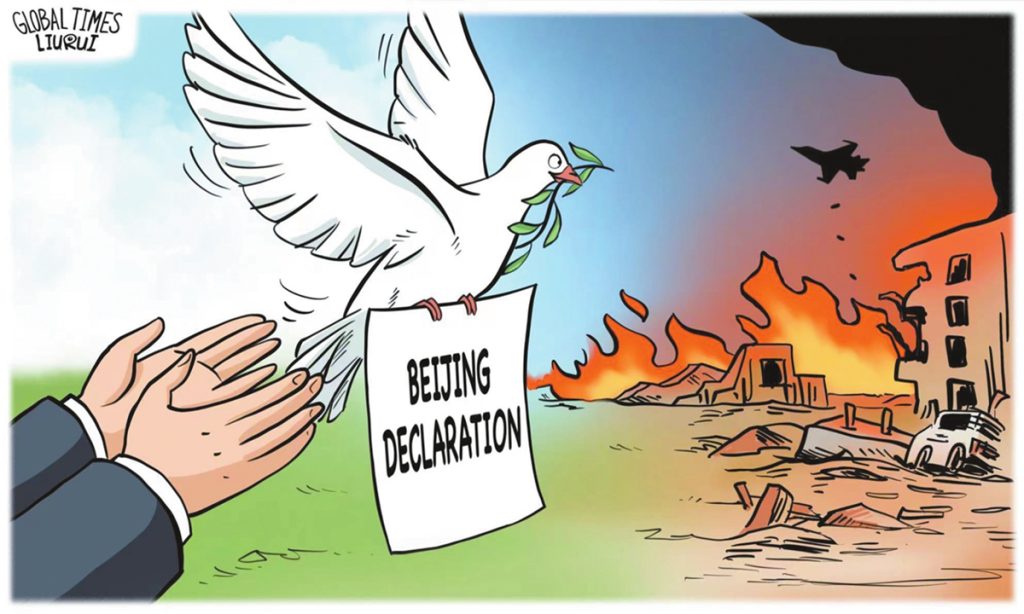
As the 2024 Summit of the Forum on China-Africa Cooperation (FOCAC), set to be held in Beijing from September 4 to 6, draws near, the "debt trap" slander targeting China-Africa cooperation is becoming rampant again. 

In fact, whenever the FOCAC is held, the West will always stir up a new round of smearing with absurd accussations against China.

The FOCAC was established in 2000. Over the past 20 years, China has truly promoted the modernization process in African continent through grant, investment, and trade, and has also won wide recognition and acclaim from African partners.

China has used interest-free loans to help Africa build much needed facilities such as hospitals and schools. Meanwhile, Chinese financial institutions have actively provided financing support to support infrastructure construction, such as railways, roads, and electricity facilities in African countries. 

The China-Africa Development Fund, an equity investment fund managed by the China Development Bank, has provided financing totaling more than $6.6 billion to Africa and has facilitated Chinese companies to invest more than $31 billion in Africa.

The West is the main culprit behind Africa's debt crisis. Notably, in recent years, the West believes that the African economy has shown some signs of improvement, so they prematurely pushed Africa to the global capital market, leading to African countries borrowing excessively and causing the current high proportion of external debt faced by Africa. It can be said that the West has directly pushed Africa into a "debt trap." 

Although China is not the main creditor of African countries, it actively participates in the resolution of debt issues faced by African countries and helps them explore solutions to promote development and ultimately solve their debts. China never uses debt collection as a pretext to seek private gain - this is the core difference between China's approach and that of the West in managing debt.

However, it needs to be acknowledged that the ultimate solution to the debt problem must rely on economic development. Only by helping Africa solve the bottlenecks that restrict African development, can African countries be fundamentally lifted out of the debt distress.

Currently, Africa urgently needs more development funds, as progress on several indicators of the UN's 2030 Agenda for Sustainable Development remains slow. In light of this, China will continue to roll out a package of aid measures under the FOCAC to help Africa tackle their challenges.

China has never been the main creditor for African debt. Under the framework of the FOCAC, China has provided a package of assistance measures to Africa and offered support. 

Through interest-free loans, concessional loans, and other development financing, China has provided significant support to back up Africa's development. A series of infrastructure projects and talent training have started, laying the foundation for poverty reduction and independent development in Africa.

Beijing urges Washington to stop official exchanges with Taiwan island

China on Friday urged the US to stop official exchanges with China's Taiwan island and cease support for any form of "Taiwan independence" separatist activities, after senior officials from the island reportedly made a secret trip to the greater Washington area for talks with US officials recently. 

China firmly opposes any forms of official exchange between the US and Taiwan. This position is consistent and clear, Foreign Ministry spokesperson Mao Ning said, urging the US to  abide by the one-China principle and the three China-US joint communiqués, deliver on the commitments made by the US leaders on the issues related to Taiwan, handle the Taiwan-related issues with utmost prudence, and stop any official exchanges with Taiwan.

The US should stop upgrading its substantive relations with the region, and stop conniving at and supporting "Taiwan independence" separatist activities in any form, Mao said.

The head of the external affairs authority of Taiwan island, Lin Chia-lung and Joseph Wu, the security adviser to Lai Ching-te, travelled to the Washington area this week through a "special channel" to hold talks with the US, according to Financial Times, without naming the US officials. 

"The visit by the two high-ranking officials to the US is significant at this particular juncture, and it is sensitive and contains secrets between the two sides," an analyst on Taiwan affairs, who preferred to be named Li, told the Global Times. 

"Through deliberately analyzing and strategizing their next steps, the US and the DPP authorities are seeking to come up with something to further challenge the mainland without inciting a significant backlash from it," Li said. 

He explained that the US' engagement with Taiwan is aimed at more effectively deploying its strategic maneuvers to contain the Chinese mainland, when the US is showing fatigue and weakness in dealing with both Asia-Pacific affairs and conflicts in Ukraine and the Middle East.

The US government is also attempting to engage with its protected parties, including the island, to reaffirm its commitments, dispelling any doubts about the US' promises and Taiwan authorities' confidence in US protection, Lü Xiang, a research fellow at the Chinese Academy of Social Sciences, told the Global Times on Friday.

"A US powerless in dealing with international affairs including the Ukraine crisis leaves Lai Ching-te increasingly perplexed, so can the chess piece of Taiwan still be supported in this circumstance?" Lü asked.

The visit serves to alleviate Lai's concerns, gauge their position within the US strategic landscape and seek to strengthen the so-called protection from the US, he said.  

However, the fact is that collusion with the US, which views Taiwan as merely a chess piece, will only lead the island toward greater chaos, more intense internal strife, and a further loss of direction. The US has always maintained strategic ambiguity when it comes to "defending Taiwan," Li explained. 

Despite the small move that the US and DPP authorities have made, the mainland will remain confident and methodical in its approach to dealing with the Taiwan question, Lü emphasized.

This year's government report showed that the mainland will implement the overall policy for the new era on resolving the Taiwan question, stay committed to the one-China principle and the 1992 Consensus, and resolutely oppose separatist activities and external interference. The mainland will promote the peaceful development of cross-Straits relations, and be firm in advancing the cause of China's reunification, according to the report.

Scola optimistic about China's basketball potential, advocates for overseas play

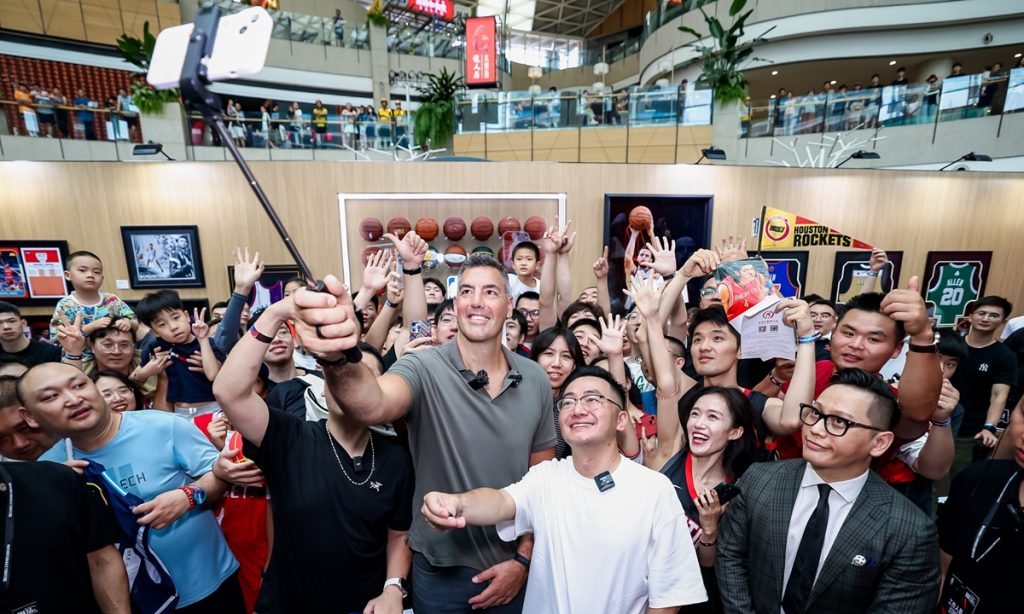
While acknowledging the challenges players face when moving abroad, Argentine basketball star Luis Scola insisted that playing overseas will benefit basketball players more.   

"When players leave their country and go to bigger countries, they grow. It helps them improve their game," Scola told reporters on Sunday in Beijing, where an NBA-themed exhibition is in full swing at the Indigo Mall. 

"Sometimes, the [domestic] system protects the players... I do believe that good talent, they need to find ways [to go] outside their own countries." 

The Argentine is particularly popular in China thanks to his stint with the Houston Rockets in the NBA, when he was teamed up with Chinese basketball icon Yao Ming. 

Asked specifically about young Chinese player Cui Yongxi, who is with the Portland Trail Blazers in the NBA Summer League, Scola admitted he was not very familiar with the 21-year-old Chinese player, but reiterated his advice for all talented players to seek opportunities outside China. 

"If they're good, they need to find other opportunities in other different countries," he advised.

Scola stressed the importance of being in excellent physical shape and making the most of opportunity.

"Maybe the Summer League is hard, but you just have to play hard and be in good shape. It's an opportunity, and you need to be really good shape," he emphasized.

A youngster-led Chinese national team is also currently playing in the NBA Summer League this month.

When asked about his views on Chinese basketball, Scola, who played for Chinese Basketball Association (CBA) teams the Shanxi Loongs in 2017-18 season and the Shanghai Sharks in 2018-19 season, was optimistic. He said China has a wealth of opportunities and resources that will enable the sport to flourish. 

"China has a lot of opportunities to grow. You've got a lot of players, a good league, and a lot of resources. I think Chinese basketball is going to be very good, very soon," he said.

Scola also touched on the policies of the CBA regarding foreign players. He emphasized the importance of an open league system. 

"The more open the league can be, that's the best way to bring the best talent. And talent eventually creates more talent," Scola stated. He highlighted the NBA's model, where there are no limits, as a successful example that fosters local player development.

Looking ahead to the Olympics, Scola was enthusiastic. He anticipates a competitive tournament, with the US expected to field the strongest team. 

"I think it's going to be a good Olympics. The US is going to be the best team. But there are other strong teams like Spain. It's going to be a good tournament," he predicted.

First deep-snouted Tyrannosaur discovered in SE China

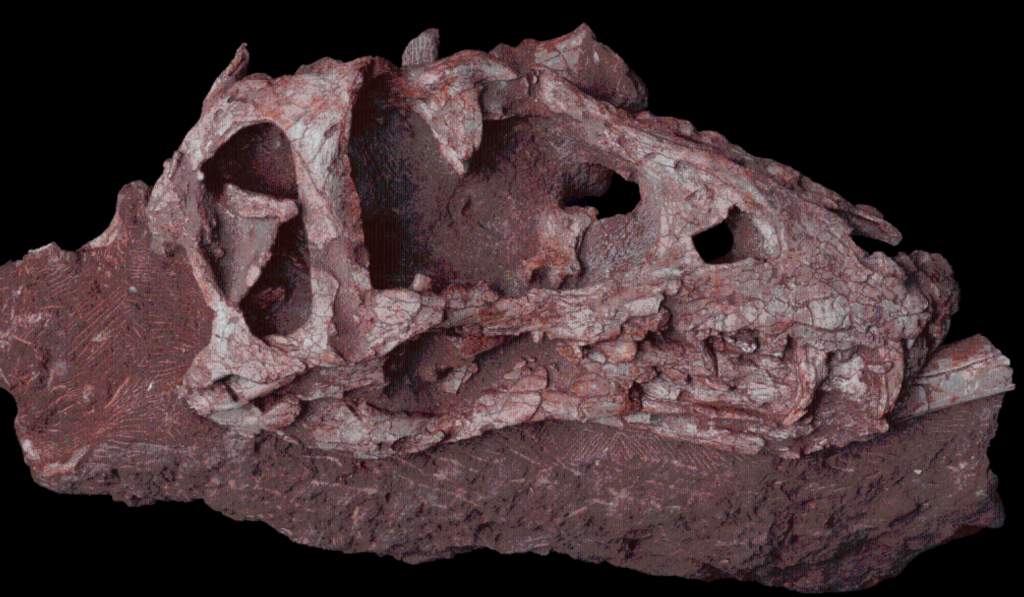
China's paleontology research team has recently identified a new genus and species of tyrannosaur that marks the first deep-snouted tyrannosaur discovered in southeastern China, according to Xinhua News Agency. 

The research was conducted by four paleontologists from the Zhejiang Museum of Natural History, and they named the new species "Asiatyrannus xui" in honor of Xu Xing, an academician of the Chinese Academy of Sciences, who has been dedicated to dinosaur research and has long supported the academic and popular science work of the museum. 

Zheng Wenjie, deputy director of the Earth Sciences Department and a researcher at the  museum, explained that the dinosaur, given the name "Asiatyrannus xui", lived during the Late Cretaceous period, which dates back 66 to 72 million years ago, according to Xinhua.

The fossil specimen includes an almost complete skull as well as tail vertebrae and hind limb bones. This dinosaur belongs to the more advanced Tyrannosaurinae subfamily within the Tyrannosauridae family. The related academic paper was published in Scientific Reports on Thursday. 

Zheng noted that tyrannosaurs are a large family classified under the superfamily Tyrannosauroidea. They first appeared around 165 million years ago in the Middle Jurassic and went extinct at the end of the Cretaceous period, which is about 66 million years ago. Within the superfamily, the Tyrannosauridae family members were the top predators in Asia and North America during the last 20 million years of the dinosaur era.  

Many people think tyrannosaurs have large heads. Zheng explained that based on snout characteristics, tyrannosaur heads can be divided into two types. 

Most Tyrannosauridae dinosaurs have deep-snouted heads, with relatively short skulls front to back and higher vertical distances between the upper and lower jaws, making them appear somewhat "square." The skulls of Tyrannosaurus and Tarbosaurus are examples of this type. Asiatyrannus xui measures 47.5 centimeters in length and also belongs to the deep-snouted type. 

Another group of Tyrannosauridae dinosaurs has long-snouted heads, with narrow snouts, and these dinosaurs are classified under the branch called Alioramini. 

In the central Asian Gobi region, scientists have discovered deep-snouted tyrannosaurs and long-snouted Alioramini living at the same time. The former are larger, possibly occupying different ecological niches. In southeastern China, however, the body size comparison is reversed. 

Asiatyrannus xui, which lived at the same time as the long-snouted Qianzhousaurus, was relatively small, while The Qianzhousaurus, estimated to reach a length of about 9 meters, was much larger. 

The newly discovered Asiatyrannus xui, although an immature dinosaur, had passed its fastest growth stage with a body length of only about half that of Qianzhousaurus. They likely occupied different ecological niches and employed different hunting strategies to avoid direct competition.

China Eastern Airlines receives 7th C919, as the home-made aircraft completes over 3,000 flights

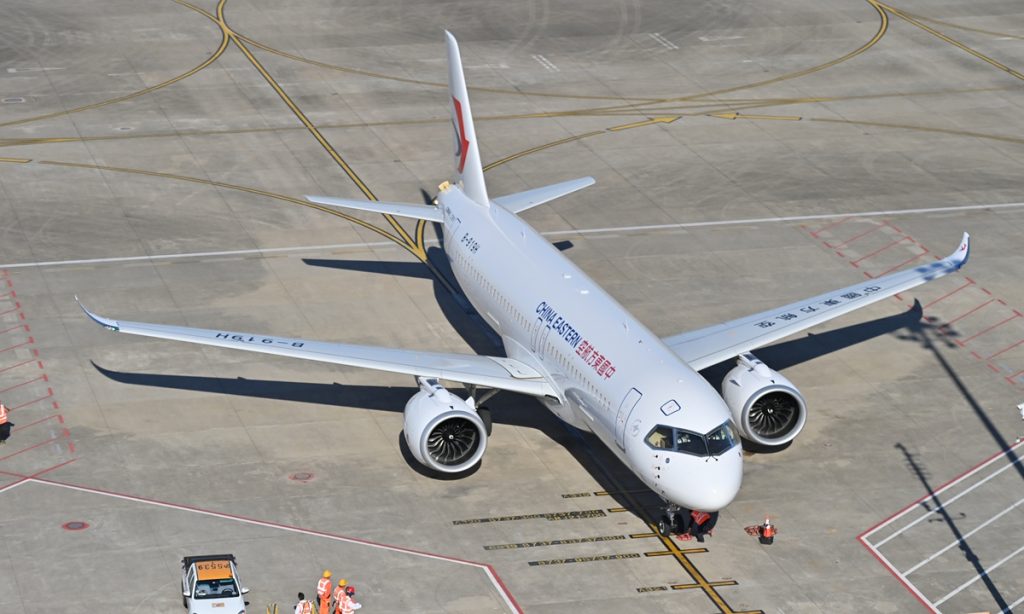
China Eastern Airlines received its seventh C919 plane on Monday. The delivery marks the third C919 aircraft received by the air carrier, the world's first C919 customer, this year.

At 16:25 on Monday, the C919 with the aircraft number B-919H flew from Shanghai Pudong International Airport to Shanghai Hongqiao International Airport, as the plane is officially joining China Eastern Airlines' fleet.

On May 28 this year, the first anniversary of the commercial operation of the C919, China Eastern Airlines' fleet welcomed the sixth C919. This was also the first of the 100 C919 aircraft ordered by the airline.

China Eastern is currently the world's largest user of the home-made C919 aircraft.

On September 28 of 2023, China Eastern Airlines and Commercial Aircraft Corporation of China (COMAC) signed an agreement to order additional 100 C919 large passenger planes.

At present, the C919 aircraft operate four regular commercial routes between cities of Shanghai to Chengdu, Beijing, Xi'an and Guangzhou.

The airlines said that more new routes are expected with the delivery and introduction of new C919 aircraft.

As of Sunday, China Eastern Airlines' C919 fleet has completed a total of 3,031 flights, facilitating nearly 405,000 passenger trips.

Suparna Airlines, known in Chinese as Jinpeng Airlines said it will receive its first C919 aircraft in the fourth quarter of this year, making it be the first private company in the world running home-made C919.

Domestic flagship carriers like Air China and China Southern Airlines have also placed additional orders for 200 C919 planes. At present, the global orders placed for C919 have exceeded 1,000 planes.

Merck Healthcare CEO Foresees China's AI-Powered Innovation Ecosystem Opening New Frontiers of Pharmaceutical Research

For nearly a century, Merck, the German scientific and technological giant, has woven its legacy into the fabric of China's healthcare industry. As global uncertainties loom, the company's dedication to the Chinese market remains unshaken. Peter Guenter, CEO of Healthcare at Merck, offers a compelling vision for China's pivotal role in global pharmaceutical innovation, propelled by artificial intelligence (AI).

"The Chinese local pharmaceutical market has developed incredibly over the last 10 to 20 years. The changes are remarkable, with the industry migrating from copying small molecules to innovation," recalls Peter Guenter, whose voice tinged with admiration. Reflecting on his early visits to China, Guenter remembers a time when the local industry was predominantly focused on generic small molecule drugs. Today, the landscape is totally different, transformed by cutting-edge innovation. Technological advancements, especially in areas like antibody-drug conjugates, have catapulted China to the forefront of pharmaceutical progress. Furthermore, China's efforts in upstream innovation, such as target discovery, are gaining significant momentum.

Technological Revolution in Healthcare

Guenter says the technological revolution reshaping the healthcare landscape is akin to the discovery of the human genome. "In the last 5 to 10 years, we have seen the emergence of many new technologies making certain biological targets druggable. We can reach them with medicines that would have been impossible with small or large molecules," he explains. Innovations like mRNA technology, pivotal in developing COVID-19 vaccines, and cell and gene therapies are pushing the boundaries of what's possible, offering more targeted and effective treatments. From reprogramming a patient's own cells to fight cancer to repairing genetic defects, these advancements are opening new frontiers in medicine.

AI and big data analytics are further enhancing drug research, speeding up discovery processes, and improving target identification. Merck is deeply engaged in these areas, leveraging these technologies to bring new treatments to the market more efficiently.

"The sheer volume of data is the secret sauce," Guenter states with conviction. Merck's collaborations with companies like BenevolentAI and Exscientia, which use AI to identify potential drug candidates, exemplify how AI accelerates the discovery process. By analyzing biological targets provided by Merck, these partnerships generate promising drug candidates faster than traditional methods.

Challenges and Opportunities in China

However, Guenter is candid about the challenges that remain. "In the pharmaceutical industry, we work with long innovation cycles. If we don't have predictability of a certain framework and that framework will remain in place for the foreseeable future, we struggle," he says. Incentivization measures, such as tax breaks for R&D, available in many European countries, are crucial for sustaining innovation and are also present in China.

China's significant role in the global pharmaceutical market is undeniable. As the world's second-largest pharmaceutical market, it offers ample opportunities for Merck to introduce its innovations and source local breakthroughs for global distribution. Yet, the high costs of drug development, estimated at a minimum of $2 billion to bring a new medicine to market, necessitate adequate pricing to recoup investments and fund further research. This balance between rewarding innovation and ensuring accessibility under universal healthcare systems is a global challenge, one that China is well-equipped to navigate.

In China for China

Merck's commitment to China is unwavering. "We believe we live in a complex world with a lot of geopolitical tensions. But we do believe in working together," Guenter says. Over the past decade, Merck has invested around 6 billion yuan in China, growing from 22 employees to 4,500. The company's diverse activities in healthcare, electronics, and life sciences reflect its holistic investment strategy. Local collaborations with Chinese biotech firms have been fruitful, and Merck aims to expand these partnerships further.

As China grapples with an aging population and rising incidences of cancer and diabetes, Merck stands as a committed partner, determined to help create, improve, and prolong lives. Guenter's personal resolve shines through in his reflections. "Whether we like it or not, sooner or later, we are all patients ourselves. When I'm in a meeting with many people, and they ask me, 'Peter, why are you in this business?' I ask the audience one question: 'How many of you have a friend or family member who was lost to disease? Please stand up.' And then everybody stands up. I say, 'That's why I'm in this business. It's as simple as that.'"

This deeply personal connection to the mission underscores Merck's commitment. Through fruitful collaborations with local biotech firms and a steadfast focus on innovation, Merck aims to expand its partnerships further, ensuring that its efforts benefit both Chinese patients and patients around the globe. 

"Our commitment to China is clear. We will continue to grow, and we will continue to invest in the country," Guenter says.


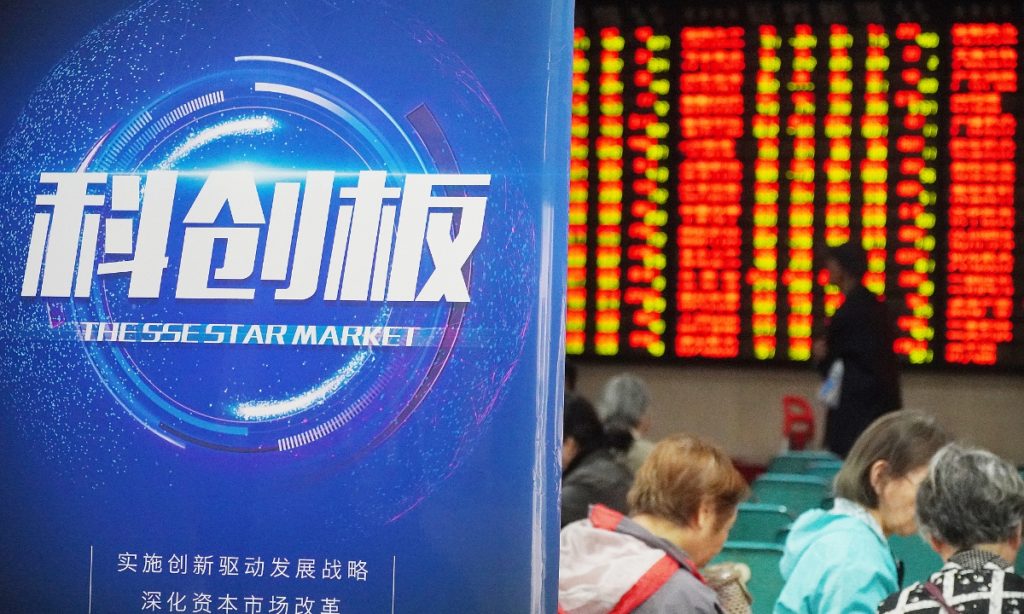
STAR Market helps tech-focused firms fuel China’s new quality productive forces

China's Nasdaq-style sci-tech innovation board of the Shanghai Stock Exchange, also known as the STAR Market, celebrated its fifth anniversary on Monday. It has helped more than 570 technology companies raise 1 trillion yuan ($137 billion), with 60 percent of them driving import replacement efforts, as a key driver of China's new quality productive forces.

The STAR Market has helped 573 companies in sectors such as information technology, biomedicine, high-end equipment, new energy, new materials, energy conservation, environmental protection and strategic emerging industries to go public, the China Media Group reported.

These companies have a total market capitalization of 5 trillion yuan. Their IPOS raised 910.8 billion yuan, and secondary rounds of financing raised 158.1 billion yuan, totaling more than 1 trillion yuan.

Thanks to consistent and significant investment in research and development, 30 percent of companies on the STAR Market have made groundbreaking products or projects, while 60 percent are leading the way in replacing imported products with their own innovative technologies.
The STAR Market has attracted a significant number of cutting-edge companies in the semiconductor and biotechnology industries. There are 114 chip companies, covering the entire industrial chain of the semiconductor sector, and 111 companies in the field of biomedicine.

This influx of innovative companies has helped solidify the STAR Market's reputation as a hub for groundbreaking technologies and advancements.

Qian Yujun, president of UBS China and chairman of UBS Securities, told the Global Times on Monday that the STAR Market has supported more than 500 technology companies in the past five years, showcasing its effectiveness in attracting and fostering innovation in the technology sector and the overall economy.

"These companies have showed a notable increase in research and development investment after their IPOs, leading to significant improvements in their operating income and profits. This demonstrates the positive impact provided by the STAR Market in empowering technology innovation," Qian said.

According to a resolution adopted at the third plenary session of the 20th Central Committee of the Communist Party of China, China will establish a mechanism for ensuring funding increases for industries of the future; improve the policy and governance systems for promoting the development of strategic industries such as next-generation information technology, artificial intelligence, aviation and aerospace, new energy, new materials, high-end equipment, biomedicine and quantum technology, and steer emerging industries toward sound and orderly development.

China will also improve the functions of the capital market to give balanced weight to investment and financing, prevent risks and tighten regulation to promote the sound and stable development of the capital market as well as facilitate the entry of long-term capital into the market.

This year, China's reform of the capital market has accelerated with several measures.

In June, China's top securities regulator rolled out new measures to further reform the STAR market to better serve sci-tech innovation and promote the development of new quality productive forces. The measures include giving priority to the listing of enterprises making breakthroughs in new industries, new business patterns and new technologies.

In April, the State Council released a new guideline, widely known as the State Council Nine-Point Guideline, to boost the high-quality development of the capital market through 2035.

The high-quality development of China's capital market has prompted foreign institutions to accelerate their presence in the Chinese capital market. BNP Paribas launched its securities unit in China on July 16 with registered capital of 1.1 billion yuan, according to company information website Tianyancha, making it the fourth securities firm with full foreign ownership in China.