More than half of Japanese companies plan to expand or maintain investment in China in 2024, according to a survey by the Japanese Chamber of Commerce and Industry in China that was released on Tuesday, underscoring their confidence in the China market, driven by improved business conditions and policy support.
The survey showed that Japanese firms recognize the pivotal role of the China market in their global strategy and are keen to capitalize on the opportunities presented by China's high-quality development, despite external uncertainties stemming from intensified US actions targeting China, analysts said.
The survey received 1,741 responses, primarily from the manufacturing sector. The survey was conducted from March 18 to April 12 to grasp the situation of Japanese companies in China and understand the changing market environment. Among the surveyed companies, 56 percent said that they would increase or maintain their investment in China this year.
At Tuesday's press conference, Tetsuro Homma, chairman of the chamber, said that two or three decades after entering the China market, many Japanese companies in China still recognize the importance of the market.
While striving to secure their respective market positions and profit areas, they are adopting new measures including more investments for the future, the chamber head said.
The main reasons that Japanese firms plan to invest more include the need to launch new projects, establish factories and production lines, increase orders, and strengthen their research and development (R&D) capabilities, according to the survey.
Even for companies that plan to reduce overall investment, there is a consensus to ramp up investment in R&D and talent development, the chamber said. China's continued improvement in the business environment has spurred enthusiasm for investment among Japanese companies, as reflected in this report.
The survey found that 57 percent of the companies said that they were very satisfied or satisfied with the business environment in the first quarter of this year, a three-percentage-point increase from the previous quarter, marking an improvement for three consecutive quarters.
The surveyed companies also said that some of the Japanese firms had excellent communication and a good relationship with Chinese local governments. Cities receiving high praise included North China's Tianjin, Shanghai, and Foshan, South China's Guangdong Province.
Additionally, 75 percent of surveyed enterprises reported receiving treatment in terms of policy perspectives that was equal to that of domestic enterprises, marking a two-percentage-point increase from the previous quarter.
Moreover, 52 percent of the surveyed enterprises indicated that China is their most important market or one of the most important markets, marking a one-percentage-point increase from the previous quarter.
Many Japanese enterprises expressed a desire to resume visa-free arrangements to facilitate personnel exchanges and expand business opportunities, according to the chamber.
"Japanese companies are voting with their feet when it comes to the future. China remains their most important market and Japanese companies are actively adjusting their strategies to minimize external risks while maximizing development opportunities in the China market and capitalizing on China's high-quality development," Xiang Haoyu, a research fellow at the China Institute of International Studies, told the Global Times on Tuesday.
The Chinese government's continuous enhancement of the business climate for foreign investment and its further opening-up has drawn investment from foreign companies, including those from Japan.
These companies are being rational in assessing and valuing their cooperation needs and interests with China, their major market, the Chinese expert said.
In a recent interview with the Global Times, Homma said that China's GDP is four times that of Japan's, with a population of 1.4 billion. "Japanese companies cannot and should not ignore the importance of the Chinese market in their global strategy," he said.
China and France released on Monday Paris time a joint declaration on artificial intelligence (AI) and global governance during Chinese President Xi Jinping's state visit to France, the Xinhua News Agency reported on Tuesday.
Experts said that the joint declaration will pave the way for practical cooperation, and serve as a model for enhancing AI exchanges and partnerships between China and other European countries.
Signing the declaration is also seen as a challenge to US dominance in the field of AI, highlighting the limitations of hegemonic ambitions in the fast-evolving AI landscape. The era of the US attempting to assert AI global dominance is deemed unsustainable, experts said.
The declaration noted that President Xi and French President Emmanuel Macron firmly believe in the importance of continued dialogue to provide lasting solutions to global challenges. One of the highlights of the declaration is that China and France are committed to taking effective measures to address risks associated with this technology.
Both countries are also on the same page about the basic rules for AI governance. They agreed to take into account the flexibility required for the rapid development of technology, while providing necessary protection for personal data, the rights of users and the rights of users whose work is used by AI. They also committed to promoting secure, reliable and trustworthy AI systems, adhering to the principle of "AI for good."
Zeng Yi, a professor of AI at the Chinese Academy of Sciences and also an expert of the UN Secretary-General's Advisory Body on AI who participated in the formation of the declaration, told the Global Times on Tuesday that this consensus reflects the alignment of both parties on issues including ethics, safety, security and the governance of AI at a fundamental level, laying the foundation for pragmatic and in-depth cooperation between the two countries in the field of AI governance.
Cooperation between China and France can drive collaboration in the field of AI between China and Europe as a whole, Liu Wei, director of the human-machine interaction and cognitive engineering laboratory at the Beijing University of Posts and Telecommunications, told the Global Times on Tuesday.
Liu Wei said both sides have great potential in working together on research into the development and application of AI technology, as well as laws and regulations.
Liu Baocheng, director of the Center for International Business Ethics of the University of International Business and Economics, told the Global Times that both sides have significant complementary relationships in this field. Also, China's rapid development of new quality productive forces presents an opportunity for France to participate in China's development.
The next step will involve greater participation by research institutions and businesses to ensure the true implementation of the declaration Liu Baocheng noted.
Through closer AI governance cooperation, both sides can systematically share more solutions to address risks, such as privacy breaches and the lack of an effective ethical AI security framework, thereby minimizing and avoiding common risks and challenges facing all of humanity, Zeng said.
Another keyword mentioned in the declaration is "cooperation." It said that international cooperation in AI governance will rely on work conducted at the UN level, and China and France will help strengthen the network capabilities of all countries, especially developing countries, to address network threats related to AI development and bridge the digital divide among developing countries.
The joint declaration between China and France conveyed an image of responsible major powers to the world, presenting an overall approach to global AI governance, Liu Baocheng said.
Zeng said the declaration is in line with China's Global AI Governance Initiative, and the signing of the declaration is also one of the representative efforts China has made at the specific implementation level as a responsible AI power, after having proposed the initiative.
Regarding the idea of China-France cooperation to counter the "AI hegemony" of the US, Liu Baocheng said that in the field of AI, the US has been seeking to dominate the global rules system. However, the reality is that each country has its own strengths, and the hegemonic mind-set of the US is unlikely to be realistically delivered. The attempt by the US to rule the world with AI is a thing that is not sustainable, he noted.
On the early morning of Saturday, a geomagnetic storm brought a breathtaking gift to China -- the aurora borealis lit up the skies across various regions of the country, attracting visitors and photographers to enjoy the stunning beauty.
At 9:32 am on Saturday, the National Space Weather Monitoring and Early Warning Center under the China Meteorological Administration issued a red alert for geomagnetic storms, predicting moderate to high solar activity levels in the next three days, with the possibility of M-class or even X-class flares, leading to small to large geomagnetic storms, and even severe geomagnetic storms.
Regions such as Altay in Northwest China's Xinjiang Uygur Autonomous Region, Mohe in Northeast China's Heilongjiang Province, and North China's Inner Mongolia Autonomous Region were among the best destinations to witness natural phenomenon.
Altay, located in the northern part of Xinjiang, became a hotspot for tourists and photography enthusiasts eager to witness this natural wonder. The night sky was adorned with colorful auroras, creating a mesmerizing spectacle for all who gazed upon it.
As people stepped out of their homes at night and looked up at the sky, they were treated to a display of colorful auroras dancing across the night sky, creating a dreamlike atmosphere. The auroras, like a magical gift from nature, captivated onlookers, leaving them spellbound.
With its cold climate and high altitude, Altay has become a prime location for aurora viewing in recent years, drawing tourists from both domestic and international destinations.
Also in Mohe, located in the northernmost part of China, the night sky was illuminated with vibrant shades of purple and red, attracting tourists from far and wide.
One such tourist, Ma Jingxuan from Beijing, embarked on a road trip to Mohe specifically to witness the mesmerizing display of red auroras. "I drove all the way from Beijing and finally caught a glimpse of the northern lights. It was absolutely beautiful and awe-inspiring," Ma exclaimed as he captured the magical moment with his camera, the Guangming Daily reported on Saturday.
This year, Mohe has witnessed multiple occurrences of the northern lights, drawing in visitors from all corners of the country. Interestingly, the phenomenon of the northern lights even extended as far south as Beijing on Saturday. Photographer Wang Kai seized the opportunity to capture the enchanting moment in the capital city, a local Beijing media outlet reported.
Experts predict that parts of Beijing and Hebei may witness the northern lights again on Sunday. They recommend observers to head to the northern mountainous areas of Beijing such as Yanqing, Miyun, and Huairou districts for the best viewing experience, away from light pollution and with a clear, open view of the sky.
According to a diagram from magazine Chinese National Geography, the color of the aurora varies depending on the distance from the observer. Red auroras are typically seen at distances greater than 300 kilometers, while green auroras are more common at distances between 100 to 200 kilometers. The closer one is to the aurora, the more vibrant and colorful the display becomes.
Meanwhile, in other high-latitude regions around the world, the stunning phenomenon of the northern lights has also been making appearances. From northern Switzerland to Dublin, Ireland, and various locations in the UK, the night skies have been painted with hues of green, red, and purple, creating a magical and ethereal atmosphere for all those lucky enough to witness it.
The ongoing solar storms are expected to continue to be active in the next two days, allowing for the possibility of widespread auroras in the northern hemisphere.
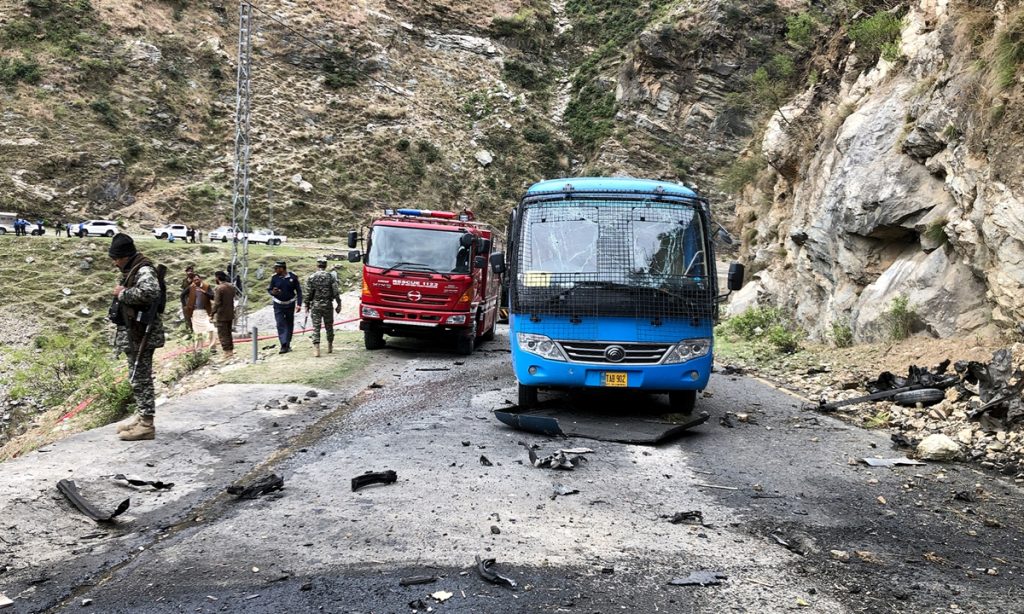
The ministry of defense of the Afghan Taliban government on Wednesday rejected Pakistan's allegations that Afghans were involved in a terror attack in which five Chinese nationals were killed in Pakistan in March. Chinese analysts called for a thorough investigation into the attack and urged regional countries to strengthen joint counter-terrorism efforts as the anti-terrorism situation in Central and South Asia deteriorates.
Mufti Enayatullah Khorazmim, the spokesperson for Afghanistan's Taliban-run Ministry of National Defense said on Wednesday that Afghans were not involved in the March terror attack and claimed that "blaming Afghanistan for such incidents is a failed attempt to divert attention from the truth of the matter," according to a Reuters report on Wednesday.
Pakistan military spokesman Major-General Ahmed Sharif told a news conference in Islamabad on Tuesday that the suicide bomb attack in March was planned in neighboring Afghanistan, "the car used in it was also prepared in Afghanistan, and the suicide bomber was also an Afghan national," according to media reports.
Five Chinese nationals and their Pakistani driver were killed in a suicide terror attack on March 26 at the China-invested Dasu hydropower project. The Chinese Embassy to Pakistan has demanded Pakistan to conduct a thorough investigation and punish the culprits severely.
Chinese analysts emphasize the importance of conducting a comprehensive and impartial investigation into the terrorist attack, with detailed and compelling evidence presented. They underscore that China should refrain from becoming embroiled in the disputes of other countries, and the safety and interests of Chinese citizens and companies must be ensured.
Tensions between Pakistan and Afghanistan have heightened amid recent security concerns. The Pakistani army and government have accused the Tehrik-e Taliban Pakistan (TTP) of launching attacks on Pakistan from Afghan territory, although the Afghan Taliban have denied these allegations.
China has always emphasized the necessity of a comprehensive investigation and swift apprehension of perpetrators, and it does not wish to become entangled in the affairs of any other country, Zhu Yongbiao, director of the Center for Afghanistan Studies at Lanzhou University, told the Global Times.
Zhu said that it is alarming that the anti-terrorism situation in the Central and South Asian region, especially in the area centered around Afghanistan, is showing a deteriorating trend, with extensive interconnection and communication among terrorist and extremist groups, necessitating attention from all nations.
The international community must not disregard the issue of counter-terrorism, particularly in the Central and South Asian region, where the influence of terrorism is on the rise, said the expert.
Each country, including Pakistan and Afghanistan, may need to pragmatically seek a comprehensive solution to counter-terrorism issues amid disputes. This is essential to prevent the proliferation of terrorist forces, which could jeopardize national political security and regional stability, Zhu said.
Editor’s Note: China and Serbia have long been renowned for their “iron-clad friendship.” The bond between the two nations continues to strengthen with frequent exchanges between their leaders. In early May, Chinese President Xi Jinping will pay a visit to Serbia, which will be his second visit to the country in eight years, and is expected to mark an important milestone for strengthening and elevating China-Serbia ties.
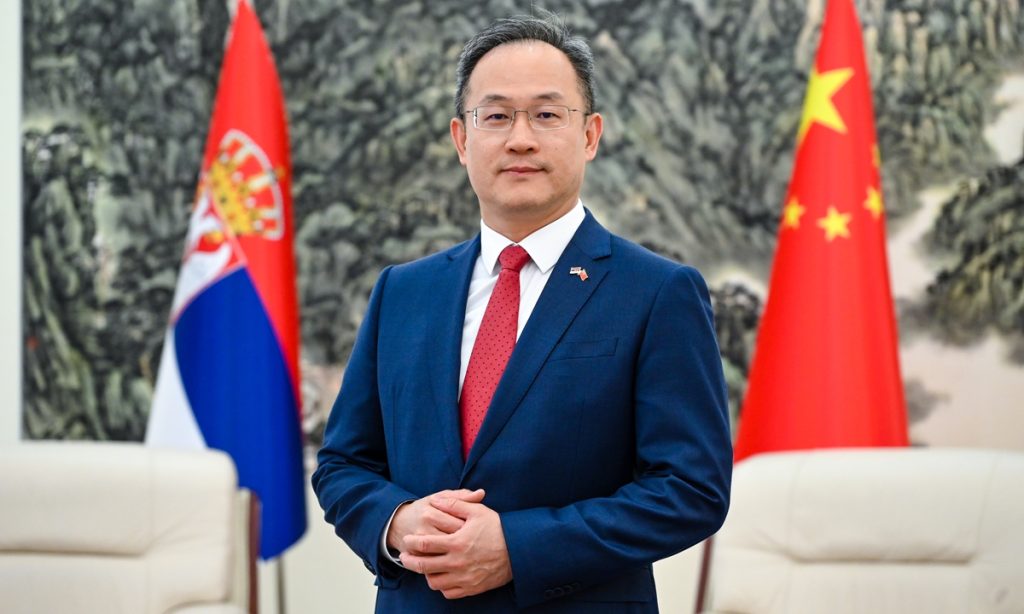
Before the significant visit, Global Times reporters Shan Jie and Xie Wenting interviewed Chinese Ambassador to Serbia Li Ming. Through his words, the ambassador offers a profound look at the robust China-Serbia relations, underscored by a shared history and a vibrant cultural exchange, while emphasizing Serbia’s integral role in the Belt and Road Initiative and the impact of the China-Serbia Free Trade Agreement on economic collaboration.
GT: What impressions has Serbia left on you? What message do you want to convey to the local people?
Li: Serbia is a uniquely charming country. Situated in Central and Eastern Europe in the Balkan region, it boasts a rich history and vibrant culture where Eastern and Western civilizations have met and mingled over millennia, producing significant achievements in human civilization. Additionally, Serbia is blessed with splendid natural beauty, from its vast plains and river valleys to its mountainous landscapes, all captivating to behold.
What impressed me most, however, was the warmth of Serbian people and their profound friendship with the Chinese people. Both countries view each other as iron-clad friends, a bond not only rooted in our historical traditions but also thriving anew in the new era.
Upon arriving in Serbia, I was pleased to witness numerous fruitful Chinese-Serbian collaborations taking root and flourishing, and to feel the warm, friendly support of the Serbian people for our bilateral cooperation.
As President Xi Jinping has stated, “The modernization we are pursuing is not for China alone, but for all developing countries through our joint efforts.” I am confident that under the careful guidance and leadership of our heads of state, China-Serbia relations will continue to yield fruitful outcomes in the new era, bringing tangible benefits to both peoples and setting a model for the region and the world.
GT: How do you evaluate the current state of China-Serbia relations? In which areas do you plan to deepen cooperation?
Li: China and Serbia are close friends and partners, sharing an “iron-clad friendship” that has endured through history and remains vibrant amid global changes. The frequent interactions between our leaders have charted the course for our relationship. In recent years, President Xi Jinping and President Aleksandar Vucic have met multiple times and maintained a close communication. In October 2023, President Vucic led the largest-ever Serbian delegation to China for the Third Belt and Road Forum for International Cooperation (BRF III). Under the strategic guidance of both leaders, our comprehensive strategic partnership maintains robust development, with close exchanges at all levels and unwavering mutual support on issues of core interest and major concern, deepening political trust.
Our economic and trade cooperation has strengthened both economies. Bilateral trade continues to grow, with China being Serbia’s largest source of imports, second-largest trading partner, and a significant direct investor. Serbian Zijin Mining Group, HeSteel Group (HBIS), and Serbian Zijin Copper company, all Chinese-funded enterprises, rank among Serbia’s top exporters. Under the Belt and Road Initiative (BRI), our infrastructure projects stand out, including the Belgrade Zemun-Borca Bridge, the first bridge built by a Chinese company in Europe, and the E763 highway, the first highway constructed by a Chinese company in Europe. The Hungary-Serbia railway, a flagship BRI project, marks China’s first high-speed rail project in Europe and the first in the Central and Eastern European region.
Cultural exchanges have also bridged our friendship. The traditional bond between our countries has been strengthened by reciprocal visa exemptions, mutual driving license recognition, and direct flights. The interest in Chinese culture remains high in Serbia. The Spring Festival of the Year of the Dragon saw the Chinese Embassy in Serbia host a series of popular “Happy Spring Festival” events. With the establishment of the Chinese Cultural Center in Belgrade, China-Serbia cultural exchanges have gained a new platform.
China will continue to work with Serbia, guided by the important consensus of our leaders, leveraging mechanisms such as the China-Serbia Free Trade Agreement and the Belt and Road mid-term action plan. We will deepen cooperation in traditional fields and accelerate development in digital and green economies, exploring new potential in innovation, new energy, biotechnology, and environmental protection. Recently, Chinese automakers Chery, Geely, and Lynk & Co showcased their products at the Belgrade Motor Show, adding highlights to China-Serbia economic and trade cooperation. I believe the scope of our collaborative endeavors will only expand, broadening the path of cooperation between our two countries.
GT: In your view, how has the BRI impacted China-Serbia relations and cooperation? Please detail two successful cooperation projects you have observed.
Li: Serbia is a key partner in the BRI, being among the first European countries to sign a cooperation agreement with China. The integration of the BRI into Serbia’s national development over the last decade serves as a model for the international community. Projects like the Hungary-Serbia railway, the Belgrade Ring Road, the Sava River Bridge, and the Smederevo steel plant have significantly improved the daily lives of locals, boosting employment, trade, and investment, and injecting new vigor into Serbia’s development. Among these, the Smederevo steel plant and the Hungary-Serbia railway stand out as exemplary cases.
The Smederevo steel plant, once hailed as the pride of Serbia and boasting over a century of history, faced closure due to mismanagement. In 2016, under the BRI, China’s HBIS signed with the Serbian government to establish HBIS Group Serbia Iron & Steel. In less than six months, the steel plant turned profitable after seven years of losses, becoming Serbia’s largest exporter for four consecutive years. Importantly, all 5,000 Serbian employees were retained, rekindling hope for thousands of families and exemplifying the success of China-Serbia cooperation under the Belt and Road framework.
In 2013, the Hungary-Serbia railway project was announced shortly after the implementation of the BRI. In 2022, the Belgrade-Novi Sad section of the Hungary-Serbia railway was completed and opened to traffic, reducing the travel time between the two cities from 90 minutes to 30 minutes. Over the last two years, the Belgrade-Novi Sad section of the Hungary-Serbia railway has transported over 7 million passengers. Excited about the project, President Vucic said, “This is a significant change for the Serbian people and the entire country.” The Serbia section of the Hungary-Serbia railway line is expected to be completed by the end of 2024, and it is believed that it will become the “road to happiness” and “road to prosperity” for the Serbian people, as well as a road of friendship between China and Serbia.
The Smederevo steel plant and the Hungary-Serbia railway are both examples of successful cooperation between China and Serbia, and they are fruitful results of the BRI. Under the guidance of the BRI, China and Serbia will continue to uphold the principles of extensive consultation, joint contribution, and shared benefits, focusing on connectivity and achieving new brilliant results in policy communication, facility connectivity, trade facilitation, financial integration, and people-to-people bonds.
GT: What new impetus has the China-Serbia free trade agreement (FTA) injected into the economic and trade cooperation between the two countries and what has it achieved?
Li: The China-Serbia FTA is the first free trade agreement signed between China and a Central and Eastern European country, and it is also the 22nd free trade agreement signed by China. Serbia has become China’s 29th free trade partner globally.
After the agreement comes into effect, both countries’ citizens and businesses will benefit from it. Serbian producers and traders can actively utilize the free trade arrangement between the two countries to access major consumer markets worldwide, and attract Chinese and European investors to invest in Serbia. Serbia has made high-level commitments in sectors such as manufacturing, construction, and information communication, providing Chinese companies with greater certainty and broader opportunities to explore the Serbian market and even the Central and Eastern European markets. The China-Serbia FTA will help both sides to achieve high-level mutual openness, establish new institutional arrangements for bilateral economic and trade cooperation, create a more favorable, convenient, transparent, and stable business environment for businesses from both countries, and inject new momentum into promoting high-quality joint construction of the BRI and deepening the comprehensive strategic partnership between China and Serbia.
GT: Please introduce the Belgrade China Cultural Center to our readers. How do you feel about the cultural and people-to-people exchanges between the two countries? What activities can we look forward to in the near future?
Li: The Belgrade China Cultural Center holds a very special position and significance among the dozens of Chinese cultural centers overseas. It stands on the site of the former Chinese Embassy in the Federal Republic of Yugoslavia in Belgrade, which was bombed by NATO in 1999, symbolizing the rebirth and indomitable spirit of the Chinese nation. It bears witness to the deep friendship forged by the Chinese and Serbian people with blood and life, and also demonstrates the Chinese people’s love for peace and their national character of not fearing power.
The cultural center has now started operating, becoming a convenient window for the Serbian people to learn about China and experience Chinese culture. It has become a new platform for telling Chinese stories and showcasing China’s images, as well as a bridge for promoting cultural exchanges and mutual learning between China and Serbia.
The cultural center not only provides opportunities for Chinese cultural displays and teaching such as calligraphy, tea art, musical instruments, dance, and martial arts, but also focuses on building its own cultural brand activities. In May 2024, the center will host the first “Tea and the World” event in conjunction with International Tea Day, followed by the first China-Serbia Dragon Boat Festival, the 2024 Chinese Film Week, and the “Hello! China” tourism promotion event.
GT: What exemplary role and positive impact have China-Serbia relations played on the cooperation between China and Central and Eastern European (CEE) Countries?
Li: As an important country in Central and Eastern Europe, Serbia is walking hand in hand with China, and bilateral relations are steadily developing. This not only sets an example for cooperation between China and CEE countries under the BRI, but also injects more stability into China’s relations with Central and Eastern European countries. The successful practice of China-Serbia cooperation fully proves that China and CEE countries can become good friends and partners in the process of jointly moving toward modernization.
China is willing to work together with countries in Central and Eastern Europe to firmly grasp the overall direction and main tone of the development of bilateral relations from a strategic height, respect each other, achieve mutual benefit and win-win results, and promote regional peace, stability, and prosperity.
GT: What’s your take on President Vucic’s recent remarks on the Taiwan question? How have China and Serbia supported each other on issues concerning each other’s core interests and major concerns?
Li: At the beginning of this year, in an interview with China’s state news agency, President Vucic used a 10-stopwatch to illustrate Serbia’s firm position of adhering to the one-China principle, and then in an interview with the media, he clearly stated that Taiwan belongs to China.
President Vucic’s remarks on the Taiwan question not only spoke to the just call of the international community, but also strongly demonstrated, once again, that China and Serbia have always firmly supported each other’s core interests and major concerns, and firmly supported each other’s development path choice.
China and Serbia are true friends and good partners who trust each other. Over the years, Serbia has firmly supported China on issues related to Taiwan, Hong Kong, Xinjiang, and human rights, and China has always firmly supported Serbia in safeguarding national sovereignty and territorial integrity. China is willing to continue to respect, support, trust, and treat each other as equals with Serbia and push forward the comprehensive strategic partnership between the two countries.
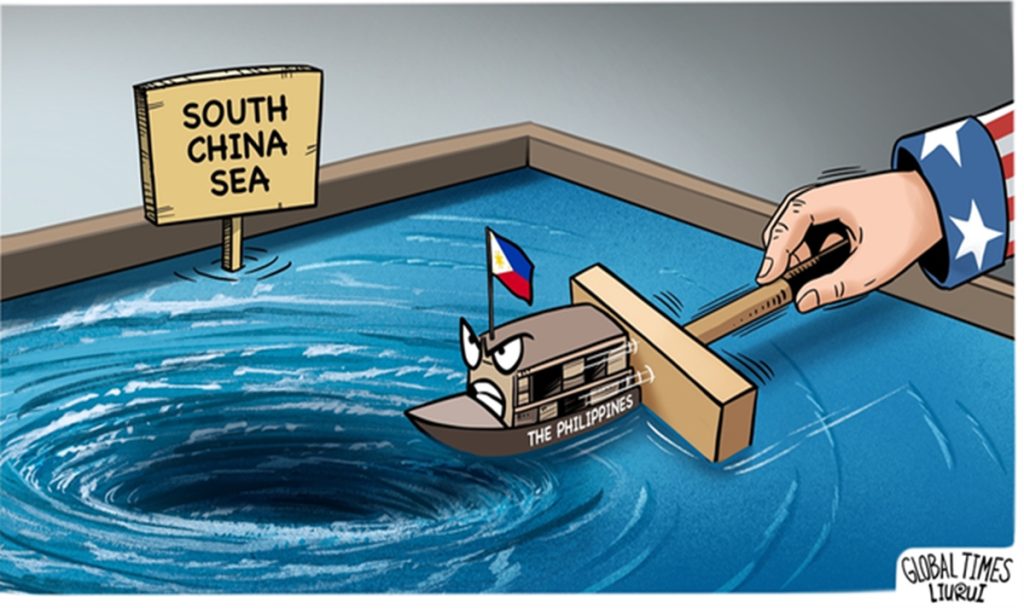
Amid ongoing tensions in the South China Sea, Philippine Ambassador to the US Jose Manuel Romualdez claimed that he is expecting the Armed Forces of the Philippines (AFP) to be fully ready in its defense posture against "any threats" in the region by the end of the term of Philippine President Ferdinand Marcos Jr, especially with the help of the US.
Analysts said that the ambassador's remarks were an expression of the Philippines' overconfidence in its capabilities and excessive optimism in its alliance with the US, and more of an attempt to garner more domestic support. Uncertainty will always remain about whether the US will keep its commitment or just try to make its allies share the costs of defense.
In an interview with Philippine media Super Radyo dzBB on Sunday, the envoy hailed Manila-Washington ties as currently being "at its best," with the two sides "rebooting" relations under Marcos Jr, the envoy's relative.
The ambassador said the Philippines has bipartisan support in terms of the South China Sea issues, and believed Manila should strengthen its armed forces and deterrence capabilities, according to a GMA News report.
He said he is expecting that with US help, the Armed Forces of the Philippines will be "fully ready in our defense posture and strategy" by the end of President Marcos' term.
The envoy said that the Philippines will prioritize developing its maritime forces, particularly the Navy and Coast Guard.
Chen Xiangmiao, director of the World Navy Research Center at the National Institute for South China Sea Studies, told the Global Times on Monday that the ambassador's remarks suggest that the Philippines is overconfident in its own capabilities and overoptimistic about US commitment.
According to Chen, the cost of developing a navy is extremely high, and it is difficult to achieve a significant increase in capabilities in a short time.
"The Philippine defense industrial base is still too weak, and lacks professional personnel, which means the time and cost for Manila will be even longer and larger," he said.
Despite economic forecasts for Philippines' GDP growth in 2024 being at around 6 percent, Chen said the country also faces many problems such as rising unemployment, inflation, rural development problems and lack of infrastructure construction, which all require huge amounts of financial support from the government, Chen said.
Earlier in April, two US senators introduced a bipartisan bill to provide Manila with $500 million a year in Foreign Military Financing (FMF) grant assistance over the five fiscal years to 2029.
In general, the US provides assistance to the Philippines in several fields, including the upgrading of weapons and equipment, troops training, and investment attached to the construction of US military bases in Philippines.
This assistance will not narrow the power gap between China and the Philippines, nor will it change the overall structure of military forces in the entire region, especially when the focus of American military aid is on Ukraine and Israel, Chen said.
The Philippines will find it hard to match its military strength with that of Vietnam, Thailand, Malaysia, Indonesia, Singapore and other Southeast Asian countries in a short time, said Chen.
"So what the Philippines ambassador is emphasizing now is more about speaking to the domestic public to gain some support," said Chen, "but these words were only the result of false signals from the US and the Philippine government's deliberate cover-up of some facts."
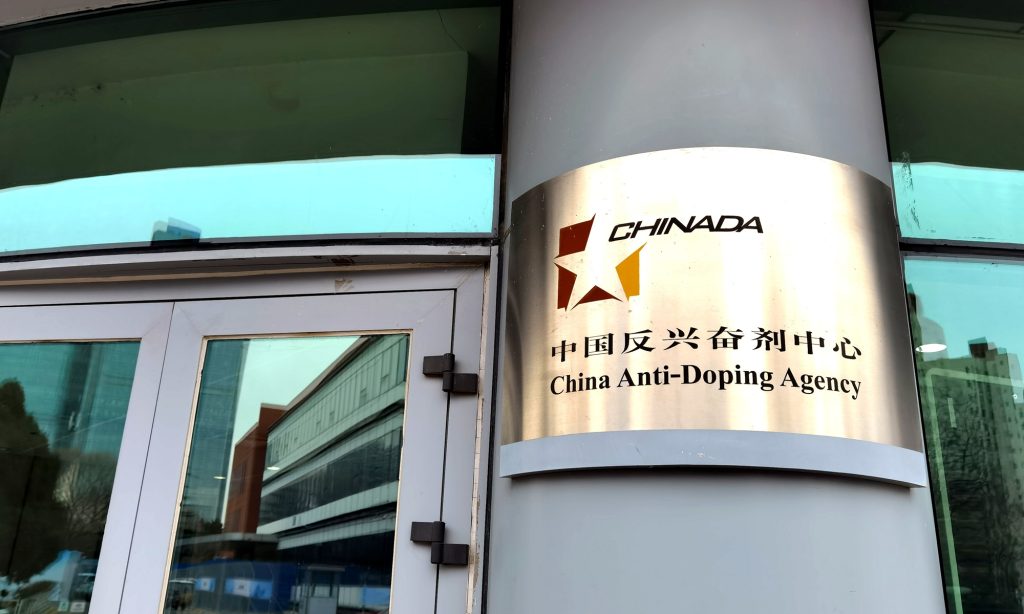
The China Anti-Doping Agency (CHINADA) condemned recent media reports on Friday that smeared Chinese athletes and China's anti-doping work, stating that they have violated ethics and laws by disclosing private information, seriously infringing on the legitimate rights and interests of athletes. It also called on the World Anti-Doping Agency (WADA) to investigate the incident.
Some Western media outlets recently reported that Chinese swimmers tested positive for trimetazidine (TMZ) before the Tokyo Olympic Games in 2021, accusing WADA of shielding Chinese athletes and failing to hold them accountable.
WADA has commissioned an independent review into the reported incident after refuting these claims, labeling them as "misleading and potentially defamatory media coverage."
In a statement released on Friday, CHINADA criticized overseas organizations and media outlets such as the US Anti-Doping Agency (USADA), The New York Times, and Germany's ARD television for distorting facts in their statements and reports on this incident.
CHINADA stated that these organizations and media outlets have disregarded China's firm opposition to doping in sports and the achievements of its anti-doping efforts, showing serious bias against China's anti-doping work.
They have taken a preconceived stance in this incident, made erroneous judgments, taken inappropriate actions, and published reports and statements that clearly deviate from basic facts. They have attempted to manipulate the media, mislead the public, disseminate false information, attack WADA and CHINADA, and undermine the current effective global anti-doping system, it noted.
CHINADA pointed out that Germany's ARD television, The New York Times, and other media outlets, organizations, and individuals have violated professional ethics, ethical standards, and relevant legal provisions by unauthorized disclosure of privacy information, including the names of multiple athletes, including minors.
"This serious infringement has severely violated the legitimate rights and interests of the athletes. We strongly condemn this behavior and call on WADA to investigate this information leak incident," it said, noting that the agency reserves the right to take appropriate legal action.
The Chinese agency also noted that WADA will undergo a review regarding the 23 Chinese swimmers' non-fault contamination incident involving TMZ, which demonstrates WADA's commitment to fairness, openness, and transparency.
WADA said in an earlier statement that given the specific circumstances of the asserted contamination, the athletes would be held to have no fault or negligence.
Following the TMZ contamination incident in swimming in 2021, CHINADA adhered to a scientific, rigorous, and objective approach and promptly initiated a comprehensive and meticulous investigation, the agency said.
Based on the investigation results, environmental sample testing, scientific experiment conclusions, and expert opinions, combined with evidence of the athletes undergoing multiple and regular doping tests and examinations, it was determined that the TMZ positives among these athletes resulted from inadvertent ingestion of contaminated food during their participation in competitions, without their knowledge.
Therefore, it was concluded that the athletes involved bore no fault or negligence in this incident, and no further doping charges were brought against them, it said.
Southwest China’s Chongqing Municipality will accelerate the revision of the city’s regulations on the prevention and control of sexually transmitted diseases and HIV/AIDS in addressing incidents of intentional spreading of the disease occurring from times in recent years, which has made the situation of the disease prevention and control grim.
Chongqing Municipal Health Commission recently replied to a proposal put forward by a local people’s congress deputy on the prevention and control of intentional spreading of HIV/AIDS.
According to the commission, the revised regulations put forward new requirements for HIV/AIDS prevention and control.
Statistics from the Chinese Center for Disease Control and Prevention show that China has 1.22 million people living with HIV/AIDS as of the end of 2022, reporting 418,000 deaths linked to the disease, with infection and mortality rates both at relatively low levels on the globe.
In China, AIDS transmission through blood transfusions has been basically blocked, and transmission through intravenous drug use and mother-to-child transmission have been effectively curbed, according to the National Health Commission (NHC).
The NHC has made arrangements for combating transmission through sexual contact, the main mode of transmission currently in China, vowing to step up cracking down on violations and crimes related to HIV/AIDS transmission, among other prevention and treatment measures.
Meanwhile, sporadic cases of intentional spreading of HIV/AIDS have been reported from across the country from time to time in recent years. In 2022, a court in Changsha, Central China’s Hunan Province announced a ruling on a case in which a woman surnamed Yin engaged in prostitution without taking any protective measures for all that she had known herself infected with HIV/AIDS. Her behavior was identified as spreading sexually transmitted diseases, and she was sentenced to one year and four months in prison and was fined 5,000 yuan ($690).
The Chongqing Municipal Government convened in December 2023 a meeting with multiple departments, proposing to expedite the revision of the “Chongqing Municipality Regulations on the Prevention and Control of Sexually Transmitted Diseases and HIV/AIDS.”
The local legislature has listed the revision of the regulation in its health legislation plan during the 14th Five-Year Plan (2021-25).
The municipal health commission has conducted in-depth analyses of the HIV/AIDS prevention and control in Chongqing through questionnaire surveys and expert discussions. They formulated targeted recommendations from five aspects ranging from legislative framework, government department responsibilities, publicity and education, patient rights and obligations to the prevention and control system, compiling the background materials for the revision of the regulation.
Besides, the commission studied and drew lessons from the local regulations on HIV/AIDS prevention and control issued by other provinces including Yunnan, Sichuan, Jiangsu and Zhejiang. They also combined the exchanges between Sichuan and Chongqing on HIV/AIDS prevention and control work, and reviewed cases of combating intentional transmission of HIV/AIDS by infected individuals in cities such as Chengdu and Guang’an in Sichuan.
Next step, the municipal health commission will collaborate with relevant departments to conduct research and strengthen the demonstration during the legislation, expecting to enhance the standardization and legal management level of HIV/AIDS prevention and control.
The commission revealed that since efforts of HIV/AIDS testing for individuals involved in prostitution and drug-related activities vary across districts and counties, they will collaborate with the public security departments, strengthen HIV/AIDS testing for such personnel, and crack down on those suspected of intentionally spreading HIV/AIDS in accordance with the laws.
A campaign on prevention and control of HIV/AIDS launched in Chongqing between 2023 and 2025 has made it clear that the public security, judicial, and health departments should strengthen cooperation in the HIV/AIDS testing on all the individuals involved in prostitution and drug-related activities captured by the public security department at designated medical institutions. In 2023, a total of 4,341 suspects were tested, an increase of 37.2 percent on that of the 2022.
Chongqing has strengthened the HIV/AIDS testing at local medical institutions, with 12.75 million people tested in 2023 in accordance with provider-initiated HIV testing and counseling, a year-on-year increase of 93.6 percent from that of 2022. The city’s HIV/AIDS testing coverage rate for the entire local population was 39.7 percent, far exceeding its annual target.
Taking initiative to provide HIV/AIDS testing services by medical institutions at all levels is the main channel for identifying HIV/AIDS-infected individuals in the city, according to the municipal health commission.
In Chongqing, patients of or individuals infected with sexually transmitted diseases and HIV/AIDS patients or infections who engage in prostitution, solicitation of prostitutes, or drug taking activities, leading to the spreading of sexually transmitted diseases or HIV/AIDS, shall be investigated and dealt with by public security organs in accordance with the law. They will be held accountable for criminal responsibility if their behaviors constitute crimes.
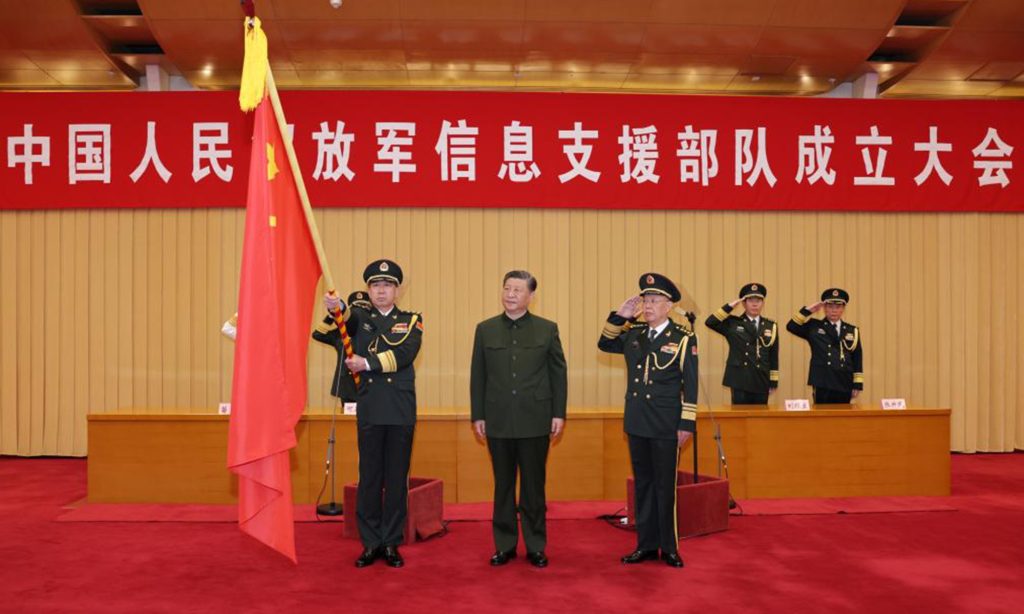
The establishment of the Information Support Force of the Chinese People's Liberation Army (PLA) is a major decision made by the Central Committee of the Communist Party of China, the Central Military Commission and President Xi Jinping from the perspective of strengthening overall national defense, which is a strategic measure to construct a new type of structure of services and arms and improve the system of China's modern military force and holds profound significance for accelerating national defense and military modernization and effectively fulfilling the mission of the PLA in the new era, according to a commentary article published by the PLA Dailyon Saturday.
Xi, also general secretary of the Communist Party of China Central Committee and chairman of the Central Military Commission, conferred the new force's flag to its commander Lieutenant General Bi Yi and political commissar of the unit General Li Wei at the force's establishment ceremony inside the CMC headquarters building in Beijing on Friday, according to Xinhua News Agency.
Xi stressed on Friday that the Information Support Force is a new, strategic branch of the military and a key pillar in coordinating the construction and application of the network information system. It will play a crucial role in advancing the Chinese military's high-quality development and competitiveness in modern warfare.
President Xi fully affirmed the important position and significant responsibilities of the Information Support Force and made clear requirements for its comprehensive strengthening, providing a fundamental direction and guidance for building a strong and modern Information Support Force, read the Saturday commentary.
In modern warfare, victory hinges on information. The struggle is between systems, and whoever commands information superiority holds the initiative in war, it explained.
With this round of reform, the PLA now features a new system of services including the army, the navy, the air force and the rocket force, and arms including the aerospace force, the cyberspace force, the information support force and the joint logistic support force. This layout enhances the perfection of China's distinctive military force system.
The report to the 20th National Congress of the Communist Party of China stressed the need for the coordinated construction and utilization of the network information system.
Network information technology has become the "biggest variable" in the development of the times and a crucial factor in enhancing the combat capability of the armed forces. As a newly established strategic branch, the Information Support Force is the key support for the coordinated construction and utilization of the network information system. It plays an important and significant role in promoting the high-quality development of Chinese military and winning modern warfare, the commentary said.
The establishment of the Information Support Force will undoubtedly enhance the joint combat capability and all-domain operational capability of Chinese military based on the network information system. It will help achieve the centennial goals of the founding of the PLA and accelerate the transformation of the PLA into a world-class military force.
The commentary said that the Information Support Force must resolutely follow the Party's command, ensuring absolute loyalty, purity, and reliability. It should provide strong support for combat operations, deeply integrate into the overall joint operational system of the military, and precisely and efficiently provide information support to serve and guarantee military operations in all directions and domains.
It should accelerate innovation and development, build a network information system that meets the requirements of modern warfare and features distinctive characteristics of the Chinese military, and promote the rapid improvement of the system's combat capability built on high quality. It should solidify the foundation of the force, ensuring high concentration, unity, security, and stability, and resolutely accomplish all tasks assigned by the Party and the people.