Australia's AUKUS nuclear submarine plans are bad fornonproliferation and increase the risk of nuclear war
Two years ago this week, the AUKUS pact was announced. When US President Joe Biden, UK Prime Minister Rishi Sunak and Australian Prime Minister Anthony Albanese stood together in San Diego on March 14, 2023, to announce arrangements for the Australian acquisition of nuclear-powered submarines (SSNs), many Australians were dumbstruck. They were as dumbstruck as they were when the initial announcement was made 18 months earlier by Biden and past prime ministers Boris Johnson and Scott Morrison in the dying stages of a discredited Australian government. Their dismay was shared by many of Australia's neighbors in Asia and the Pacific.  

The plan consists of three stages. The first will involve increased rotational deployment, effectively basing, of US (from this year) and UK (from 2027) SSNs in Australia. The second is the Australian purchase of between three and five US Virginia-class SSNs, commencing in the early 2030s. The third is the design and construction of a new AUKUS-SSN, to be built in the UK and Australia using US weapons systems and a US/UK-built nuclear reactor, to be available in the 2040s and 50s.

The eye-watering projected A$368 billion ($244.06 billion) cost is 10 times greater than Australia's largest previous military acquisition, even without the seemingly inevitable cost blowout. It is, in fact, a greater cost than any other national project in Australia's history. The plan was hatched and developed in secret with a complete absence of democratic process and accountability. There has been no detailed parliamentary examination, no White Paper, and no ministerial statements explaining a rigorous assessment of the comparative risks, benefits and costs of the plan and alternatives, in the context of a long-term comprehensive security plan for the country. Albanese in opposition agreed in less than 24 hours to sign up to the plan hatched by Morrison, his predecessor as prime minister. This was, apparently, essentially for the mundane political imperative not to be wedged and portrayed as weak on national security and the US alliance in the lead-up to a federal election. 

That Labor has embraced and aggressively prosecuted such a fraught, costly and long-term plan hatched by the previous government, rather than let it die a natural death at the end of the 18-month review period, is incomprehensible for many Australians who had hoped for much better from their new government. 

The AUKUS plan takes Australia back to the old racist, colonial and sub-imperial approach of "forward defense" - long-range power projection far beyond Australia's surroundings, as "deputy sheriff" in concert with a white great ally and protector, previously the UK, now the US. Forward defense justified Australia's past involvement in wars in the Korean Peninsula, Malaysia and especially Vietnam. The submarines are to be deployed with conventionally armed Tomahawk cruise missiles and will be technologically dependent on the US.

The strategic implications of the plan are profound. In the context of escalating enmeshment with US military forces and plans, which Australia's Deputy Prime Minister and Defense Minister Richard Marles has characterized as no longer about "interoperability" but "interchangeability," the plan is the flagship for a profound loss of sovereignty and independence by Australia. Former Labor Prime Minister Paul Keating described the AUKUS submarine plan as "the worst international decision by an Australian government since the former Labor leader, Billy Hughes, sought to introduce conscription to augment Australian forces in World War One."  

AUKUS nuclear submarines will lock Australia into US plans to contain and potentially militarily confront China, and (together with missile defense, to which Australia also contributes via the Pine Gap base in central Australia) put at risk China's second-strike nuclear capability. Regional tensions in Northeast and Southeast Asia, the risk of armed conflict, including between nuclear-armed states, notably the US and China, and the potential for such conflict to escalate to nuclear war can only grow. All the available evidence suggests that if the threshold of nuclear weapons use is again crossed, rapid escalation of nuclear war will follow. 

As the five permanent members of the United Nations Security Council reaffirmed last year, a nuclear war cannot be won and must never be fought. And as G20 leaders just reiterated, "The use or threat of use of nuclear weapons is inadmissible." The survival and health of all humanity and the biosphere demand that nuclear weapons be eliminated. This is the only way to ensure that they are never used under any circumstances. Nothing can justify increasing the danger of nuclear war.

Another negative consequence of the AUKUS SSN plan relates to nuclear nonproliferation and fissile material control. With the planned purchase of second-hand US Virginia-class submarines, Australia will become the first country without nuclear weapons to acquire nuclear-powered submarines. Regrettably, like current and planned US and UK submarines, any Australian SSN will be fueled by highly enriched uranium (HEU), which is directly usable in nuclear weapons. This is entirely avoidable. France and China have fueled their nuclear submarines with low-enriched uranium, which cannot be directly used for nuclear weapons. 

The AUKUS plan will put somewhere between eight and 20 nuclear weapons worth of HEU per submarine on stealthy mobile platforms, the whereabouts of which are designed to be secret over many months at sea, where it is effectively unverifiable. 
This flies in the face of commendable international efforts in recent decades, which the US, UK and Australia contributed to, to end the production of fissile materials and reduce and eliminate the use of HEU. 

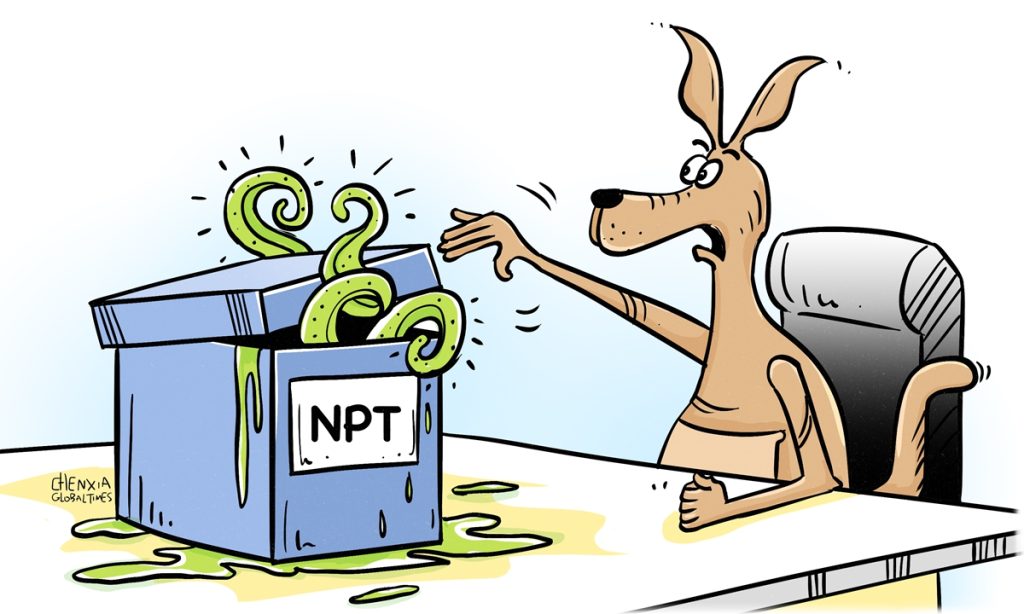
Already nuclear nonproliferation and the consistent application of nuclear safeguards are under severe stress in multiple countries. Australia looks set to become the first country to prize open a previously dormant loophole in the Treaty on the Non-Proliferation of Nuclear Weapons (NPT) which envisages the temporary removal of nuclear material from comprehensive safeguards for non-explosive military purposes. It is unlikely to be the last.

It is not too late for democratic, accountable, evidence-based common sense to curtail the fraught AUKUS nuclear submarine plan and avoid the huge opportunity costs for human and environmental security and the grave dangers it fuels. 

The author is a board member and immediate past co-president of International Physicians for the Prevention of Nuclear War and founding chair of the International Campaign to Abolish Nuclear Weapons.
Cabinet reshuffle no help in stopping Kishida’s declining approval rating

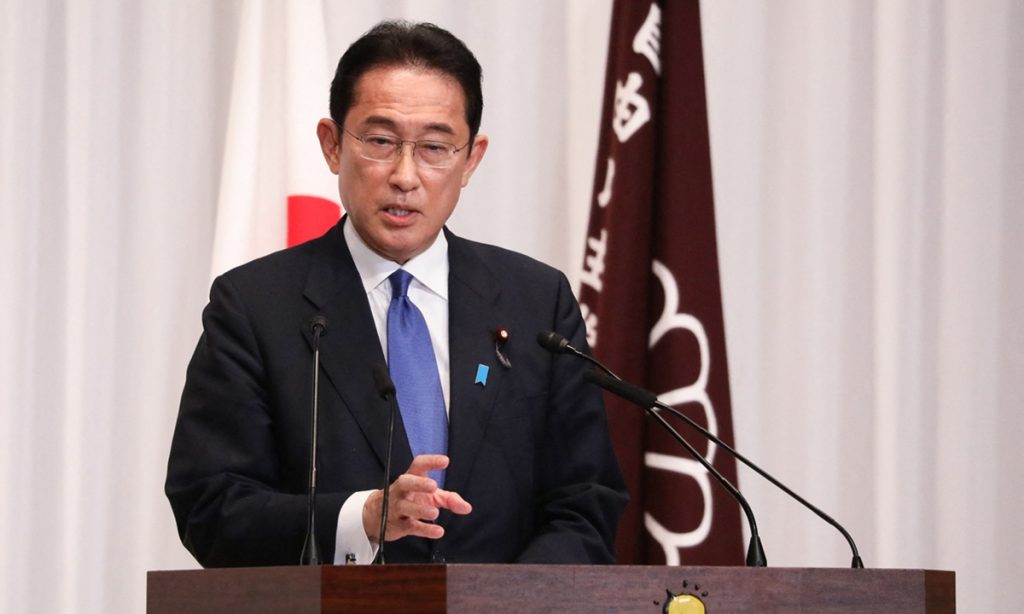
Japanese Prime Minister Fumio Kishida has been facing a headache recently: a constant low approval rating. Japanese media outlet Mainichi Shimbun reported on Monday that the approval rating for Kishida's cabinet stood at 25 percent in a recent nationwide public opinion poll conducted by the newspaper, tying the record low backing his administration saw in December 2022.

A week beforehand, Kishida reshuffled his cabinet and executives of the Liberal Democratic Party (LDP), with 11 ministers taking on cabinet posts for the first time, while six remain in place. The new cabinet also includes five women among the 19 total positions, which is considered to be a selling point for boosting Kishida's support rate. 
Judging from past, the approval rating for the cabinet often sees an obvious increase after a reshuffle, but the revamp failed to achieve such an effect this time, reflecting structural problems in the Kishida administration.

First, there was no pressing need for a reshuffle of the cabinet. The revamp this time seems to have infused new blood into the cabinet, but there has been no change in key positions, such as chief cabinet secretary, finance minister and minister of economy, trade and industry. Meanwhile, Kishida has retained Toshimitsu Motegi as his ruling Liberal Democratic Party (LDP) secretary general and Taro Aso as vice president, which means that the structure of the regime generally remains unchanged and current policies will continue.

In addition to Tetsuro Nomura, minister of agriculture, forestry and fisheries, who was replaced in the reshuffle due to the controversy over calling the Fukushima nuclear wastewater "contaminated," Deputy Chief Cabinet Secretary Seiji Kihara was replaced because of alleged scandals. But Kihara was soon appointed to the post of acting secretary-general of the LDP and special advisor to the chairperson of the Policy Research Council. This is just a change from governmental to party post.

Second, the cabinet reshuffle was only intended to complete the distribution of factional interests. After being elected president of the LDP, Kishida proposed that party officials rather than the president should be limited to one term of one year and only up to three consecutive terms. In this way, the LDP is bound to face a reshuffle every year. Kishida kept the positions of Aso and Motegi, but the issue of the appointment of other senior party members is still a very difficult matter for Kishida. Taking into account the balance of the major factions in the LDP, Kishida had to swap the positions of some members of the party and cabinet.

At the same time, the LDP has seen a considerable number of party members who are qualified to enter the cabinet but don't have the chance to because of Shinzo Abe's stable leadership since 2012. This pushed Kishida into the cabinet reshuffle. In other words, it is more of a coordination of the top party and government officials and an adjustment to satisfy the interests of different party factions.

Third, Kishida's reshuffle failed to bring about major policy changes. His nepotism and closed-mindedness are what Japanese public opinion has particularly criticized.
As far as his policies are concerned, Kishida said during his campaign for the leadership that people's voices should be heard; but what we see more in the process of policy formulation and implementation are his subjective assertions. For example, before the nuclear-contaminated wastewater dumping began, although Kishida visited Fukushima to inspect the area, he did not meet with or listen to the voices of the fishing communities in Fukushima Prefecture.

According to public opinion polls conducted by several media outlets, what the Japanese public questions most is Kishida's lack of leadership skills. The cabinet reshuffle did not touch on the essence of the problem, which is the crux of Kishida's low approval rating even after the revamp. Instead of focusing on gaining people's trust, Kishida seems to put his mind toward the distribution of political interests and the balance of power of party factions, so as to lay the foundation for his reelection in next year's LDP leadership election.

Huawei’s high-profile launch event may not reveal details of its starring Mate 60 Pro phone: sources

Huawei is to hold a high-profile new product launch event on Monday afternoon, which is expected to be the launch of a series of products including Huawei Smart Screen V5 Pro and Huawei MatePad Pro 13.2-inch flagship tablet, according to media reports.

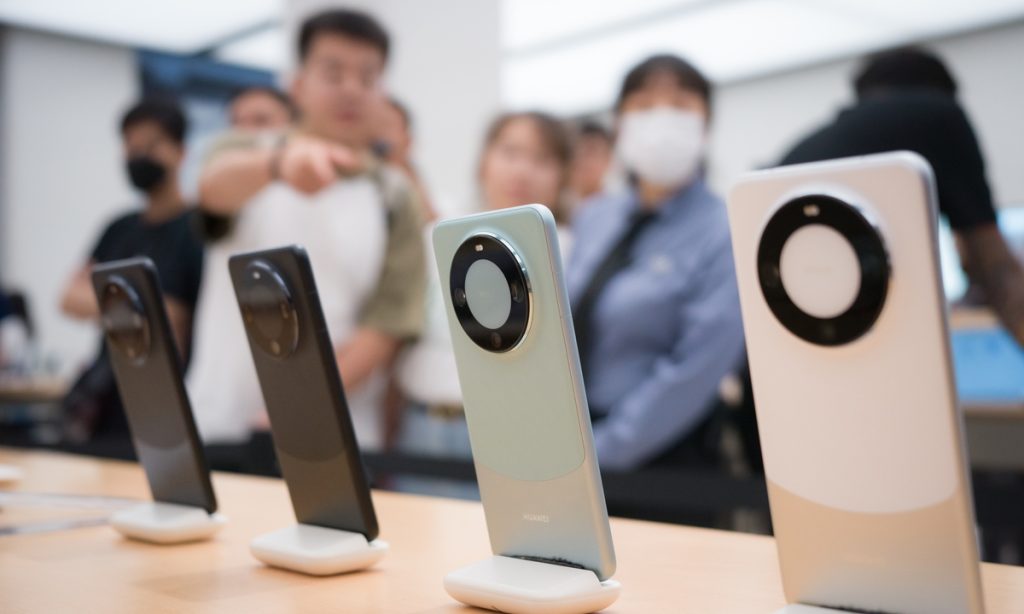
However, insiders told the Global Times that there won’t be too many details of the closely-watched Mate 60 Pro phone series to be unveiled at the event, which has generated buzz among Chinese consumers for weeks after an unexpected debut on August 29, with some hailing the phone as representing a significant chip breakthrough.

The planned launch on Monday has drawn “unprecedented” attention across China, attracting the live broadcast and live-streaming of more than 100 media outlets. On Monday morning, Huawei-related “concept” stocks were active, with many jumping by 10 percent, hitting their daily limit.

Industry observers were anticipating a formal detailing of the phone's specs and in particular the chipsets in the phone, which reportedly utilizes the Kirin 9000S chip, featuring either 7-nm or 5-nm process technology. Huawei has kept tight-lipped about the capabilities of the chip.

On August 29, Huawei surprised the market by kicking off early presales of Mate 60 Pro smartphone series ahead of Apple’s annual big launch event. Since then, Mate 60 Pro has been a big seller across the country.

Consumers have been queuing up to grab a mobile phone outside Huawei’s offline stores.

Monday also marks the two-year return of Meng Wanzhou in 2021. Meng, now a rotating chairperson of Huawei, was arrested by Canadian authorities in December 2018 under the request of the US government.

Some netizens said a stronger Huawei returning to the center stage of global tech innovation may be considered as "a slap in the face" to the US government's ruthless suppression and attack on the leading Chinese tech company, especially as the planned event date marks two years of Meng's safe return from Canada to China.

Looking ahead, Huawei founder and CEO Ren Zhengfei said in a recent interview that US sanctions on Huawei provided both pressure and impetus. “Huawei may encounter more difficulties, but at the same time becomes more prosperous too,” Ren said.

China releases stimulus to boost tourism consumption on first day of Golden Week holidays, marked by record railway trips

China has released a number of measures to revive domestic tourism and further unleash consumption potential on the first day of the Golden Week holidays on Friday, on which the world’s second-largest economy has witnessed record railway trips, traffic and long queues outside tourist spots.

The series of rules covers a wider range of areas including enhancing high-quality tourism products and services, expanding marine tourism products, optimizing tourism infrastructure investment, increasing international flights, offering convenience for inbound tourism and expanding financing channels for tourist enterprises, according to a report from the Xinhua News Agency, citing a document from the State Council.

The stimulus measures aim to further meet the people’s aspirations for a better life, and leverage the significant role of the tourism industry in advancing economic and social development, the report said.

Stimulus targeting the tourism industry is being launched at a critical time, when Chinese authorities have been ramping up efforts to shore up confidence and stabilize growth as the world’s second-largest economy has seen signs of recovery over the past months. 

Analysts have expected a surge on consumption during the Golden Week holidays, which falls from Friday to October 6, it’s China’s longest public holiday this year.

Traffic is quite busy. On the first day of the eight-day holidays, the national railway network is experiencing its peak passenger flow, with roughly 20.2 million trips are made on this day. A total of 12,508 passenger trains are scheduled to operate, including 1,841 additional trains added to accommodate the surge in passenger demand on the day.

Specifically, the railway network in the Yangtze River Delta region, one of China’s most economically dynamic areas, is expected to see 3.5 million trips on Friday, an increase of 60 percent compared with the same time in 2019. 

In response to the high passenger volume during this travel peak, the railway authorities said they are making every effort to tap into the transportation potential, maximize capacity, and ensure that the travel needs of the passengers are met to the best extent possible.

In terms of commercial aviation, more than 21 million travelers will take flights in the span of eight days, with the aviation meal production workshop is operating 24 hours a day to ensure a sufficient meal supply during the holiday period, according to a report from ThePaper.cn.
The official start of the eight-day holidays goes hand in hand with the peak of tourism season nationwide. Data from travel agencies showed that during this holiday period, the popularity of long-distance travel products, primarily to destinations like Xinjiang Uygur Autonomous Region, Southwest China’s Xizang Autonomous Region, and Yunnan Province, have seen a year-on-year increase of over 300 percent. 

Long-distance group tours have become a rising trend, with no decrease in the popularity of major cities, and lesser-known places are also gaining attention. Furthermore, the entertainment industry has seen  “retaliatory growth” this year, with consumers showing a sustained enthusiasm for attending shows. “Traveling  with performances” has become a new trend for holidaymakers.

The film industry has also rebounded. As of 5:50 pm on Friday, the box office for the 2023 National Day holiday season has exceeded 300 million yuan ($41.11 million), according to data from online ticketing platform Maoyan. 

Alibaba’s Cainiao strongly refutes Belgian intelligence service’s ‘spying’ allegation

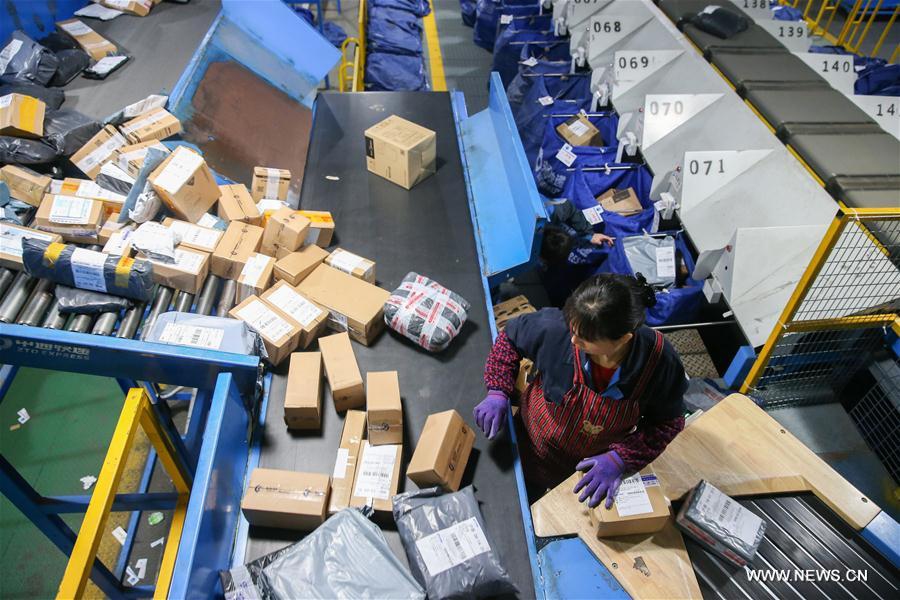
Alibaba’s Cainiao Smart Logistics has strongly refuted Belgian intelligence service VSSE’s recent accusation of engaging in “possible spying or interference activities” at the company’s European logistics center at Belgium’s Liege Airport.

“We strongly deny the allegations based on prior conjecture. Cainiao is in compliance with all laws and regulations where it operates,” the company said in a statement sent to the Global Times on Saturday.

Belgian officials are looking into “risks” involving the presence of China’s e-commerce giant Alibaba at a cargo airport in the city of Liege, Reuters reported on Friday, citing VSSE.

The security service said it was working to “detect and fight against possible spying and/or interference activities carried out by Chinese entities including Alibaba,” Reuters wrote.

Alibaba signed an agreement with the Belgian government in 2018 to establish an e-commerce trade center operated by Cainiao at Liege Airport. In 2021, Cainiao commenced operations at the Liege Digital Logistics Hub, which was its largest smart logistics hub in Europe.

It is not the first time for certain Belgian officials and media outlets hype such groundless accusations. In May 2021, The Chinese Embassy in Belgium refuted similar accusations against Alibaba, noting that such baseless allegations were a replica of the “China threat theory,” which not only misguided the Belgian public but also cast a negative impact on the image and reputation of Chinese businesses and individuals in Belgium.

The Chinese government always requires Chinese enterprises to strictly abide by local laws and regulations when doing business overseas, and will not require Chinese enterprises to engage in activities that violate local laws and regulations, the embassy said in a statement.

“Currently, Europe’s perception of and sentiment towards China have undergone complex changes due to a combination of internal and external factors. Many regular economic cooperation projects between China and Europe are being scrutinized through the lens of so-called security concerns,” Dong Yifan, a research fellow at the Institute of European Studies, China Institutes of Contemporary International Relations, told the Global Times.

Against the backdrop, various security and defense departments, including Belgium’s VSSE, are inclined to take the forefront in promoting such issues to underscore their own influence, Dong said.

“Such moves overstretching the concept of national security will undoubtedly create a negative impact on the political atmosphere and public sentiment between China and Europe, subsequently undermining the willingness and confidence of both parties to engage in cooperation,” Dong said.

Cao Zhongming, China’s ambassador to Belgium told the media in January that China retained its position as Belgium’s third-largest trading partner in 2022, while Belgium stood as China’s seventh-largest trading partner within the EU. The accomplishment is noteworthy given the backdrop of a sluggish global economic recovery.

The successful operation of Alibaba's Cainiao Liege Smart Logistics Hub in Belgium has significantly boosted cross-border e-commerce between China and Europe and helped reinforce Belgium’s position as a logistics hub in Europe, Cao said.

China to push AI-enabled economic, social development

China will build a batch of regional highlands and technological platforms for artificial intelligence (AI), in a bid to deepen enterprise-led integration of industry, research and application, and promote AI-enabled economic and social development, Wang Zhigang, Chinese minister of science and technology, said at a major AI event on Thursday.

Officials and industry practitioners also said at the event that the new generation of AI will become a new engine for the development of the economy and society.

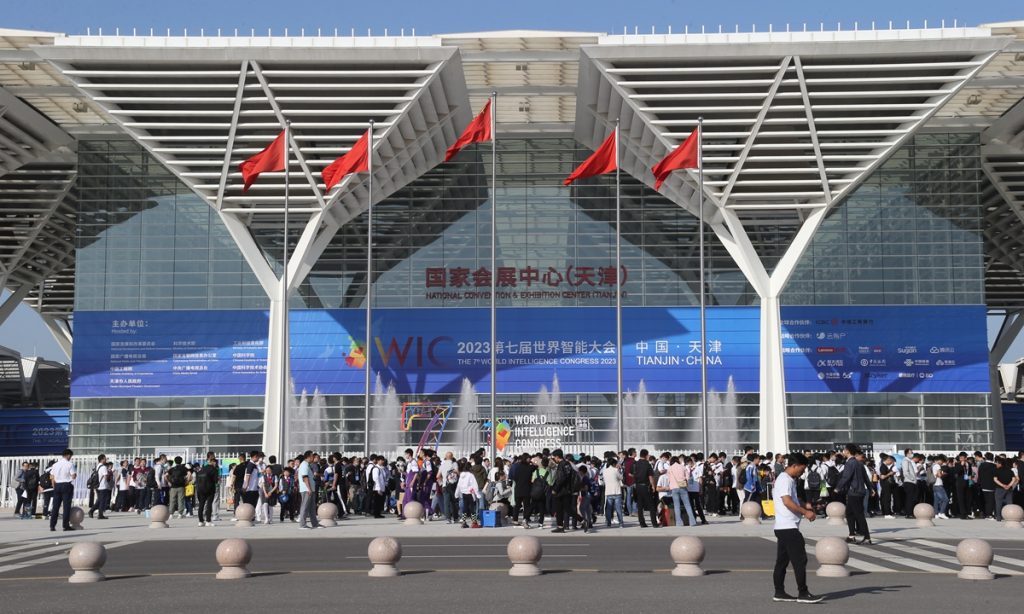
"The application scenarios of AI continue to expand, making the AI-empowered industrial mode change from small manual workshops into the era of large-scale industrialization, which will have a significant and far-reaching impact on economic development, social progress, global governance and many other aspects," Wang said on Thursday, while addressing the opening ceremony of the 7th World Intelligence Congress (WIC), which runs until Sunday in Tianjin Municipality.

The accelerated evolution of brain-like intelligence, quantum intelligence, big data and other technological areas has led to a mass breakthrough in frontier fields, which is expected to achieve major technological changes, Wang noted.

Relying on the advantages of China's super-large market, AI will attract global innovation resources to deeply integrate with China's real economy, and constantly create a new trend of industrial development while becoming a new engine of economic and social development, Wan Gang, president of the China Association for Science and Technology, said at the WIC.

"The new generation of AI should focus on expansion in application markets and industrial ecological cultivation," said Wan.

With the rapid development of AI, China has achieved remarkable economic and social empowerment. By 2022, China ranked first in the world in the number of AI patent applications.

According to official statistics, China has a leading edge in computer vision, natural language processing and voice recognition, and its core industry scale exceeds 500 billion yuan ($71.2 billion), with more than 4,200 representative enterprises, accounting for about 16 percent of the world's total.

China ranked 11th in the Global Innovation Index, according to a report released by the World Intellectual Property Organization. In terms of scientific and technological innovation, including the field of AI, China is not only an important player in international frontier innovation, but also an important contributor to jointly solving global problems.

Under its blueprint of AI development, China has established a total of 18 national pilot zones, including Beijing and Tianjin, for the development of next-generation AI innovation and 32 open innovation platforms, according to official statistics.

While attaching great importance to the development of AI, the Chinese government is fully aware that technologies including AI have two sides, Wang noted.

At the same time, China also sees that the development of AI is still faced with technical challenges, such as the deviation of underlying algorithms, lack of high-quality data, model efficiency to be improved, and social challenges to personal privacy, public safety, education and employment. China urges cooperation with countries around the world to jointly promote the sustainable and healthy development of AI.

"We have actively responded to the risks and challenges that may be brought by AI, and promoted the ethical governance of AI. China [in November 2022] published a position paper on strengthening the ethical governance of AI, demonstrating to the world a clear position on the responsible development of AI," said Wang.

ChatGPT and brain computer interface (BCI) were key issues for discussion at the 2023 WIC. 

On Thursday, a BCI system was launched at the high-tech event, which has set the current world record for the fastest non-invasive BCI system. With a small device on your head, a computer can type out what you think.

The WIC attracted participation of 117 of the world's top 500 companies, 369 of China's top 500 companies, and more than 1,000 well-known unicorn technology companies, universities and institutions, according to the organizers.

The event uses cutting-edge technologies such as AI and metauniverse to comprehensively showcase the latest technologies and products in intelligent industries, smart cities, smart manufacturing and smart living.

These cutting-edge technologies have dazzled many participants.

Andrew Starforth, general manager of the China division of Silverstream Technologies, was one of them.

"All the technologies are in place. And various local companies, not ones that are recognized globally compared to big players, are developing technology that is better than what you can see elsewhere," Starforth told the Global Times on Thursday on the sidelines of the 2023 WIC.

Starforth went to work in China in 1999 and stayed for five years. He moved back in 2018. "The changes in China in the past six years have been phenomenal."

Describing China in 1999 and 2023 as worlds apart, Starforth said that China has advanced quickly.

Exclusive: China identifies the culprits behind cyberattack on Wuhan Earthquake Monitoring Center; a secretive US global reconnaissance system to be exposed

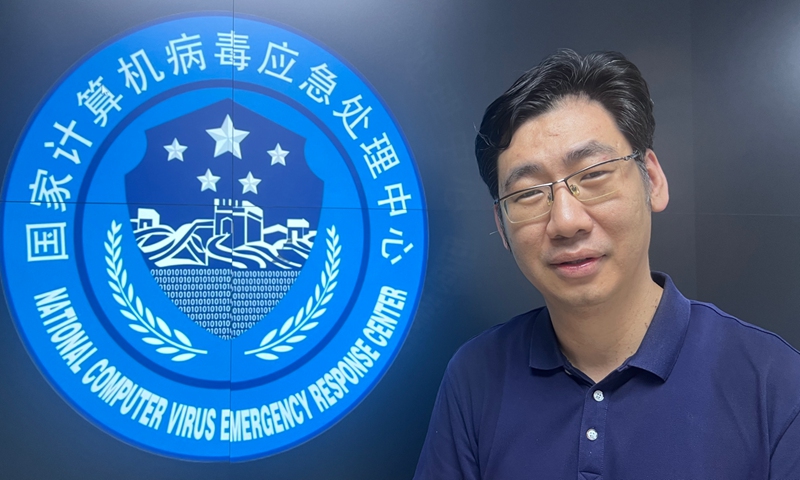
New progress has been made on an investigation into a cyberattack incident targeting the Wuhan Earthquake Monitoring Center affiliated to the city's Emergency Management Bureau, after a joint investigation team formed by the National Computer Virus Emergency Response Center (CVERC) and Chinese cybersecurity company 360 discovered malicious backdoor software that exhibits characteristics of US intelligence agencies, the Global Times learned on Monday. Chinese authorities will publicly disclose a highly secretive global reconnaissance system of the US government, which poses a serious security threat to China's national security and world peace.

On July 26, the Wuhan Earthquake Monitoring Center reported that some front-end station collection points of the earthquake reporting data had been implanted with backdoor programs, attracting widespread attention. The CVERC and the company 360 immediately formed a joint investigation team to go to Wuhan for investigation and evidence collection.

Du Zhenhua, a senior engineer from the CVERC, told the Global Times that the team has found very complex backdoor malware in the victim's network, fitting the characteristics of US intelligence agencies, highly concealed, and aiming to steal earthquake monitoring-related data, with a clear military reconnaissance purpose.
Why target earthquake monitoring system?

Du explained that China is a country seriously affected by earthquake disasters, with multiple occurrences causing severe loss of life and property. "Therefore, China attaches great importance to earthquake monitoring and early warning. In order to improve the monitoring and early warning capability of geological disasters, earthquake monitoring data includes not only basic information like magnitude and epicenter but also rich geographical and geological data such as surface deformation and hydrological monitoring," Du said.

These data also hold high value as military intelligence. Hence, the cyberattack on the earthquake monitoring center by US intelligence agencies was a planned and premeditated cyber military reconnaissance action, the expert noted.

Xiao Xinguang, a member of the National Committee of the Chinese People's Political Consultative Conference (CPPCC) and also the chief software architect of leading anti-virus company Antiy Labs, further explained to the Global Times that although the location, magnitude, and depth are publicly released information, they are based on the calculations from multiple sensors.

"The comprehensive vibration and sound wave data collected by these sensors, especially infrasound data, have significant intelligence value for judging geological terrain, analyzing weapons system tests, and nuclear tests," Xiao said.

Furthermore, this is just one of the reasons the US targets earthquake monitoring and other systems with cyberattacks. Xiao also analyzed that the current information gathering is only one type of behaviors that have been exposed.

There are still many information theft instances targeting other fields that have not yet come to the surface. By leveraging its global comprehensive reconnaissance ability, along with various means of intrusion, theft, and other comprehensive measures to obtain all kinds of telemetry data, and combining other multi-source auxiliary data, it forms the ability to analyze, judge, attribute, and locate China's economic, social operations, and even military actions.

Causing social panic

Experts believe that cyberattacks on civil infrastructure, including earthquake monitoring systems, can lead to serious consequences.

Du underlined that if the attackers maliciously damaged earthquake monitoring system, it would become ineffective in providing accurate data during an earthquake. This would impact earthquake early warnings and disaster assessment work, leading to more severe loss of life and property.

"Even more dangerous is that if the attackers tamper with the earthquake monitoring data, triggering false alarms, it could lead to social panic and disorder, resulting in casualties among innocent people," Du said.

The remote sensing and telemetry systems and data are national strategic resources that must be given priority protection, Xiao said. "These data can display the basic operation of our country's economy and society from macro to micro levels and provide comprehensive support for integrated decision-making and emergency response. They are the supporting resources for territorial safety and national security."

"US intelligence agencies not only actively collect various signal intelligence but have also long obtained other countries' comprehensive earth system science remote sensing and telemetry data as strategic intelligence through various means. This includes sharing through allied intelligence mechanisms, coercing high-tech companies to provide it, and using academic and scientific research activities," Xiao said.

He also explained that the discovery of the cyberattack on Wuhan earthquake monitoring center was not accidental, indicating that cyberattack intrusion and theft have become the lowest-cost way for the US to obtain other countries' remote sensing and telemetry data.

The US has developed a series of signal intelligence collection, analysis, and processing systems, such as the Echelon project for electromagnetic signal spying, the Main Core project for telecommunications operators, and the PRISM project's super access interface for large IT and internet manufacturers.

"After many years of continuous tracking with relevant departments, we will soon publicly disclose a global reconnaissance system of the US government, which poses serious security threats to China's national security and world peace. We must be highly vigilant and tightly guard against this," Xiao said.

Violating international law

In fact, a plethora of internal documents from the National Security Agency (NSA) and Central Intelligence Agency (CIA) exposed in events such as Prism, Shadow Brokers and WikiLeaks reveal that the US, as a real "hacker empire" and "spying empire," targets "indiscriminately" (including its allies) in its cyber intelligence collection activities. Civil institutions and individuals worldwide are its targets for cyberattacks, fully exposing the US' double standards and hypocrisy on human rights issues.

Du further stated that the US military intelligence agencies' use of their information technology advantage to launch cyberattacks on civilian infrastructure is a criminal act in clear violation of international law, seriously infringing on China's national security and public interest.

"In fact, for a long time, the US' cyberattacks on China's key information infrastructure have been all-encompassing, with government agencies, universities, research institutions, and large corporations all being targeted by its cyberespionage activities. The US is attempting to use these unfair means to comprehensively steal China's political, economic, military, and diplomatic sensitive information, to contain China's development and progress, and to maintain the US' world hegemony," he said.

As a veteran expert in computer virus prevention technology and emergency response, Du suggested that if China's key information infrastructure is attacked with state-backed hackers, relevant units must report the cyberattack to relevant authorities immediately; build cybersecurity capabilities; strengthen supply chain security management, increase autonomous control abilities; conduct regular cybersecurity drills to improve emergency handling and recovery abilities.

Xiao believed that although China's overall cybersecurity ecosystem is still relatively small in market size, overall, it's complete in technology categories without obvious weaknesses. "In continuous confrontation with threats, especially in identifying, analyzing, and exposing advanced persistent cyberattacks, including those from the US, many excellent Chinese cybersecurity companies have demonstrated their abilities, becoming the industry's supporting force in safeguarding national security and defending the security of the cyberspace community."

China does not need to underestimate itself in terms of cybersecurity capabilities, he noted. "We can establish more ambitious goals, become a competent force in the national governance system, create a capability advantage compared to main geopolitical competitors, and not become a significant constraint and risk vulnerability, even when facing comprehensive suppression by hegemonic states or in high-intensity security conflicts.

"We can achieve an overall risk controllable state by strengthening the construction of the public service attributes of cybersecurity , and enhancing the construction of common security capabilities, resilience mechanisms, and cybersecurity infrastructure," Xiao said.

China’s security ministry lashes out against US Intelligence Strategy by exposing four US dangerous modes of thinking

China’s security ministry lashed out against a new US Intelligence Strategy on Monday by exposing four dangerous, ill-suited and parasitic modes of thinking emerging from the US intelligence community – Cold War mentality of targeting China, zero-sum thinking, hegemonic thinking and confrontational thinking. 

The Ministry of State Security (MSS) said in a statement that the policy orientation set by the US National Intelligence Strategy is aimed at deterring China and is merely a new iteration of the “China threat theory,” also a clear declaration of the US intelligence community to open an era of “targeting China.”  

The new US National Intelligence Strategy, unveiled on August 10, aims to better prepare the US for a range of threats that are no longer limited to traditional nation-state competitors such as China and Russia or terrorist groups such as al-Qaida and the Islamic State group, VOA reported.

China’s security ministry in the statement advised the US intelligence community to take a sober approach toward the present-day China and the international landscape. Immersing itself in backward and misguided notions will only result in self-inflicted harm and undermine its own interests, the ministry warned. 

The MSS firstly revealed the Cold War mentality behind the US National Intelligence Strategy, saying though it has been over 30 years since the Cold War has been ended , some individuals in the US intelligence community have only adapted to the new multipolar world physically, while their mindset remains stuck in the bipolar confrontation of the Cold War era. 

They have been constantly searching for a “perfect adversary” to showcase their skills, treating China as a “toolbox” to leverage their own value domestically and as a scapegoat for disguising security challenges internationally. 

From establishing the “China Mission Center” to advocating for the reconstruction of intelligence networks in China, from launching “witch-hunt operations” against Chinese scholars to pressuring countries to “decouple” from China, the US intelligence agencies have skillfully employed strategies from the Cold War era, erecting a new “Iron Curtain” to hinder global prosperity and development, the ministry wrote in a statement. 

The ministry pointed out that the zero-sum thinking over “absolute security” is apparent in its National Intelligence Strategy, which lists numerous new security threats but fails to propose effective strategies for deepening international security cooperation. 

Pursuing its own security while neglecting common security of the world countries and viewing competition and cooperation among nations as a simple zero-sum game, this is where the entrenched malady of the “US security concept” persists, the MSS said. 

Even in the 21st century, the US continues to follow the law of the jungle, where only one side can win at the expense of others. This approach only leads countries into a “prisoner’s dilemma” of mutual distrust and ultimately makes the US itself less secure. “America First” has become the root cause of turmoil and suffering in the world, the ministry said. 

As the sole superpower, imposing its own will on the world is an inherent logic of American hegemony. Citing “American values” and referring to the “international security order,” the US only aims to uphold the “US-centered international order,” the ministry pointed out. 

As early as World War II, the Office of Strategic Services (a predecessor to the CIA) proposed implementing propaganda and subversive actions to shape the post-war world order. In 1948, the CIA launched the “Operation Gladio” and interfered in elections in Italy. In 1953, the CIA carried out the “Operation Ajax” to overthrow the Mossadegh government in Iran, the MSS said. 

Starting in 2003, a series of “color revolutions” occurred in Georgia, Ukraine, and Kyrgyzstan, with the US intelligence department being regarded as important behind-the-scenes actors, it added. 

The ability to shape security in line with global hegemony is a persistent goal that the US has been pursuing, however, its unilateralism and egotism are triggering increasingly strong criticism and opposition from the international community, the security ministry said. 

Placing importance on leveraging allies is the biggest difference that the Biden administration self-proclaims as part of its foreign policy compared to the Trump administration. But the truth is that the so-called “alliances and partnerships” is essentially the act of coercing other countries to take sides and firmly binding them to the US intelligence apparatus. 

The security ministry referenced the Russia-Ukraine conflict, to solidify anti Russia alliance, the US intelligence community has been hyping up over on the European energy supply chain and the Nord Stream pipeline issue remains shrouded in mystery to this day.

While in the Asia-Pacific region, the US has aggressively promoted the “Indo-Pacific strategy” and rallied the “Five Eyes alliance,” “Quad mechanism,” and “trilateral security partnerships” to create intelligence cliques, pressuring countries to join in an anti-China chorus, the ministry stated. 

However, being an intelligence ally of the US not only requires willingly acting as a “pawn” but also accepting the meticulous “special care” of the “big brother’ at all times, the ministry said.

Citing media reports, the ministry pointed out that the US National Security Agency has long monitored the heads of state and government of allied nations, also established technical eavesdropping bases covering neighboring countries in a certain European country, and even demanded the country’s intelligence agency assist the US in monitoring its own government officials. 

Such absurd demands can only come from a “peculiar ally” like the US, the ministry added. 

Low levels of radiation from Fukushima persist in seafood

Radiation from the 2011 disaster at the Fukushima Daiichi nuclear power plant contaminates most Japanese seafood at low levels, researchers estimate February 29 in the Proceedings of the National Academy of Sciences.

For aquatic foods, data on lingering concentrations of cesium is limited in terms of the number of species sampled and the levels that surveys can even detect. To fill in the blanks, a team of researchers in Japan drew from survey measurements from April 2011 to September 2015 and devised a way to predict cesium contamination in different aquatic species across Japan.

The analysis provides mixed news: Overall, cesium contamination is pretty low. But, some species retain higher levels than others. Larger fish near the top of the food web tended to have the highest levels of contamination. The researchers predict that such factors put some wild freshwater species like the whitespotted char (Salvelinus leucomaenis leucomaenis) and the Japanese eel (Anguilla japonica) at higher risk for contamination.

This eclipse goes on and on

Once every 69 years, a nearby star dramatically dims for about three and a half years during the longest known stellar eclipse in our galaxy.

The star, called TYC 2505-672-1, is a red giant, about 10,000 light-years away in the constellation Leo Minor. The star is orbited by a dim, hot companion star that appears to be enveloped by a thick cloud of dust roughly one to three times as wide as Earth’s orbit. The cloud, reported in an upcoming Astronomical Journal, blocks much of the red star’s light from reaching Earth for a good long time.

Researchers already knew that TYC 2505-672-1 had drastically faded recently. But astronomer Joseph Rodriguez of Vanderbilt University in Nashville and colleagues scoured data from many telescopes — including a Harvard University photograph archive dating back to 1890 — and found that the starlight dipped and rebounded not only between 2011 and 2015 but also in the 1940s. The previous eclipse record holder was Epsilon Aurigae, a star 2,000 light-years away that dims for about 24 months every 27 years.

Editor’s Note: This story was updated on April 27, 2016, to correct distances and the name of the previous eclipse record holder.