The US is moving to implement the preliminary outcomes of the China-US economic and trade consultations, including the establishment of a China-US Trade Council and tariff reductions on $30 billion worth of goods, according to media reports.
Bloomberg reported on Wednesday that US trade Representative Jamieson Greer said his agency would issue a notice in the Federal Register "shortly" to seek public comments on a Board of Trade with China.
The report described the move as "a formal step to establish a new mechanism to manage economic relations between the two nations."
Greer also said on Tuesday the government will seek public comment on which Chinese goods should be eligible for lower tariffs, Reuters reported on Wednesday.
China's Ministry of Commerce (MOFCOM) announced on May 16 that China and the US achieved positive outcomes during their recent consultations. They will establish trade and investment councils. Through the trade council, the two sides will discuss issues such as tariff reductions on specific products, and they have agreed in principle to lower tariffs on products of respective concern on an equivalent scale.
On May 20, an official from MOFCOM, while further elaborating on the preliminary outcomes of the China-US economic and trade consultations, said the economic and trade teams of the two sides will maintain close communication and work out specific arrangements on the structure, functions and operational model of the councils as soon as possible.
Meanwhile, the two sides agreed in principle to discuss, under the Trade Council, a framework arrangement for reciprocal tariff reductions on products of equivalent scale, amounting to $30 billion or more on each side, the official said.
Wan Zhe, a professor at Beijing Normal University, told the Global Times on Wednesday that the essence of China-US relations is mutual benefit and win-win cooperation. Following the preliminary outcomes of the bilateral trade consultations, China has already shown goodwill on the issue of US beef exports to China, and the US is now also moving to implement the consultation outcomes, which would help further advance the outcomes and stabilize bilateral economic and trade ties.
Wan said that stable economic and trade ties with China would help support the US macroeconomy and financial markets while also expanding access for US products to the Chinese market, making the implementation of the consultation outcomes in line with US interests and a wise choice.
A red-carpet welcome at the airport, a palace banquet and a prestigious national decoration — Japan has rolled out what media described as "highest-level" honors for visiting Philippine President Ferdinand Marcos Jr, as Tokyo and Manila moved to further elevate ties with China clearly in mind, according to media reports.
Chinese observers said that by hyping the so-called "China threat", Japan and the Philippines are each advancing their own calculations with Tokyo seeking to use closer ties with Manila to loosen its postwar military constraints while Manila is relying on external forces to internationalize and inflame South China Sea disputes. Such bloc-style cooperation runs counter to the region's pursuit of stability and development, risks fueling geopolitical rivalry in the Western Pacific, and could undermine regional security, they said.
Hidden calculations
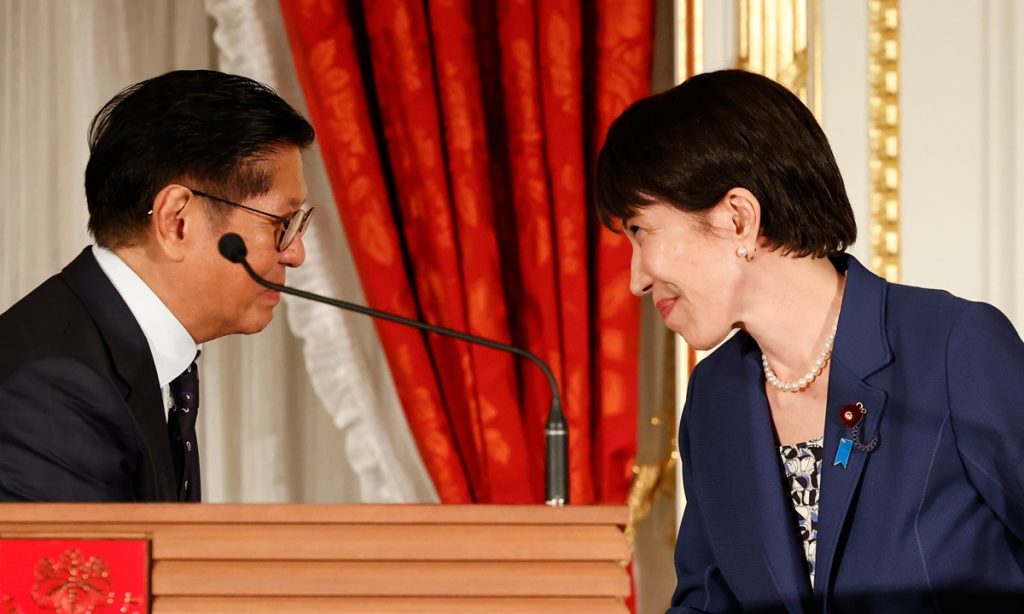
Japanese Prime Minister Sanae Takaichi held talks with Philippine President Ferdinand Marcos Jr, who is visiting Japan as a state guest, for about one hour on Thursday in Tokyo, according to Japanese media outlet NHK.
At the start of the meeting, Takaichi claimed that as the international situation becomes increasingly severe, the importance of close coordination between Japan and the Philippines has never been greater in realizing an evolved "Free and Open Indo-Pacific." Calling the Philippines one of Japan's closest like-minded countries, Takaichi said she was very pleased that the two sides were able to upgrade their bilateral relationship to a "comprehensive strategic partnership" during the visit, per NHK.
After the meeting, the two leaders issued a joint statement pledging broader cooperation, including launching formal negotiations on a General Security of Military Information Agreement, or GSOMIA, to enable the immediate sharing of highly sensitive military information and promoting defense equipment transfers after Japan eased rules on lethal weapons exports, according to the NHK report.
Meanwhile, a Jiji Press report noted that "the two sides discussed responses to China, which they claimed is intensifying military coercion in the East China Sea and South China Sea, as well as to the US, which is leaning toward an America-first approach. They confirmed strengthened cooperation in the security field and in the energy sector in response to the situation in the Middle East."
Japan and the Philippines deliberately hyping maritime issues in the East China Sea and South China Sea reflects a dangerous form of geopolitical coordination. Differences over relevant waters should be handled through dialogue and consultation by the parties directly concerned, but Tokyo and Manila have chosen to amplify so-called "concerns", effectively manufacturing confrontation and fueling regional tensions, Xiang Haoyu, a distinguished research fellow at the China Institute of International Studies, told the Global Times on Thursday.
A Reuters Japanese-language report noted that Marcos visited Japan as a state guest, marking the first state visit to Japan by a Philippine president since President Benigno Aquino's visit in 2015.
In an April 2025 Japan-Philippines summit between Marcos and then Japanese Prime Minister Shigeru Ishiba, the two sides agreed to strengthen bilateral security cooperation and "oppose attempts to unilaterally change the status quo in the East and South China Seas."
In response, Chinese Foreign Ministry spokesperson Guo Jiakun said China has always maintained that exchanges and cooperation between countries should not target any third party or harm their interests. "We oppose any moves that forge groupings and escalate tensions in the region," Guo said.
Japan's efforts to court the Philippines reveal a clear strategic calculation. Through high-level diplomatic honors and an upgrade of bilateral ties, Tokyo is seeking to tighten political and emotional bonds with Manila while accelerating cooperation in defense, maritime security, and defense equipment transfers, said Xiang.
During a meeting with the Japan-Philippines Parliamentary Friendship League on Wednesday, Marcos Jr claimed that he considers Japan one of the Philippines' "most reliable partners" amid growing global uncertainty, which has resulted in "disruptions in supply chains, and mounting pressures on the rules-based international order," according to Philippine media outlet Business Mirror.
Marcos also claimed both the Philippines and Japan share a common goal of strengthening defense and security cooperation to maintain freedom of navigation in crucial international waterways such as the South China Sea. Currently, the defense-related partnership between Manila and Tokyo includes the Reciprocal Access Agreement (RAA) and the Acquisition and Cross-Servicing Agreement (ACSA). per Business Mirror.
Both countries are hyping the so-called "China threat", but each has its own calculations. For the Philippines, the main goal is to use external forces in the South China Sea to increase its bargaining power and confrontation leverage. Manila is well aware that bringing in outside powers carries risks, even the danger of "inviting the wolf into the house", but it has still chosen to rely on them and continue hyping maritime disputes to defend its own interests, Song Zhongping, a Chinese military affairs expert, told the Global Times.
Japan is, in effect, treating the Philippines as a pawn in its regional strategy. By providing Manila with various types of defense equipment and strengthening defense and maritime security cooperation, Tokyo seeks to widen the rift between the Philippines and China, fuel more confrontations and tensions in the South China Sea, create a pretext for deeper Japanese involvement in regional affairs, and build its own security clique, said Song.
Small circle
Many Japanese and Philippine media outlets, as well as some Western media, have covered Marcos Jr's visit to Japan and mentioned China. An Associated Press report titled "Japan woos visiting Philippine leader during state visit with arms sales and China in mind" noted that Marcos Jr is "receiving an exceptional level of hospitality" during his state visit to Japan. It also said Marcos is "the first potential major customer" for Japanese arms since Takaichi's government scrapped a ban on lethal weapons exports.
Commenting on Bloomberg's news report on Takaichi and Marcos Jr's meeting to discuss strengthening security cooperation amid China's "hardline stance in East and South China Sea", Ukeru Magosaki, a former Japanese Foreign Ministry official, wrote on X on Thursday that "Doing such things doesn't strengthen Japan's security by even a millimeter."
A group of Filipino activists and their supporters on Tuesday evening staged a protest in Roppongi District, central Tokyo, to demonstrate their opposition to the state visit of the President of the Philippines to Japan. Participants displayed banners bearing slogans such as "Marcos is not welcome in Japan" and "No to military relations between Japan and the Philippines," according to Arab News Japan.
Xiang noted that Japan and the Philippines are forging an exclusive security clique, and such kind of military-oriented cooperation undermines the ASEAN-led security framework, pushes the South China Sea issue toward bloc confrontation, and raises the risk of maritime friction.
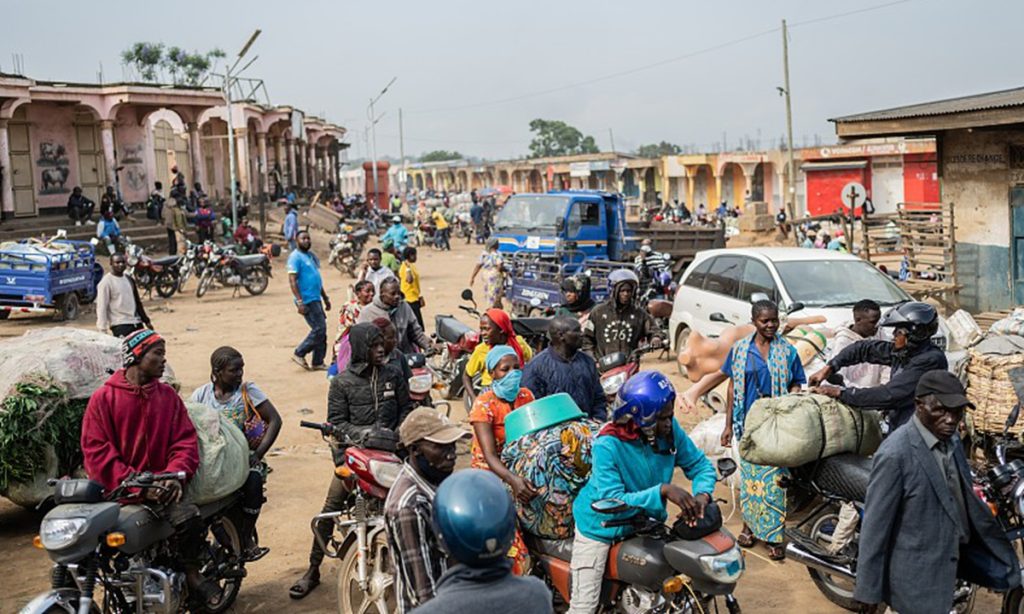
As the ongoing Ebola outbreak continues to spread across the Democratic Republic of the Congo (DRC) and into Uganda, Chinese nationals and companies in affected areas have reinforced safety protocols such as pre-entry temperature screening, mask wearing and curbing non-essential travel.
The government of the DRC has temporarily suspended all passenger flights to and from Bunia, capital of the northeastern Ituri Province that is the epicenter of the ongoing Ebola outbreak, the Xinhua News Agency reported on Sunday, citing the DRC's Ministry of Transport.
The UN World Health Organization (WHO) on Friday raised the national risk assessment for DRC to "very high," although the global risk remains "low," according to UN News. So far, 82 cases and seven deaths have been confirmed in the DRC, but the WHO says the real scale of the outbreak is likely far larger, with nearly 750 suspected cases and 177 suspected deaths reported, per UN News.
To control the risks, the Chinese Center for Disease Control and Prevention (China CDC) announced on Saturday via its official WeChat account that individuals entering or returning to China from epidemic-risk countries and regions such as the DRC and Uganda should undergo 21 days of self-health monitoring, commencing from the date of entry.
The outbreak has also heightened vigilance in Chinese companies in the DRC. Sun Yilong, a Chinese employee working for a Chinese company in Bunia said that due to the severity of the local epidemic, they have already taken preventive measures and are making every possible effort to ensure maximum protection.
Sun told the Global Times on Sunday that employees are required to wash their hands and wear masks before entering, and security personnel will check employees' temperature at the gate, barring entry to anyone with a reading above 37 C.
"We are also required to refrain from non-essential outings," Sun said, adding that employees are required to wear disposable gloves when handling cash or passing objects to minimize physical contact.
Some regions that have yet to report confirmed cases are also concerned about the risk of the outbreak spreading and have stepped up protective efforts.
A Chinese medical worker surnamed Chen employed at a Chinese firm in Lomami Province told the Global Times that local efforts are currently focused on strengthening protection awareness, with posters on identifying Ebola symptoms and prevention measures being put up in areas where company employees gather.
The outbreak has spread to other African countries, with Ituri-neighboring Uganda logging confirmed infections. According to Xinhua's Sunday report, Uganda's health ministry announced three new Ebola cases on Saturday, bringing the total number of confirmed infections to five.
A Chinese national working in Uganda who requested anonymity told the Global Times that "my client reminded me to stay away from the markets, and I will do my best to take protective measures and sanitize as much as possible," he said.
The WHO's representative in DRC, Dr Anne Ancia, told reporters in Geneva that "We have significant uncertainty about the number of infections and how far the virus has spread," UN News reported on May 19.
The Economist warned this outbreak "is shaping up to be the worst Ebola epidemic since at least 2018, when more than 2,000 people died in eastern Congo."
According to the Africa CDC, Ebola is a severe and often fatal illness. It spreads through direct contact with the bodily fluids of infected persons, contaminated materials, or persons who have died from the disease.
Yang Zhanqiu, a professor of pathogen biology at Wuhan University, believes that whether the current outbreak will surpass previous ones in scale remains to be seen. Yang told the Global Times that if the outbreak is confined to one or two African countries, it would be relatively manageable. However, if multiple countries experience simultaneous outbreaks, the scale of the epidemic could make prevention more difficult due to challenges such as cross-border coordination and poor local healthcare infrastructure.
The WHO said it had deployed 22 international staff to the field and released $3.9 million from its contingency fund, while a continental incident management team was being established with the Africa Centers for Disease Control and Prevention, UN News reported on Friday.
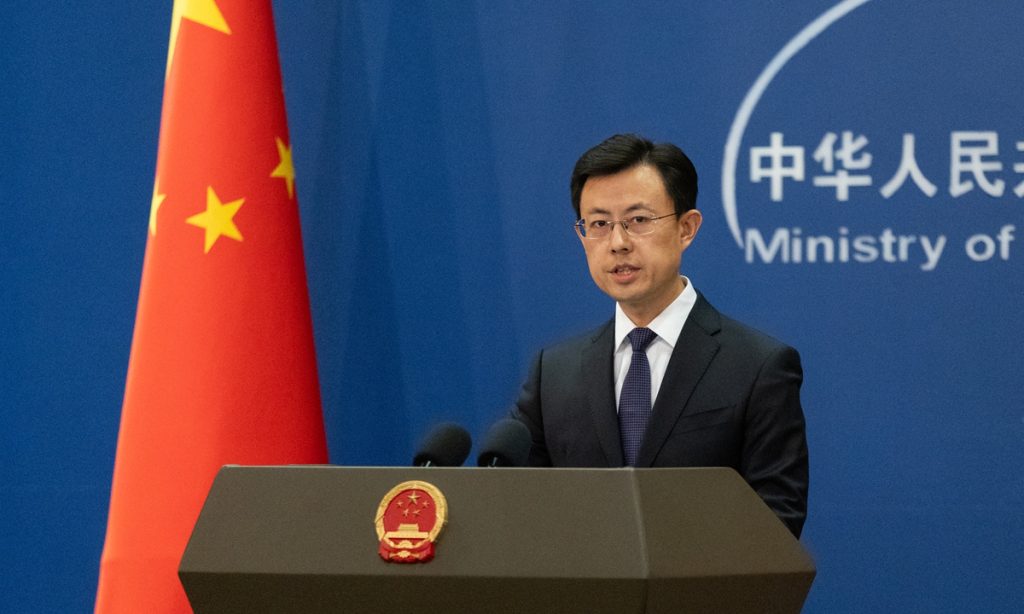
When asked to share the details about Pakistani Prime Minister Shehbaz Sharif's upcoming visit to China, Chinese Foreign Ministry spokesperson Guo Jiakun said on Thursday that today marks the 75th anniversary of the establishment of diplomatic relations between China and Pakistan.
Prime Minister Shehbaz Sharif's upcoming official visit is an important high-level exchange as we mark the 75th anniversary, Guo said.
During the visit, President Xi Jinping and Premier Li Qiang will meet and hold talks with him respectively. They will have in-depth exchanges of views on China-Pakistan relations and issues of mutual interest to chart the course forward for bilateral ties in new circumstances, Guo said, adding that besides, Prime Minister Shehbaz Sharif will attend a reception celebrating the 75th anniversary and visit Zhejiang Province.
China and Pakistan are good friends and all-weather strategic cooperative partners. Over the past 75 years, China-Pakistan relations have withstood various tests and stood rock solid, setting a shining example for state-to-state relations, Guo said.
In recent years, under the strategic guidance of leaders of the two countries, we have had frequent high-level exchanges, made solid progress in practical cooperation, and achieved fruitful outcomes in high-quality cooperation on the China-Pakistan Economic Corridor, Guo added.
The two sides maintain close communication and coordination on major international and regional issues, which helps us to safeguard common interests and advance peace, stability and development in the region, said the spokesperson.
China hopes that both sides will take the upcoming visit as an opportunity to carry forward the traditional friendship, deepen cooperation across the board, and write a new chapter in building an even closer China-Pakistan community with a shared future in the new era, Guo said.
The visit had earlier been announced by Pakistani Deputy Prime Minister and Foreign Minister Ishaq Dar earlier in May. According to Pakistan's Dawn newspaper, Dar said Pakistan and China were taking "another significant step towards innovation, digital connectivity and the economy of the future as our partnership enters a new phase in the digital age."
Dar also emphasized that the friendship between the two countries was "not ordinary diplomacy," according to the Dawn. "It is a relationship tested by time and strengthened by trust […] from the Karakoram Highway, carved through some of the most difficult terrain in the world, to the China-Pakistan Economic Corridor, which transformed Pakistan's energy and connectivity landscape," he was quoted as saying.
The report noted that Sharif's upcoming visit follows Pakistani President Asif Ali Zardari's five-day visit to China earlier in May. It also pointed out that Sharif last visited China in September 2025 to attend the Shanghai Cooperation Organization summit.
A Chinese analyst said the visit is expected to inject fresh momentum into bilateral cooperation at a milestone moment in China-Pakistan relations.
"China and Pakistan are all-weather strategic cooperative partners, and Chinese side attaches high importance to ties with Pakistan," Qian Feng, director of the research department at the National Strategy Institute at Tsinghua University, told the Global Times on Thursday.
"As the two countries celebrate the 75th anniversary of diplomatic relations, Prime Minister Sharif's visit is expected to further deepen and solidify bilateral ties," Qian said.
Qian noted that Sharif's itinerary in Zhejiang Province also carries important economic significance. Zhejiang, one of China's most dynamic hubs for private-sector development, has seen extensive investment and business engagement in Pakistan, he said.
"The visit sends a signal that Pakistan welcomes more Chinese private enterprises to expand into the Pakistani market and jointly inject new momentum into bilateral economic cooperation," Qian said.
He added that Sharif's planned engagements beyond Beijing reflect Pakistan's intention to deepen people-to-people exchanges with more Chinese provinces and strengthen public support for broader bilateral cooperation.
"Such arrangements will help enhance mutual understanding between the two peoples and facilitate cooperation across various fields," Qian said.
Eight people have been confirmed dead, and 38 remain trapped underground after a coal mine accident in Qinyuan County, north China's Shanxi Province, on Friday night, local emergency management authority said Saturday.
A gas explosion occurred at the Liushenyu coal mine in the county at 7:29 p.m. on Friday, with 247 workers on duty underground.
As of 6:00 a.m. on Saturday, 201 people had been brought to the surface safely, including eight confirmed dead. Rescue efforts were still underway. The cause of the accident is under further investigation.
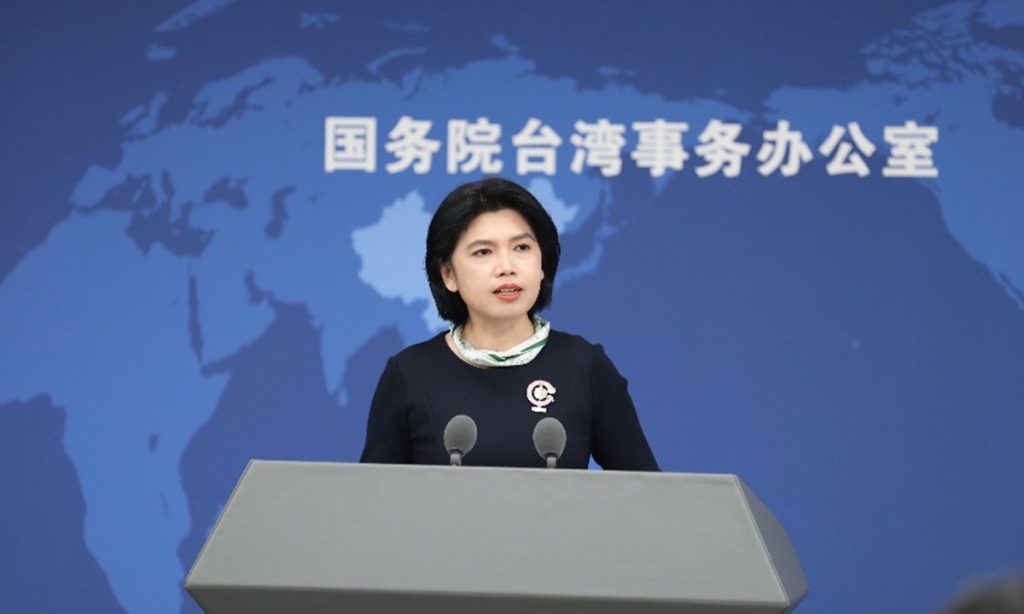
The DPP authorities are hyping up issues related to the World Health Assembly (WHA), using the guise of health affairs to engage in "independence" political manipulation, and have no concern for the interests and well-being of the residents of Taiwan island, Zhu Fenglian, a spokesperson for the State Council Taiwan Affairs Office, said at a regular press conference on Wednesday.
Zhu made the remarks when responding to a media inquiry that the 79th WHA convened in Geneva on Monday, and Taiwan region failed to attend for the tenth consecutive year, while regional health and "foreign affairs" authorities held so-called events outside the assembly venue, according to CCTV News.
By attempting to "crash the meeting" to seek attention and make political stunts to deceive the people on the island, DPP authorities will only bring self-inflicted humiliation upon themselves. This cannot change the doomed failure awaiting their "Taiwan independence" provocations, Zhu said, per CCTV News.
Q: President Xi Jinping yesterday held state events for the visiting U.S. President Donald Trump, which drew close attention from home and abroad. Can you give us more details?
A: At the invitation of President Xi Jinping, U.S. President Donald Trump is paying a state visit to China. The two presidents are meeting again in person since their Busan meeting last October and it is the first visit to China by a U.S. president in nine years. On May 14, President Xi Jinping held a welcome ceremony and a welcoming banquet for President Trump, and held talks and visited the Temple of Heaven with him. The two presidents had an in-depth exchange of views on major issues concerning the two countries and the world and reached a series of new common understandings.
The two presidents agreed on a new vision of building a constructive China-U.S. relationship of strategic stability to provide strategic guidance for China-U.S. relations over the next three years and beyond, promote the steady, sound and sustainable development of China-U.S. relations, and bring more peace, prosperity and progress to the world.
The two presidents have reached important common understandings on handling their mutual concerns in a proper manner. They both agreed to strengthen communication and coordination on international and regional issues.
Interactions between the two presidents have enhanced mutual understanding, deepened mutual trust, advanced practical cooperation, increased benefits for the people of both countries, and injected much-needed stability and certainty into the world.
Following a private meeting with Chinese President Xi Jinping in the Zhongnanhai leadership compound in central Beijing, US President Donald Trump boarded Air Force One on Friday and departed for the US, bringing this historic state visit to a conclusion.
The red carpet laid out at Beijing Capital International Airport, the impeccably straight-standing PLA honor guards, students waving Chinese and American flags, and Foreign Minister Wang Yi who came to see Trump off together constituted China's high-level protocol and hospitality — mirroring the grand welcome accorded to the US president upon his arrival.
During Trump's visit, the two leaders agreed to build a new vision of building a constructive China-US relationship of strategic stability, reached consensus on major bilateral and global issues, and engaged in warm interactions on multiple occasions.
The two presidents had in-depth communication and achieved fruitful outcomes in their Beijing meeting. President Xi will pay a state visit to the US in autumn this year at the invitation of Trump, Chinese top diplomat Wang Yi said on Friday when briefing the press about the just-concluded Xi-Trump meeting in Beijing.
Observers noted that the just-concluded summit not only charts a new course for the development of bilateral ties, but also injects certainty into a complex and volatile international landscape, carrying important positive implications for global economic recovery, world peace and stability, and sound interaction between major powers.
New vision
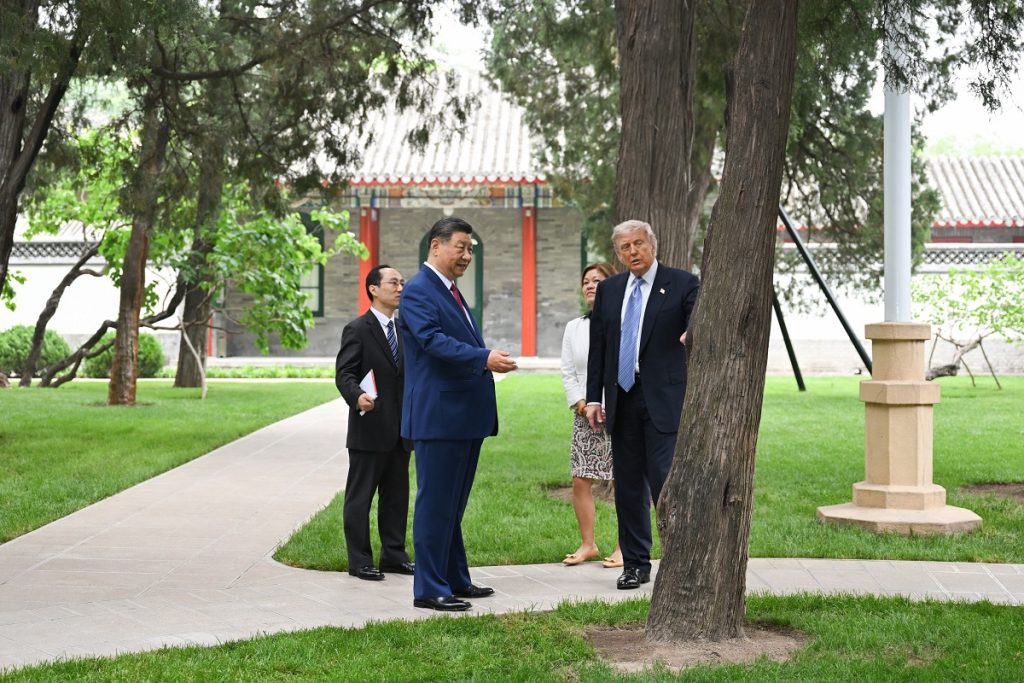
Following the two leaders' formal talks on Thursday, the Chinese leader on Friday warmly welcomed Trump in Zhongnanhai, according to Xinhua, which also noted that the two heads of state walked and talked, occasionally stopping to admire the trees and flowers in the garden.
Noting that Trump's visit was a historic and landmark one, Xi said the two sides had set the new vision of building a constructive China-US relationship of strategic stability.
"We had reached important common understandings on maintaining stable economic and trade ties, expanding practical cooperation in various fields, and properly addressing each other's concerns," Xi said, per Xinhua. The two sides also agreed to strengthen communication and coordination on international and regional issues, according to the Chinese leader, Xinhua reported.
The visit is conducive to enhancing mutual understanding, deepening mutual trust and improving the well-being of the two peoples, said the Chinese president.
"While President Trump hopes to make America great again, I am dedicated to leading the Chinese people toward national rejuvenation," the Chinese leader said, stressing that the two countries can advance their respective development and revitalization by strengthening cooperation.
Trump said that he is very grateful to Xi for inviting him to visit Zhongnanhai, adding that his China visit was very successful, captured the world's attention and was unforgettable, per Xinhua.
Noting that Xi is his old friend, Trump said that he has great respect for Xi and that they have established a good relationship. The US-China relationship is very important and will definitely get better, he said.
Trump said that he is willing to continue to maintain sincere and in-depth communication with Xi, and warmly looks forward to hosting him in Washington, DC, Xinhua reported.
Beyond the remarks from Trump featured in Xinhua, US news outlets' coverage of key details from Friday's event further underscored the friendly atmosphere surrounding the China-US leaders' meeting.
According to Fox News, as the Chinese leader guided Trump on a tour of the garden in Zhongnanhai, Trump praised the setting, saying, "I like this place. I could get used to it."
Trump gave high praise as he walked past green columns and archways in Zhongnanhai, saying that "These are the most beautiful [Chinese] roses anyone has ever seen," according to AP.
In addition, the concept of a "new vision" has sparked interest among international media. US magazine The Diplomat said the two leaders seek a new chapter in China-US relations.
Wu Xinbo, Dean of the Institute of International Studies of Fudan University, told the Global Times on Friday that the successful China-US leaders' summit has provided important support for the improvement and development of bilateral relations in the next phase, and marks a new starting point for China-US relations to achieve steady progress while maintaining stability and moving toward greater improvement.
"It has laid a solid foundation for stabilizing bilateral relations and deepening the bonds of mutual interests between the two sides," said Li Haidong, a professor at the China Foreign Affairs University.
Against the backdrop of profound changes in the international landscape and significant adjustments in the global balance of power, the new vision of building a constructive China-US relationship of strategic stability, has provided both sides with a clear guideline for action, he added.
More expected
The world's media has been closely following the historic summit between Chinese and US leaders over the past few days. BBC said in its live coverage on Friday that the two leaders concluded very successful talks in Beijing while Reuters, quoting Trump, said his visit was incredible.
French media outlet Le Monde reported that for the US president's visit, the Chinese leader put on a display of grandeur, while remaining very firm on the Taiwan question.
The vast majority of media outlets in China's Taiwan region, regardless of their political stance, have been paying close attention to the China-US leaders' summit. On Thursday, Trump did not directly respond to media questions concerning the Taiwan question during his visit to the Temple of Heaven, sparking concerns among secessionists.
On the Taiwan question, Wang Yi noted on Friday at the media briefing that the Taiwan question was one of the key topics during the leaders' meeting. He reiterated China's position, stating that Chinese side had sensed during the meeting that the US side understands China's stance, attaches importance to China's concerns, and, like the international community, does not recognize or accept "Taiwan independence."
On the Middle East situation, Wang said China maintains that on the basis of sustaining the ceasefire, the Strait of Hormuz should be reopened as soon as possible, and at the same time believes that the fundamental solution to issues concerning the strait lies in the realization of a permanent and comprehensive ceasefire.
Regarding the Ukraine crisis, Wang Yi stated that both China and the United States are willing to maintain communication over the Ukraine crisis and play a constructive role in working for its political settlement.
China's major neighboring countries also responded to the China-US leaders' summit on Friday.
According to CNN, Kremlin spokesman Dmitry Peskov told reporters that Russian President Vladimir Putin's upcoming visit to China will be "a good opportunity to exchange opinions on the contacts that have taken place between the Chinese and the Americans."
"When (the US and China) engage in direct dialogue at the highest level … such contacts, of course, are a subject of special attention and analysis for all countries, including our country," Peskov said, per CNN.
When answering a question raised by a reporter from China Central Television (CCTV), South Korean presidential office's senior secretary for public relations and communication Lee Kyu-yeon said on Friday that South Korea welcomes the meeting between the Chinese and US leaders as well as the development of China-US relations, adding that Seoul hopes the summit will also further deepen and strengthen both China-South Korea relations and US-South Korea relations, CCTV reported.
According to a release by the Japanese Ministry of Foreign Affairs, Japanese Foreign Minister Toshimitsu Motegi said on Friday that it crucial that US-China relations contribute to the stability of the international community, including Japan, which has therefore been paying close attention to the recent US-China leaders' summit.
As the world's two most important major powers, the peace, stability, and practical cooperation between China and the US profoundly influence the global strategic landscape, world economic development, and the prosperity and stability of the international community, said Wu.
Similarly, Li said that the stability of China-US relations has, in a sense, taken on the attributes of a global public good. Any warming or cooling in the relationship between China and the US will quickly be transmitted to global markets, supply chains, and even security expectations.
On Thursday, International Monetary Fund spokesperson Julie Kozack said that it welcomes the initial positive dialogue between the Chinese and US leaders, adding that reducing tension and uncertainty between the world's two largest economies was good for the world, per a Reuters report.
"In the current increasingly complex international environment, the strategic guidance by the Chinese and US leaders is particularly valuable," Li said, "Both leaders have demonstrated strategic vision and a high sense of responsibility toward their respective countries and the international community, providing much-needed certainty and positive energy to the world."
In the first Truth Social post en route back to the US, Trump shared a photo that recorded the moment the two heads of state walked in front of the Great Hall of People in Beijing.
"The man I am walking with is President Xi, of China, one of the World's Great Leaders!" said the US president.
In a Fox News interview on Thursday, Trump described the Chinese leader as "a warm person."
"I'll get criticized, as always, when I say good things about certain leaders," Trump said. "But he's a leader for China. He's led almost 1.5 billion people for a long time, and he's respected."
China-US economic ties are mutually beneficial and win-win in nature, Chinese President Xi Jinping said on Thursday when holding talks with US President Donald Trump in Beijing.
"Yesterday, our economic and trade teams produced generally balanced and positive outcomes. This is good news for the people of the two countries and the world," Xi said.
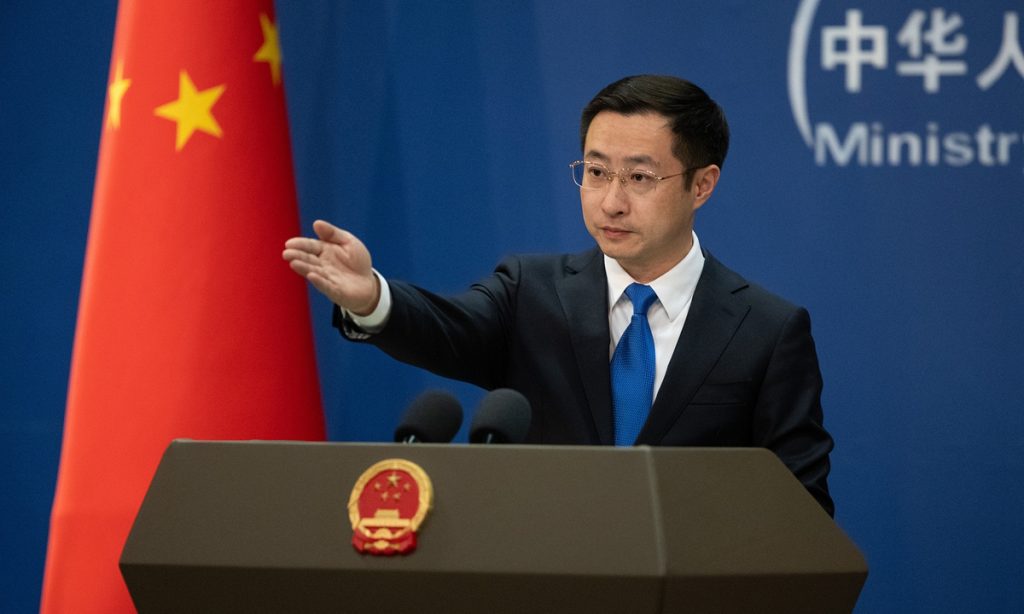
"As far as I know, representatives from the Chinese Embassy in Russia will attend the event [Victory Day parade in Moscow] upon invitation," Chinese Foreign Ministry spokesperson Lin Jian said at a press briefing on Friday, in response to media inquiries over the relevant information regarding the attendees from the Chinese side.
According to Tass News Agency's previous report, Kremlin Spokesman Dmitry Peskov told Izvestia that Russia expects a number of foreign leaders to attend the May 9 Victory Day parade in Moscow's Red Square.
"Victory Day is one of the most important holidays in Russia. That said, guests from various countries attend the Victory Day parade on Red Square," Peskov said, per Tass.