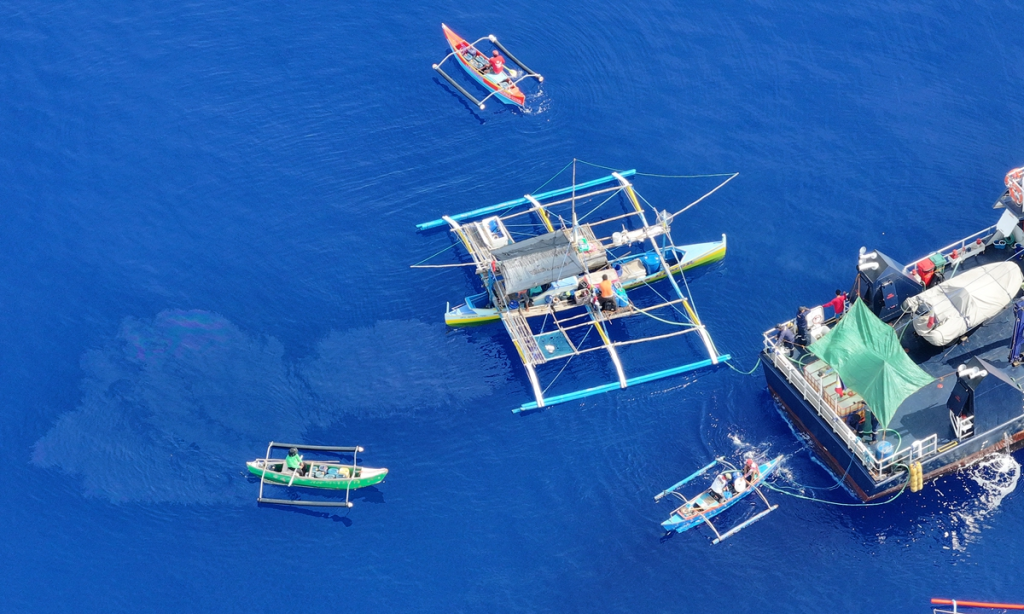
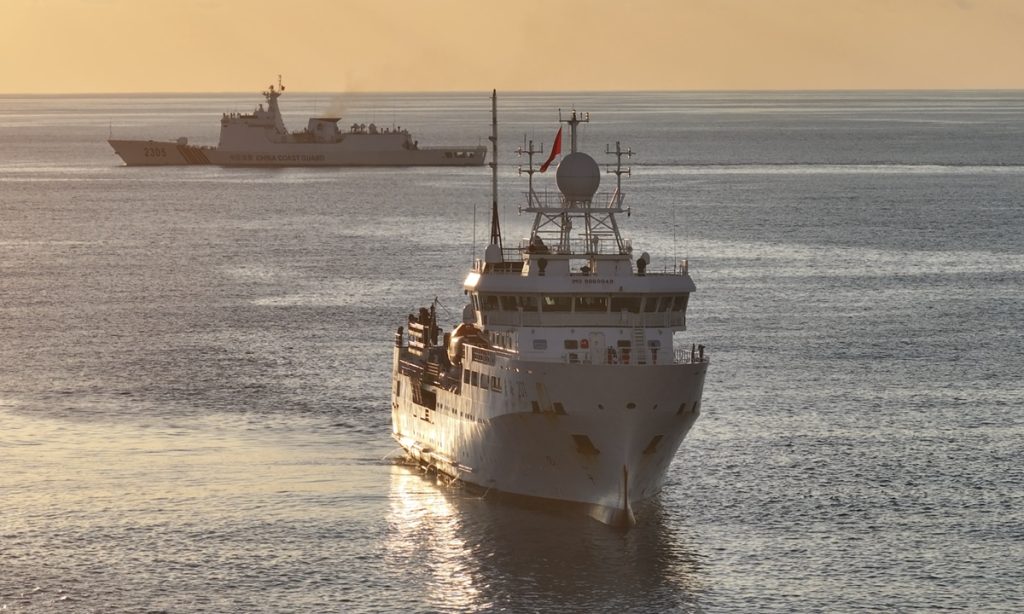
The China Coast Guard (CCG) on Friday took control measures in accordance with the law against multiple Philippine vessels engaged in illegal activities in the waters under China's jurisdiction off Huangyan Dao.
On Thursday, two Philippine public vessels (MMOV 3012 and MMOV 3018) ignored repeated dissuasion and warnings from the Chinese side and obstinately intruded into the waters under China's jurisdiction at Huangyan Dao. The CCG took necessary countermeasures in accordance with the law to track, monitor and block the Philippine vessels, compelling them to leave the area, the CCG announced on Thursday.
The on-site operations by the Chinese side were professional, standardized, legitimate and lawful, according to the CCG. Huangyan Dao is China's inherent territory. We urge the Philippine side to immediately stop rights-violation and provocations. The CCG will, in accordance with the law, continue to carry out rights-protection and law-enforcement operations in the waters of China's Huangyan Dao and resolutely safeguard China's territorial sovereignty and maritime rights and interests, Jiang Lue, spokesperson for the CCG, said in a statement on Thursday.
In the middle of a July night, in waters east of China's Taiwan island, the fishery science research vessel Lanhai 201 remained a hive of activity. As the survey nets were slowly hoisted aboard, the collected samples poured into specimen boxes, releasing a strong fishy scent. Yet Shi Yongchuang, an associate researcher at the East China Sea Fisheries Research Institute (ECSFRI) under the Chinese Academy of Fishery Sciences, China's Ministry of Agriculture and Rural Affairs, excitedly removed his mask and leaned in close to examine these small creatures from a relatively unexplored sea area.
For the fishery survey team, whose average age is just 35, this marked their first survey of these traditional fishing grounds of Chinese fishermen. To them, it was a scientific expedition carrying forward a historic mission, and they felt proud to arrive in this sea area under Chinese jurisdiction amid turbulent waves.
On July 23, seven days after Lanhai 201 set sail, the comprehensive resource and environmental survey conducted by the ECSFRI in the waters east of Taiwan island was officially announced. The voyage covered the area of the waters east of Taiwan island within the range of latitudes 20.5°-23.5°N and longitudes 122°-124.5°E, and the Global Times reporters witnessed the whole expedition.
Zheng Hanfeng, chief scientist of the expedition and deputy director of the ECSFRI, told the Global Times that the most significant milestone of this voyage lies in filling the gap in China's fishery surveys in the waters east of Taiwan island, thereby completing the regional map of scientific investigations into fishery resources in China's exclusive economic zone. Filling gap in near-sea survey map
"Non-stop work around the clock" was the norm for the survey team aboard Lanhai 201 over the seven days. Even after midnight, the decks and laboratories remained brightly lit. What excited the team were the hauls from each net. Like opening blind boxes, they looked forward to new surprises with every deployment.
Even for a small, ordinary-looking fish, Zhao Guoqing, another researcher, and his colleagues would carefully identify and clean it, measuring length and weight one by one, and meticulously dissecting to record gonad development and stomach fullness. He told the Global Times that these seemingly trivial basic biological parameters form the cornerstone for subsequent biodiversity analysis and resource assessment. The same fish species in different sea areas may exhibit significant differences in population characteristics due to geographic isolation and varying environments.
Zhang Hanye, a senior researcher at the ECSFRI in field of ichthyology taxonomy, told the Global Times, "The seabed in the waters east of Taiwan island features rare cliff-like depth changes, with depths reaching 3,000 to 5,000 meters, vastly different from the continental shelf characteristics of several dozen to over a hundred meters in other Chinese near-sea areas. Collecting first-hand data in this sea area under our own jurisdiction gives us much stronger confidence in scientific analysis."
This focus and dedication stem from a sense of mission. Zhao shared a regret with the Global Times: his supervisor had long participated in near-sea fishery resource surveys in earlier years. However, on the near-sea survey station map drawn by the team at the time, a small area remained blank - the waters east of Taiwan island. "My supervisor often said that only when we could conduct a survey there would the work be truly complete. This time, I have finally fulfilled the teacher's wish by filling that blank spot on the near-sea fishery survey map. As a Chinese person, I feel really proud right now."
Zheng also carries this sacred mission. He shared that 46 years ago, from 1980 to 1981, predecessors from the ECSFRI have taken Dongfang scientific vessel to conduct surveys in the outer region of the continental shelf and continental slope of the East China Sea, which is very close to today's research area. They completed 9 voyages and conducted over 110 stations, covering a total area of more than 30,000 square nautical miles. Yet due to various factors, this particular area was left blank. "I feel honored today to come here with a new generation of colleagues for scientific investigation. It is both a continuation of the legacy and a remedy for the past regrets," said Zheng.
In this sea area rarely visited by mainland fishery workers, the survey team found a very rich biota. Preliminary identification revealed approximately 114 fish species, eight cephalopod species, and six shrimp and crab species.
Meanwhile, this area also showed extraordinary diversity and abundance of ichthyoplankton, and plankton species richness and biomass are exceptionally high as well. Chen Yuange, an assistant researcher at the ECSFRI and the leader of the expedition's plankton team, extended the scientific survey into the microscopic world. Most of the time, he examines ichthyoplankton samples under a stereomicroscope, consulting literature on the early life history of this area and carefully cross-referencing specimens with their characteristics. "The waters here are so biologically rich that our expedition findings could well fill a book someday," he said confidently.
"The waters east of Taiwan island are part of China's exclusive economic zone under jurisdiction and serve as traditional fishing grounds for fishermen from Taiwan. They are rich in high-value species such as tuna, as well as dolphinfish, mackerel, scad, squid, and other economically important fish," Zheng explained. Moreover, literature indicates that this sea area is one of the important spawning grounds for Pacific bluefin tuna, the only known bluefin tuna spawning ground located within China's exclusive economic zone. For a long time, however, it remained one of the very few areas in China's EEZ that had not undergone systematic fishery resource surveys. Conducting investigations here holds profound significance for understanding the life history of these high-value fish and expanding aquaculture and breeding research, according to this chief scientist. "From publicly available literature, previous surveys in this sea area conducted by China's Taiwan island, Japan, and the Philippines mainly focused on individual economically important species such as bluefin tuna. But we are not limited to single species. A systematic fishery resource survey like ours - covering multiple stations, multiple species, and strictly following national standards - is the first of its kind in this sea area," Zheng further noted. Undeterred by rough waves and harassment
Two days after departure, Beaufort wind at force eight stirred up 5-meter swells, causing the 3,000-ton-plus Lanhai 201 to roll more than 15 degrees. Not only the Global Times reporters, who were experiencing the sea's power for the first time, but also many seasoned crew members felt dizzy and nauseous.
Yet the rough seas could only be overcome by passion. The reporter observed during the voyage that no matter how complex the sea conditions, once the vessel reached a preset station, upon hearing the winch lowering the nets and seeing the gleaming catch under the searchlights, the scientific team could overcome seasickness.
If searching for marine specimen could soothe physical discomfort, facing external harassment strengthened the team's resolve.
Recently, Japan and the Philippines bypassed China to unilaterally initiate so-called maritime delimitation negotiations in the waters east of Taiwan island, openly infringing on China's maritime rights and interests. Before departure, some team members gained a deeper understanding of the unique significance of this voyage.
During the seven-day journey, external forces intending to interfere with the Chinese survey arrived as expected. Not only did military aircraft from a certain country circle above Lanhai 201, but the Japan Coast Guard also dispatched a patrol vessel to shadow the research ship. However, these interferences did not disrupt the survey's rhythm; instead, they further strengthened the team's determination to complete the scheduled tasks in this sea area.
One notable incident occurred on July 18. During survey operations that day, the radar on the Lanhai 201 showed the Japan Coast Guard's PLH42 Shunko patrol vessel attempting to approach the Chinese research ship. Meanwhile, China Coast Guard (CCG) vessel 2305, performing routine law enforcement patrols in nearby waters, remained highly vigilant and firmly intercepted the Japanese vessel, keeping it outside the 14-nautical-mile range of the research ship, making it difficult for the Japanese vessel to close in.
That evening, the Global Times reporter saw via radar imagery that another CCG vessel 1401, also rushed to the scene to join the escort. The two vessels formed a protective formation, securely shielding Lanhai 201. Witnessing this, Chen sighed with relief: "The moment I saw the CCG ships appear on the radar, I felt completely at ease." Protecting fishery rights is defending maritime rights
"Fisheries represent one of humanity's oldest uses of the ocean and one of the primary ways to exercise maritime rights. Countries' assertions of maritime rights and interests are largely manifested in claims over fishing grounds and fishing rights," Zheng said during the voyage, highlighting another dimension of the survey's significance. "This survey itself is an important measure to exercise jurisdiction and demonstrate national sovereignty."
The focus of this survey is fishery resources and fishing ground environments. Zheng believes that the survey is for better protection and sustainable utilization, which is itself a manifestation of safeguarding maritime rights and interests.
"Fisheries, due to their unique flexibility, widespread nature, and mass participation, play an irreplaceable role in maintaining national maritime rights and interests," Wang Nan, an associate professor at the School of Marxism, Beijing Jiaotong University, who researches maritime history, told the Global Times.
Fisheries are also an important area for countries to expand diplomacy, participate in international resource allocation and management, and handle international relations. "China should attach greater importance to striving for and safeguarding fishery rights, by strengthening the actual presence of fisheries in disputed waters and establishing dominance in certain sea areas, thereby achieving the effect of declaring and exercising sovereignty," Wang said.
A landslide in Dangchang county, Northwest China's Gansu Province, has killed 21 people, local authorities said on Wednesday. The disaster occurred at around 6:56 am on Tuesday in Renzang village, Nanhe township, trapping 33 people. Emergency, firefighting and public security teams were swiftly mobilized to carry out rescue efforts after the incident, according to the Xinhua News Agency.
The Longnan municipal government held a press conference on Wednesday morning to brief the public on the latest developments. Search and rescue operations have completed, officials said. At the event, government officials and journalists stood for a moment of silence in memory of those who lost their lives in the disaster.
China has dispatched 20,000 pieces of disaster relief supplies to the central province of Hubei after it was hit by gales and thunderstorms, the Ministry of Emergency Management (MEM) said Wednesday.
The items, including folding beds, summer quilts, towel blankets, moisture-proof mats, folding tables and chairs, and family emergency kits, were jointly allocated by the office of the national commission for disaster prevention, reduction and relief, the MEM, and the National Food and Strategic Reserves Administration.
The supplies will support local authorities in resettling affected residents, providing relief assistance, and ensuring their basic living needs are met, according to the MEM.
Through an emergency supply mechanism involving government agencies and social organizations, China has also coordinated the delivery of 40,000 additional relief items to disaster-hit areas, including family relief kits, outdoor jackets, emergency food, drinking water and hot meals.
Efforts have also been made to support the reconstruction of damaged schools in the disaster-hit areas, and to coordinate resettlement, relief and post-disaster reconstruction work.
China has dispatched 50,000 pieces of disaster relief supplies to Zhejiang and Fujian provinces to support local typhoon response work, the Ministry of Emergency Management (MEM) said Thursday.
The items, including folding beds, summer quilts and family emergency kits, were jointly allocated by the office of the national commission for disaster prevention, reduction and relief, the MEM, and the National Food and Strategic Reserves Administration.
The supplies will support the two provincial authorities in evacuating and resettling residents and providing relief assistance, as part of efforts to prepare for Typhoon Bavi, the ninth typhoon of this year, according to the ministry.
For years, Norwegian salmon was one of the first things many Chinese people associated with Norway. But as Erling Haaland and the Norwegian national team gain global attention at the World Cup, football adds to a new dimension to China-Norway ties. With his phenomenal popularity among Chinese fans, Haaland is boosting people-to-people exchanges.
"Before, when I traveled around China, the first thing everybody said about Norway was salmon, because we are very famous for Norwegian salmon," Norwegian Ambassador to China Vebjørn Dysvik told the Global Times in an exclusive interview on Friday. "We still are, but now we are also famous because of Norwegian footballers."
"Even before the World Cup, Norwegian footballers, Haaland of course being maybe the most prominent, but also other players such as Martin Ødegaard, who plays for Arsenal, and several of the other Norwegian players, have become quite famous in China," he said.
Haaland's popularity has also extended beyond football. His collaborations with Chinese brands have helped him become more visible among Chinese consumers. As a brand ambassador for the Norwegian Seafood Council, Haaland has drawn attention from Chinese consumers, with many users on Chinese social media platform Xiaohongshu, or the RedNote, sharing photos of Haaland-themed displays at salmon counters and others asking about the campaign's availability and which supermarkets featured the displays for photo opportunities.
According to the latest data from the RedNote, during the World Cup, views of Haaland-related topics on that platform has surged by 220 million in a short period, with total views reaching as high as 960 million at one point. By comparison, French soccer player Kylian Mbappé-related topics saw an increase of 50 million views during the same period.
The popularity of Haaland and the national team shows how sports can create connections that go beyond traditional diplomacy.
"It's important to remember that some of the most important 'ambassadors' from Norway are not actual ambassadors," Dysvik said. "Sports profiles and cultural personalities also tell a story about our country."
"I think they open a door for communicating about our country, maybe to people who are difficult to reach through regular diplomats," he added.
For Dysvik, football provides a unique channel for people in China and Norway to understand each other.
"Sports is a global phenomenon. Football is a global sport, and now everybody is paying attention because of the World Cup," he said, noting that sports will always be an important bridge between people. "It's part of our culture, and a very important part, both in Norway and in China," he said.
The ambassador's own experience reflects this connection. A football fan since childhood, Dysvik is a season ticket holder at Beijing Guoan and regularly attends matches at the Workers' Stadium.
"I think it's partially because we live very close to the stadium, so I can walk over there to watch football," he said. "And I think Beijing probably has the most enthusiastic fans that I've seen… extremely enthusiastic."
"Football is also always fun to watch, especially when it's live," he said. "So I like football a lot, and I go as often as I can."
Beyond football, Dysvik stressed that China and Norway have many areas of cooperation, including trade, green development, marine industries and culture including sports.
"Our cooperation with China is very important," he said. "It's very clear that China plays a very important role for Norway in many fields," he said. "It's important for our economy, important for reaching global goals like combating climate change, and we cannot do it without China."
He said both sides have opportunities to deepen cooperation, particularly in the green transition. "Chinese companies play a very important part in our green transition," Dysvik said. "But we also see that Norwegian companies have competence that is relevant for China…there's a high degree of complementarity."
For Dysvik, the rise of Norwegian football in China offers another opportunity for people-to-people exchange.
"We see an increasing interest among Chinese people in going to Norway… I'm, of course, again biased. But if you want to visit maybe the most beautiful country in the world, it's a great place to go," the ambassador said.
"Come to Norway to see the fjords, to see the mountains… to see the midnight sun, and the northern lights," he said, indicating that there is also a lot more to see beyond sports.
Chinese President Xi Jinping and Seychelles' President Patrick Herminie on Tuesday exchanged congratulations on the 50th anniversary of diplomatic relations between the two countries.
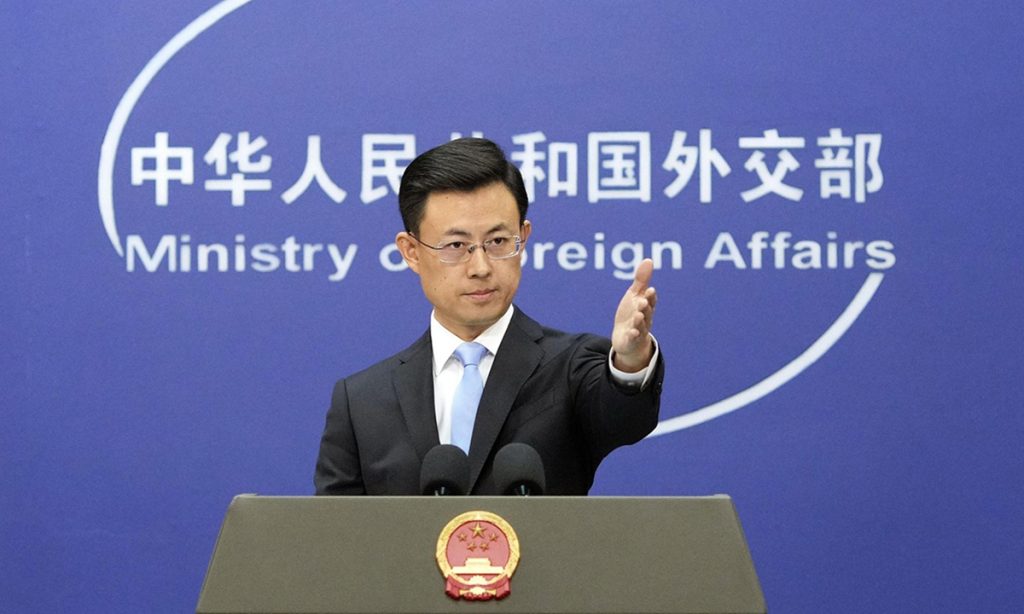
China has repeatedly made its solemn position clear, and we wish to reiterate that China has an exclusive economic zone and continental shelf in the waters east of Taiwan Island. Relevant activities carried out by Chinese authorities in those waters are legitimate, lawful and beyond reproach, Guo Jiakun, a spokesperson for China's Foreign Ministry, said at a regular press conference on Monday.
The spokesperson's remarks were made in response to a media inquiry that a Japanese government spokesperson claimed that activities by the China Coast Guard (CCG) in Japan's exclusive economic zone south of Yonaguni Island, as well as China's sovereignty position over those waters, are unacceptable.
Guo said that Japan and the Philippines bypassed China and unilaterally launched so-called maritime "delimitation talks," which seriously violate international law, including the United Nations Convention on the Law of the Sea (UNCLOS), as well as the basic norms governing international relations, and seriously infringe upon China's maritime rights and interests. China will never allow this.
China’s Ministry of State Security (MSS) warned on Sunday that foreign spy agencies are exploiting pop-up ads for intelligence collection, target identification and ideological infiltration activities, posing a threat to national security.
The MSS has ordered relevant online platform operators to immediately cease providing advertising and promotional services for unidentified overseas links, promptly blocking the spread of potential security risks, according to an article released by the MSS on Sunday.
According to the MSS, intrusive pop-up ads prompted when internet users open a webpage or launch an app are often difficult to skip and prone to accidental clicks that redirect users to another page, which creates opportunities for criminals to exploit.
The MSS reminded that some of the advertisement companies use “personalized advertising recommendations” as a cover for collecting user data. After a user clicks on a pop-up advertisement, the application transmits personal data, interest profiles, and other information stored in its database back to the advertising company. The advertising company then uses “microtargeting” algorithms to deliver personalized advertisements.
Recently, the state security authorities have discovered that foreign spy agencies have colluded with certain advertising companies to set up surveillance platforms, integrate and analyze data returned by advertising companies together with social media information, high-precision location data, and other sources to accurately identify targeted individuals’ home addresses, workplaces, and daily activity patterns, building comprehensive profiles of those individuals, so as to make tailored strategies to induce them.
The state security authorities have also found that foreign intelligence agencies use pop-up ads containing links to anti-China websites, bypass China’s internet regulatory system through nodes in neighboring regions, covertly distribute ideological infiltration content within China’s online environment, posing a serious threat to state security.
According to the MSS, relevant authorities have in recent years issued regulations on pop-up information services and internet advertising, established clear regulatory boundaries at the institutional level, and explicitly required pop-up ads to be clearly labeled as advertisements and easily closed with a single click. Amid increasingly covert online infiltration tactics by foreign intelligence agencies, the MSS has urged platforms and users to remain vigilant and take stronger precautions against potential compromise.
Zhu Wei, a professor at the China University of Political Science and Law and a member of the Law and Ethics Committee at China Advertising Association, told the Global Times on Sunday that one of the flaws of pop-up ads is that the entity displaying the advertisement often does not review its content, while users may not know who placed them, creating opportunities for malicious actors to exploit the platform.
Zhu suggested strengthening oversight by requiring demand-side platforms to review ad content, landing pages, and safety, while also holding display platforms responsible for initial screening, rapid removal of problematic ads, and reporting to relevant authorities.