Chinese mountaineer Wang Zhong and renowned climber Nirmal 'Nims Dai' Purja confirmed dead in Broad Peak avalanche: Alpine Club of Pakistan

Four more bodies, including that of Chinese mountaineer Wang Zhong, have been reportedly recovered after a significant avalanche struck a 10-member international climbing team led by renowned British-Nepali mountaineer Nirmal Purja on Broad Peak in Karakoram Mountain range in Pakistan on Thursday, Alpine Club of Pakistan's official social media accounts shows. 

According to the latest post from the Alpine Club of Pakistan's Instagram account on Sunday, three bodies have already been reportedly recovered, while four identified climbers are being brought down to Camp1 and downwards by the ground rescue team. The recovered four climbers are Nirmal "Nims Dai" Purja, Wang Zhong, Nima Sherpa, and Kili Pemba Sherpa "Kilu."

An earlier post from the club said that the ground rescue team reached Nirmal Purja "Nims Dai" at approximately 5,700 meters on Broad Peak, where three additional bodies had also been sighted.  

On Saturday, Elite Exped, the mountaineering company co-founded by Purja, confirmed his death in an Instagram post on its official account, the post also said that Elite Exped has received confirmation that other members of the expedition did not survive.

There is one additional body remaining at a significantly higher elevation on Broad Peak, and due to the extreme hazardous location and terrain, a recovery attempt is unlikely at this stage, according to the latest post from the club. 

According to its Instagram account, the Alpine Club of Pakistan is the official authority responsible for certifying and verifying first climbs, treks, and mountain-pass explorations in the country.

Before the tragedy, Wang, 52, was attempting to complete the challenge of climbing all 14 of the world's peaks above 8,000 meters. He had already summited 12 of them, with Broad Peak being his 13th, according to a report by the Yangtse Evening Post.

Purja, 43, was widely known by his nickname "Nims Dai." In 2019, he became the fastest mountaineer to summit all 14 of the world's peaks above 8,000 meters, completing the feat in just six months and six days. The achievement was recognized by Guinness World Records and established him as one of the world's best-known high-altitude climbers, per Xinhua. 

Several other Nepali climbers have also been identified among the victims. Nepal's prime minister Balendra Shah paid tribute to Purja and other Nepali climbers in a social media post, Nepalese media outlet Republica reported on Saturday. Nepal's Kathmandu Daily described the tragedy as a "concentrated loss of internationally recognized and highly accomplished climbers in a single mountain disaster."

The Chinese Embassy in Pakistan on Saturday confirmed that a Chinese mountaineer went missing in an avalanche near Broad Peak in Pakistan on Thursday, and has activated consular protection emergency response mechanism and urged Pakistani authorities to make every effort in the search and rescue operations, the Xinhua News Agency reported on Sunday. 

Broad Peak, which rises 8,047 meters above sea level, is the world's 12th-highest mountain, according to Xinhua. 

The Global Times has reached out to both the Chinese Embassy in Pakistan and the Pakistani authorities regarding updates on search and recovery progresses and follow-up arrangements related to the incident, but had not received a response from either side by press time.
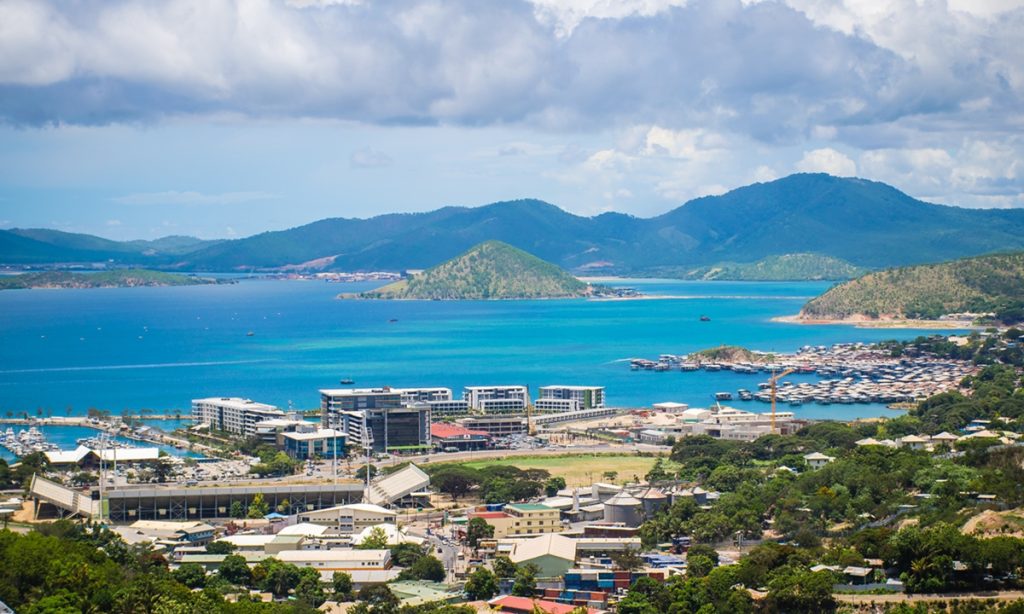
Western media’s hype of China factor over NZ-PNG defense deal aims to limit Pacific nations’ independent choices: Chinese expert

New Zealand and Papua New Guinea (PNG) signed a defense cooperation agreement late Wednesday, with some foreign media hyping the pact as Wellington's latest effort to deepen security ties in the Pacific with China in mind. A Chinese expert said that attempts by certain media to frame the cooperation in the context of China reflect their intention to interfere in the choices of Pacific island nations and seek to cultivate exclusive partnerships.

New Zealand Defense Minister Chris Penk and his Papua New Guinea counterpart Elias Kapavore signed a Statement of Intent on Defense Cooperation for 2026-2029 in Papua New Guinea, Reuters reported on Wednesday citing Penk's office. The agreement will expand defense dialogue, training, military exercises and personnel exchanges, it said.

"In an increasingly volatile world, Pacific nations like ours are stronger when we work closely together to respond to the complex security challenges affecting our region," according to the website of the New Zealand government. The statement didn't directly mention China.

The Canberra Times also reported on the signing, citing Australian Associated Press and claiming that Wellington seeks ‌to deepen security ties in the Pacific amid growing strategic competition and ‌China's expanding influence. 

The Reuters report claimed that the deal adds to a quickening push by Australia, New Zealand and the US to lock in Pacific security ties as China expands its diplomatic, policing and infrastructure footprint across the region. 

Washington signed a defense cooperation agreement with PNG in 2023 that gives US forces easier access for training and infrastructure work, per Reuters. Australia has followed security deals with PNG and Vanuatu with a new mutual-defense pact with Fiji, branded the Ocean of Peace Alliance, that officials have said could open to other Pacific nations.

As media alleged that the mutual defense treaty signed between Australia and Fiji is part of Canberra's campaign to shore up its influence in the South Pacific and to limit China's influence, Chinese Foreign Ministry spokesperson said in a press conference on July 6 that "We do not engage in geopolitical rivalry or seek selfish political gains." 

"It is hoped that the country concerned will truly respect the independence of Pacific island nations, focus on their sustainable socioeconomic development, and avoid targeting any third party or harming the interests of any third party," the spokesperson Mao Ning said.

Ning Tuanhui, an associate research fellow at the China Institute of International Studies, told the Global Times on Thursday that attempts by certain media outlets to link the defense cooperation agreement to China also reflect their intention to interfere in the choices of Pacific island nations, so as to cultivate exclusive partnerships in the region.

New Zealand and Australia have markedly expanded security and defense cooperation with Pacific Island countries over the past few years, driven largely by growing strategic anxiety, Ning noted.

Long viewing themselves as the region's primary security providers, the two countries have become increasingly anxious that China's engagement could weaken their traditional influence, particularly after the signing of the China-Solomon Islands security framework agreement, Ning said, adding that strengthening defense ties with Pacific island countries is therefore seen as a way to reinforce their regional presence.

The Reuters report also claimed that PNG's recent move to close Taipei economic office in Port Moresby has further underscored the pressure on Pacific governments as they try to balance security support from traditional partners with economic ties to China.

Ning added that Pacific Island countries generally pursue a foreign policy of  "friends to all, enemy to none." While they value Australia's and New Zealand's longstanding role in the region, they are also expanding ties with China and other Global South countries to diversify their external partnerships. That, he said, is also why Australia and New Zealand have intensified engagement with the region—to weaken Pacific Island countries' ties with other major powers, particularly China.

During the meeting with PNG's Minister for Foreign Affairs Justin Tkatchenko in Manila on Wednesday, Chinese Foreign Minister Wang Yi said China appreciates PNG for closing the Taipei economic office, according to the Xinhua News Agency.

China's development of relations with Pacific Island countries does not involve geopolitical games or seek a so-called sphere of influence, Wang said, adding that these countries have the right to independently choose their development partners and should not be interfered with by third parties, Wang said, per Xinhua.

Tkatchenko also said PNG is willing to deepen its cooperation with China in areas such as trade and investment, infrastructure and medical and health care, and strengthen communication and collaboration in APEC and other multilateral platforms, per the report.