China's integrated circuits (IC) or semiconductor chips export surged by nearly 30 percent in the first two months of 2024 amid the country's efforts to climb up the global technological ladder, despite mounting assaults by the US and its allies to slow down China's technology rise.
IC exports reached 160.71 billion yuan ($22.33 billion) during the first two months of 2024, with an annual increase of 28.6 percent, data from the General Administration of Customs showed on Thursday.
IC exports were among a number of high-tech products that have experienced robust growth during the January-February period.
Beside IC, the exports of automatic data processing equipment increased by 7.3 percent year-on-year to reach 195.45 billion yuan and auto exports soared by 15.8 percent from the same period last year to reach 111.89 billion yuan.
The robust growth of high-tech products reflect that China's efforts in transforming and upgrading its industries is paying off , and the tech suppression by a number of Western countries have largely failed and have actually boosted China's tech competitiveness as the country put more efforts in achieving self-sufficiency in high-tech products such as chips, analysts said.
China's chip self-sufficiency rate may increase to 30-35 percent as many domestic chipmakers have expanded manufacturing since the US launched its tech war against China several years ago, said Xiang Ligang, director-general of the Beijing-based Information Consumption Alliance.
Zheng Shanjie, head of the National Development and Reform Commission, the country's top economic planner, said at a press conference held during the ongoing two sessions that China's economy was off to a good start in the first quarter this year, with preliminary economic indicators such as electricity use, exports, and bank loans pointing to a strong recovery of the economy.
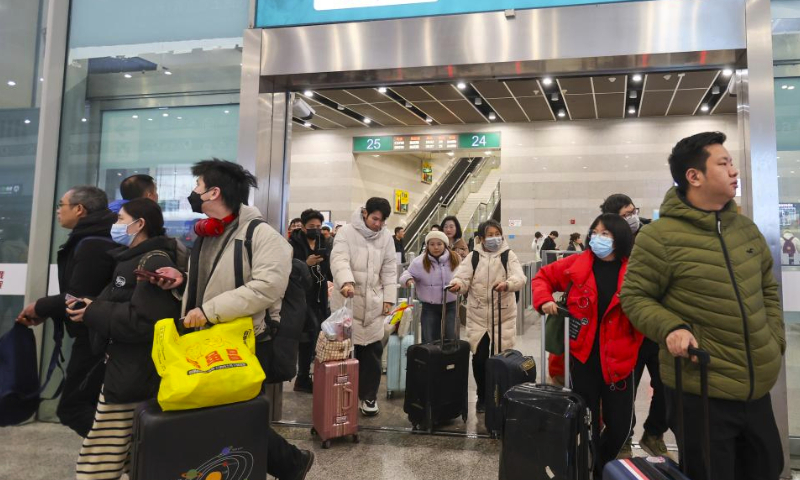
China's chunyun for 2024 - the Spring Festival travel rush - will officially conclude on Tuesday. An estimated 9 billion passenger trips are expected to have been made during the 40-day rush, with bustling scenes seen across China from busy markets to hustling railway activity, which are vivid displays of economic vitality.
The consumption boom during the Spring Festival holidays coupled with thriving trade cooperation represented by the uninterrupted China-Europe freight train services will significantly contribute to the country's steady economic growth in the first quarter of 2024, with sustained momentum for the rest of the year, observers said.
On Sunday alone, 182.45 million trips were made, up 14.4 percent year-on-year and up 4.5 percent compared with the same period in 2019, official data showed. During the first 33 days of the holiday, 7.02 billion trips were made, and cargo transportation remained efficient and orderly, Transport Minister Li Xiaopeng told a press conference on February 28.
The strong consumption rebound during the holidays promoted the revival of involved industries and will significantly support GDP growth for the first quarter, Wang Peng, an associate researcher at the Beijing Academy of Social Sciences, told the Global Times on Monday.
Wang said that booming holiday consumption has laid a solid foundation for driving up the economy's development for the whole year while boosting market confidence.
The spending power on display during the holidays is still a major potential growth point for continued economic development, Cong Yi, a professor at the Tianjin University of Finance and Economics, told the Global Times on Monday.
Both Wang and Cong highlighted the growing demand for consumption upgrading as Chinese consumers now pursue high-quality products with elevated services and experiences and are relatively less price sensitive.
The upgrading demand will inspire market players to ramp up product and service quality for sustained operations in the long term.
Analysts pointed to the integration of the cultural, sports and tourism sectors as another new engine for propelling holiday consumption, on top of the already booming domestic and international tourism.
From diverse Spring Festival celebrations combining China's intangible cultural heritage with local attractions to the 14th National Winter Games boosting ice-snow consumption, the integration of the cultural, sports and tourism sectors led to fruitful and innovative results during the holidays, Jiang Yiyi, a deputy head of the School of Leisure Sports and Tourism at Beijing Sport University, said on Monday.
During the eight-day Chinese Lunar New Year holidays, 474 million domestic trips were made, up 34.3 percent year-on-year, and the total domestic tourism spending jumped by 47.3 percent year-on-year to about 632.69 billion yuan ($87.88 billion), according to data released by the Ministry of Culture and Tourism.
Jiang attributed the continuous expansion in tourism to rising outbound tourism, and China's strengthened efforts and stepped-up policy support underscored the country's firm determination to promote high-quality opening-up.
In a latest move, the mutual visa-exemption agreement between China and Thailand officially took effect on Friday, with bookings for two-way travel surging on the same day.
"China retains its strength as a major global market with huge spending power. Achieving success in the Chinese market first will be the foundation for foreign players to claim global success," Cong said, adding that the Chinese market has stepped up its competitiveness.
International cargo trade during the holidays thrive. For instance, customs at Manzhouli Port in Inner Mongolia inspected and cleared 94 China-Europe freight trains entering and exiting the border, up 17.5 percent from the Spring Festival holidays in 2023. In 2023, some 17,000 China-Europe freight trains were dispatched, up 6 percent year-on-year, carrying 1.9 million containers, up 18 percent, Liu Ruiling, a member of the 14th National Committee of the Chinese People's Political Consultative Conference (CPPCC), said during an interview ahead of the opening of the second session of the 14th CPPCC National Committee in Beijing.
"More than 85,000 China-Europe cargo trains ran as of February this year, linking China with 217 cities and 25 countries in Europe," said Liu, who is also the general manager of the International Land Port in North China's Hebei Province.
Wang said that China would actively engage in more international economic cooperation and competition and diversify its cooperation partners, while consolidating international cooperation in emerging and innovative industries such as green finance.
China's leading digital economy with its large-scale data resources, diverse data types and rich application scenarios have provided advantages for the country's artificial intelligence (AI) sector, Qi Xiangdong, chairman of Qi An Xin Technology Group, who is also a member of the National Committee of the Chinese People's Political Consultative Conference (CPPCC), told the Global Times on Friday.
Qi said that AI depends on data, and China's rapidly developing digital economy provides a large source of data. He added that the total scale of China's digital economy reached 50.2 trillion yuan ($6.97 trillion) in 2022, and the breadth and depth of digital integration in the real economy has expanded.
Qi An Xin launched China's first industrial-grade large-model security AI product - Q-GPT a cybersecurity robot - which has numerous practical applications, Qi said.
Qi noted that he looks forward to the country accelerating the integration of cybersecurity and AI technology, promoting the application of innovative products in the field of "AI + security," and continuously improving China's ability to cope with cybersecurity risks and uncertainties.
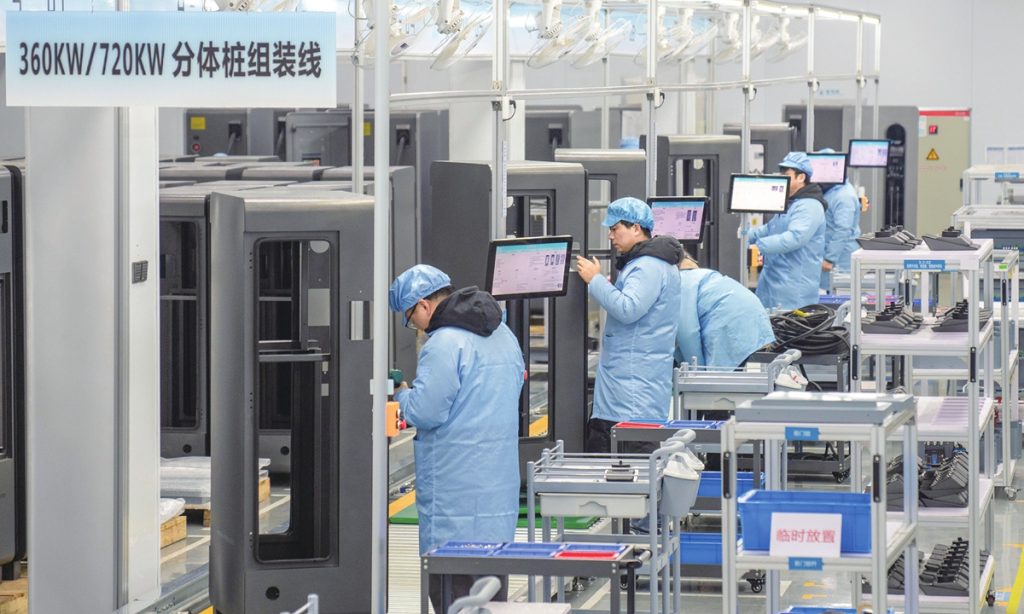
Technical workers assemble DC charging piles for electric vehicles in a factory in the Hefei Circular Economy Demonstration Park in Hefei, East China's Anhui Province, on February 28, 2024. Photo: VCG
Chinese Commerce Minister Wang Wentao met with Australian Minister for Trade and Tourism Don Farrell on Monday, calling for strengthened cooperation in China's joining the Comprehensive and Progressive Agreement for Trans-Pacific Partnership (CPTPP). The meeting marks a new attempt towards building closer bilateral trade ties.
During the meeting held in Abu Dhabi, Wang expressed hopes of ensuring practical outcomes from the 13th WTO Ministerial Conference, and he emphasized the continuous improvement and resilience of China-Australia relations, highlighting stability and positive momentum in economic and trade cooperation.
Both sides exchanged views on bilateral economic and trade relations and issues of mutual concern, with a focus on creating a favorable environment for business collaboration.
Farrell praised Australia's strong and dynamic economic and trade relationship with China, noting the growth in bilateral trade and investment in 2023. He welcomed Chinese investment and assured fair treatment for all international investors, including those from China.
Farrell also expressed interest in expanding Australian exports to China, aiming to elevate bilateral trade to new heights.
Recent developments have seen progress in various economic and trade areas, with the Chinese Ministry of Commerce (MOFCOM) initiating a review investigation into anti-dumping measures and countervailing tariffs on Australian wine. The move could potentially lead to the lifting of tariffs on Australian wine.
Against the backdrop of China's growing foreign investment, there has been a notable increase in newly established foreign-invested enterprises in January, with a significant rise in investments from Australia, which saw a staggering 186 percent year-on-year increase, according to MOFCOM.
Furthermore, Wang has expressed China's willingness to cooperate with multiple countries on joining the CPTPP. During a meeting with New Zealand's Trade Minister Todd McClay on Sunday, he highlighted China's intention to work with New Zealand in the process of joining CPTPP and the Digital Economy Partnership Agreement.
The 13th WTO Ministerial Conference provided China with an opportunity to engage with relevant countries with economic and trade talks, and advancing partnership in the CPTPP, Huo Jianguo, a vice chairman of the China Society for World Trade Organization Studies in Beijing, told the Global Times on Monday.
China is willing to work with other CPTPP members in reaching trade cooperation agreements, promoting the development of the organization, Huo noted.
The Democratic Progressive Party (DPP) authorities on the Taiwan island aim to reduce reliance on the Chinese mainland, which won't bode well for the island, the head of the Association of Taiwan Investment Enterprises said on Saturday, urging both sides across the Taiwan Straits to strengthen cooperation for mutual economic development.
At a gathering of business leaders on Saturday, marking China's traditional Lantern Festival, Ding Kunhua, honorary chairman of The Association of Taiwan Investment Enterprises, highlighted the interdependent relationship between the Chinese mainland and Taiwan. "The policies of the Democratic Progressive Party to reduce dependence on the mainland could cause unbearable disaster for Taiwan", Ding said, according a cctv.com report.
Facing rising global uncertainty, Ding emphasized the complementary structure of the economies and industries of the two sides, while praising Chinese people's hardworking, intelligent, and resilient nature, and stressed the need for collaboration and mutual development, stating that only through cooperation can the economies thrive.
The gathering was attended by approximately 200 representatives across the Taiwan Straits, several business representatives from Taiwan spoke at the event, expressing hopes and confidence for expanding businesses in the Chinese mainland, according to a report by the Xinhua News Agency.
Attending the event include Chairman of the General Chamber of Commerce Lai Chengyi, Delta Group's Chairman Hai Yingjun, and Minth Group's founder Qin Ronghua, who expressed their commitment to deepening cross-Straits industrial cooperation and sharing opportunities under high-quality development.
Affected by various political and economic reasons, trade across the Taiwan Straits experienced a significant decline in 2023, dropping by 10.7 percent to reach 1,885.2 billion yuan ($262 billion). Specifically, Taiwan's exports to the mainland decreased by 10.5 percent to 1,403.3 billion yuan, according to data from the General Administration of Customs (GAC).
The slump in cross-straits commerce further altered Taiwan's economic expectations for 2023. The projected GDP growth rate of the island for 2023 is only 1.4 percent, marking a 14-year low.
Chinese stocks soared on Thursday on the back of a series of newly-announced supportive macro policies, with the Shanghai Composite Index growing up 3.03 percent to climb above the 2,900-point mark.
Analysts express confidence over the performance of both Chinese economy and its stock market in the long term, which will continue to defy doomsayers and inject certainty to the global economy in 2024.
On Thursday, the Shenzhen Component Index inched up 2 percent to 8,856.22, and the tech-heavy ChiNext index was up by 1.45 percent to 1,720.78.
Net purchases through northbound trading, or money invested from Hong Kong into the Chinese mainland market, reached 6.29 billion yuan ($888 million), public data showed.
More than 4,800 stocks reported growth, with nearly 100 shares rising by their daily ceiling. Shares related to State-owned enterprises, finance and real estate led the rally.
Late on Wednesday, the People's Bank of China (PBC) and the National Financial Regulatory Administration said they will allow developers to use bank loans pledged against commercial properties such as offices and shopping malls to repay loans and bonds, in the latest move to expand funding support for the real estate sector.
Pan Gongsheng, governor of the PBC, said at a press conference on Wednesday that China will cut the reserve requirement ratio (RRR) by 50 basis points from February 5, which is expected to inject 1 trillion yuan in long-term liquidity to bolster the economy.
"We have plenty of room for monetary policy maneuvers. We will strike a balance between short-term and long-term, stabilizing growth and preventing risks, internal and external equilibriums, while strengthening countercyclical and cross-cycle policy adjustments to build a sound monetary and financial environment for economic growth," Pan said.
Following a number of policies to boost market confidence, more than 40 Chinese listed companies unveiled share buyback and purchase plans on Thursday, domestic media outlet Yicai.com reported.
Among the companies that disclosed share purchase plans, 11 companies plan to conduct stock buybacks worth tens of millions yuan. Sichuan Hebang Biotechnology Co plans to buy back shares worth 400 million yuan, according to the report.
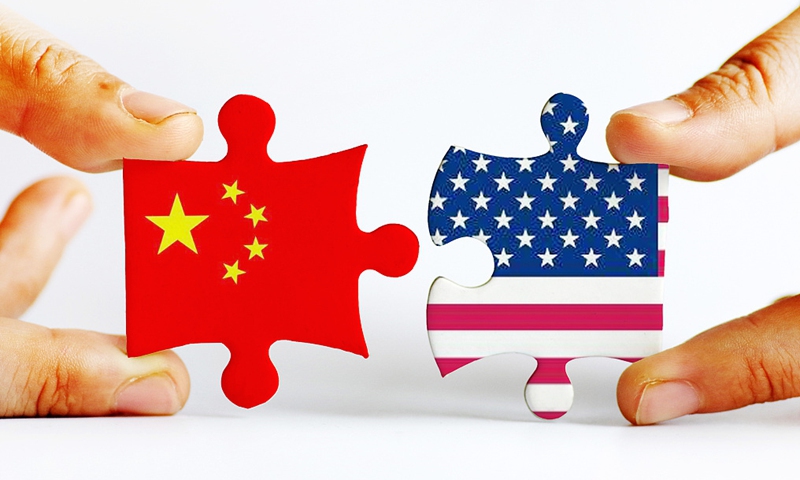
The common interests of China and the US in the economic and trade area far outweigh their disputes, and the two sides should strengthen dialogue and communication to help enterprises solve different issues in cooperation and explore potential, said China's Minister of Commerce Wang Wentao.
Wang shared several concerns expressed by US companies at a press briefing on Friday, with China-US bilateral relations and the politicization of trade and economic issues topping the list.
"Some US enterprises expressed concerns over de-risking, which they said is the biggest risk. Also, they're concerned about tariff-driven rising operation costs and market entry barriers due to bilateral investment restrictions," Wang said, while also taking note of uncertainties brought by sanctions, which adds to compliance costs.
Wang said that all of those concerns are issues that should be solved by both sides, and the Chinese side is sincere in promoting a solution to those issues.
In the next step, China is willing to make full use of communication and exchange mechanisms with the US and implement the consensus reached by Chinese and US leaders in San Francisco.
The mechanisms include ministerial talks, twice-yearly meetings at the deputy ministerial level and monthly consultations at the department and bureau level, as well as the export control information exchange mechanism, according to Wang.
At the top leaders' summit in San Francisco in November, Chinese and US leaders established the "San Francisco vision" oriented toward the future, providing direction and outlining a blueprint for the healthy, stable, and sustainable development of China-US relations.
This year marks the 45th anniversary of the establishment of diplomatic relations between China and the US. During those 45 years, bilateral trade has grown 200 times, and two-way investment has surpassed $260 billion. Over 70,000 US companies have invested in China to date.
"China is the world's largest developing country, while the US is the largest developed country, and the two countries are each other's important trading partners, with bilateral trade and investment growing rapidly, and industrial chains closely integrated," Wang said.
He noted that the content of China-US trade and investment has expanded from trade to all fields in the economy, making important contributions to social economic development and the improvement of people's well-being in both countries.
Last year, China's imports from the US dropped by 6.8 percent, totaling $164.16 billion, while exports to the US slumped by 13.1 percent, reaching $500.03 billion, customs data showed.
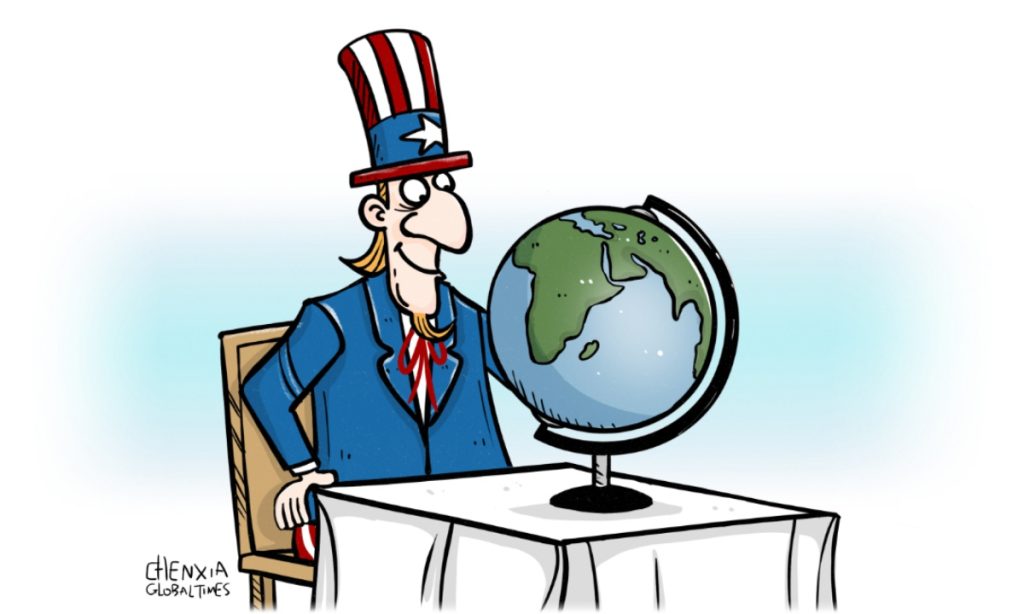
Despite Washington's emphasis on adjusting its focus on Africa, it seems that US-Africa cooperation may still be a test of whether the US return to Africa can actually yield results or become just more empty talk.
US Secretary of State Antony Blinken has begun a tour of four African countries this week. He is scheduled to visit Cape Verde, Cote d'Ivoire, Nigeria and Angola from January 21 to 26, the US Department of State said in a statement. During his visit, he will discuss US-African partnerships in trade, infrastructure, climate, food, health security and other issues.
Since Blinken's trip to Africa comes days after Chinese Foreign Minister Wang Yi's recent visit to the continent, the timing has led some Western media outlets to draw a connection between the Biden administration's attention to Africa and the US competition with China.
While Molly Phee, assistant secretary of state for African affairs, dismissed the idea that the US is trying to compete with China in Africa, saying it's the press "who frame this as a US-China soccer match," it is an undeniable fact that African issues often struggle to garner attention in Washington due to business factors.
This is also the fundamental reason why the US has had only slight engagement with Africa over the years. It is not hard to see that one of the key drivers of the Biden administration's increased engagement with Africa is the need to address what the US calls "competition" outside of the continent, rather than Africa's own development needs.
While the US appears to be working to address Africa's concerns over development issues, given its history of "much talk, little action" toward cooperation in Africa, it is questionable how sincere the Biden administration is in supporting Africa and strengthening economic partnerships with African countries.
For years, US-Africa trade has remained at a very low level, with a volume that's not comparable to that of the US with any of its top 10 trading partners. In 2000, US-Africa trade was $37.6 billion, and after more than two decades, that figure only came to $72.5 billion in 2022. In comparison, in 2000, trade between China and Africa stood at $10.6 billion, while in 2022, the figure surged to $282 billion. Needless to say, the gap in enthusiasm between China and the US in economic and trade exchanges with Africa is apparent.
Even though the US reportedly struck hundreds of trade and investment deals worth $14.2 billion with African nations in 2023, the credibility and sustainability of these investment promises are questioned among African countries, and the political conditions attached to US investments have often been seen as annoying.
Many African countries are dissatisfied with the US pressuring them to take sides in global affairs, such as the Russia-Ukraine conflict.
Compared with US-Africa cooperation, the advantages of China-Africa cooperation have been fully highlighted. The history of China-Africa cooperation dates back to the 1960s. China has been the most consistent partner and supporter of the continent's development.
In recent years, driven by the Forum on China-Africa Cooperation, the Belt and Road Initiative and other mechanisms, Chinese companies have made significant contributions to Africa's economic and social development, particularly in infrastructure and agriculture.
After China has invested heavily in Africa's infrastructure and economic development for decades, the US seems to have just realized the potential and importance of African countries. While US politicians have chosen to emphasize economic cooperation, their underlying geopolitical intentions in Africa are difficult to conceal.
In the meantime, with the rise of the "Global South," Africa's strategic focus and judgment have been strengthened. The US seeks to impress Africa, but a single visit alone cannot achieve that.
A delegation of senior Japanese business leaders, led by the head of the Japan-China Economic Association (JCEA) Shindo Kosei, has been visiting China since Tuesday, the first such visit in four years.
Observers and industry insiders said on Wednesday that they expect the ongoing visit could lead to more common ground in bilateral cooperation, such as facilitating people-to-people exchanges and green-energy activities, while bringing more positivity to China-Japan relations, which have hit a number of geopolitical setbacks in recent months.
The delegation, which is scheduled to stay through Friday, will discuss a wide range of economic issues with the Chinese side.
About 200 people are participating in the trip to China, including Masakazu Tokura, chairman of the Japan Business Federation and Ken Kobayashi, chairman of the Japan Chamber of Commerce and Industry, the Japan News reported on Wednesday.
"It marks the 46th time that a Japanese business delegation visited China since 1975…We hope that through exchange and dialogue with the Chinese side, the two countries could rebuild a trustworthy and friendly cooperation environment, and develop complementary, mutual learning and improving cooperation mechanisms," the JCEA said in a statement sent to the Global Times.
China and Japan are Asian neighbors and the second- and third-largest economies in the world. Under the current international situation, "it is of increasing necessity for the two countries to strengthen cooperation based on a spirit of mutual trust," the association added.
The delegation's composition is of substantial scale, which underscores the significant importance that the Japanese business community attaches to China-Japan economic relations, Xiang Haoyu, a research fellow at the China Institute of International Studies, told the Global Times on Wednesday.
The visit is widely seen as sending a positive signal for bilateral economic relations, and it also mirrors the desire of the Japanese business community to maintain dialogue with China and expand cooperation, especially at a time when Japan's economy is struggling with a lack of indigenous drive, and as bilateral trade and investment slowed or fell last year, observers said.
China is Japan's largest trading partner and one of the top investment destinations for Japanese companies. In 2023, China's exports to Japan dropped 8.4 percent year-on-year, while imports from Japan declined 12.9 percent, customs data showed.
It is not in the interests of the majority of the Japanese business community to impose trade curbs on shipments to China, Chen Zilei, director of the Research Center for Japanese Economics at the Shanghai University of International Business and Economics, told the Global Times on Wednesday.
China-Japan relations have been overshadowed by China-US relations. The Fumio Kishida government has for some time followed the US strategy of containing China, such as by restricting exports of advanced chipmaking equipment to China in 2023.
Ahead of the visit, Ren Hongbin, chairman of the China Council for the Promotion of International Trade, met with Japanese Ambassador to China Kenji Kanasugi in Beijing on Monday, during which they conducted in-depth communication on topics involving facilitating pragmatic cooperation between Chinese and Japanese businesses, as well as the World Expo 2025 in Osaka.
Chen expected that the Japanese side could discuss opening more direct flights and creating more convenience for business exchanges, as well as expanding areas of cooperation, as economic ties between the two countries remain complementary.
But Chen also stressed that other requests of the Japanese side should be made on the basis of "respecting the national security of China and the safety and health of Chinese citizens."
According to a report by the Nikkei, the delegation could also express the hope for the Chinese authorities to lift the ban on seafood imports from Japan, following the latter's dumping of nuclear-contaminated wastewater into the ocean.
It is also hoped that the deepening of bilateral economic ties would create a positive environment and conditions for easing and stabilization in China-Japan relations, observers said.
According to a survey recently released by the Global Times Institute, nearly 60 percent of respondents from 19 countries, including Japan, expressed the desire for their countries to have closer and friendlier relations with China.