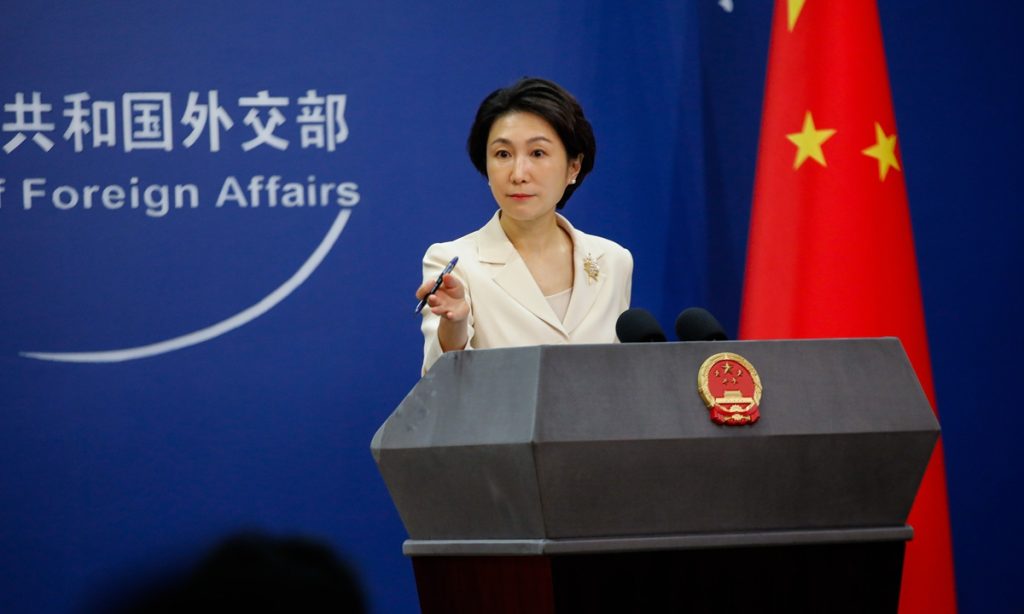
Top leaders of China and the Democratic People's Republic of Korea (DPRK) will exchange views on bilateral relations and issues of mutual interest in Pyongyang next week, Chinese foreign ministry spokesperson Mao Ning said on Friday.
Mao made the remarks at a regular news briefing when asked about the upcoming state visit to the DPRK by Xi Jinping, general secretary of the Communist Party of China Central Committee and Chinese president, scheduled from June 8 to 9.
Xi's trip is at the invitation of Kim Jong Un, general secretary of the Workers' Party of Korea and president of the State Affairs of the DPRK.
This visit will be Xi's first state visit to the DPRK in seven years. This year marks the 65th anniversary of the signing of the China-DPRK Treaty of Friendship, Cooperation and Mutual Assistance.
China and the DPRK will take this visit as an opportunity to promote the bilateral relations to keep pace with the times and achieve greater development, enhance the well-being of the people of the two countries, and make greater contributions to peace, stability, development and prosperity in the region and the world at large, Mao said.
Chinese Vice President Han Zheng on Saturday called for deeper trade and investment cooperation between China and Belarus for the benefit of the two peoples.
Addressing the opening ceremony of a China-Belarus industrial and investment cooperation forum in Minsk, Han said relations between the two countries have maintained high-level development in recent years, with economic, trade and investment cooperation yielding fruitful results.
Bilateral trade in 2025 was nearly 150 times the figure recorded shortly after they forged diplomatic relations more than three decades ago, he said, adding that the flagship China-Belarus Industrial Park has attracted 178 enterprises and effectively driven local economic and social development.
He called on the two countries to strengthen the alignment of their development strategies, advance the high-quality Belt and Road cooperation, explore new drivers of trade growth and expand industrial and investment cooperation.
China will remain committed to high-quality development and high-level opening up, creating broader development opportunities for countries around the world including Belarus, he noted.
The forum was jointly organized by the China Council for the Promotion of International Trade, the China-Belarus Industrial Park and the National Agency of Investment and Privatization of Belarus, with more than 400 people present.
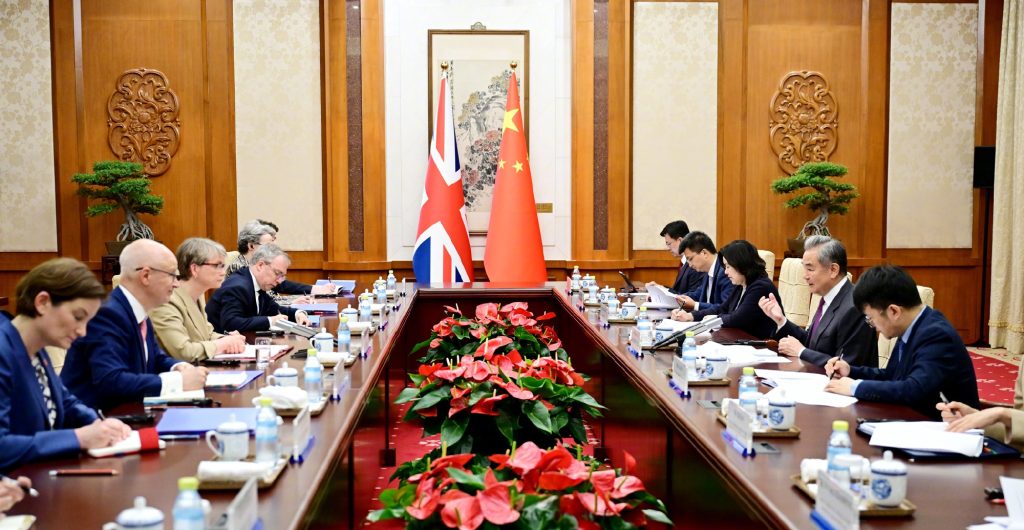
Chinese Foreign Minister Wang Yi on Tuesday said China hopes the British side will provide Chinese enterprises with a fair, just and non-discriminatory business environment, and foster a sound atmosphere for the development of bilateral ties and the deepening of cooperation between the two countries, according to the Xinhua News Agency.
Wang, also a member of the Political Bureau of the Communist Party of China Central Committee, made the remarks when holding the 11th China-UK Strategic Dialogue with UK Foreign Secretary Yvette Cooper in Beijing.
Noting that the leaders of both sides agreed to develop a long-term and consistent comprehensive strategic partnership when British Prime Minister Keir Starmer visited China at the beginning of this year, Wang said that at present, exchanges and cooperation in all fields between the two countries have been fully restored and are gradually getting back on track.
As permanent members of the United Nations Security Council, China and the UK should take the lead in following the right and impartial path, safeguard the fruits of victory in World War II, abide by the UN Charter, adhere to true multilateralism, and jointly promote the building of a more just and reasonable global governance system, Wang noted.
Cooper said that the long-term and consistent comprehensive strategic partnership is of great significance and in line with the interests of both sides. At a time when the international situation is turbulent and complex, it is more important than ever for the UK and China to strengthen dialogue and cooperation to jointly address global challenges, she added, according to Xinhua.
Since the establishment of diplomatic relations with China, the policy pursued by the UK on the Taiwan question has remained unchanged and will not change, Cooper said, adding that the British side is willing to continue to engage in candid dialogue with the Chinese side, handle differences constructively and properly, and promote the healthy and stable development of UK-China relations.
Cooper's visit is widely seen as a follow-up to the consensus reached by the leaders of the two countries during Starmer's visit to China in January, with the aim of translating political understandings into concrete outcomes, Li Guanjie, a research fellow at the Shanghai Academy of Global Governance and Area Studies under the Shanghai International Studies University, told the Global Times on Tuesday.
"Economic and trade cooperation remains the cornerstone of China-UK relations. Bilateral trade has remained steady in recent years, but maintaining that scale has become increasingly challenging amid global economic uncertainties. Against this backdrop, both sides are expected to focus on consolidating existing cooperation while exploring new growth areas, like science and technology cooperation, as the UK seeks to gain a better understanding of China's technological development and identify potential areas for future collaboration, Li said.
British media have also closely followed Cooper's visit. In a report published on Monday, the Independent said that Cooper had arrived in Beijing for in-depth talks on global security as the UK seeks to strengthen diplomatic relations with China.
Cooper's trip, which runs from Monday to Wednesday, includes visits to Beijing and Shenzhen in South China's Guangdong Province for a program focused on science and technology, according to Reuters. Cooper's visit is a "trip to focus on tackling global challenges," Reuters said.
Cooper's trip is understood to be aimed at building on previous Government visits with the most extensive senior foreign policy discussions since Labour came to power, said the Independent.
In another article published on Tuesday, the Independent noted that the UK government "sees engagement with major economies like China as key to protecting Britain's security at a time of heightened global instability, insisting the UK will cooperate where it can and challenge where it must."
At a time when geopolitical tensions, regional conflicts and protectionist tendencies continue to create uncertainties worldwide, maintaining dialogue and expanding areas of consensus between major countries could contribute to international stability, which is important for countries like China and the UK, Li said, adding that issues such as climate change, artificial intelligence and multilateral governance are likely to become important areas where the two sides can further deepen cooperation in the future.
Fabricating excuses and spreading disinformation cannot serve as a justification for the US' brutal blockade and illegal sanctions against Cuba, Foreign Ministry spokesperson Mao Ning said on Thursday.
Mao made the remarks when asked to comment on media reports that US Secretary of State Marco Rubio testified before the US Senate Foreign Relations Committee and a senator said that US intelligence agencies during the Biden administration had found no evidence of Cuba supporting terrorism. Rubio reportedly responded that Cuba had "sponsored" almost every left-wing, radical, violent terrorist group in the Western Hemisphere and that no evidence was needed. He also reportedly claimed Cuba needs new leadership to achieve serious reforms so that it will no longer pose a threat to Washington. On the same day, media reports said that due to the US oil embargo on Cuba, transportation difficulties in Cuba have prevented the smooth distribution of 20,000 tons of food that the UN planned to provide to Cuba.
The US has long imposed unilateral sanctions and a blockade on Cuba, severely affecting Cuba's economy and people's livelihoods and causing great suffering to the Cuban people, which has been widely opposed by the international community, said Mao.
China firmly supports Cuba in safeguarding its national sovereignty and security and opposes external interference. The US should listen to the call of the international community and immediately and fully end its blockade, sanctions, coercion and pressure against Cuba, Mao said.
After a historic 210-day orbital stay that set a new record for the longest in-orbit duration by a Chinese taikonaut crew, the Shenzhou-21 astronauts concluded their extraordinary space journey on Friday by returning to Earth aboard the Shenzhou-22 spacecraft.
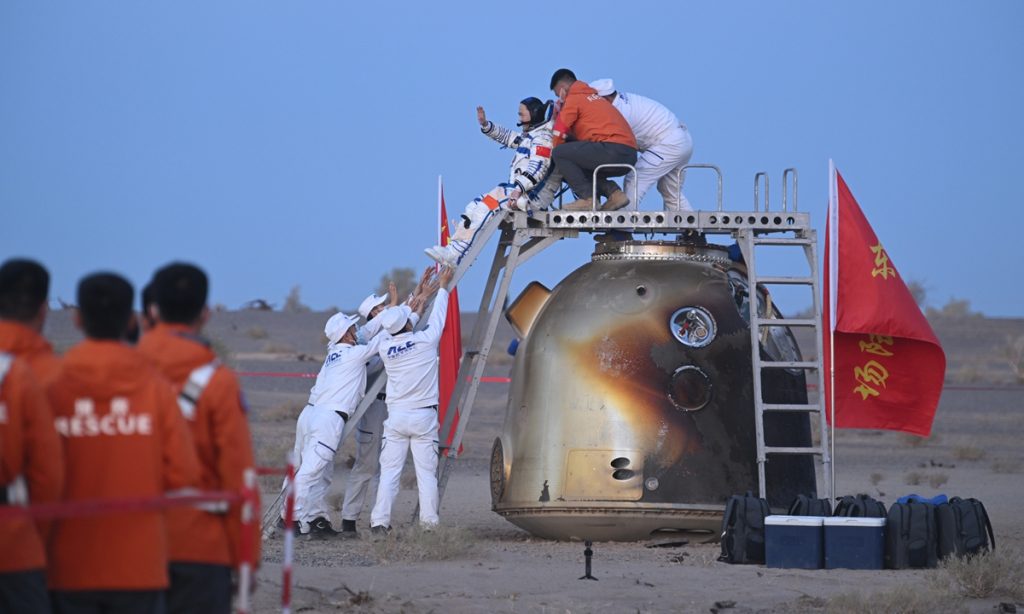
The return capsule of China's Shenzhou-22 spaceship carrying the Shenzhou-21 astronauts touched down at the Dongfeng landing site in North China's Inner Mongolia Autonomous Region at 20:11 on Friday, with on-site medical and health support personnel confirming the taikonauts are in good physical condition, making the Shenzhou-21 spaceflight mission a complete success, according to the China Manned Space Agency (CMSA).
At 20:59, taikonauts Zhang Lu, Wu Fei and Zhang Hongzhang of the Shenzhou-21 crew left the return capsule, all in sound health. This marks the successful conclusion of their space mission, with Zhang Lu now holding the record for conducting the most extravehicular activities among China's taikonauts. Meanwhile, Wu Fei and Zhang Hongzhang have accomplished their maiden space flights, the CMSA said. Zhang Lu, who is also the commander of the three-member Shenzhou-21 crew, shared his thoughts after out of the capsule. According to China Central Television (CCTV) News, Zhang Lu said "Tomorrow is the National Science and Technology Workers Day. We brought back an apple from the space station to give it to all tech professionals. Thank you for your dedication and hard work! May China's aerospace endeavor thrive endlessly, and may all our future missions stay safe and successful!" CCTV footage showed the apple bears the Chinese characters Pingan (safety).
Having docked with the China Space Station on November 1, 2025, the three taikonauts of the Shenzhou-21 crew stayed in orbit for 210 days, setting a new record for the longest single mission duration by a Chinese astronaut crew, per the CCTV News.
"The entire return went off perfect. Guided by the spacecraft's GNC (Guidance, Navigation and Control) system, the return capsule maintained steady flight throughout and landed with pinpoint accuracy," a developer from the Fifth Academy of the China Aerospace Science and Technology Corporation told the Global Times.
According to a statement by the 502 Research Institute of the China Academy of Space Technology (CAST) shared with the Global Times, the Shenzhou-22 mission marks China's second three-orbit fast return for a crewed spacecraft. The three-orbit fast return was first successfully accomplished during the Shenzhou-21 mission, wrapping up in just 5.5 hours.
The mature application of the three-orbit fast return technology fully demonstrates the leaps and flexibility of China's manned spaceflight capabilities. It also greatly boosts the safety and reliability of manned space missions.
According to developers, this technology enables the Shenzhou manned spacecraft to better tackle major malfunctions during autonomous flight and complex assembly flight phases. It ensures taikonauts can return to safety in the shortest possible time. Additionally, it cuts down the emergency response time for unexpected anomalies aboard the space station, provides an efficient evacuation route for on-orbit crews, and strongly underpins the long-term stable operation of China's space station.
China launched the Shenzhou-21 spaceship on October 31, 2025 to send the Shenzhou-21 crew to its space station for rotation with the Shenzhou-20 crew. However, the Shenzhou-20 crew later found that the Shenzhou-20 spaceship's return capsule viewport window suffered a suspected impact from space debris during its mission and was unfit for the crew return mission.
On November 14, 2025, the Shenzhou-20 crew returned safely aboard the Shenzhou-21 spacecraft. On November 25, China launched the Shenzhou-22 spaceship to provide a return vessel for the Shenzhou-21 crew.
The crew reaped remarkable achievements throughout their stay. According to previous announcement from the CMSA, the Shenzhou-21 crew aboard China's orbiting space station completed a total of three extravehicular activities (EVAs) during their mission. The first was carried out on December 9, 2025, with the crew working for approximately eight hours, while the second on March 16, for roughly seven hours.
On April 17, the crew completed their mission's third series of EVAs, working for roughly 5.5 hours and completing the installation of space debris protection equipment and the inspection of extravehicular equipment.
The CMSA disclosed that since the second EVAs, the Shenzhou-21 astronauts have been steadily advancing their experimental missions in space life science, human body research, and microgravity physics. They have continued to conduct station environmental monitoring, equipment inspection and maintenance, and supply organization. The crew has also completed full-system pressure emergency drills, in-orbit emergency rescue training, and EVAs preparations.
Furthermore, the crew witnessed several historic firsts in China's manned space program during the orbital mission: the first delay of a spacecraft's return due to space debris impact, the first crew return aboard a different spacecraft, and the first emergency launch of a crewed spaceship. They experienced the inspiring moment when all teams across the manned space sector stood united to respond to the emergency, CCTV News reported.
Several key statistics are some of the footnotes that the People's Republic of China has written over the past 75 years: GDP per capita has risen from a few dozen dollars in 1952 to $12,700 in 2023, average life expectancy has increased from 35 years to 78.6 years, and railway mileage has expanded from 22,000 kilometers to 159,000 kilometers, including 45,000 kilometers of high-speed rail…
There are more comparisons across various sectors which demonstrate how China is marching forward with solid steps.
At this historic juncture, it is crucial to understand what kind of path China has taken and what has empowered its great strides.
The answers not only shed light on China's further quest for modernization but also offer inspiration for the rest of the world, particularly the Global South, in face of development challenges.
Strong leadership
China's modernization steps have been and will continue to be solid only under the leadership of the Communist Party of China (CPC).
Yang Xuedong, director of the Department of Political Sciences at Tsinghua University, saw the leadership in three layers - pioneer in exploration, the central pillar to unite all, and the ultimate guarantee in a crisis.
The CPC is "a pioneer" in the senses of both ideology and practice, Yang told the Global Times.
The CPC has envisioned the country's future path through the pursuit of Chinese modernization. With nearly 100 million Party members at different positions in all walks of life, the CPC also leads the effort in practice, Yang continued.
Cohesion is vital for a country as unique as China, with its huge population, vast landscape, diverse ethnicities and cultures, and varying interests of different groups, analysts said.
With Party organizations at various levels, the CPC effectively mobilizes people toward a common goal, Yang said.
The CPC has also acted as a safeguard during major challenges, Yang noted.
China's socialist cause had faced setbacks, but we can always overcome challenges with a strong leadership, analysts said.
In face of profound global changes unseen in one century, the CPC fulfills its role in the duty of every Party member, as they participate in rural revitalization in villages, safeguard national sovereignty and territorial integrity along both land and sea borders, and strive to tackle cutthroat problems and make scientific and technological breakthroughs, they said.
Clear road map
China's path has a clear goal of achieving Chinese modernization and national rejuvenation, and a well-defined road map is guiding the great cause, Yang said.
President Xi Jinping first introduced the concept of Chinese modernization in a speech he delivered to mark the CPC's centennial in July 2021.
During the 20th CPC National Congress held in October 2022, Xi delivered a report which clarified five features of Chinese modernization, as well as the essential requirements and major principles of it.
In July 2024, the third plenum of the 20th CPC Central Committee adopted a resolution on further deepening reform comprehensively to advance Chinese modernization.
According to analysts, there is a clear trajectory for how Chinese modernization was envisioned, enriched, and will be realized step by step.
Yang particularly highlighted the keyword "people," which is crucial for this trajectory to succeed.
A people-centered philosophy is reflected in China's system of democracy, its governance and pursuit of high-quality development. Yang said that China can pool all resources to complete major missions, overcome difficulties, and ensure that the fruits of development are shared by the people.
Bojan Lalic, director of the Belt and Road Institute in Belgrade, noted that China's modernization is a comprehensive model with focus on the state's role, and the objectives incorporate development of infrastructure, technology and innovation, together with social progress.
China also prioritizes environment and ecology, as well as sustainable development, and values culture and tradition in the process of modernization, Lalic said.
Inspiration for world
China's modernization is not only meaningful for the 1.4 billion Chinese people, or one-fifth of the world's population, but also offers development opportunities for others through initiatives such as the Belt and Road Initiative (BRI) and the three global initiatives - the Global Development Initiative, the Global Security Initiative and the Global Civilization Initiative, analysts said.
China has signed more than 230 BRI cooperation agreements with more than 150 countries and more than 30 international organizations, according to the National Bureau of Statistics.
Beyond immediate economic benefits, China engages in knowledge sharing and cultural exchanges with other countries and regions, showcasing the benefits of collaboration and a collective approach, Lalic said.
Hamad Al Hosani, a senior research fellow at think tank TRENDS Research and Advisory in the United Arab Emirates, told the Global Times that in contrast to rapid democratization as advocated by Western-style modernization, China's approach has been more gradual, emphasizing economic development alongside social and political continuity.
The Chinese path demonstrated the importance of long-term planning, and the value of tailoring modernization strategies to each country's unique historical, cultural, and social context, Hosani noted.
Lalic said he believes China's modernization journey provides pragmatic and adaptable insights for countries and regions facing development challenges.
Countries can tailor approaches to their unique contexts while striving for sustainable growth and development, "the key is China is replacing zero-sum game with win-win cooperation," Lalic noted.
President Xi has often said that only the wearer of the shoes knows if they fit or not, according to Xinhua.
China's experience challenges the belief that Western-style democracy and capitalism are the only viable paths to modernization, and offers an alternative approach and contributes Chinese wisdom to global development, analysts said.
For the world, China's modernization demonstrates how different governance models can coexist, promoting a more pluralistic understanding of progress and global cooperation, Hosani noted.
President Xi Jinping on Sunday called on the Chinese people to learn from heroes and role models to form a mighty force to build a strong China.
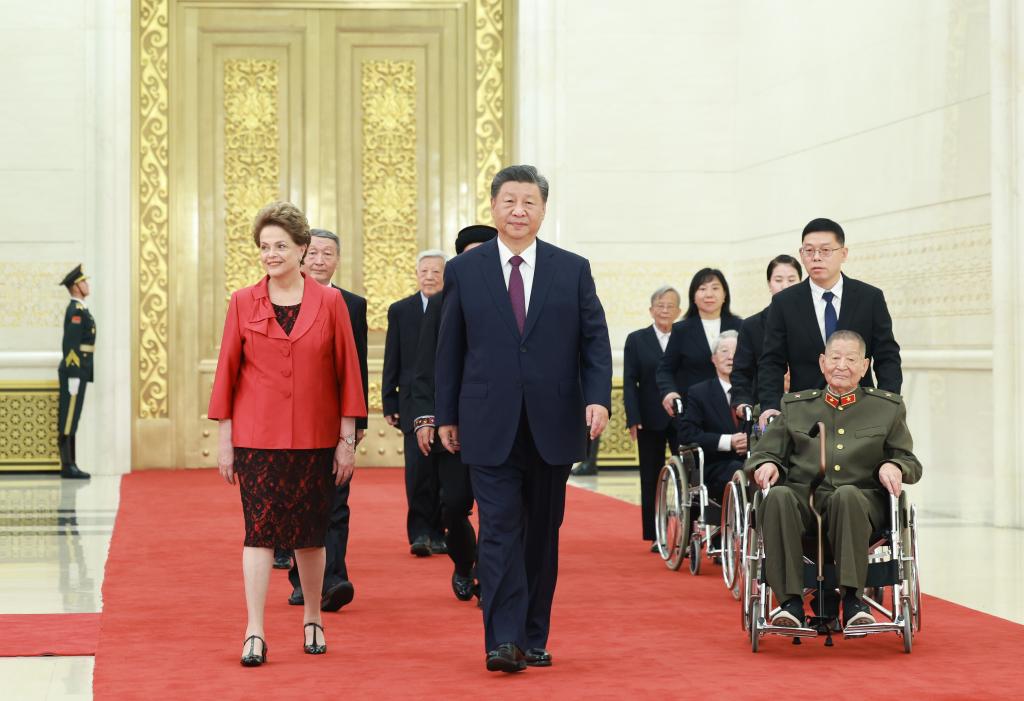
Xi, also general secretary of the Communist Party of China Central Committee and chairman of the Central Military Commission, made the remarks at a ceremony awarding the country's highest state honors ahead of the 75th founding anniversary of the People's Republic of China.
China is in a crucial period for building a great modern socialist country in all respects and achieving national rejuvenation through Chinese modernization, Xi said.
Before his speech, Xi presented the Medal of the Republic, the Friendship Medal, and medals of national honorary titles at the Great Hall of the People.
Four people, including Wang Yongzhi, a late missile and rocket expert and a pioneer of China's manned space program, were awarded the Medal of the Republic. Dilma Rousseff, president of the New Development Bank and former Brazilian president, received the Friendship Medal. Ten people were awarded medals of national honorary titles.
Among the highest state honors are also a previous border guard from Tajik ethnicity in the Taxkorgan Tajik Autonomous County Tiznapu Township, Northwest China's Xinjiang Uygur Autonomous Region. For three generations spanning 70 years, Baiyika and his family have guarded the border on the Pamir Plateau.
President Xi extended warm congratulations and high respects to the recipients of China's highest state honors.
On this occasion, Xi said that over the past 75 years the Communist Party of China (CPC) has led Chinese people of all ethnic groups in creating the twin miracles of rapid economic growth and long-term social stability.
He hailed the earthshaking changes that have taken place in China and stated that national rejuvenation is now on an irreversible historical course.
A galaxy of heroes emerging generation after generation will ensure the lasting prosperity of the Party and the people's cause, Xi said.
The Chinese president also called on the Chinese people to learn from heroes and role models to form a mighty force to build a strong China.
China is going through a crucial period for building a great modern socialist country in all respects and achieving national rejuvenation through Chinese modernization, Xi said.
He emphasized the need to bear in mind the aspirations, hone the skills, and make contributions to building a strong China.
He encouraged the Chinese people to strive for extraordinary achievements at ordinary job posts and urged all to make contributions to resolve development and reform challenges, and safeguard social harmony and stability.
Dilma Rousseff, president of the New Development Bank and former Brazilian president, received the Friendship Medal.
Xi lauded Rousseff as an outstanding representative of China's old friends and good friends who have shared the same aspirations and stood together with the Chinese people over the past 75 years.
Chinese people will never forget international friends who have made prominent contributions to China's development and the friendship between Chinese and foreign peoples, Xi said.
Xi said Chinese people stand ready to work together with people of various countries to safeguard world peace and boost common development.
Xi also called for joint efforts to build a human community with a shared future and create an even brighter future for humanity.
Before the ceremony, the recipients of the national medals and honorary titles were escorted by the state guest motorcade to the Great Hall of the People.
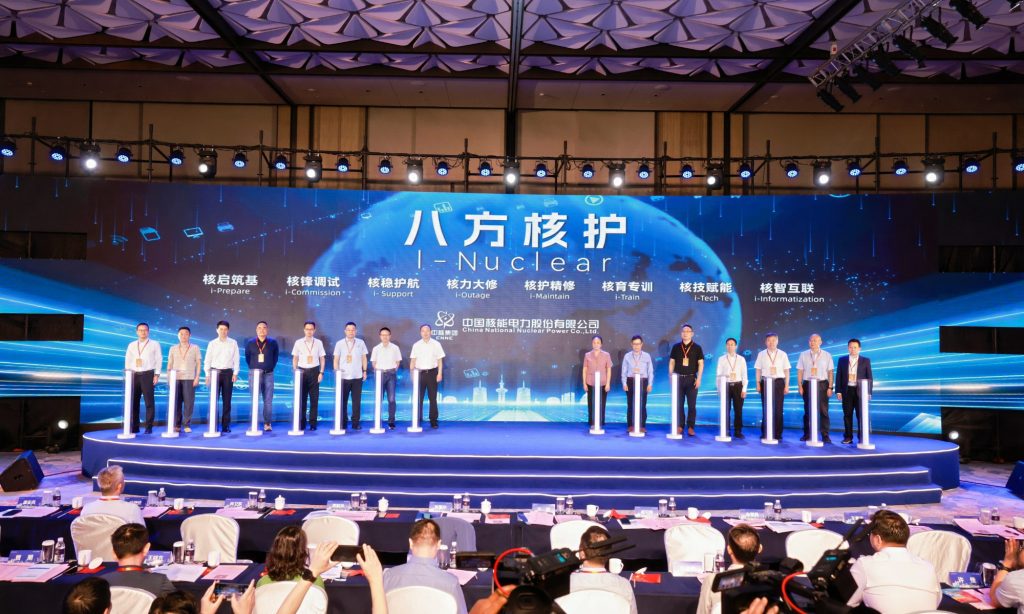
China National Nuclear Power (CNNP) released its first technical service brand “I-Nuclear” on Wednesday, aiming to further provide all-around and multi-level technical support for the safe and efficient operation of nuclear power plants.
Based on the eight technical service products released in 2017, “I-Nuclear” is a brand product of the CNNP continuously exploring and improving the core capabilities of its nuclear power technology services, catering to the diversified needs of the future nuclear power market.
Positioned as a leading one-stop nuclear power technology service provider, “I-Nuclear” covers eight key aspects in nuclear power projects: Production preparation (i-Prepare), nuclear commissioning (i-Commission), operational support (i-Support), major overhauls (i-Outage), specialized maintenance (i-Maintain), professional training (i-Train), technical support (i-Tech), and nuclear informatization (i-Informatization), according to the CNNP.
The eight products above make up the CNNP’s new “I-Nuclear” brand. They represent the culmination of the CNNP’s 260 reactor years of operational experience, serve as a significant symbol of the development of new productive forces, and reflect the successful practice of China’s nuclear safety culture, said Lu Tiezhong, chairman of the CNNP, in a video speech he delivered at the brand’s launch ceremony on Wednesday.
“It is hoped that this platform will facilitate the sharing of nuclear power experiences, enhance the safety and operational standards of nuclear power, and create even more outstanding operational achievements in the nuclear sector,” Lu said.
“As the pioneer, main force, and leader of China’s nuclear power industry, the CNNP is committed to promoting the safe and innovative development of nuclear energy, continuously exploring and improving its core capabilities in nuclear power technology services,” he noted.
The Wednesday launch ceremony was held in Shanghai along with the CNNP’s culture festival, where it was also announced that a new CNNP cultural creativity and brand studio would be set up.
Wisdom, green, health, and safety are the keywords of future technology and industrial development, which are closely linked to the CNNP’s efforts, said Fang Xin, former deputy secretary of the Party Leadership Group of the Chinese Academy of Sciences (CAS), who attended the ceremony as a guest.
Fang praised the release of “I-Nuclear” as a new milestone in the development of the CNNP. “The Chinese nuclear industry has always been at the forefront of technological innovation as a national strategic scientific force,” she said at the ceremony. “We believe that through the hard work and dedication of all those involved in nuclear power, the future of China’s nuclear energy will be even more brilliant.”
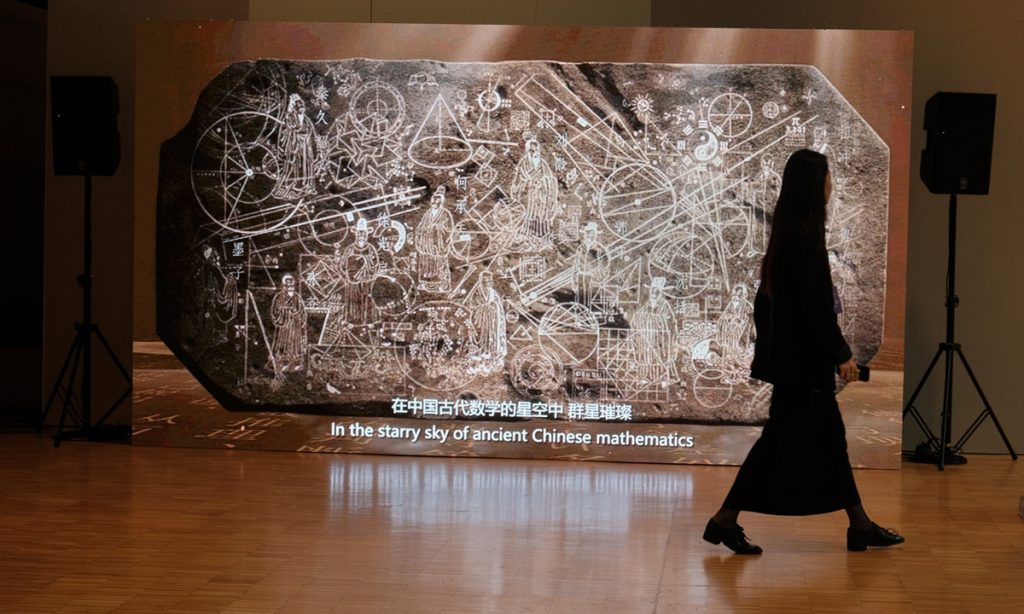
A year-long global commemoration of Liu Hui, a prominent figure in ancient Chinese mathematics, kicked off in Paris on Tuesday local time.
Co-hosted by the China Association for Science and Technology (CAST), and the Chinese National Commission for UNESCO (The United Nations Educational, Scientific, and Cultural Organization), the commemoration celebrates Liu, whose works and theories not only have a profound impact on ancient Chinese mathematics, but also continue to provide a source of inspiration for scientific and technological progress and civilization exchanges in today's world.
In November 2023, UNESCO held the 42nd session of the General Conference and approved the proposal made by the CAST to celebrate the anniversary of Liu's birth. It was the first time China had successfully applied for a birthday anniversary event for a scientist at UNESCO, said the CAST.
"We hope that through such events, we can showcase to a global audience the remarkable scientific achievements, exceptional ideas, and significant contributions to human civilization made by ancient Chinese scholars like Liu Hui," said He Junke, executive president of the CAST, in a speech he delivered at the launch ceremony of the commemoration on Tuesday local time, at the headquarters of UNESCO in Paris.
An ancient Chinese mathematical master
Liu, who lived in the 3rd century, was one of the founders of classical Chinese mathematical theory.
Liu had a profound influence on ancient Chinese mathematics and a direct influence on mathematics in the whole East Asia region, and he also indirectly influenced other regions in the world, said Zou Dahai, a research fellow at the Institute for History of Natural Sciences, Chinese Academy of Sciences (CAS).
Liu's commentary in China's mathematical classic Nine Chapters on the Mathematical Art inspired numerous mathematicians and mathematical works in later generations. "Emerging during the mid-1st century BC and having been passed down to present day, Nine Chapters on the Mathematical Art contains numerous universal algorithms and corresponding mathematical problems," Zou, who attended the Tuesday commemoration events online as an expert representative, told the Global Times. "The book has extremely rich content, featuring many significant academic achievements. But it doesn't provide explanations of how the algorithms and formulas were derived."
Liu's commentary was then an essential complement to the book, giving a comprehensive demonstration of mathematical methods in it. "Also, he made original and significant achievements in various areas, such as the theory of lü (ratio), the method of infinite division, volume theory, indirect surveying, the ratio of circumference to diameter, and decimals," Zou said.
Mathematics plays a crucial role in the modern scientific framework, He said at the launch ceremony on Tuesday. In ancient China, mathematics was one of the most advanced disciplines, deeply embedded in everyday life, he said.
"The mathematical system outlined in 'The Nine Chapters' serves as a bridge connecting abstract mathematical theories with practical applications," noted He. "From land measurement to urban planning, from building houses to constructing levees, it not only introduces precise calculation methods but also provides rigorous mathematical proof."
A light of wisdom spanning two millennia
Weeks ago, the International Astronomical Union Minor Planet Naming Committee officially named an asteroid discovered in China the "Liu Hui Star," paying tribute to this precious cultural heritage of all humanity, He mentioned at the launch ceremony of the commemoration.
Many Chinese and international scholars invited to the commemoration told the Global Times that Liu's thoughts and his contributions to mathematics not only have great historical value, but also a profound enlightenment in contemporary mathematical learning, scientific research, and youth science education.
"The achievements, thoughts, and methods of ancient Chinese mathematics have long been integrated into the mathematics that we study today, and Liu's contributions are also part of this integration, having both tangible and intangible effects on the development of Chinese mathematics," Zou said. He explained that many kinds of knowledge of proportions that (modern Chinese people) learn, including the idea of viewing fractions as the ratio of two numbers, were actually influenced by Liu.
"Apart from Liu's specific mathematical achievements, his scholarly attitude and scientific spirit are worth our study and promotion," added Zou.
Jeff Chen, a professor of mathematics at US St. Cloud State University who attended the commemoration in Paris on Tuesday, emphasized how Liu's work can inspire and benefit the science education of today's youth.
"Liu's works clearly demonstrated that he had a curious and logical mind," Chen told the Global Times via email. "Although the mathematical knowledge in the Nine Chapters on the Mathematical Art may be considered elementary or even rudimentary, Liu's thinking and modes of reasoning are definitely not. They help us to make sense of the knowledge and lead us to utilize the tools at our disposal, applying them in ways beyond the conventions."
"In short, Liu's works really train students to think for themselves - the ultimate goal of education," Chen noted.
A bridge connecting Eastern and Western civilizations
Following the launch ceremony, an international symposium on Liu's academic thought was also held at the headquarters of UNESCO on Tuesday afternoon, where global experts in the history of science and technology, and the history of mathematics, made multi-dimensional interpretations and held discussions on Liu's academic contributions and scientific heritage, as well as their modern value.
Furthermore, they delved into the global dissemination of Liu's mathematical ideas, and proposed suggestions to further promote China's classical mathematical heritage.
Earlier, as another highlight of this series of commemorative events, a themed exhibition featuring Liu's achievements in mathematics kicked off at the Réfectoire des Cordeliers in Paris on Monday, so as to showcase Liu's mathematical achievement, and to deepen the civilization exchanges and mutual understanding between China and the world, read the exhibition's foreword.
Zhou Xiaohan, an associate research fellow at the Institute for History of Natural Sciences, CAS, believes that the exhibition is an opportunity to show Liu's important contributions, as well as the efforts made by Chinese and foreign scholars to study ancient scientific thought in China and their in-depth cooperation over the last century.
"Liu's achievements are not only a treasure to China, but also a great legacy of human thought for the world," he told the Global Times.
"I wish there were exhibitions and presentations [in commemoration of Liu] in more major cities around the world," said Chen. "With the backing of UNESCO, such occasions will encourage more international interest in his works and attract students into the field of the history of mathematics in China. It will promote dialogue, discussions, and cultural exchanges between China and the rest of the world."
One of the themes of our time is exchange and mutual learning among different civilizations, Zou said in a speech he delivered at the launch ceremony. "Indeed, our commemoration of Liu Hui today, as well as the academic achievements supporting these activities are exactly the product of civilizational exchanges and mutual learning," he said.
The commemoration event in honor of Liu further conveys China's outstanding scientific achievements and scientific culture to the international community, which showcases both the characteristics and the universality of Chinese mathematics, Zou told the Global Times on Monday, ahead of the ceremony.
"This is a model case showing the diversity and accommodation of Eastern and Western cultures," Zou said.
Delivering performances in several Chinese cities like Beijing and Xiamen, East China's Fujian Province, Spanish jazz pianist Marco Mezquida recently made his debut in China featuring a solo piano concert in Beijing on September 9.
At the Beijing show, the Spanish artist has delivered a music repertoire which included an improvisation piece featuring multiple instruments and a reinterpreted piano piece of John Lennon's "Imagine."
A jazzy interpretation on a 1970s Chinese song, "I Love Beijing Tian'anmen," was performed by the artist as a special gift engaging on-site audiences to hum along with his piano flow.
Mezquida told the Global Times that he learned the song in only a few hours after arriving in Beijing. He noted that approaching Chinese songs with a new twist helps him "to connect deeply to the indigenous cultures he experiences."
"When I finished the show, I will go taste some nice Beijing food and visit museums that have nice textile pieces," he told the Global Times. While noting the difference existing between music traditions of Spain and China, the artistic observance of Mezquida has made him able to grasp inspirations, such as the sounds in temples, from Beijing.
"I know the music culture here has thousands of years of histories. I felt something really special about the city when I arrived here," Mezquida told the Global Times. He has also revealed that how his unique music was created starting from "hearing the sounds, and recording it and then transcribing it into the language of music."
Before his Beijing performance, Mezquida played at the JZ Club in Shanghai, a renowned venue with over 20 years of history, serving as a key gathering place for Chinese jazz enthusiasts and professionals from across the country.
"I can feel the passion of audiences in China and I think in 20 and 30 years of time, there will be more great Chinese musicians in Jazz for sure," Mezquida told the Global Times. He added that he is looking forward to collaborating with classic and jazz musicians across the country.
Born in 1987, Mezquida is a prolific artist who has taken part in the recording of more than 50 albums. He is known for his talent in giving original music expressions through fusing different genres.