PLA Navy’s carrier Shandong formation to visit Hong Kong, marking first public opening
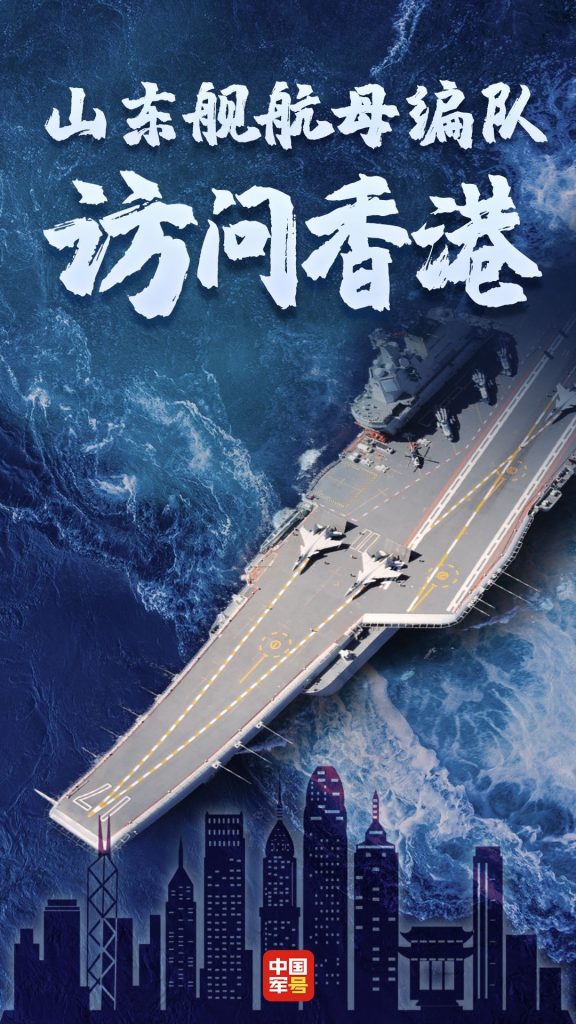
After an eight-year interval, Hong Kong is about to welcome China's second aircraft carrier, the Shandong. This marks the first visit of the Shandong carrier formation to Hong Kong, making the city the only one to host visits of two of China's aircraft carriers and also to hold public open-house events during their stays.

Under the approval of the Central Military Commission, from July 3 to 7, a naval formation consisting of the aircraft carrier Shandong, the guided missile destroyers Yan'an and Zhanjiang, and the guided missile frigate Yuncheng will visit Hong Kong, according to a statement from China's Ministry of National Defense on Saturday.

During this period, a series of open-day visits and cultural exchange activities will be organized to give Hong Kong compatriots a more direct and in-depth understanding of the development of national defense and military modernization in the new era, the Chinese Defense Ministry said.

In July 2017, China's aircraft carrier formation comprising the Liaoning, China's first aircraft carrier, and three escort ships, namely the YantaiYinchuan, and Jinan, conducted a five-day visit to Hong Kong. The event sparked a "Liaoning fever" in Hong Kong.

Eight years later, the visit of the Shandong, China's first domestically built aircraft carrier, is expected to also spark a "Shandong fever" in Hong Kong, Zhang Junshe, a Chinese military affairs expert, told the Global Times on Saturday.

According to information released by the Chinese Defense Ministry, the Shandong carrier formation will also conduct a five-day visit to Hong Kong with four vessels. However, compared to the Liaoning's formation, this visit will see new changes. 

Zhang said that The Shandong's escort ships, the Type 055 10,000 ton-class destroyer Yan'an, the Type 052D guided missile destroyer Zhanjiang and Type 054A guided missile frigate Yuncheng, all fully domestically developed by China, are a composition that demonstrates the core warships of a modern Chinese carrier formation, and are expected to meet Hong Kong's high public expectations.

Compared to 2017, this carrier formation is even more impressive, said Zhang. "In addition to China's domestically built aircraft carrier Shandong, the accompanying Yan'an is a Type 055 large destroyer - often hailed as the 'sword-bearing guard' of carrier groups. This visit also marks the first public opening of a Type 055 destroyer in Hong Kong," he said.

In 2020, the Nanchang (Hull 101), the first Type 055 destroyer, was commissioned into service. Since then, the family of 10,000 ton-class destroyers has continued to grow. Official reports indicate that the Type 055 destroyer represents the Chinese People's Liberation Army (PLA) Navy's largest-tonnage, most technologically advanced, and most comprehensively capable destroyer in history. Upon its debut, it immediately ranked among the world's top-tier warships."

To date, Hong Kong has witnessed multiple first and exclusive records in hosting Chinese naval vessels. The PLA Navy has consistently chosen Hong Kong as the first public showcase for its newest warship classes, including not only the aircraft carrier Liaoning's first and only public opening, but also the first public opening of the domestically developed Type 075 amphibious assault ship Hainan during its Hong Kong visit from November 21 to 25, 2024.

Opening naval vessels to nationals is a common practice among navies worldwide. Since Hong Kong's return to the motherland, PLA Navy vessels have made multiple port calls to the city, each time welcoming Hong Kong compatriots aboard for tours, Zhang said.

The state-of-the-art surface vessels offer Hong Kong compatriots a tangible showcase of China's national defense and military modernization achievements in the new era. These visits allow them to witness firsthand the strength of the motherland's defense capabilities, thereby enhancing national pride and strengthening patriotic sentiment, Zhang said, noting that during last year's port call by the amphibious assault ship Hainan, many Hong Kong residents expressed enthusiasm for more naval visits - with hopes to see advanced vessels like the Type 055 large destroyers in the future. The upcoming visit by the aircraft carrier Shandong and Type 055 destroyer has indeed warmly fulfilled these expectations.

At the same time, the visit of these cutting-edge warships to Hong Kong, a bridge and window of China's openness to the world, fully demonstrates to the international community both the developmental achievements of China's military and the exemplary professionalism of its naval personnel. In addition, the display of powerful, strategic assets like the aircraft carrier Shandong and the Type 055 10,000 ton-class destroyer also serves as a deterrent to any forces with ill intentions, Zhang said.

"We hope to share with our Hong Kong compatriots the nation's development achievements and progress in national defense and military modernization, while also demonstrating the PLA's capacity to safeguard national sovereignty and security," Zhang said.

Song Zhongping, another Chinese military affairs expert who boarded the Liaoning during the carrier's 2017 Hong Kong visit, told the Global Times on Saturday that there were many Hong Kong residents who applied to tour China's first aircraft carrier. Many of them waved Chinese national flags in their hands.

Speaking with Song about their impressions of the Liaoning, Hong Kong visitors said that they could feel the growing strength of the motherland, and that a mighty PLA means a safe Hong Kong, according to Song.
Chinese meteorological authorities warn of heat waves in north and floods in south

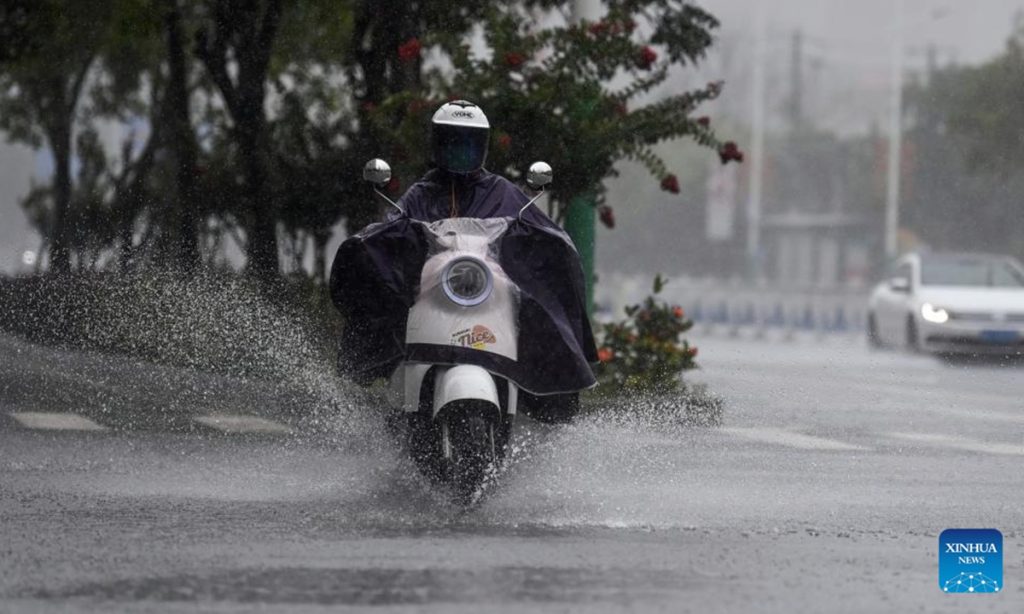
China's National Meteorological Center (NMC) issued yellow heat alerts on Monday for most of northern China, warning of temperatures exceeding 35 C — with certain regions and cities surpassing 40 C. Meanwhile, eight southern provinces are expected to experience torrential downpours and flood risks in certain area.

The NMC renewed a yellow alert at 6 am on Monday, warning of high temperatures in multiple regions of the country.

The center forecast scorching conditions exceeding 35 C on Monday across vast areas including most of Beijing, Tianjin, North China's Hebei Province and the Inner Mongolia Autonomous Region, East China's Shandong Province, Central China's Henan Province, Fenwei Plain, Northeast China's Liaoning and Jilin provinces, as well as the Junggar Basin of Northwest China's Xinjiang Uygur Autonomous Region and the southern Xinjiang Basin.

Particularly intense heat of 37 - 39 C is expected in some of the aforementioned regions - while some areas may exceed 40 C, the NMC said.

The center advised people to take protective measures to prevent prolonged outdoor exposure during peak heat hours.

Education authorities in Beijing issued heat advisories on Monday, urging kindergartens, primary and secondary schools and vocational institutes to suspend outdoor activities during peak heat hours. 

China experienced eight large-scale heatwaves in 2024, with the number of high-temperature days during the summer reaching the second-highest number since 1961, according to the China Meteorological Administration (CMA). Nearly half of the provinces in China recorded their highest average temperatures since national meteorological records began, the CMA said.

Regarding 2025's scorching heat, Ma Jun, director of the Beijing-based Institute of Public and Environmental Affairs, told the Global Times on Monday that the potential onset of a La Nina event is expected to slightly temper the sweltering weather. However, Ma noted that the fundamental trend of global warming remains unchanged, urging continued vigilance against extreme weather events. 

At the same time, southern China faces a starkly different weather pattern.

The NMC raised a blue alert for heavy rainfall at 6 am Monday, warning of substantial downpours from 8 am Monday to 8 am on Tuesday in several regions. 

Rain-affected areas include East China's Zhejiang and Jiangxi provinces, Central China's Hunan Province, Southwest China's Guizhou and Yunnan provinces, South China's Guangxi Zhuang Autonomous Region, western parts of the Sichuan Basin, and Southwest China's Xizang Autonomous Region, the NMC said.

Besides, some southeastern parts of Guizhou may see hourly rainfall of 100 to 120 millimeters, the center said.

Certain regions may experience short-term heavy rain of 20 to 50 millimeters hourly, even exceeding 60 millimeters, accompanied by thunderstorms and gales, according to the NMC.

The Ministry of Water Resources said that torrential rains have triggered flooding in 27 rivers exceeding warning levels across Guangxi, Guizhou and Yunnan between 8 am Saturday and 8 am Sunday. Some rivers exceeded thresholds by up to 3.71 meters, CCTV News reported Monday.

The Mengtong River in Yunnan experienced its worst flooding since 1979, according to CCTV News.

Last week, flash floods hit Huaiji county, South China's Guangdong Province. By noon on June 18, all 19 townships in the county had sustained damage, affecting around 300,000 residents, the Xinhua News Agency reported.

Local authorities evacuated nearly 70,000 people as floodwaters surged. The disaster left 15 injured, though none serious, the report added.

Ma noted that Typhoon Wutip has brought heavy rainfall to southern regions, with extreme precipitation concentrated in mountainous areas. This has triggered mountain floods and debris flows, posing serious threats to the lives and property of local residents.

The MWR maintains a Level-IV flood emergency response in Zhejiang, Anhui, Central China's Hubei and Hunan provinces, Guangxi and Guizhou, deploying three task forces to assist flood control efforts in Hubei, Hunan and Guangxi.

Meanwhile, the Ministry of Natural Resources activated geological disaster emergency responses in Hunan, Hubei, Southwest China's Chongqing Municipality, Guizhou, and Henan amid persistent rainfall nationwide, dispatching professional teams to oversee disaster prevention.

In Hunan, the National Food and Strategic Reserves Administration urgently deployed 81,500 relief items — including tents, folding beds, and summer quilts — to support emergency relocation and basic needs, CCTV News reported.

Ma, the expert, added that the summer grain harvest in the hardest-hit townships may be affected, though the overall impact on the national summer grain yield remains limited. Residents in severely affected areas are advised to expedite drainage of flooded farmland to reduce soil waterlogging once normal life is resumed. For fields with total crop failure, farmers should replant or switch to alternative crops based on local conditions.

China to hold military parade to mark 80th anniversary of victory against Japanese aggression, fascism

China will hold a military parade in Tian'anmen Square, downtown Beijing, on Sept. 3 to mark the 80th anniversary of the victory in the Chinese People's War of Resistance Against Japanese Aggression and the World Anti-Fascist War.

President Xi Jinping will review the troops during the parade, which is held as part of a grand gathering to commemorate the anniversary.

Xi, also general secretary of the Communist Party of China Central Committee and chairman of the Central Military Commission, will deliver a speech at the gathering.

The military parade will feature marching formations, armored columns, and aerial echelons, and display new types of combat forces, including unmanned, intelligent equipment.

Xi sends congratulatory letter to 2025 SCO forum on poverty reduction, sustainable development

Chinese President Xi Jinping on Tuesday sent a congratulatory letter to the 2025 SCO (the Shanghai Cooperation Organization) Forum on Poverty Reduction and Sustainable Development, held in Xi'an, northwest China's Shaanxi Province.

Xi pointed out that poverty eradication, a global issue, is a common goal of all countries in the world.

Through arduous efforts, China has successfully won the battle against poverty, achieved the poverty reduction target of the United Nations 2030 Agenda for Sustainable Development ten years ahead of schedule, blazed a poverty reduction path with Chinese characteristics, and written a new chapter in the history of mankind's fight against poverty, Xi said.

Stressing that the root cause of poverty is inadequate development, Xi said the SCO has actively carried out cooperation on poverty reduction and sustainable development in recent years, achieving remarkable results.

As the rotating chair of the SCO, China is willing to continuously enhance policy communication with all parties, share poverty reduction experience, deepen practical cooperation, help more countries explore poverty reduction and sustainable development paths that suit their national conditions, and join hands to build a beautiful world free from poverty and with common prosperity, Xi noted.

The forum opened in Xi'an on Tuesday under the theme of "Sustained Poverty Reduction and Cooperative Development: Advancing Poverty Alleviation and Sustainable Development among SCO Countries." The forum was co-hosted by the SCO Committee on Good-Neighborliness, Friendship and Cooperation and the People's Government of Shaanxi Province.

China gives Thailand high priority in neighborhood diplomacy: Chinese FM

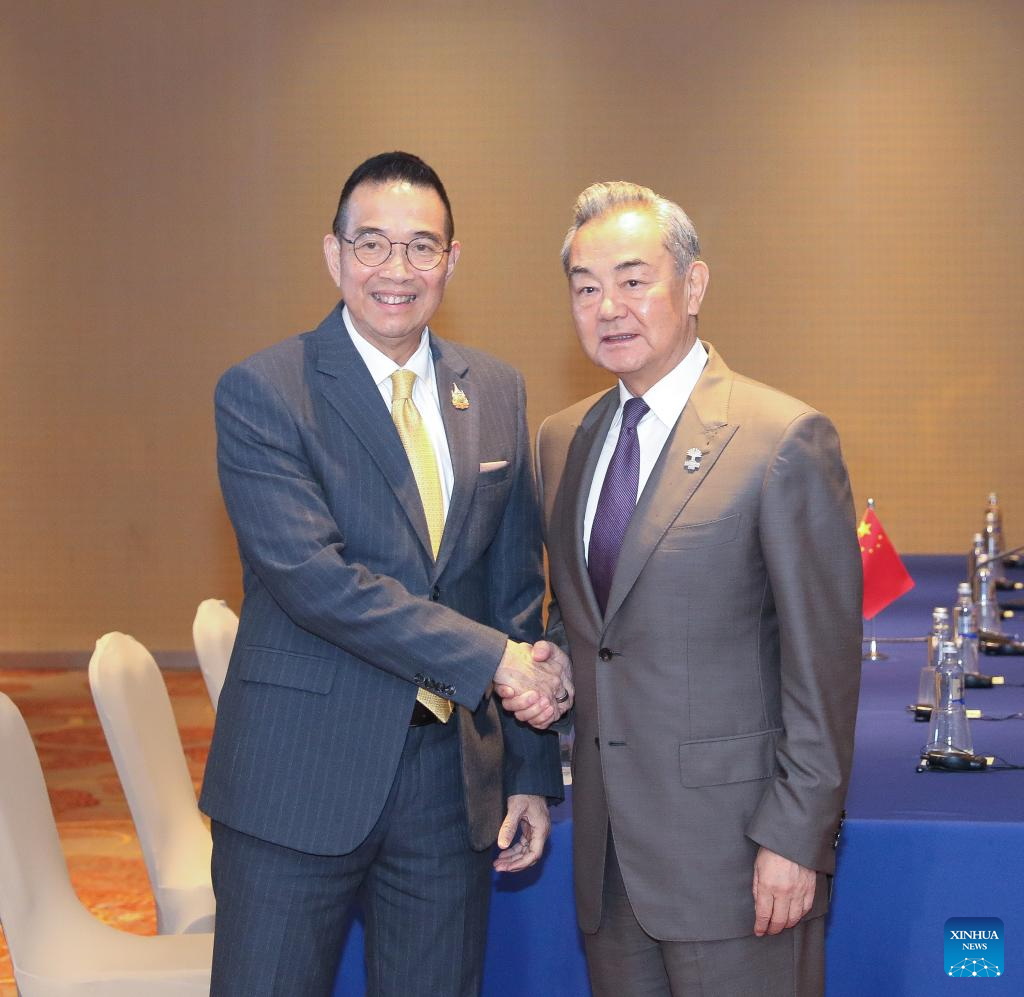
Chinese Foreign Minister Wang Yi said on Monday that China always gives China-Thailand relations high priority in neighborhood diplomacy.

Wang made the remarks when meeting with his Thai counterpart, Maris Sangiampongsa.

Wang, also a member of the Political Bureau of the Communist Party of China Central Committee, said China is ready to work together with Thailand to deepen practical cooperation across various fields and bring more certainty to regional peace and stability.

China welcomes Thailand's participation as a BRICS partner country and supports its full engagement in BRICS cooperation, he added.

For his part, Maris said that Chinese modernization will bring huge opportunities for his country and that Thailand hopes to join the BRICS family, strengthen Global South cooperation and safeguard the common interests of developing countries.

Both sides agreed to accelerate the construction of the China-Thailand railway, continue international cooperation on giant panda, resolutely crack down on telecom fraud and other cross-border crimes and advance the construction of the Version 3.0 China-ASEAN Free Trade Area.

China releases white paper on Covid-19 prevention, control and origins tracing

China's State Council Information Office on Wednesday issued a white paper titled "Covid-19 Prevention, Control and Origins Tracing: China's Actions and Stance."

Apart from preface and conclusion, the document contains three chapters: "Contributing Chinese Wisdom to the Study of the Origins of SARS-CoV-2," "China's Contribution to the Global Fight Against Covid-19," and "The Mismanaged Response of the US to the Covid-19 Pandemic."

Xi says looking forward to cementing friendship, promoting cooperation with Cambodia

Chinese President Xi Jinping said Thursday he looks forward to cementing friendship and promoting cooperation with Cambodia.

He made the remarks in a written statement upon his arrival in Phnom Penh for a state visit to Cambodia.

Xi was warmly welcomed by Cambodian King Norodom Sihamoni, Cambodian People's Party President and Senate President Samdech Techo Hun Sen and other senior officials at the airport during a grand welcome ceremony held by the king.

Hundreds of local people waved the two countries' national flags and held banners bearing the words "Long live Cambodia-China friendship, solidarity and cooperation!" to welcome Xi.

In the statement, Xi expressed his pleasure in visiting Cambodia again and said he looks forward to meeting and holding talks with King Sihamoni, Queen Mother Norodom Monineath Sihanouk, Samdech Techo Hun Sen and Prime Minister Hun Manet.

Noting that his visit came on the occasion of the Khmer New Year, Xi, on behalf of the Chinese government and people, extended warm New Year greetings to the Cambodian government and people.

He said Cambodia is a time-honored civilization, adding that the splendid Khmer civilization, created by the hard-working and talented Cambodian people, has made important contributions to the progress of human civilization.

Xi said that in recent years, Cambodia has vigorously implemented the Pentagonal Strategy, achieving rapid economic growth and continuous improvement of people's livelihood.

He expressed confidence that the Cambodian people will surely make new and greater achievements in national development with the blessing of King Sihamoni and under the leadership of the Cambodian government headed by Prime Minister Hun Manet.

Noting that bilateral ties were forged and nurtured by the elder generations of leaders of the two countries, Xi said China-Cambodia relations have withstood the test of global transformations, and always remained rock-solid.

The two countries have taken the lead in building a bilateral community with a shared future, as well as Belt and Road cooperation, Xi said.

China and Cambodia have supported each other in maintaining stability and promoting development and prosperity, and worked together in upholding international fairness and justice, setting an example for a new type of international relations while contributing to building a community with a shared future for mankind, he added.

Xi said China takes Cambodia as a priority in neighborhood diplomacy, and firmly supports Cambodia upholding strategic independence and following a development path suited to its national conditions.

He expected the two sides would enrich the China-Cambodia "Diamond Hexagon" cooperation framework, bring political mutual trust to a higher level, expand mutually beneficial cooperation of higher quality, ensure greater security, have more frequent people-to-people exchanges and strengthen strategic coordination of higher standards, so as to bring more benefits to the people of China and Cambodia and contribute more positive energy to peace and stability in the region and beyond.

More than 20,000 local people, along with representatives of overseas Chinese, Chinese-funded enterprises and Chinese students, lined the streets to warmly welcome Xi.

COP30 president calls for multilateralism, lauds China-Brazil role in global climate efforts

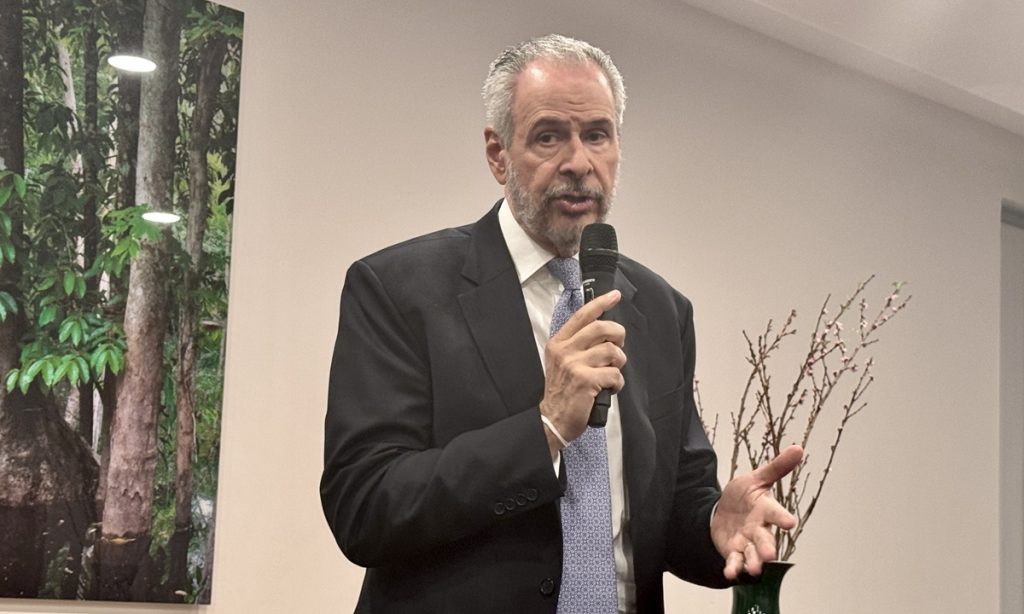
At a press conference in Beijing on Friday, COP30 President-Designate Andre Correa do Lago presented Brazil’s vision for the upcoming 2025 UN Climate Change Conference (COP30), highlighting multilateral cooperation to tackle global climate challenges. 

COP30 will focus on Nationally Determined Contributions (NDCs). “Countries must present their NDCs, and the United Nations will calculate how far we are from the Paris temperature objectives,” Lago, who is visiting China, told the Global Times.

The 2025 UN Climate Change Conference (UNFCCC COP 30) will take place in November 2025 in Belém, Brazil. The year also marks the 10th anniversary of the Paris Agreement.

“Brazil is working hard to make the action agenda dynamic and deliver results. After consultations, like those in China, we’ll clarify expectations for outcomes in the coming months,” he said.

At the Friday press conference, Lago praised China’s efforts in green development as well as China’s role in global climate governance. “China demonstrates that investing in climate action can bring excellent economic results and improve the lives of its population. This example is crucial for other countries.” 

He highlighted Brazil and China’s cooperation in energy sectors, saying that Brazil welcomes Chinese investment in this field. “EVs, green technologies, solar panels, and wind turbines are welcomed.”

Lago underscored the vital but underfunded role of climate finance, highlighting the ongoing shortfall in support for developing countries. “We have never reached the amounts of financial support considered necessary for most developing countries to fight climate change more effectively,” he said. 

Lago called for a fresh approach to climate finance. “We must look at climate finance dynamically, beyond the traditional view,” he said.

Amid global uncertainty, Lago called for prioritizing climate action through strengthened multilateralism. 

“Climate change is something that should not be confused with a specific economic or political crisis; it’s something we have to deal with because it’s there and it’s not going away,” he said, stressing that multilateralism benefits all and is strongly supported by both Brazil and China.

Lago also referenced the upcoming BRICS summit in Brazil. “We are discussing climate issues within BRICS…We believe the global south has many of the most important answers to climate change,” he said.

During a Tuesday meeting with Lago, China’s Minister of Ecology and Environment Huang Runqiu noted that global climate governance currently faces mounting challenges and uncertainties. 

Huang emphasized the need to uphold multilateralism, adhere to the principles of “common but differentiated responsibilities,” fairness, and respective capabilities, ensure developed countries fulfill their funding obligations, strengthen global cooperation on climate change, and promote a just transition for developing countries.

Lago expressed hope that China would continue contributing stability and momentum to global climate governance through the multilateral process.

Japan’s annual foreign policy report stresses importance of US ties, eyes ‘mutually beneficial relation’ with China

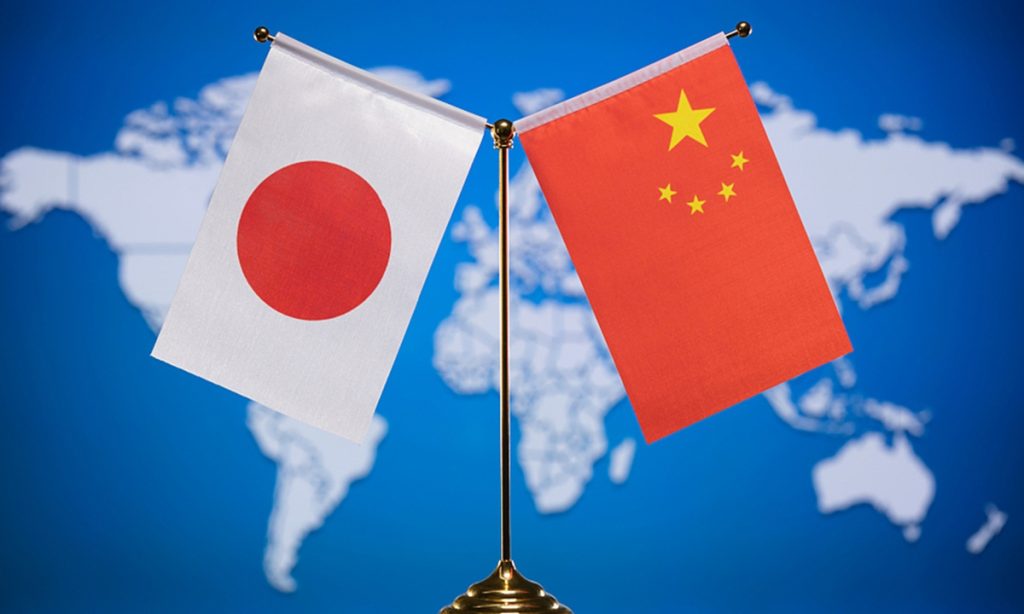
Japan on Tuesday released its annual government foreign policy report, which stressed the importance of Tokyo deepening ties with Washington while also reiterating its policy of promoting a "mutually beneficial relationship based on common strategic interests" with China. 

A Chinese expert said the report indicates that Japan still appears to prioritize maintaining its alliance with the US and has not altered the dual nature of its China policy — one that seems to advocate engagement, cooperation, and dialogue, while simultaneously maintaining a stance of competition, containment, and even confrontation.

The annual government foreign policy report emphasized the importance of Tokyo's push to build a strong rapport and further deepen ties with US President Donald Trump's administration - a view that comes as Japan grapples with how to respond to his decision to slap the US ally with onerous tariffs, the Japan Times reported.

The 2025 Diplomatic Bluebook, presented by Foreign Minister Takeshi Iwaya at a Cabinet meeting the same day, said that Tokyo will communicate closely with Washington over various issues facing the international community and work to make solid contributions, said the report.

Regarding China, the report reiterated the government's policy of promoting a "mutually beneficial relationship based on common strategic interests" with the world's No.2 economy, a phrase revived in 2024's report after a four-year absence. 

The biggest change in the 2025 Diplomatic Bluebook stems from the series of new challenges posed to Japan by the current US administration's foreign policy, particularly in terms of how to maintain the stability of the US-Japan alliance, Xiang Haoyu, a research fellow at the China Institute of International Studies, told the Global Times on Tuesday.

"Fundamentally, Japan still prioritizes its relationship with the US and has not altered the dual nature of its China policy - maintaining engagement, cooperation, and dialogue on one hand, while also pursuing competition, containment, and even confrontation on the other," he said.

He further noted that compared with the past, Japan's current approach to China appears more pragmatic and flexible. However, these adjustments, Xiang stressed, are seems to be tactical and expedient rather than a long-term strategic shift.

Meanwhile, NATO Secretary General Mark Rutte, visiting Japan for the first time since becoming head of the Belgium-based military alliance in October, was set to hold talks with Japanese Defense Minister Gen Nakatani later Tuesday and with Prime Minister Shigeru Ishiba on Wednesday, the Associate Press reported.

China's expansion of its armed forces has been "staggering," Rutte claimed on this visit, which was aimed at "projecting" the alliance's power in the Asia-Pacific region, said the AFP.

Rutte's so-called aim of "projecting" the alliance's power in the Asia-Pacific region has laid bare NATO's intention to interfere in the region's security and stability, Lü Chao, an expert at the Liaoning Academy of Social Sciences, told the Global Times. He further noted that NATO seems reluctant to see closer ties between China and Japan.

The US wants NATO members to be more involved in the Indo-Pacific region, Rutte claimed. He welcomed US Secretary of Defense Pete Hegseth's recent trip to Japan to ensure Washington's commitment to strengthen its alliance with Japan and presence in the region. 

The Japan Times also reported that Rutte is scheduled to hold talks with Defense Minister Gen Nakatani later Tuesday. Ahead of the meeting, the defense chief referred to Rutte's visit as "very meaningful for furthering security and defense cooperation."

2025 marks the 80th anniversary of the victory of the Chinese People's War of Resistance Against Japanese Aggression and the World Anti-Fascist War. If Japan chooses to emphasize "continuing to promote practical cooperation" with NATO in the Asia-Pacific region at this time, this would have a detrimental impact on regional security, Lü said.

Since Japan states it is promoting a "mutually beneficial relationship based on common strategic interests" with China, it should face up to history and work with China toward the same goals, he added.