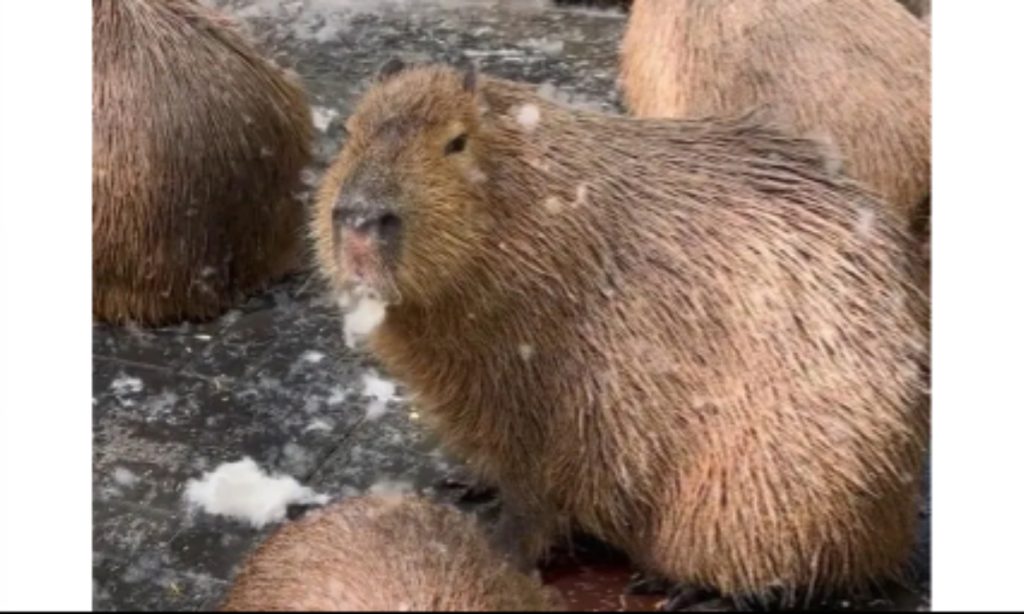
As Beijing entered its peak willow and poplar catkin season, a capybara at the Beijing Wildlife Park was spotted calmly nibbling on the floating fluff – almost like little fluff cleaner helping people clean up the seasonal fuzz. A video posted by a netizen shows Beijing Wildlife Park, surrounded by woods, covered in floating poplar and willow catkins. The wind blew the fluffy seeds toward a group of capybaras, with one filmed slowly chewing the catkins, looking totally relaxed and carefree.
The video drew nearly 130,000 likes and over 140,000 shares on Chinese social media platform Douyin. In the comments, netizens joked that the capybara truly lives up to their reputation as the “epitome of emotional stability” by helping eliminate catkins. Some humorously wondered, "Will the capybaras develop hay fever and get stuffy noses from catkin allergies?"
Some netizens also expressed concern that swallowing catkins might cause health issues for the animals. A park staff member explained that catkins themselves are non-toxic, composed primarily of plant fibers and seeds, and that capybaras are large herbivorous rodents naturally equipped to digest high-fiber plants, Science Daily said.
"It's fine for capybaras to occasionally eat a few catkins – they can pass through their digestive systems normally," the staff member said, adding that the park runs a professional veterinary hospital, where vets conduct regular health checks on the animals, according to the report.
Capybaras are not particularly attracted to catkins — they simply eat whatever drifts close to their mouths, Science Daily reported, citing the staff member.
The staff member also said that the capybaras are currently in good health, and keepers will continue to monitor their condition closely, per the report.
To tackle the catkin issue, the park has deployed high-pressure water sprayers to routinely flush the canopies of willow and poplar trees at scheduled times each day, reducing the production of catkins at the source, the park said on its official WeChat account. Cleaning staff have also increased their sweeping frequency, promptly clearing catkins in high-traffic visitor areas to minimize their spread in the air, according to the park.
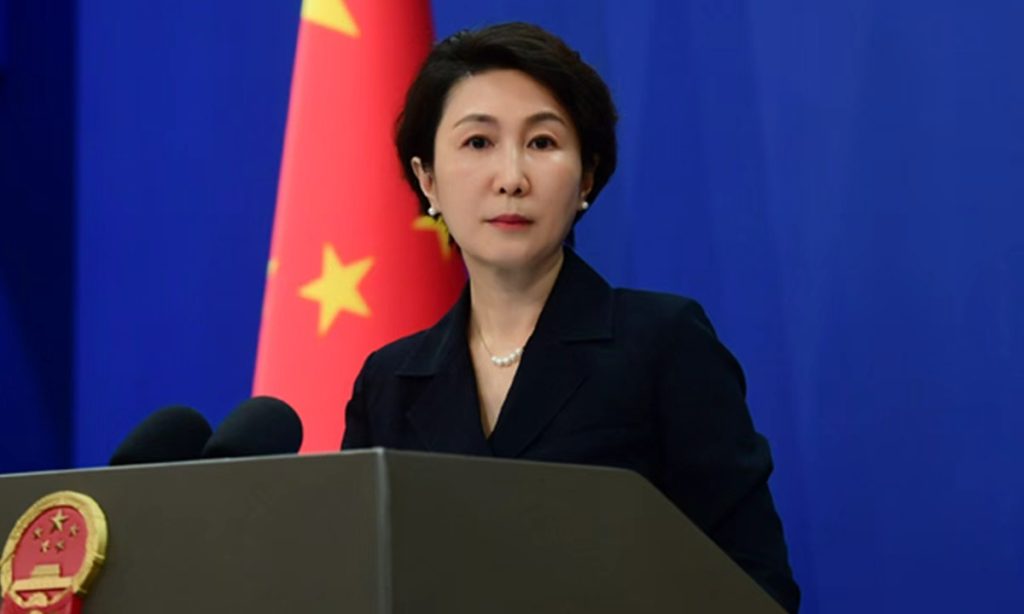
China maintains that the sovereignty, security, and territorial integrity of Gulf countries should be fully respected, and the safety of shipping lanes and energy infrastructure must be ensured. The root cause of the obstruction to navigation in the Strait of Hormuz lies in the illegal military actions by the US and Israel against Iran. The fundamental solution to restoring navigation in the strait is to achieve a ceasefire and end the conflict as soon as possible, the Chinese Foreign Ministry spokesperson Mao Ning said on Wednesday in response to a question about the UN Security Council (UNSC) vote on Tuesday local time on a draft resolution concerning the Strait of Hormuz proposed by Bahrain, during which China and Russia voted against it and exercised their vetoes, resulting in the draft resolution failing to pass.
Actions by the UNSC should aim to de-escalate tensions, and must not provide a legal cover for unauthorized military actions, grant a license for the use of force, or add fuel to the fire and escalate the conflict, Mao said. China's vote is objective and impartial and will stand the test of time, the spokesperson said.
The draft resolution on the Strait of Hormuz jointly proposed by China and Russia has been formally circulated among UNSC members, the spokesperson said as China and Russia have put forward a new draft resolution on the Middle East situation and maritime security.
The draft is objective and impartial, aims to ease tensions, calls for dialogue and negotiations, and seeks to safeguard the rights and freedoms of navigation, in line with the expectations of the international community. China stands ready to continue working with relevant parties to make unremitting efforts to promote de-escalation at an early date and to restore peace and stability in the strait and the Middle East region, Mao said.
Christmas may still be months away, but the Christmas goods section of the Yiwu International Trade Market in East China's Zhejiang Province is already buzzing with activity. According to Yiwu Fabu, vendors report that international buyers have been arriving at least a month earlier than usual. "The change is noticeable," remarked the manager of a factory producing Christmas apparel and gifts in Yiwu.
This trend is also reflected in export figures. Local customs data show a 23.3 percent year-on-year increase in Yiwu's Christmas goods exports during the first two months of the year. This early uptick further reflects changes in the timing of Yiwu's Christmas sales, pointing to a gradual shift toward earlier purchases.
Yiwu is an important representative of the global Christmas goods market, given its prominence as a major hub for small commodities trade. According to a report from the Xinhua News Agency, Yiwu exports more than 20,000 categories of Christmas products, accounting for nearly 80 percent of the global market and reaching more than 100 countries and regions.
Despite ongoing uncertainties in global trade, Yiwu's Christmas product exports have continued to grow, with a 22.9 percent year-on-year increase, reaching 5.17 billion yuan ($756.99 million) in the first three quarters of 2025, according to Xinhua. This sustained growth highlights both the enduring global demand for Christmas products and Yiwu's role in the supply chain.
Given Yiwu's crucial role in the global Christmas goods market, the move toward an earlier procurement season is becoming increasingly understandable. According to Yiwu Fabu, the trend of placing orders earlier is not incidental, but rather the result of a complex interplay between global trade dynamics and the evolving industry landscape. In response to fluctuations in shipping capacity and uncertainties at ports, international buyers are placing greater emphasis on risk management by adjusting their procurement timelines.
This trend further underscores the deep integration between Yiwu and the global Christmas goods market, emphasizing the impracticality of any potential "decoupling." With the market's broad product range, rapid adaptability, and a highly efficient trade model, Yiwu's Christmas goods have become an integral part of the global holiday economy, consistently setting trends in the small commodities trade worldwide.
Yiwu's deep integration with the global market is driven by a range of key factors. First, innovation is central to the enduring global competitiveness of Yiwu's products. By continuously incorporating emerging technologies and introducing new products that exceed customer expectations, local manufacturers maintain fresh and dynamic offerings.
Second, Yiwu's competitiveness in international markets is bolstered by a diversified distribution network, which helps mitigate risks arising from external uncertainties. For example, in the first three quarters of 2025, exports to Latin America grew by 17.3 percent and exports to the EU grew by 45 percent, together accounting for more than 60 percent of Yiwu's total Christmas product exports, according to official data.
Here is a case in point. According to the Yiwu Cross border E-Commerce Association, some Yiwu manufacturers developed singing Santa Claus toys, leading to a surge in orders. These products are available in four foreign languages, and each additional language effectively opens up a new market.
These factors, along with China's robust industrial and supply systems and others, have cemented Yiwu's long-standing and resilient connections to the global market. This bond has evolved over time and is likely to endure for the foreseeable future. In this context, the trend toward earlier procurement of Yiwu's Christmas goods is hardly surprising.
When placed within a broader context, Yiwu's story offers insights into the current state of global trade. The realignment of global supply chains is driven by market forces, not by political agendas. When international buyers use various means to secure a stable supply from China, they are making pragmatic business decisions that gradually counter the political narratives surrounding "decoupling."
At the same time, China's industrial and supply chains are actively adapting to the evolving dynamics of global trade. In Yiwu, innovation is evident across various sectors - whether in product development, trade practices, international logistics, or digitalization. This flexibility has allowed Yiwu's goods to reach further across the globe, fostering a closer two-way exchange between foreign buyers and Chinese producers.
History has shown that trade protectionism rarely addresses underlying issues and often exacerbates uncertainty. The early arrival of Yiwu's Christmas export season offers a tangible example of how global trade continues to adapt in an unpredictable environment. Yiwu's ability to navigate these complexities highlights the resilient forces driving progress in global supply chains.
The US is considering further restrictions on Chinese telecom companies, in what analysts describe as a continued expansion of Washington's tech-related curbs on China under the pretext of "national security," warning that the move could further undermine the stability of bilateral economic and trade ties.
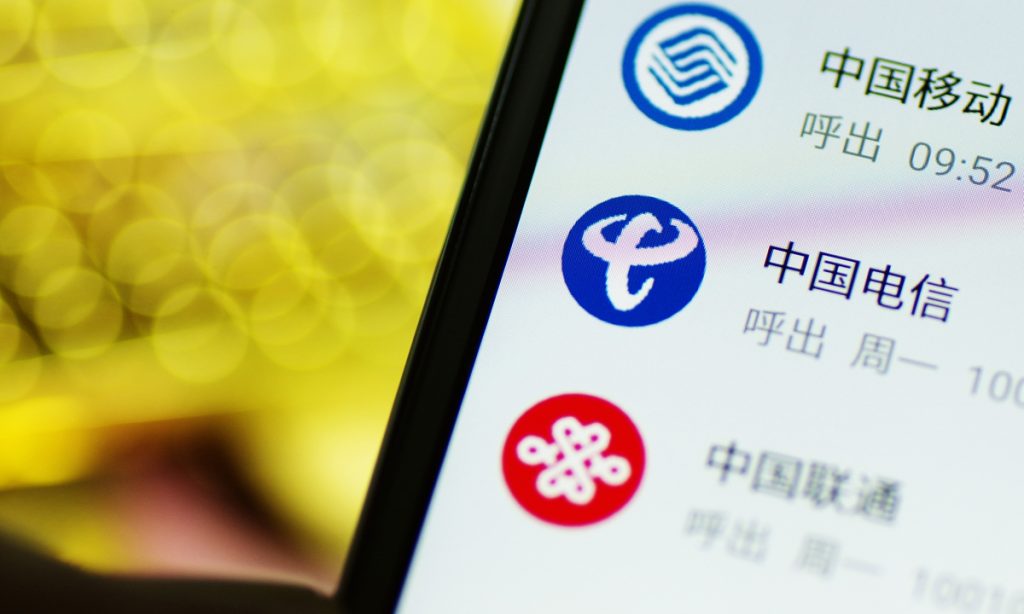
According to a Reuters report on Thursday, the Federal Communications Commission (FCC) of the US claimed it may bar major Chinese carriers including China Mobile, China Telecom and China Unicom from operating data centers in the US, and also could ban telecom carriers from connecting with these Chinese carriers.
The FCC claimed that it has tentatively concluded it should prohibit American and other telecommunications carriers operating in the US from interconnecting with companies on the so-called "Covered List" that it says pose "national security" concerns, according to a fact sheet published by the FCC on Thursday. This includes China Mobile, China Telecom, and China Unicom.
The agency claimed that it is also considering barring Chinese telecom firms that operate data centers or so-called Points of Presence at internet exchange points from interconnecting with other companies. It added that it may extend the existing ban on providing telecom services in the US to certain affiliates of companies on its national security list, according to Reuters.
The FCC could also bar telecommunications carriers from interconnecting with companies that use equipment from firms on the list, including Huawei and ZTE, the Reuters report said.
Li Yong, a senior research fellow at the China Association of International Trade, told the Global Times on Friday that the move, at its core, reflects an irrational expansion of the US' so-called national security concept, driven less by genuine security concerns than by political motives to push decoupling in the China-US technology and telecommunications sectors - a course that ultimately benefits no one.
The FCC plans to take an initial vote on the proposal at its April 30 meeting.
Responding to the agency's move, the Chinese Embassy in Washington said that China "consistently opposes the overstretching of the concept of national security and the abuse of state power to suppress Chinese enterprises," according to Reuters.
The latest proposal is not an isolated move but part of a broader escalation of US restrictions targeting Chinese technology firms across multiple segments of the communications supply chain.
Last Friday, the FCC has proposed banning imports of telecom and surveillance equipment from Chinese firms already on its "Covered List," widening a previous action targeting China, according to Reuters.
On Wednesday, the agency said it will also vote April 30 on a proposal to bar all Chinese labs from testing electronic devices for use in the US.
These measures build on earlier actions. In December, the FCC claimed that it could bar China Mobile, China Telecom and China Unicom from connecting to US networks, following a series of earlier moves that effectively shut them out of the market, including rejecting market entry and revoking operating authorizations in recent years.
"In fact, Chinese telecom operators and related firms already have only a limited presence in the US following a series of politically driven restrictive measures, and such discriminatory curbs are unlikely to have a significant impact on their actual operations or business performance," Li noted.
Chinese telecom carriers have already seen their US footprint significantly reduced, with Reuters previously noting they now maintain only a "small presence," mainly through cloud services and wholesale internet traffic routing.
Li warned that the repeated and erratic restrictions have eroded the credibility of the US market. "By invoking vague and loosely defined concepts to justify broad curbs, the US is making its business environment increasingly unstable and unpredictable, undermining multinational companies' confidence in investing there," the expert said.
In response to a question about the FCC's plan to vote on a proposal that would ban all Chinese labs from testing electronic devices used in the US, Chinese Foreign Ministry spokesperson Mao Ning said on Thursday that, "China firmly opposes the US overstretching the concept of national security."
This type of action has severely impeded the normal economic and trade exchanges between Chinese and US companies and does not serve anyone's interests, including those of American companies and consumers, Mao said, adding that China will continue to firmly safeguard its legitimate and lawful rights and interests.
The Type 056 corvette China provided to Cambodia, which has reportedly arrived at the Ream Naval Base, is part of an existing cooperation program between militaries of the two countries, a spokesperson for Chinese Defense Ministry said on Thursday in response to a related question. A Chinese expert told the Global Times that the Type 056 corvette, a light multi-purpose vessel, is expected to enhance Cambodia's maritime security and rescue capabilities, marking further advancement in China-Cambodia defense cooperation.
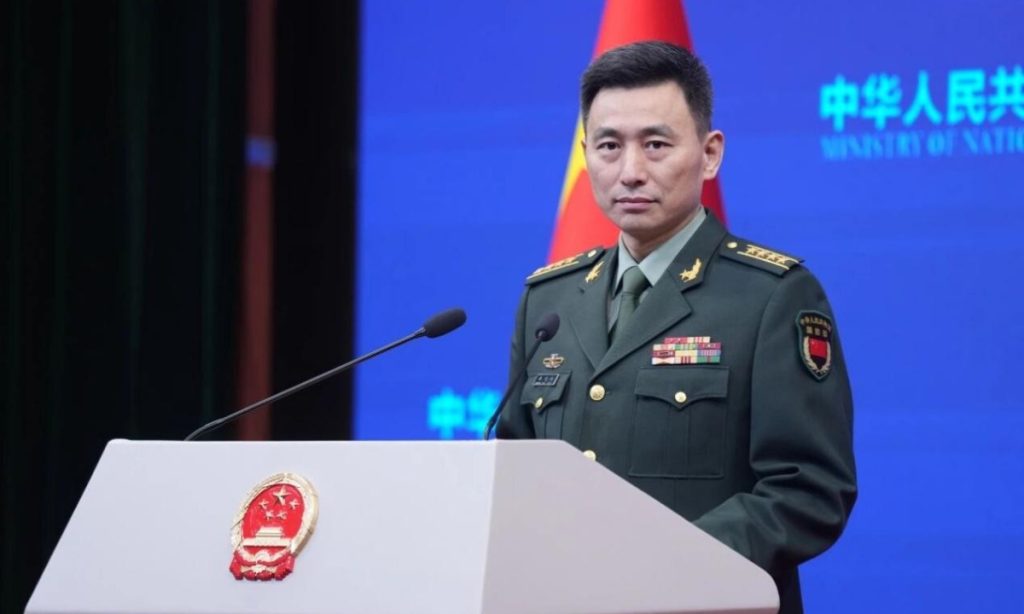
At a regular press briefing on Thursday, Chinese Defense Ministry spokesperson Zhang Xiaogang responded to a question regarding the recent arrival of the first Type 056 corvette China provided to Cambodia at the Ream Naval Base, with reports suggesting that amid regional tensions, countries such as Thailand are closely watching maritime security developments. The Chinese spokesperson said that this is part of an existing cooperation program between the Chinese and Cambodian militaries, which is not directed at any third party, and has no bearing on the current regional situation.
Zhang Junshe, a Chinese military affairs expert, told the Global Times on Thursday that the Type 056 is a light multipurpose combat vessel with a displacement of approximately 1,500 tons and a powerful propulsion system. It is primarily designed for daily patrols and surveillance missions, making it well-suited for coastal operations.
Despite its modest displacement, the Type 056 is equipped with a range of missile systems, known for their rapid response and high guidance accuracy. The vessel also features a close-in air defense system, anti-ship weaponry, and a naval gun, giving it strong comprehensive combat capabilities. Its anti-ship missiles have long ranges, while its air defense missiles can effectively intercept low-flying targets such as incoming anti-ship missiles. The corvette also possesses certain anti-submarine warfare capabilities, Zhang said.
Dozens of Type 056 corvettes are in service with the Chinese armed forces, official Chinese media reports show.
Ream is also home to a Cambodia-China Joint Support and Training Center. The center at Port Ream in southwestern Cambodia was put into operation in April, 2025, according to the Xinhua News Agency.
At a ceremony at the time, the Chinese and Cambodian sides emphasized that the construction and operation of the center were the result of mutual respect and equal consultation between the two countries, which is conducive to further strengthening the practical cooperation between the two militaries, better fulfilling international obligations and providing international public security products, Xinhua reported.
Both sides expressed willingness to continue to work together to comprehensively deepen cooperation in joint exercises and training, talent training, equipment technology and other fields, continuously consolidate and develop the relationship between the Chinese and Cambodian militaries, and jointly maintain regional security and stability, reported Xinhua.
In conjunction with the inauguration ceremony, the Chinese and Cambodian militaries organized the launch event for the "Golden Dragon-2025" joint exercise at the center. This marked an important demonstration of the center's role in promoting China-Cambodia friendship and deepening military cooperation, the military channel of CCTV News reported on April 6, 2025.
During the exercise, vessels from both sides conducted training exercises, including formation maneuvering, maritime communication, and equipment drills, further enhancing their joint command and coordinated operational capabilities. This has laid a solid foundation for future multi-service joint training involving land, sea, and air forces, reported the military channel of CCTV News.
Zhang explained that the center provides logistical support for counterterrorism, disaster relief, and humanitarian assistance operations conducted by both sides, helping fulfill international obligations and contributing to global public security.
With the latest arrival of the Type 056 corvette at the Ream base, the vessel is expected to effectively strengthen Cambodia's capacity to safeguard national security and peace, while also enhancing its capabilities in maritime rescue and humanitarian operations. It marks a deepening and upgrading of China-Cambodia military cooperation, from joint exercises and training to equipment and technology collaboration, Zhang added.
This year marks the 80th anniversary of the victory in the Chinese People's War of Resistance Against Japanese Aggression and the World Anti-Fascist War. Yet in Japan, the concealment of historical truth persists. Why is the Japan's younger generation so severely disconnected from its modern history of aggression? Why do the inquiries raised by a lawmaker and the repentant apologies of a war veteran to China deeply wound Japan? How do Japanese civil forces persist in uncovering the truth under such circumstances? When "irrefutable evidence" collides with "sophistry," when perpetrators deliberately forget, who will preserve the memory for tens of millions of victims?
The Global Times launches the "Uncovering Evidence in Japan" series, engaging in direct dialogue with those involved through exclusive interviews with firsthand witnesses, using the truth as a blade to slice through the silence. Only by confronting and remembering history can we safeguard the peace of the future.
In recent years, new evidence pointing to the various crimes committed by the Japanese invasion forces in China has continued to emerge. This evidence is hidden nowhere else but in Japan itself. For instance, in March, Japanese Communist Party member and House of Councillors member Taku Yamazoe publicly presented historical documents at the National Diet proving that Unit 731 (the Kwantung Army Epidemic Prevention and Water Supply Unit, hereafter referred to as Unit 731), part of the Japanese invasion forces, conducted live human experiments in China. These documents had long been concealed within the National Institute for Defense Studies at Japan's Ministry of Defense.
Another example is that of 77-year-old Japanese man Katsutoshi Takegami, who accidentally discovered his father's past as a member of the Japanese invasion forces' bacterial warfare unit, Unit 1644 (officially known as the Central China Epidemic Prevention and Water Supply Department, originally coded "Unit Ei 1644," abbreviated as Unit 1644), years after his death. The evidence was hidden among the belongings of Takegami's father.
Global Times reporters recently traveled deep into Tokyo and Nagano in Japan, speaking with those involved to learn how Japanese civilian forces confront their government's evasive stance on war responsibility and how they persistently "salvage" history from photo albums and archives. 'No excuse for [Japanese government's] concealment of evidence'
"Time's up!" "Time's up!"
On March 21, during a Budget Committee session of the House of Councillors, Yamazoe, policy commission chair of the Japanese Communist Party and a member of the House of Councillors, raised questions regarding Unit 731. However, the inquiry was forcibly cut short amid repeated calls to wrap up before receiving any direct answers.
Unit 731 established a base on the outskirts of Harbin, Northeast China's Heilongjiang Province, where, under the pretext of disease prevention research and water purification, they conducted inhumane live human experiments. The experiments included bacterial infections, frostbite tests, and poison gas inhalation, with Chinese, Korean, and Soviet nationals used as guinea pigs. While the postwar Japanese government acknowledged "the existence of Unit 731," it evaded further discussion by claiming "no records detailing its activities exist."
During the House of Councillors Budget Committee session, Yamazoe presented, for the first time, a copy of a document titled "observation of skin injuries and general clinical symptoms caused by mustard gas shell bombardment," which summarized the results of five experiments conducted from September 7 to 10, 1940, involving mustard gas shell tests on humans, providing irrefutable evidence against the Japanese government's lies.
Upon investigation, it was found that this detailed record of the Unit 731's human experiments had been donated to the Ministry of Defense in 1964 by former Unit 731 medic Naeo Ikeda. In the comments section of the document upon receipt, the Japanese government explicitly noted, "This is the result of experiments conducted on humans," and "is extremely valuable material."
In his office at the House of Councillors building in Nagatacho, Tokyo, Yamazoe granted his first exclusive interview to Chinese media regarding the Japanese government's deception, showing the Global Times the materials used in the National Diet at that time. He explained that although the Japanese government acknowledged these materials as "official documents," it evaded responsibility by claiming "it cannot confirm objective facts.
More critically, this key piece of evidence was kept hidden for 40 years after being donated to the government in 1964, only being made public in 2004, while the Japanese government continued to falsely assert that "there is no documentation that can indicate the details of the Unit 731's activities," Yamazoe stated. "Why conceal evidence? Why lie? This is the starting point for my decision to raise questions in the Diet."
"On the day of the inquiry, I only had 21 minutes to speak, so the questioning was indeed time-constrained. I asked, 'Was Naeo Ikeda, the donor of the documents, a real person? Did he belong to Unit 731?' These are clear-cut matters - if the government genuinely wanted to answer, it would have done so." Yamazoe told the Global Times that the government was clearly "avoiding answering" questions it did not want to address, while members of the ruling party sought "to cut the inquiry short and hurry things alone by shouting "Time's up!"
Yamazoe explained, "It is certain that the [Japanese] government has consistently claimed it has not found records indicating the specific activities of Unit 731, such as bacteriological warfare and human experimentation, which is obviously a lie. When accused of systematically concealing evidence, the Japanese government has no credible defense." 'All the materials are gone? I don't believe that.'
Unit 1644, based in Nanjing, was another Japanese biological warfare unit that was stationed in China during the wartime. A four-hour drive from Tokyo, Global Times reporters arrived in Komagane City, Nagano Prefecture, where they met with the son of a Unit 1644 member, 77-year-old Katsutoshi Takegami, who adopted his mother's surname.
Takegami's father, Toshiichi Miyashita, married into his mother's family and changed his surname to Takegami. The couple had four children. Takegami recalled to the Global Times, "In my impression, my father was a gentle man with no bad habits. He never hit or scolded us. After the war, he worked at a local health center to make ends meet. I occasionally heard him mention that he had worked in China, but he never said where he went or what he did, and he never mentioned anything about participating in the invasion of China."
Miyashita passed away in 1981. It wasn't until 2017 that Takegami accidentally found his father's belongings in a storage room - a box labeled "Nara Army Hospital" containing several thick photo albums. Among the black-and-white photos were images of his father working in military uniform. Some photos bore inscriptions such as "Epidemic Prevention Section" and "Central China Epidemic Prevention and Water Supply Department."
"I was in deep shock at the time! I really wanted to know exactly what my seemingly ordinary father did in China. What unknown past did he have?" Takegami was determined to investigate, but it was easier said than done. Takegami told the Global Times, "At the beginning, I had no clues at all. I didn't know how to investigate or where to look."
After prolonged investigations, Takegami learned that the "service rosters" (archival documents recording unit member information) of various Japanese units that invaded China had been secretly stored at the Ministry of Health, Labour, and Welfare after the war and kept from public view for a long time. At some point, these documents were transferred to the hometowns of the unit members for safekeeping. Following this lead, Takegami contacted the Nagano prefectural government and obtained his father's "military service record," which listed his father's name as "Toshiichi Miyashita" and his grandfather's name as "Umejiro Miyashita."
"There's no doubt it was my father," Takegami said. Although mentally prepared, when he was confronted with his father's military service record line by line, he still couldn't reconcile it with the father he remembered.
The "military service record" detailed the military career of Takegami's father: Toshiichi Miyashita was born in 1909 to a farming family in Iijima town, Nagano Prefecture. He was conscripted at age 21 in 1930. He participated in the "Manchurian Incident" (the September 18 Incident), was assigned to Unit 1644 established in Nanjing in 1941, and later worked in other parts of China until Japan's defeat, when he returned to Nagano.
To uncover more historical truths, Takegami collaborated with Japanese biological warfare expert and professor emeritus at the Shiga University of Medical Science, Katsuo Nishiyama, among others, to continuously submit applications, ultimately prompting the Ministry of Health, Labour, and Welfare to transfer the rosters of Unit 1644 and two other Japanese bacteriological warfare units - Unit 8604 and Unit 8609 - to the National Archives of Japan in March 2024. It wasn't until March 2025 that these rosters appeared in the newly published document catalog of the National Archives of Japan. Takegami said, "These rosters can prove that these units indeed existed."
"Lacking detailed activity records" has been a common excuse given by the Japanese government to deny the crimes of the Japanese army during its aggression against China. Takegami told the Global Times, "It's true that the Japanese military destroyed a large number of documents when they were defeated, but to say all the records are gone? I don't believe that. Those were all official documents. I believe they must be hidden somewhere." Earlier this year, Takegami accidentally discovered a set of materials titled "medical history of the army in the 'Greater East Asia War'" in a secondhand bookstore, consisting of nine volumes, of which he only purchased volumes one to eight. Volume seven contained detailed records of the activities of the "Central China Epidemic Prevention and Water Supply Department."
"Without understanding the painful past, we cannot prevent war," Takegami warned. "It is a fact that Japan's aggression caused tremendous harm to the Chinese people. It is also a fact that my father was a member of the Japanese military corps that invaded China. I will continue to investigate further to let more people know the truth about this history. This is key to preventing war from breaking out again."
A government that cannot confront history has no right to discuss future
"People may lie, but documents do not," said Seiya Matsuno, a researcher at Meiji Gakuin University's International Peace Research Institute, in an interview with the Global Times.
As mentioned earlier, the documents presented by House of Councillors member Yamazoe in the Diet were originally donated to Japan's Ministry of Defense in 1964 by former Unit 731 member Naeo Ikeda. However, in an August 15, 1984 report by Japan's Mainichi Shimbun, Ikeda claimed that he "absolutely did not want to speak about Unit Ishii" (referring to Shiro Ishii, the founder and commander of Unit 731 - editor's note), and insisted that he "was not transferred to Unit 731 until 1942" and "did not participate in any experiments."
"Ikeda lied. His records show he was already in Unit 731 in Showa 15 [1940]," Matsuno said. Furthermore, the materials Yamazoe used in the Diet clearly documented Ikeda's personal history: He served as a medical major in Unit 731 from July 1940 to November 1942.
Matsuno stated, "Testimonies are certainly important. However, as time passes, there are issues of memory blurring. When discussing facts of perpetration, testimonies may lack objectivity - as seen in Naeo Ikeda's case where he claimed non-participation despite actual involvement while attempting to distance himself. Therefore, we must persistently unearth historical materials to verify the veracity of testimonies or supplement them, thereby drawing closer to the truth."
Matsuno was born in 1974. While in high school, he accidentally learned about the Japanese military's use of poison gas during the war of aggression against China, which became the impetus for his more than three-decade self-funded research into the Japanese invasion forces' chemical warfare, biological warfare, and related subjects.
Unearthing historical materials in Japan is no easy task. Matsuno told the Global Times, "Since my graduate school days, I've frequented archives and libraries, examining materials from morning till night. Back then, there were no electronic catalogs - I had to flip through card catalogs one by one, often ending up empty-handed." Moreover, the greater challenge lies in the fact that searching for, analyzing, and collecting materials requires first knowing that a particular historical event even occurred- otherwise, one would never think to investigate it. Since his student days, he had never encountered any mention of Unit 731 in textbooks.
"I don't know exactly what yet, but I believe undiscovered evidence still exists in Japan," Matsuno said. To ensure people understand the horrors of war and the true history, researchers must keep striving to unearth materials and restore historical truth.
"A government that cannot confront history has no right to discuss the future," Yamazoe told the Global Times. "If a country fails to clearly acknowledge its past wrongs, it cannot prevent repeating them." He believes that acknowledging facts and offering apologies based on those facts is essential, noting that no country can claim an inability to apologize solely due to "the passage of too much time," whether decades or even a century later.
Chinese Vice Premier He Lifeng will be in Sweden from July 27 to 30 for economic and trade talks with the US upon mutual agreement, China's Ministry of Commerce announced on Wednesday.
Following the important consensus reached during the phone talks between the two heads of state on June 5, the two sides will leverage the role of the China-US economic and trade consultation mechanism and continue to engage in consultations on economic and trade issues of mutual concern based on the principle of mutual respect, peaceful coexistence and win-win cooperation, said a spokesperson with the ministry, the Xinhua News Agency reported.
In May, China and the US released a joint statement on the China-US Economic and Trade Meeting in Geneva and the parties announced the establishment of a mechanism to continue discussions about economic and trade relations, according to Xinhua.
In June, the first meeting of the China-US economic and trade consultation mechanism was held in London, leading to new progress in addressing each other's economic and trade concerns, China Central Television reported.
"The fact that China and the US can hold three economic and trade talks within two and a half months indicates that both sides are willing to maintain communication and strengthen dialogue. The previous two talks have each produced new outcomes, showing a consensus on achieving concrete results, which are all positive signals," He Weiwen, a senior fellow at the Center for China and Globalization, told the Global Times on Wednesday.
"Talks and engagement are always better than confrontation, as they will help foster a more predictable environment for companies from the two countries as well as other countries," said Gao Lingyun, a research fellow at the Institute of World Economics and Politics of the Chinese Academy of Social Sciences.
He Weiwen noted that the new round of talks is crucial for building on the outcomes of the previous two, further refining the framework of China-US agreements, and striving for more concrete results to advance comprehensive economic and trade cooperation between the two major economies.
Multilateral rules
China and the United States on May 12 released a joint statement on China-US Economic and Trade Meeting in Geneva, stating a 90-day pause on most of tariffs, which is scheduled to expire in August.
US Treasury Secretary Scott Bessent said on Tuesday local times he will meet his Chinese counterparts in Stockholm next week for their third round of trade talks aimed at extending a tariff truce and widening the discussions.
In response to Bessent's claim that the negotiations may take on a broader array of topics, including China's purchase of oil from Russia and Iran,
Guo Jiakun, a spokesperson from China's Foreign Ministry, said at a press conference on Wednesday that on economic and trade issues, China's position is consistent and clear.
We hope the US will work with China to act on the important common understandings reached by the two presidents in their phone conversation, make good use of the consultation mechanism and engage in communication and dialogue on the basis of equality, respect and mutual benefit, so that there will be more consensus and cooperation and less misperception, and the bilateral relations can achieve steady, sound and sustainable development, Guo noted.
The US Commerce Department last week announced it will impose preliminary anti-dumping taxes of over 90 percent on a kind of graphite imported from China. The Chinese Foreign Ministry stressed that China-US economic ties benefit both sides, while urging the US side to abide by the rules of the market economy and keep trade and economic ties sound and stable.
Normal trade and economic cooperation benefits both sides, Gao said, noting that the US business community, academics and political figures need greater efforts to inject common sense into the China-bashing environment in the US.
Spillover effects of tariff
According to CNBC, US Commerce Secretary Howard Lutnick said on Sunday that August 1 is the deadline for countries to begin paying tariffs to the US.
Agreements should be based on multilateral trade rules, equality, mutual respect and mutual benefit, He Weiwen said.
A recent report released by the US-China Business Council shows that 82 percent of US companies in China reported a profit. Many say uncertainties in China-US relations and tariffs are their top concerns, but the Chinese market remains vital.
The International Monetary Fund (IMF) released a report on July 22 local time, warning that the US administration's move to impose import tariffs on nearly all of its trading partners "would have significant macroeconomic effects."
The report noted that the tariffs are likely to reduce global demand in the short term, leading to "a negative supply shock (especially for the imposing countries), and add to inflationary pressures through rising import prices." Moreover, the uncertainty surrounding the tariffs could undermine consumer and business confidence and increase volatility in financial markets.
The report noted that the US tariff hikes could prompt other countries to respond by raising their own trade barriers to address widening imbalances, further deepening geoeconomic fragmentation. Such a trend would inflict lasting damage on the global economy.
The Asian Development Bank (ADB) has also lowered its growth forecasts for economies in developing Asia and the Pacific this year and next year. The downgrades are driven by expectations of reduced exports amid higher US tariffs and global trade uncertainty, as well as weaker domestic demand.
ADB forecasts the region's economies will grow by 4.7 percent this year, a 0.2 percentage point decline from the projection issued in April. The forecast for next year has been lowered to 4.6 percent from 4.7 percent, according to the Asian Development Outlook (ADO) July 2025 released on Wednesday.
"Tariffs primarily affect trade, while the uncertainty they create has a particularly severe impact on investment, both of which are destructive to the global economy," He Weiwen warned.
China has consistently been a practitioner of multilateralism and hopes that the US will adopt a responsible attitude as a major power, working together with China to uphold free trade and inject vitality into global progress through cooperation, Gao noted.
A Chinese Foreign Ministry spokesperson expressed deep concern over current developments between Thailand and Cambodia on Thursday, urging both parties to resolve the issue through dialogue and negotiation after fresh clashes broke out along their border.
Thailand and Cambodia exchanged fire on their border Thursday in a sharp escalation of their conflict that killed at least 11 civilians, according to the Al Jazeera update. Both nations accused each other of starting the military clashes and have downgraded their diplomatic relations since Wednesday, according to the media reports.
Thailand is closing all border crossings with Cambodia, a spokesperson of Thailand's Ad Hoc Center for Thailand-Cambodia Border Situation told a press briefing on Thursday, the Xinhua News Agency said.
The two countries' foreign ministries issued statements condemning the situation "in the strongest terms," while calling on each other to cease the hostile acts.
Cambodia's Ministry of Foreign Affairs and International Cooperation issued a statement condemning Thailand's aggression. Since the early morning of Thursday, Thai armed forces launched "unprovoked, premeditated and deliberate attacks" on Cambodian positions along the border areas, including Tamone Thom Temple, Ta Krabey Temple and Mom Bei, in the provinces of Preah Vihear and Oddar Meanchey, it said.
The Thai government also condemned on Thursday "in the strongest terms the violations of Thailand's sovereignty and international law" and urged Cambodia to cease its repeated act which constitutes a severe violation of international law, according to a statement issued by the Thai foreign ministry.
At a press conference on Thursday, Chinese Foreign Ministry spokesperson Guo Jiakun, when responding to a question on the Thailand-Cambodia border clash, stated that Thailand and Cambodia are both China's friendly neighbors and important members of ASEAN. Good-neighborliness and properly settling differences serves the fundamental and long-term interests of the two sides.
He added that we are deeply concerned over the ongoing developments and hope that the two sides will properly address issues through dialogue and consultation. Bearing in mind the common interest and concerns of regional countries, China upholds a just and impartial stance. We have and will continue to promote talks for peace in our own way and play a constructive role in promoting deescalation.
The strikes come a day after a Thai soldier lost his leg to a landmine on the border, prompting a downgrade of diplomatic ties by both Bangkok and Phnom Penh as relations collapse to their lowest level in years, CNN said.
Worrying escalation
The Chinese Embassy in Cambodia on Thursday reminded Chinese citizens in the country, especially those near the conflict zones, to closely monitor the local security situation, remain vigilant, take precautions, and stay safe. They should also avoid traveling to the Cambodian-Thai border areas, according to a statement issued by the embassy.
A Chinese citizen living in Bangkok, surnamed Qian, who had planned to fly back to Beijing in two days, told the Global Times on Thursday that after learning the conflict had escalated to airstrikes, she was worried that if the situation worsened further, Thai airspace might close, leaving her unable to return home.
Zhou Yingping, General Manager of China Southern Airlines Company Limited's Phnom Penh Office, told the Global Times on Thursday that the company has contacted Cambodian air traffic control authorities and confirmed that there are no disruptions so far to current flight operations. However, Zhou expressed worries about the conflict escalating out of control and said they are closely monitoring the situation.
Cambodian media outlet Khmer Times described the clashes on Thursday as having "escalated into one of the most serious military standoffs between the two countries in recent years," drawing regional and international concern.
Thailand's Ministry of Education ordered all 582 schools on Thursday in the Thai-Cambodian border conflict zone to temporarily suspend classes, according to CCTV News.
The ministry said the suspension was for safety reasons, with all students currently returning home. If the situation continues to worsen, students will be instructed to seek shelter in bunkers, CCTV News said.
With the conflict escalating through the deployment of heavy weapons such as fighter jets and rocket artillery following landmine incidents along the disputed border, a Chinese military affairs expert said the clashes were intensifying, and warned of further escalation between China's two neighbors.
Ritcha Suksuwanon, Thai military deputy spokesperson, said six Thai F-16 fighter jets were deployed from Ubon Ratchathani province, hitting two "Cambodian military targets on the ground", according to the Al Jazeera. The report also said that Cambodia fired artillery shells and rockets into Thailand, per the update report.
Both countries seek to communicate with the UN urgently on Thursday. Thai Foreign Minister Maris Sangiampong arrived at the UN Headquarters in New York City on Thursday afternoon to urgently communicate with the international community regarding "Cambodia opening fire on Thailand," Bangkok-based media Khaosod English reported.
Cambodian Prime Minister Hun Manet has formally requested the UN Security Council to urgently address what he described as a "premeditated military aggression" by Thai armed forces along the Cambodian-Thai border, Khmer Times reported.
CNN, citing an analyst, predicted on Thursday that the conflict between Thailand and Cambodia is "likely to get worse before it gets better," and the next few days could see more "confrontation, clashes, escalation."
Thailand and Cambodia have had a complicated relationship of both cooperation and rivalry in recent decades, CNN said, pointing out that the two countries share an 817-kilometer land border — largely mapped by the French when they controlled Cambodia as a colony — that has periodically seen military clashes and been the source of political tensions.
"Many of the issues are not due to deep-rooted animosity between Thailand and Cambodia themselves, but rather stem from the lingering problems left behind when French colonialists withdrew," Song Zhongping, a Chinese military affairs expert, told the Global Times on Thursday.
The border dispute between Thailand and Cambodia involves complex historical issues. The two countries should actively seek more dialogue and communication, and work together to create favorable conditions for easing the situation, Bao Zhipeng, an assistant researcher at the Department for Asia-Pacific Studies of the China Institute of International Studies, told the Global Times on Thursday.
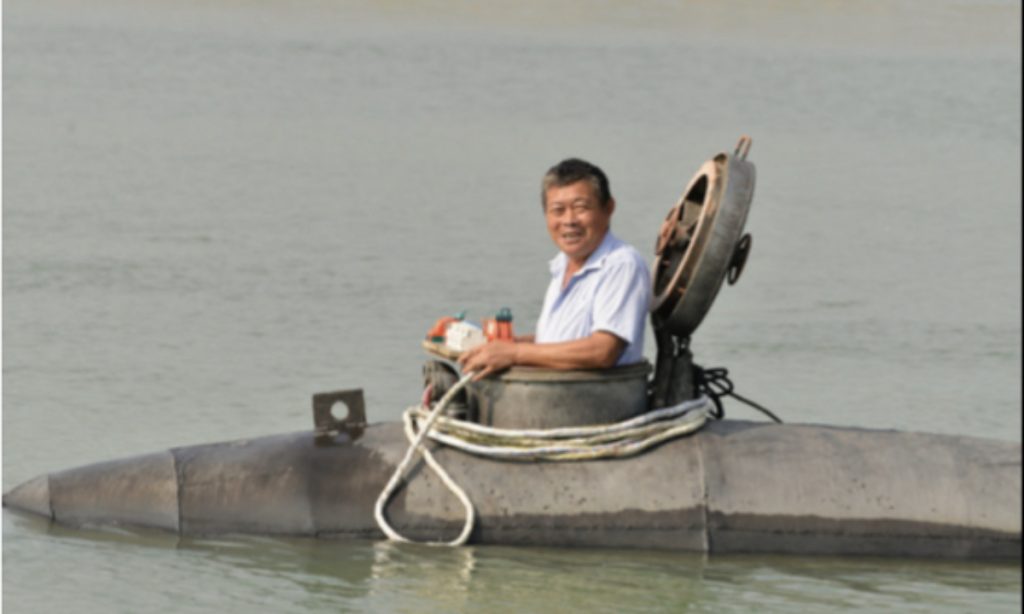
A 60-year-old farmer from Maanshan, East China’s Anhui Province, has successfully built a submarine on his own, the China Central Television (CCTV) reported. The five-ton homemade vessel, named "Big Black Fish," is capable of diving to a depth of eight meters. The farmer, named Zhang Shengwu, has been passionately devoted to invention since childhood, habitually engaging in small creations.
Over 20 years ago, Zhang built a sand dock in his hometown, spending his days watching cargo ships come and go.
In 2014, Zhang watched a television program featuring submarine construction, which gave him an idea to pursue. "Having spent years near water, I'd seen vessels of steel and wood – but never one capable of descending beneath the waves,” he said.
“If others can do it, so can I," said Zhang.
Though his family didn’t support him, it didn’t dampen his dream of building a submarine. He began conceptualizing the submarine’s structure in his mind.
As a seasoned carpenter, he possesses expertise in structural design, complemented by first-hand maritime work experience understanding propulsion systems, the state broadcaster CCTV News said.
“Once I calculated material requirements, the timeline became clear," Zhang noted.
With the blueprints mapped out in his mind, Zhang spent 5,000 yuan ($699) on steel plates, batteries, engines, and other materials, and started building the submarine. After six months of effort, his first submarine was completed.
Measuring six meters long, 1.2 meters high, and weighing two tons, this submarine earned him a national utility model patent, starting his inventive journey, according to the report.
By 2016, he had developed a surface vessel, winning another utility model patent certificate, CCTV News reported
Zhang didn’t stop there. He invested over 40,000 yuan to build his second upgraded submarine. The new vessel increased in length to seven meters and height to 1.8 meters, featuring a two-person cockpit.
To enhance stability, he poured approximately two tons of concrete into the hull base and installed dual ballast tanks fore and aft. For superior watertight integrity, Zhang welded all joints tightly and made the inlet and outlet circular.
Weighing five tons with seven tons of displacement capacity, the submarine achieves an eight-meter diving depth and a minimum speed of four knots.
Zhang expressed profound satisfaction, "A single small battery powers an electric motor propelling such substantial craft underwater. It remains completely watertight during 30-minute submersion cycles and possesses reverse maneuverability."
Regarding future endeavors, Zhang plans to construct larger submarines while helping enhance national defense awareness among youth.
US Coast Guard claimed that a China-flagged research vessel was detected on Friday off the coast of Alaska "in the US' Extended Continental Shelf, or ECS," and that the US Coast Guard has responded to it while released a photo of the vessel. However, The ECS itself is a unilateral territorial claim which saw the US suddenly expanding by 1 million square kilometers in size. Such a "villain strikes first" game and hyping up of "China threat" rhetoric is only to justify the US' evil deeds in the Arctic, revealing itself as a rule-breaker and global troublemaker, Chinese expert said.
The US Coast Guard asserted Saturday that the Xuelong-2, a Chinese icebreaker, was detected about 290 nautical miles north of Utqiagvik, Alaska, in the North American Arctic.
The US State Department claimed the ship was in the US' Extended Continental Shelf, or ECS, which is a portion of the continental shelf that goes beyond 200 miles nautical miles off the coast, CBS News reported.
"The US has exclusive rights to conserve and manage the living and non-living resources of its ECS," the Coast Guard claimed in its news release. A Coast Guard C-130J Hercules, a long-range surveillance aircraft, responded to China's Xue Long 2. The Coast Guard also released a photo of the vessel.
Xuelong-2 is China's first domestically built polar icebreaker delivered in 2019. With its two-direction icebreaking capabilities and the ability to sail on 60-day expeditions to all regions of the globe, it is a major platform for China's oceanic environmental survey and scientific research in the polar regions, according to Xinhua News Agency.
Previously, the Chinese Foreign Ministry spokesperson Guo Jiakun had stressed that China carries out normal research activities at sea in accordance with international law, including UNCLOS, and hopes the relevant parties will have a right understanding of this and stop the groundless suspicion and speculations.
Ironically, however, the ECS that US claimed the Chinese vessel has passed was a self-drawn area, a unilateral claim of its territory, Chinese expert noted.
In December 2023, the US Department of State released the geographic coordinates defining the outer limits of the US continental shelf in areas beyond 200 nautical miles from the coast, known as the ECS. It covers an area approximately one million square kilometers spreading across seven regions, about twice the size of California.
Grigory Karasin, chair of the Russian Federation Council Committee on Foreign Affairs, has responded by stating that "we have taken and will continue to take all measures that are necessary for our national interests in this geographical area." Similarly, Nikolai Kharitonov, head of the State Duma Committee on the Arctic, said that unilaterally expanding boundaries on this area is "unacceptable" and could lead to "increased tension."
Under international law, the Arctic and its surrounding waters in the Northern Ocean do not belong to any single country. Apart from the US, nations including Canada, Denmark, Norway, and Russia have all made sovereignty claims over sections of the Arctic seabed. This is driven by the region's vast resources, estimated at 83 billion tons of standard fuel equivalent, with nearly 80 percent concentrated in the Barents and Kara Seas, according to media reports.
Moreover, there is a high likelihood of discovering major new oil and gas reserves in unexplored continental shelf areas. The US, through its claims, seeks to secure critical minerals needed for electric vehicle battery production, further intensifying the geopolitical competition in the Arctic.
"China's position on Arctic maritime rights and interests has been made clear that they must be handled in accordance with the United Nations Convention on the Law of the Sea (UNCLOS), and China opposes any country's unilateral self-interpretation. The US, not even a party to the Convention, imposes its domestic laws on other nations through a typical long-arm jurisdiction, which is a blatant disregard for international law," Li Haidong, a professor at China Foreign Affairs University, told the Global Times on Sunday.
Its latest groundless accusations against Chinese research vessel once again reveal the extremism, irrationality, and recklessness in Washington's China policy, Li said.
This "villain strikes first" tactic is essentially about stoking anti-China sentiment at home and peddling the "China threat" narrative abroad to create confrontation. By politicizing and turning the Arctic - a region meant for shared development - into an arena of geopolitical rivalry, the US fully exposes its habitual rule-breaking behavior and its role as a global troublemaker, Li noted.