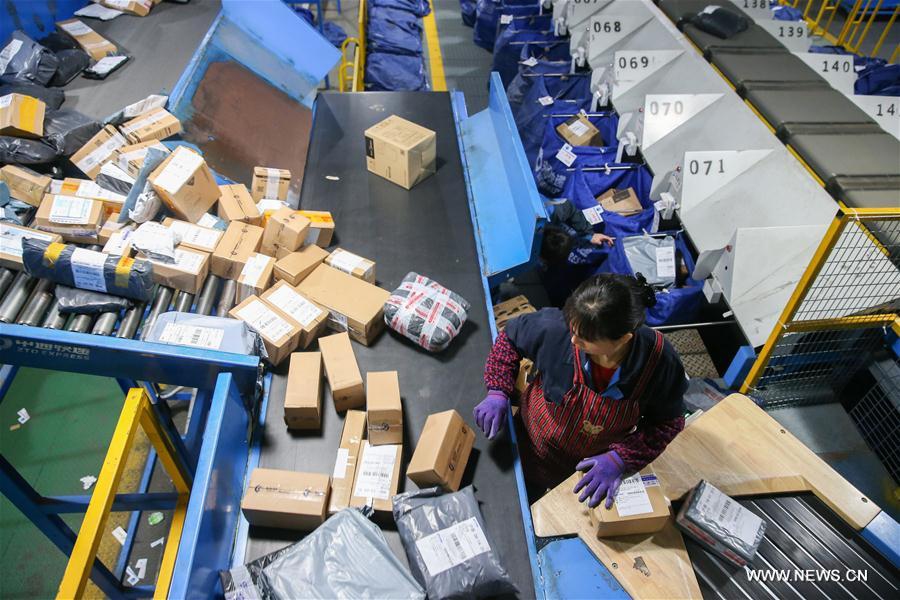
Alibaba’s Cainiao Smart Logistics has strongly refuted Belgian intelligence service VSSE’s recent accusation of engaging in “possible spying or interference activities” at the company’s European logistics center at Belgium’s Liege Airport.
“We strongly deny the allegations based on prior conjecture. Cainiao is in compliance with all laws and regulations where it operates,” the company said in a statement sent to the Global Times on Saturday.
Belgian officials are looking into “risks” involving the presence of China’s e-commerce giant Alibaba at a cargo airport in the city of Liege, Reuters reported on Friday, citing VSSE.
The security service said it was working to “detect and fight against possible spying and/or interference activities carried out by Chinese entities including Alibaba,” Reuters wrote.
Alibaba signed an agreement with the Belgian government in 2018 to establish an e-commerce trade center operated by Cainiao at Liege Airport. In 2021, Cainiao commenced operations at the Liege Digital Logistics Hub, which was its largest smart logistics hub in Europe.
It is not the first time for certain Belgian officials and media outlets hype such groundless accusations. In May 2021, The Chinese Embassy in Belgium refuted similar accusations against Alibaba, noting that such baseless allegations were a replica of the “China threat theory,” which not only misguided the Belgian public but also cast a negative impact on the image and reputation of Chinese businesses and individuals in Belgium.
The Chinese government always requires Chinese enterprises to strictly abide by local laws and regulations when doing business overseas, and will not require Chinese enterprises to engage in activities that violate local laws and regulations, the embassy said in a statement.
“Currently, Europe’s perception of and sentiment towards China have undergone complex changes due to a combination of internal and external factors. Many regular economic cooperation projects between China and Europe are being scrutinized through the lens of so-called security concerns,” Dong Yifan, a research fellow at the Institute of European Studies, China Institutes of Contemporary International Relations, told the Global Times.
Against the backdrop, various security and defense departments, including Belgium’s VSSE, are inclined to take the forefront in promoting such issues to underscore their own influence, Dong said.
“Such moves overstretching the concept of national security will undoubtedly create a negative impact on the political atmosphere and public sentiment between China and Europe, subsequently undermining the willingness and confidence of both parties to engage in cooperation,” Dong said.
Cao Zhongming, China’s ambassador to Belgium told the media in January that China retained its position as Belgium’s third-largest trading partner in 2022, while Belgium stood as China’s seventh-largest trading partner within the EU. The accomplishment is noteworthy given the backdrop of a sluggish global economic recovery.
The successful operation of Alibaba's Cainiao Liege Smart Logistics Hub in Belgium has significantly boosted cross-border e-commerce between China and Europe and helped reinforce Belgium’s position as a logistics hub in Europe, Cao said.
In an interview released Sunday, the US’ NASA chief once again smeared China's space missions and vowed to beat China in the “moon race.” The latest barrage of attacks was slammed by Chinese experts as a reflection of a lack of confidence and a dangerous, narrow Cold War mentality in the US.
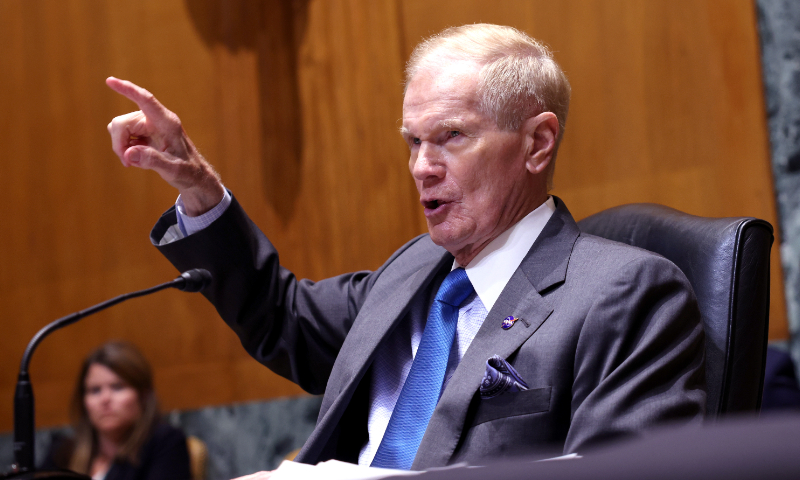
NASA Administrator Bill Nelson accused China of being “one of the very few nations” that would not be partners with the US and that it is being “very secretive” in terms of space programs in an interview with Nikkei Asia published on Sunday.
In the meantime, Nelson stated that he believes the US will beat China in terms of sending a manned spacecraft to the moon.
The two countries both have similar visions to launch a crewed moon probe in the next decade. China announced that its manned rocket for the mission is expected to be constructed by 2030, while NASA has pushed back its moon landing to 2025 or later.
Nelson's unsubstantiated accusations fully reflect that the US lacks confidence in its aviation development, experts told the Global Times.
Nelson's renewed hype of the Chinese aviation threat theory is actually a common NASA trope, spinning an external excuse to spur the US Congress to pass more related budgets, Song Zhongping, a space analyst and TV commentator, told the Global Times on Sunday.
"China has never said it aims to engage in a so-called space race with the US," he said, noting that the past race with the Soviet Union and Cold War mindset trapped the US.
In fact, publicly attacking China’s space programs has become normal for NASA in the past few months. In September, Nelson accused China of lacking needed transparency over issues. In July, the NASA chief blatantly claimed that China is “trying to occupy the moon.” In May, he said that China stole the US’ space technology.
"These accusations fired by NASA are unfounded and unjustified," Song said. "China has always had a cooperative and open attitude in the space sector."
In the 1990s, China launched satellites for other countries and provided space delivery services to other countries. Now, with its space station, return satellites and target vehicles, China has also been providing piggyback services and giving platforms to other countries’ projects.
China issued an action statement in November outlining its plan for promoting further international cooperation on space technology and exploration, working with other countries and international organizations within the framework of the United Nations.
Observers point out that China’s space station is facing all countries in the world that are willing to cooperate, including developing countries, which is the real sense of an international space station. On the contrary, the space station created by the US is precisely a club for the rich, and it is very difficult for developing countries to get their hands on it.
In 2011, the US Congress passed the Wolf Amendment, a law that prohibits NASA to engage in cooperation with China and China-affiliated organizations. “Now that China has moved into the top echelon of space-faring nations with its own innovations, the US is starting to worry even more,” Song said. “The country realizes that China's momentum is going to be strong and even limitless, which needed to be contained.”
Such a narrow US mindset and approach would not only be unhelpful to the two countries' technological development, but also could even overshadow the progress of human technology, analysts said.
If the US could treat China as a partner and not as an enemy, it would promote the humankind's ability to explore space to soar, Song noted.
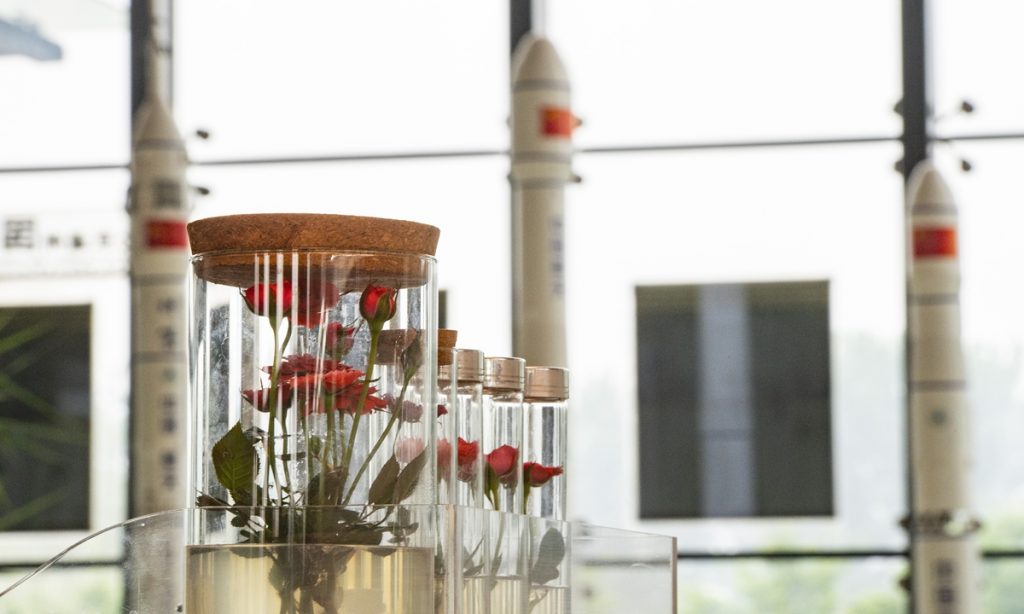
136 types of seeds, including crops, forest vegetation, flowers, and microorganisms will be carried on board the Shenzhou-16 manned spacecraft to start their space breeding journey. These seeds will contribute to the advancement of China's agricultural science and technology and enhance food security, the China Manned Space Engineering Office announced on Wednesday in a statement.
The seeds were selected through a four-month application and review process and have been chosen from 53 institutions across the country. The project, conducted by manned spaceflight, is of a public welfare nature and does not charge any carrying fees.
It has been 36 years since China's first space seed breeding effort in 1987, the country has sent the seeds of hundreds of plant species into space on dozens of retrievable satellites and Shenzhou spaceships. Nearly 1,000 new species have been created, of which 200 have displayed outstanding performances, according to media reports.
Space seed breeding uses cosmic radiation to mutate the genes of seeds sent into space, in order to create new species for greater variety.
"Space peppers and watermelons" commonly found in supermarkets in China are successful varieties of space breeding. China ranks first in the world in the number of cultivated varieties and the range of popularization and application of space breeding, read media reports.
The area under cultivation for grains, vegetables, fruits and other plants developed by space seed breeding has surpassed 4 million hectares, and generated economic benefits of over 200 billion yuan ($30.51 billion), media earlier reported.
The seeds need further improvement, especially in disease resistance, through conventional breeding methods or space breeding, the Xinhua News Agency reported.
Space breeding involves exposing seeds and strains to cosmic radiation and microgravity during a spaceflight mission to mutate their genes.
China's space seed breeding level also reflects the nation's advancing aerospace technology, Li Guoxiang, a researcher at the Rural Development Institute of the Chinese Academy of Social Sciences, told the Global Times.
"There are only a few countries in the world with mature aerospace technology, and Chi
New progress has been made on an investigation into a cyberattack incident targeting the Wuhan Earthquake Monitoring Center affiliated to the city's Emergency Management Bureau, after a joint investigation team formed by the National Computer Virus Emergency Response Center (CVERC) and Chinese cybersecurity company 360 discovered malicious backdoor software that exhibits characteristics of US intelligence agencies, the Global Times learned on Monday. Chinese authorities will publicly disclose a highly secretive global reconnaissance system of the US government, which poses a serious security threat to China's national security and world peace.
On July 26, the Wuhan Earthquake Monitoring Center reported that some front-end station collection points of the earthquake reporting data had been implanted with backdoor programs, attracting widespread attention. The CVERC and the company 360 immediately formed a joint investigation team to go to Wuhan for investigation and evidence collection.
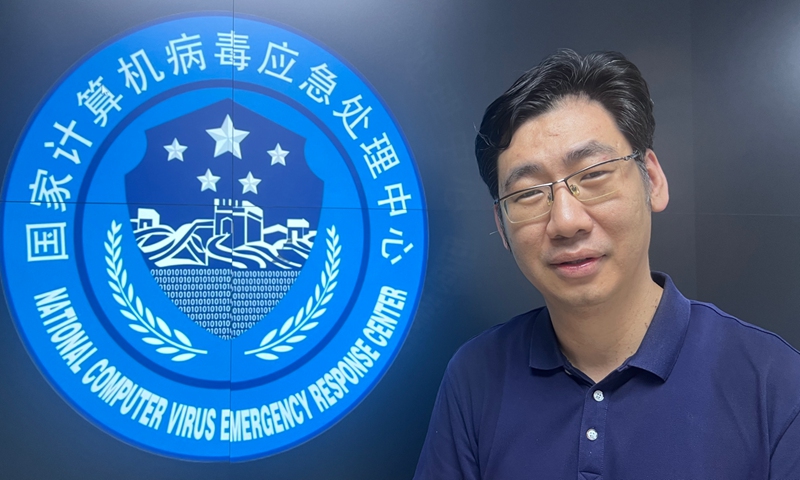
Du Zhenhua, a senior engineer from the CVERC, told the Global Times that the team has found very complex backdoor malware in the victim's network, fitting the characteristics of US intelligence agencies, highly concealed, and aiming to steal earthquake monitoring-related data, with a clear military reconnaissance purpose. Why target earthquake monitoring system?
Du explained that China is a country seriously affected by earthquake disasters, with multiple occurrences causing severe loss of life and property. "Therefore, China attaches great importance to earthquake monitoring and early warning. In order to improve the monitoring and early warning capability of geological disasters, earthquake monitoring data includes not only basic information like magnitude and epicenter but also rich geographical and geological data such as surface deformation and hydrological monitoring," Du said.
These data also hold high value as military intelligence. Hence, the cyberattack on the earthquake monitoring center by US intelligence agencies was a planned and premeditated cyber military reconnaissance action, the expert noted.
Xiao Xinguang, a member of the National Committee of the Chinese People's Political Consultative Conference (CPPCC) and also the chief software architect of leading anti-virus company Antiy Labs, further explained to the Global Times that although the location, magnitude, and depth are publicly released information, they are based on the calculations from multiple sensors.
"The comprehensive vibration and sound wave data collected by these sensors, especially infrasound data, have significant intelligence value for judging geological terrain, analyzing weapons system tests, and nuclear tests," Xiao said.
Furthermore, this is just one of the reasons the US targets earthquake monitoring and other systems with cyberattacks. Xiao also analyzed that the current information gathering is only one type of behaviors that have been exposed.
There are still many information theft instances targeting other fields that have not yet come to the surface. By leveraging its global comprehensive reconnaissance ability, along with various means of intrusion, theft, and other comprehensive measures to obtain all kinds of telemetry data, and combining other multi-source auxiliary data, it forms the ability to analyze, judge, attribute, and locate China's economic, social operations, and even military actions.
Causing social panic
Experts believe that cyberattacks on civil infrastructure, including earthquake monitoring systems, can lead to serious consequences.
Du underlined that if the attackers maliciously damaged earthquake monitoring system, it would become ineffective in providing accurate data during an earthquake. This would impact earthquake early warnings and disaster assessment work, leading to more severe loss of life and property.
"Even more dangerous is that if the attackers tamper with the earthquake monitoring data, triggering false alarms, it could lead to social panic and disorder, resulting in casualties among innocent people," Du said.
The remote sensing and telemetry systems and data are national strategic resources that must be given priority protection, Xiao said. "These data can display the basic operation of our country's economy and society from macro to micro levels and provide comprehensive support for integrated decision-making and emergency response. They are the supporting resources for territorial safety and national security."
"US intelligence agencies not only actively collect various signal intelligence but have also long obtained other countries' comprehensive earth system science remote sensing and telemetry data as strategic intelligence through various means. This includes sharing through allied intelligence mechanisms, coercing high-tech companies to provide it, and using academic and scientific research activities," Xiao said.
He also explained that the discovery of the cyberattack on Wuhan earthquake monitoring center was not accidental, indicating that cyberattack intrusion and theft have become the lowest-cost way for the US to obtain other countries' remote sensing and telemetry data.
The US has developed a series of signal intelligence collection, analysis, and processing systems, such as the Echelon project for electromagnetic signal spying, the Main Core project for telecommunications operators, and the PRISM project's super access interface for large IT and internet manufacturers.
"After many years of continuous tracking with relevant departments, we will soon publicly disclose a global reconnaissance system of the US government, which poses serious security threats to China's national security and world peace. We must be highly vigilant and tightly guard against this," Xiao said.
Violating international law
In fact, a plethora of internal documents from the National Security Agency (NSA) and Central Intelligence Agency (CIA) exposed in events such as Prism, Shadow Brokers and WikiLeaks reveal that the US, as a real "hacker empire" and "spying empire," targets "indiscriminately" (including its allies) in its cyber intelligence collection activities. Civil institutions and individuals worldwide are its targets for cyberattacks, fully exposing the US' double standards and hypocrisy on human rights issues.
Du further stated that the US military intelligence agencies' use of their information technology advantage to launch cyberattacks on civilian infrastructure is a criminal act in clear violation of international law, seriously infringing on China's national security and public interest.
"In fact, for a long time, the US' cyberattacks on China's key information infrastructure have been all-encompassing, with government agencies, universities, research institutions, and large corporations all being targeted by its cyberespionage activities. The US is attempting to use these unfair means to comprehensively steal China's political, economic, military, and diplomatic sensitive information, to contain China's development and progress, and to maintain the US' world hegemony," he said.
As a veteran expert in computer virus prevention technology and emergency response, Du suggested that if China's key information infrastructure is attacked with state-backed hackers, relevant units must report the cyberattack to relevant authorities immediately; build cybersecurity capabilities; strengthen supply chain security management, increase autonomous control abilities; conduct regular cybersecurity drills to improve emergency handling and recovery abilities.
Xiao believed that although China's overall cybersecurity ecosystem is still relatively small in market size, overall, it's complete in technology categories without obvious weaknesses. "In continuous confrontation with threats, especially in identifying, analyzing, and exposing advanced persistent cyberattacks, including those from the US, many excellent Chinese cybersecurity companies have demonstrated their abilities, becoming the industry's supporting force in safeguarding national security and defending the security of the cyberspace community."
China does not need to underestimate itself in terms of cybersecurity capabilities, he noted. "We can establish more ambitious goals, become a competent force in the national governance system, create a capability advantage compared to main geopolitical competitors, and not become a significant constraint and risk vulnerability, even when facing comprehensive suppression by hegemonic states or in high-intensity security conflicts.
"We can achieve an overall risk controllable state by strengthening the construction of the public service attributes of cybersecurity , and enhancing the construction of common security capabilities, resilience mechanisms, and cybersecurity infrastructure," Xiao said.
Deadly wildfires in Hawaii, which caused the biggest death toll in more than a century in the US and forced thousands to evacuate from their homes, expose the incompetence of the US government, said analysts, with many local residents who survived the disaster posting videos on social media criticizing the problematic response of local authorities and poor early warning system. Residents also criticized US mainstream media reports, saying this was not just a natural disaster, but also a man-made calamity.
Chinese analysts and web users are paying attention to the horrible tragedy that Americans have suffered, as the hashtags on Sina Weibo about "Hawaii wildfires" have received more than 71.52 million views on Tuesday. Experts said the response of the US government made the US look "unlike a developed country."
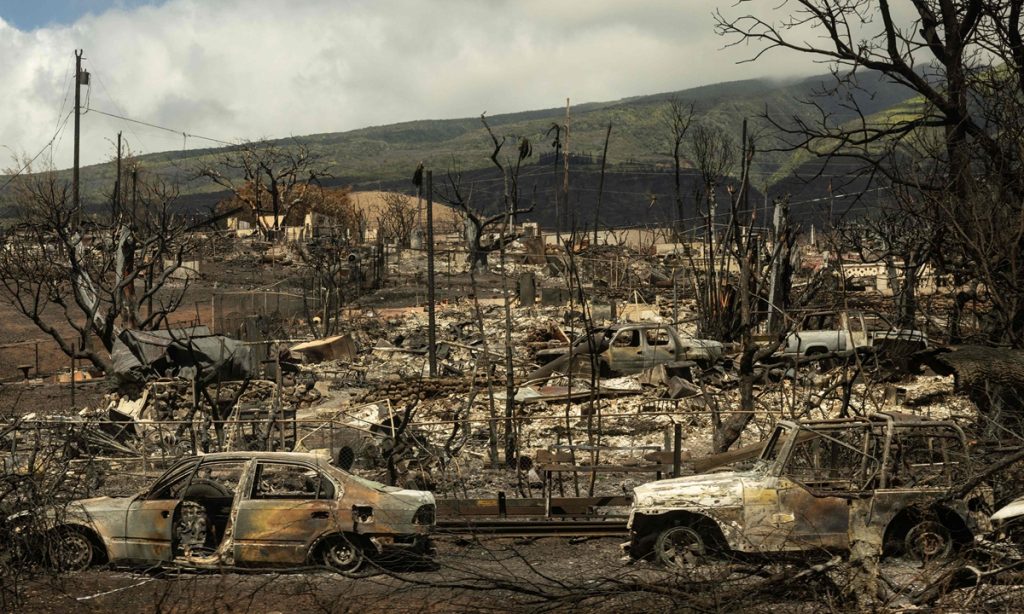
A massive blaze destroyed much of the town of Lahaina, on Maui over the weekend. As of Monday afternoon, officials confirmed 99 people have died. Hawaii Governor Josh Green told the media that the death toll would likely increase "very significantly" and could "double or even triple" over the next 10 days, according to CNN.
Green said on Sunday that there was "very little left" of Lahaina, and some 1,300 people remained missing, according to CBS News.
Many people including survivors uploaded videos to break the silence on social media networks to heavily criticize the incompetence of the government and the problematic response and early warning system. Some questioned reports by the mainstream media and said it was not a natural disaster, and the death toll could be far greater than reported.
Some of them said warning sirens did not sound and people received no warning about the wildfire, and they were not informed about evacuation. Some complained about the disorganized response and poor traffic system that trapped the people who wanted to escape and the rescue personnel who wanted to enter the island, and that donations have not been handed to the people in need. Some relief materials were looted as local authorities failed to restore public order.
Hawaii has got a massive outdoor public safety early warning system, with more than 400 sirens to remind people of threats like tsunamis, and Maui has 80 of these sirens, according to the Xinhua News Agency.
In 2018, the system mistakenly informed the people of Hawaii state that "a ballistic missile is coming" due to human error, and in 2019, the system went wrong again and caused panic among locals. But this time, it failed to warn people effectively, and the state attorney has vowed to investigate, Xinhua reported on Tuesday.
The Washington Post reported on Saturday that "Residents of Lahaina, the historic former Hawaiian capital that became an inferno," have criticized what they called inadequate warnings of the sudden firestorm and said they are now being left to fend for themselves in its wake.
"I feel like the citizens of this island have been called upon, maybe by a higher power, to actually help because no one else is helping," said Kai Lenny, a professional surfer, according to the Washington Post.
Many Chinese netizens do not understand why the powerful US military force can allow Americans to feel helpless during the disaster when the Pacific Fleet is right there in Hawaii. A comment said "why don't US military troops go to rescue their people in the disaster area?" In China, the military, police and other professional rescue forces will respond immediately to rescue people every time when disasters occur in any location in China.
Lü Xiang, an expert on US studies and a research fellow at the Chinese Academy of Social Sciences, told the Global Times that the response of the US military or national guards this time has no comparison to their fast reaction after the Capitol Hill attack in 2021, and this means the decision makers of the country did not pay enough attention to this disaster that caused huge casualties.
"From the early warning system to the response after the disaster, the performance of the US government this time just makes the US look unlike a developed country," Lü said.
US President Joe Biden was in Rehoboth Beach, Delaware, over the weekend and was asked during a bike ride on Sunday morning whether he would go to Maui to assess the devastation. He replied, "We're looking at it." After a visit to the beach later that day, Biden was asked about the rising death toll on the island and replied, "No comment," according to US media.
The comment sparked a backlash, Fox News reported, including by former Hawaii state representative Mark Kaniela Ing, a Democrat who now serves as national director of the Green New Deal Network. "I campaigned for you. Now, when I lose dozens of my friends, family, and neighbors. This?" Kaniela Ing wrote in a now-deleted post.
Kaniela Ing told Fox News Digital in a phone interview Monday that he found Biden's remark "shocking" and out of character.
This kind of disaster is closely related to climate change but the Biden administration shows limited sincerity in restoring international cooperation to handle climate change issues, said analysts, adding that a disaster like the Hawaii wildfires has not received enough attention from mainstream US media, and people from other states do not seem to care much what is happening in Hawaii.
Lü said "when I open the websites or apps of US mainstream media like The New York Times and CNN, the headline story today is about [former president] Donald Trump's legal issues, and other prominent news stories are about Ukraine, but the reports about the most deadly wildfire in more than a century in the US, while the death toll is keep updating, can only be found at the bottom."
Radiation from the 2011 disaster at the Fukushima Daiichi nuclear power plant contaminates most Japanese seafood at low levels, researchers estimate February 29 in the Proceedings of the National Academy of Sciences.
For aquatic foods, data on lingering concentrations of cesium is limited in terms of the number of species sampled and the levels that surveys can even detect. To fill in the blanks, a team of researchers in Japan drew from survey measurements from April 2011 to September 2015 and devised a way to predict cesium contamination in different aquatic species across Japan.
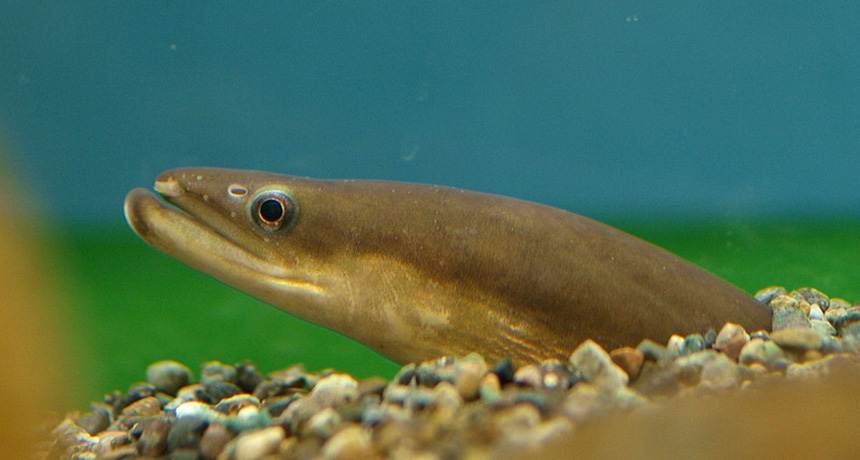
The analysis provides mixed news: Overall, cesium contamination is pretty low. But, some species retain higher levels than others. Larger fish near the top of the food web tended to have the highest levels of contamination. The researchers predict that such factors put some wild freshwater species like the whitespotted char (Salvelinus leucomaenis leucomaenis) and the Japanese eel (Anguilla japonica) at higher risk for contamination.
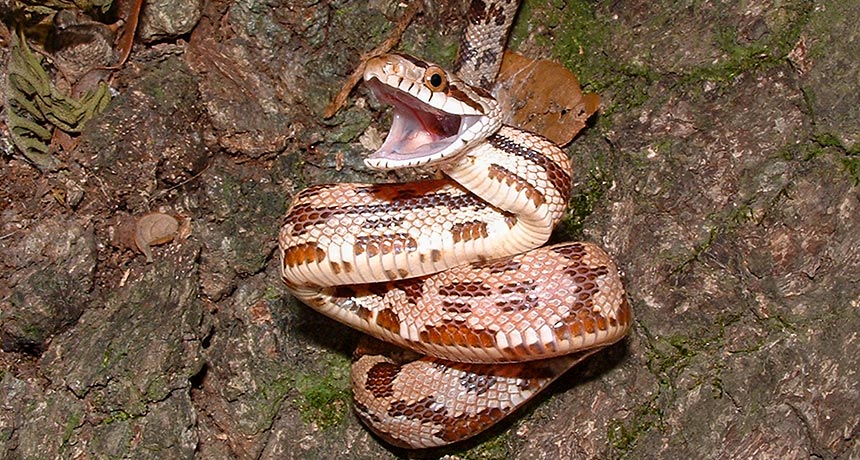
This could be embarrassing for rattlesnakes and other vipers: Their long-standing reputation as the snakes with the fastest strikes on Earth just got bit by the common Texas rat snake.
In lab tests biting a stuffed glove, Western rattlesnakes averaged speeds of 2.95 meters per second and Western cottonmouths averaged 2.98 m/s, says functional morphologist David Penning of the University of Louisiana at Lafayette. But Texas rat snakes, familiar farmyard chasers of pest rodents, averaged 2.67 m/s. Statistically that’s a three-way tie, Penning and his colleagues report March 16 in Biology Letters.
Strikes were over quickly but all species subjected their brains to impressive acceleration. Rat snakes accelerated their head more on average (190 meters per second2) than what a fighter pilot experiences when taking off from an aircraft carrier (27 to 49 m/s 2 ). Penning’s point is not that vipers are slow, but that other snakes also evolved a lightning strike. “They have to eat too,” he says. Startled mammals have been clocked activating a muscle in as little as 14 to 151 milliseconds. Snakes in Penning’s tests reached their targets in 50 to 90 milliseconds, literally before some creatures could move a muscle. And if you blink — for a human average of 220 milleseconds — you miss it all.
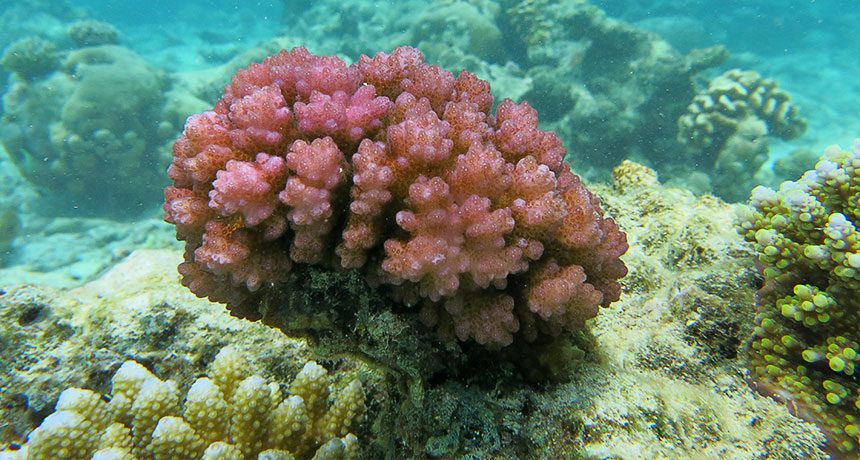
For corals, baby fat is food. Coral mothers send their offspring into the world with a balanced meal of fat and algae, but baby corals mainly chew the fat, new research finds.
Adult corals of the species Pocillopora damicornis get most of their nutrition from symbiotic algae that live inside them, providing metabolic energy by photosynthesis. But coral larvae, researchers report online March 25 in Science Advances, rely instead on their “baby fat.”
The finding sheds light on corals’ metabolism during their most vulnerable developmental stage, says biological geochemist Anders Meibom of École Polytechnique Fédérale de Lausanne in Switzerland. Baby fat “is a good thing,” he says. “It gives the coral some time to find a good home without running out of juice.” Larvae’s dependence on fat may make them less sensitive to bleaching — a process in which stressed corals jettison their algal tenants and eventually starve to death. So understanding larval nutrition could help scientists better understand the effects of ocean warming and acidification on bleaching, Meibom says. Meibom and colleagues fed isotope-tagged nutrients to larvae of P. damicornis, commonly called cauliflower coral, and tracked how the larvae’s symbiotic algae used the nutrients over time. Algae are less abundant in larvae compared with adult corals and provide very little energy, the researchers found.
The next step is to pinpoint exactly when and how larvae switch from feeding on fat to algae as they transition into adulthood, Meibom says, as well as exploring how Earth’s changing oceans might impact the process.
NEW YORK — Cells in a brain structure known as the hippocampus are known to be cartographers, drawing mental maps of physical space. But new studies show that this seahorse-shaped hook of neural tissue can also keep track of social space, auditory space and even time, deftly mapping these various types of information into their proper places.
“The hippocampus is an organizer,” says neuroscientist Howard Eichenbaum of Boston University.
Neuroscientist Rita Tavares described details of one of these new maps April 2 at the annual meeting of the Cognitive Neuroscience Society. Brain scans had previously revealed that activity in the hippocampus was linked to movement through social space. In an experiment reported last year in Neuron, people went on a virtual quest to find a house and job by interacting with a cast of characters. Through these social interactions, the participants formed opinions about how much power each character held, and how kindly they felt toward him or her. These judgments put each character in a position on a “social space” map. Activity in the hippocampus was related to this social mapmaking, Tavares and colleagues found. It turns out that this social map depends on the traits of the person who is drawing it, says Tavares, of Icahn School of Medicine at Mount Sinai in New York City. People with more social anxiety tended to give more power to characters they interacted with. What’s more, these people’s social space maps were smaller overall, suggesting that they explored social space less, Tavares says. Tying these behavioral traits to the hippocampus may lead to a greater understanding of social behavior — and how this social mapping may go awry in psychiatric conditions, Tavares said.
The work emphasizes that the hippocampus is not just a mapper of space, Tavares says. Instead, it is a mapper of relationships. “It’s relational learning,” she says. “It’s everything in perspective.”
Other research, discussed at a meeting in February, revealed a role for the hippocampus in building a very different sort of map — a map of sounds. Stationary rats were trained to “move” through a soundscape of different tones, pushing a joystick to change the sounds to reach the sweet spot — the target tone. As the rats navigated this auditory world, nerve cells in their hippocampus were active in a way that formed a map, Princeton University neuroscientist Dmitriy Aronov reported in Salt Lake City at the annual Computational and Systems Neuroscience meeting.
Cells in the hippocampus can also map time, keeping count as seconds tick by, Eichenbaum has found (SN: 12/12/15, p. 12). All of these types of information are quite different, but Eichenbaum argues that they can all be thought of as memories — another mental arena in which the hippocampus plays an important role. Organizing these memories into a sensible structure may be the big-picture job description of the hippocampus, he says. “What’s being tapped in all of these studies is that we are looking at a framework, whether it’s a physical spatial framework, a social space framework, a pitch framework, or a time framework,” Eichenbaum says.
Ocean outlook Earth’s oceans are a hot mess. They absorb heat at twice the rate that they did nearly 20 years ago, Thomas Sumner reported in “Ocean heating doubles” (SN: 2/20/16, p. 18). Meanwhile, phytoplankton release more heat during photosynthesis than previously thought, Chris Samoray reported in “Ocean flora flunk photosynthesis test” (SN: 2/20/16, p. 12). And the trillions of plastic particles littering the oceans are creating new habitats for microbes with unknown consequences, Samoray wrote in “Floating fortress of microbes” (SN: 2/20/16, p. 20). Anna Carter wondered if these findings are connected. “Is it possible that phytoplankton are contributing to ocean warming?” Carter asked. “How might the organisms now collecting on all the plastic in the ocean be related?”
Heat produced by phytoplankton doesn’t have a large impact on ocean temperature, says Sumner. “The phytoplankton are catching sunlight that otherwise could warm the water,” he wrote. “Another thing to keep in mind is that the oceans are colossal. At its deepest, the Pacific Ocean is about as deep as the cruising altitude at which most commercial airliners fly. Phytoplankton live in the top sliver of the water column, so any effect they have will be minuscule compared with the size of the ocean.” As for plastic-dwelling microbes, there is still so much to discover, Samoray says. Their contribution to ocean warming is currently unknown.
Ants on the move Florida harvester ants may be the Frank Lloyd Wrights of the animal kingdom. They construct intricate and mysterious nests, Susan Milius reported in “Restless architects we don’t understand” (SN: 2/20/16, p. 4). Researchers investigated why ants frequently build and abandon elaborate nests, and scatter charcoal around nest openings.
Readers had their own ideas about the unusual behavior. “[Charcoal] is an effective absorber of organics. Is it possibly used for absorbing their scent as a protective measure against predators?” Mark Ayers asked.
Walter Tschinkel, the Florida State University scientist featured in the story, says that the scorched plant matter ants use may not be as effective for these purposes as commercial charcoal. Field tests found no sign that charcoal would deter attacks by other ants.
Reader Joe De Vita speculated that colonies abandon their nests because of waste buildup. Tschinkel notes that this hypothesis has yet to be tested. “Digging up the vacated nest often reveals chambers with matted, blackened floors, presumably from fungus and other microorganisms, but whether this condition has any negative (or for that matter, positive) effects on harvester ants is unknown,” he says. An experiment to test this hypothesis is possible, but “ain’t all that easy. Still, stay tuned.”
Milk for spills Researchers have created a fibrous membrane made from milk proteins and carbon that could filter toxic heavy metals from severely polluted waters, Sarah Schwartz reported in “Altered milk protein cleans up pollution” (SN: 2/20/16, p. 14). In lab tests, the membrane removed over 99.9 percent of lead from a contaminated solution.
“It is a very exciting method,” wrote Janece Von Allmen. “Has anyone thought to test this method in the real polluted waters of Flint, Michigan?”
The filters are still in an early stage of design, Schwartz says. The membranes work in the laboratory to capture heavy metals and radioactive particles, but testing in the real world is a must. “Bodies of contaminated water are most likely chemically different from lab-made lead solutions and could change the membrane’s performance,” she says.
Whether or not these membranes would work in the Flint River is unclear because the river is not the original source of lead. The toxic heavy metal accumulates as the water passes through corroding pipes. The good news is the prototype shows signs of being efficient and is relatively cheap to produce.