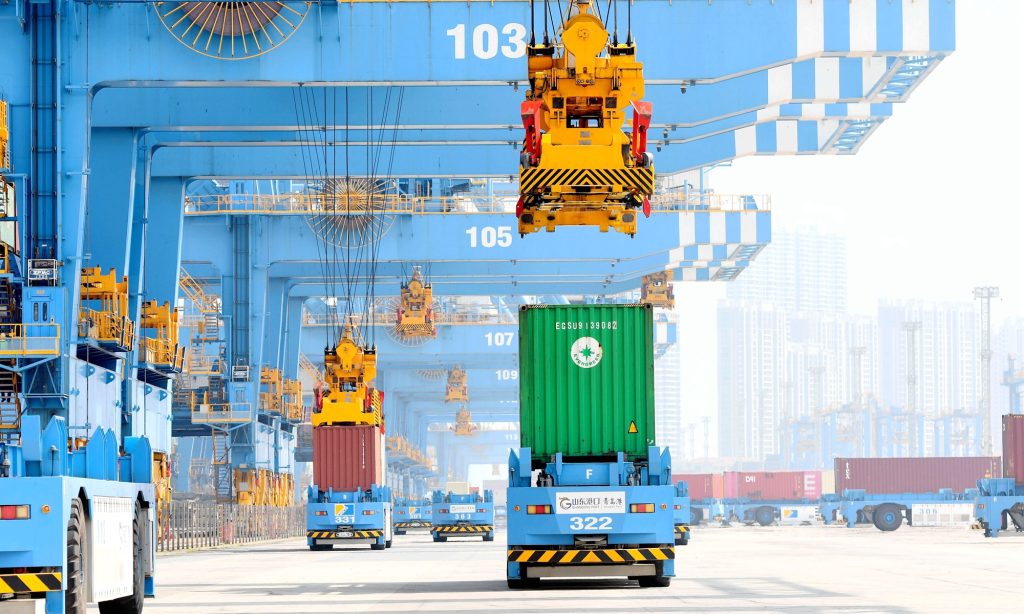
China's foreign trade in goods expanded by 6.2 percent year-on-year to reach 24.83 trillion yuan ($3.46 trillion) in the first seven months of this year, hitting a new record in trade volume, customs data showed on Wednesday, buoyed by the country's manufacturing strength, rising overseas demand, as well as the diversification of its trade partners overseas.
The brisk data add to an array of fresh evidence underscoring that the world's second-largest economy has been maintaining steady growth momentum, despite facing internal and external challenges. It also underlines a bullish outlook for the country's trade engine, which observers expect could roar at a quicker pace in the second half of the year to support the economy to grow and reach the GDP growth goal of around 5 percent for 2024.
The magnitude of China's trade growth in recent months has also defied certain Western countries' protectionist measures and blatant tariff hikes imposed on Chinese goods. This underscores the resilience, competitiveness and inherent vigor of the world's largest manufacturing powerhouse, analysts said, while pointing to China's unfazed pivotal role as a stabilizer and locomotive of the global supply chain.
In the first seven months this year, China's exports jumped by 6.7 percent, while imports gained 5.4 percent, according to customs data. The 6.2-percent foreign trade expansion also outpaced the 6.1-percent rise recorded in the first six months.
"Since the beginning 2024, China's economy has generally maintained a stable performance with steady progress, and foreign trade has continued to show a steady improvement," the General Administration of Customs (GAC) said.
In July, foreign trade in goods soared 6.5 percent year-on-year in yuan terms, with exports gaining 6.5 percent and imports expanding by 6.6 percent. The year-on-year growth rate of imports and exports has been higher than 5 percent for four consecutive months, according to GAC.
"A reading of 6.5-percent in July is a relatively high growth rate, so it is palpable that trade in July sustained the robust expansion streak from the previous month. As July marks the beginning of the second half, the positive data bode well for the second-half trade development," Tian Yun, a veteran economist based in Beijing, told the Global Times on Wednesday.
Tian also took note of import growth in July, reversing the 0.6-percent contraction in June, which signifies that China's domestic demand is "gaining traction in the second half of the year."
As trade data are a barometer of economic development, the freshly released July figures have led economists to project that China's third-quarter GDP is likely to grow by around 5 percent, or at least gain pace from the second-quarter, which saw a 4.7-percent year-on-year increase.
Li Chang'an, a professor at the Academy of China Open Economy Studies of the University of International Business and Economics, told the Global Times on Wednesday that he expected the economy to continue rebounding throughout the second half, and on a firm trajectory to achieve the GDP growth target of around 5 percent.
"The trade strength will buffer against headwinds, including rising geopolitical tensions and gloomy global economic outlook, while more targeted stimulus will be rolled out following major tone-setting conferences, injecting new impetus into the economic development," Li explained.
Positive trade momentum
According to Tian, the positive trade momentum in July is bolstered by a range of factors, including growing overseas demand amid looming global interest rate cut cycle. The 2024 Paris Olympic Games have also partly helped to drive the global demands for "Made in China" commodities, ranging from sports equipment, souvenirs to other goods.
Despite US-led blockade against China's industries, the exports of integrated circuits recorded a year-on-year increase of 25.8 percent, while the exports of auto vehicles went up 20.7 percent.
The buoyant vehicle export mirrored that the impact of tariff imposition on China's overall trade pattern remains limited, observers said. And on the contrary, the US is now "shooting itself on the feet" with its reckless crackdown on Chinese imports, which blunts its efforts to tame down inflation.
The US reported a sharp slowdown in job growth last week, which elicited fears of an economic recession.
In contrast, Li also ascribed its limited impact on Chinese exports to the country's complete industrial chain, the resilience and competitiveness of high-tech trade, as well as private companies' strengthened trade cooperation with a more diversified grouping of trade partners.
In the first seven months, China's trade with ASEAN, Central Asia, Latin America, and Africa totaled 7.6 trillion yuan, up 9.8 percent year-on-year, with its share in total trade gaining by 1 percentage point compared to the same period last year. Meanwhile, trade with the Belt and Road Initiative partners and other members of the Regional Comprehensive Economic Partnership (RCEP) rose by 7.1 percent and 5.7 percent year-on-year, respectively.
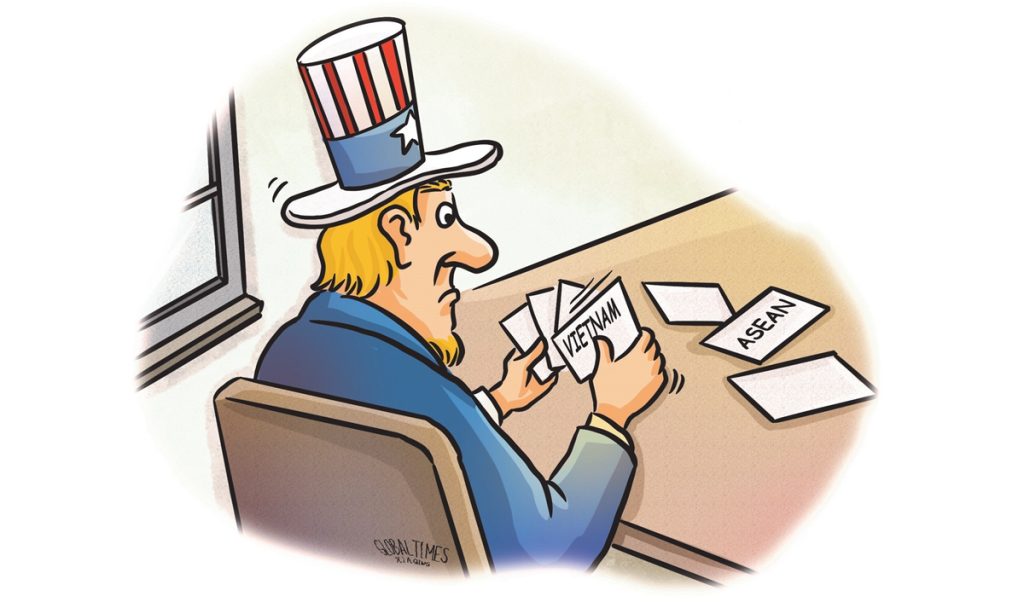
The refusal by the US to recognize Vietnam as a market economy appears to be both an economic decision and a political one, influenced by its domestic economic conditions and its strategy to counter China. Washington's increasing trend of politicizing its trade policy has become a source of growing uncertainty in the global economy.
The US Commerce Department announced on Friday its determination that Vietnam will continue to be classified as a non-market economy country for purposes of calculating US antidumping duties on imports from Vietnam, Reuters reported.
This decision brings uncertainty to Vietnam's exports to the US and sends a worrying signal, meaning that many of Vietnam's products may face the challenges of high import tariffs and anti-dumping measures. Vietnam's exports to the US have been increasing significantly. According to figures from Vietnam customs, in the first half of this year, Vietnam's exports to the US reached $55.1 billion, up 24 percent year-on-year and accounting for 30 percent of Vietnam's total exports.
The decision also contrasts sharply with recent efforts by the US government to strengthen economic relations with Vietnam. For instance, US Treasury Secretary Janet Yellen once promoted Vietnam as a "friend-shoring" destination.
But if the US truly considers Vietnam to be a crucial partner in its "friend-shoring" strategy, the irony and protectionism of rejecting Vietnam's "market economy" status becomes glaringly apparent. There is every reason to be perplexed by Washington's contradictory behavior of putting up obstacles behind its displays of support. According to the Vietnamese Ministry of Industry and Trade, 72 countries recognize Vietnam as a market economy, including Australia, UK, Canada and Japan, demonstrating its active participation and open cooperation in global trade.
Meanwhile, the US economy is grappling with various challenges, such as high trade deficits, a decline in manufacturing and other issues. The US rejection of Vietnam's bid is a clear indication that the US is more inclined to take protectionist measures to protect its domestic industries and reduce the impact of external competition when it comes to dealing with economic challenges.
Therefore, in the current economic situation, the US is unlikely to pursue an open trade policy as it did in the past. Washington may opt to leverage its market dominance to reshape the global distribution of industrial and supply chains, and consolidate its economic position and influence by putting up trade barriers, adjusting tariff policies and other means.
Washington's decision-making in terms of trade policy toward Vietnam is often deeply influenced by political motives and strategic considerations. Some US politicians are concerned that recognizing Vietnam's market economy status may indirectly help Chinese companies circumvent US curbs on Chinese imports. The mind-set reflects the increasingly politicized reality of US trade policy.
The US has been trying to squeeze out Chinese manufacturing by restructuring global industrial and supply chains, forcing many American and foreign companies focusing on exports to the US market to shift production to Southeast Asia, with Vietnam being seen as a key alternative. However, the reality is that instead of being squeezed out of the global industrial chain, China's manufacturing sector is constantly expanding and extending its supply chains to other regions like Vietnam and Mexico. The gap between expectations and reality indicates that it is not so easy as some thought to reshape the economic and trade landscape simply by using politically motivated policies.
This may explain why it is becoming more common to see Vietnam, Mexico and other countries face growing risks of being affected by US trade measures.
If anything, it lays bare the short-sightedness and contradictions in US strategy and the politicization of its trade policy. The growing trend of relying on politicized trade measures disrupts international trade and exacerbates uncertainty and tension in the global economy.
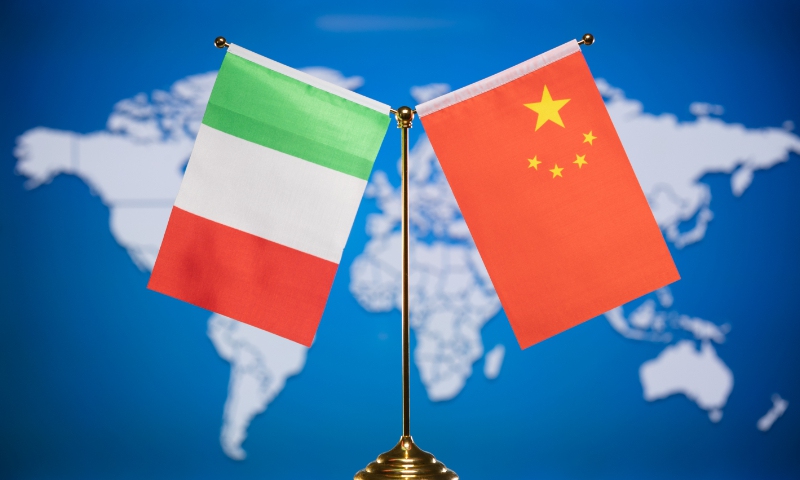
This year marks the 20th anniversary of the comprehensive strategic partnership between China and Italy, as well as the 700th anniversary of Marco Polo's death. Both sides should view and develop bilateral relations from a historical dimension, facing important opportunities for mutual development. On the afternoon of July 29, Chinese President Xi Jinping met with Italian Prime Minister Giorgia Meloni, who is on an official visit to China, at the Diaoyutai State Guesthouse in Beijing. Xi's remarks highlighted not only the profound historical significance of China-Italy relations but also their contemporary relevance as a bridge for East-West exchange. Meloni said that as ancient civilizations, Italy and China have always admired and learned from each other. Italy highly values China's international status and role and is willing to inherit the long-standing spirit of the Silk Road to develop a closer and higher-level partnership with China, she noted.
In addition to coinciding with these two important anniversaries, Meloni's visit to China itself has garnered widespread attention. She is the first G7 leader to visit China following the third plenary session of the 20th CPC Central Committee and this is her first visit to China since taking office. Meloni announced this visit during a press conference following the G7 summit last month, which was seen as a subtle shift in Italy's approach to China, seeking to develop relations with China beyond the G7's tough stance. On July 28, Meloni stated that her five-day trip was a "demonstration of the will to begin a new phase, to relaunch our bilateral cooperation."
From the current perspective, this visit, widely interpreted as a "new chapter" and "restart," has indeed yielded fruitful results. It has met Italy's domestic aspirations for cooperation with China and provided strategic planning and arrangements for bilateral economic and trade cooperation. Most notably, the two sides issued a 2024-2027 action plan on strengthening their comprehensive strategic partnership. The bilateral cooperation covers emerging fields such as electric vehicles, renewable energy, and artificial intelligence and aims to upgrade traditional cooperation in areas such as trade and investment, industrial manufacturing, technological innovation, and third-party markets. Additionally, China and Italy signed several bilateral cooperation documents in industry, education, environmental protection, geographical indications, and food safety.
In recent years, due to the influence of some internal and external factors, there have been some twists and turns in the China-Italy relationship. It should be said that through this visit, the two sides have not only reached many cooperation agreements and brought new opportunities to both sides, but also deepened political mutual trust and once again stood at a new starting point. Practice has proven that China and Italy are indispensable partners on the path of development, and can share development opportunities on the basis of equality and mutual benefit. Italy's choice also indicates that as long as dialogue is conducted based on a pragmatic and rational attitude, the space for win-win cooperation and mutual development between China and Italy is still very imaginative.
From a deeper perspective, whether it is the establishment and deepening of the comprehensive strategic partnership between China and Italy, or the historical echoes of Marco Polo spanning 700 years, the key to the enduring vitality of the China-Italy relationship lies in the ability to approach and understand each other with equality and sincerity. China and Italy are both ancient civilizations on the Eurasian continent. Marco Polo was the first person to introduce China to Europe. If we can continue to uphold the spirit of the Silk Road of civilization exchange and mutual learning, then China-Italy relations will have a continuous source of vitality and dynamism.
Just as President Xi Jinping pointed out, "China and Italy should uphold and promote the Silk Road spirit, view and develop bilateral relations from a historical dimension, strategic height and long-term perspective, and push their relations to go steady and far."
We also noticed that Prime Minister Meloni said during this visit that Italy is ready to play a positive role in the candid dialogue between the EU and China and foster a more stable cooperative relationship. She said in a speech at an exhibition themed around Marco Polo and the Silk Road that the road from Italy to China is sometimes easy, sometimes difficult, but this road is always passable. In the current global era of great changes, as two major civilizations and markets, China and Europe urgently need more and deeper equal exchanges and mutual understanding. At this moment, Italy, as a bridge between East and West and a role in maintaining road access, will surely have a lot to offer.
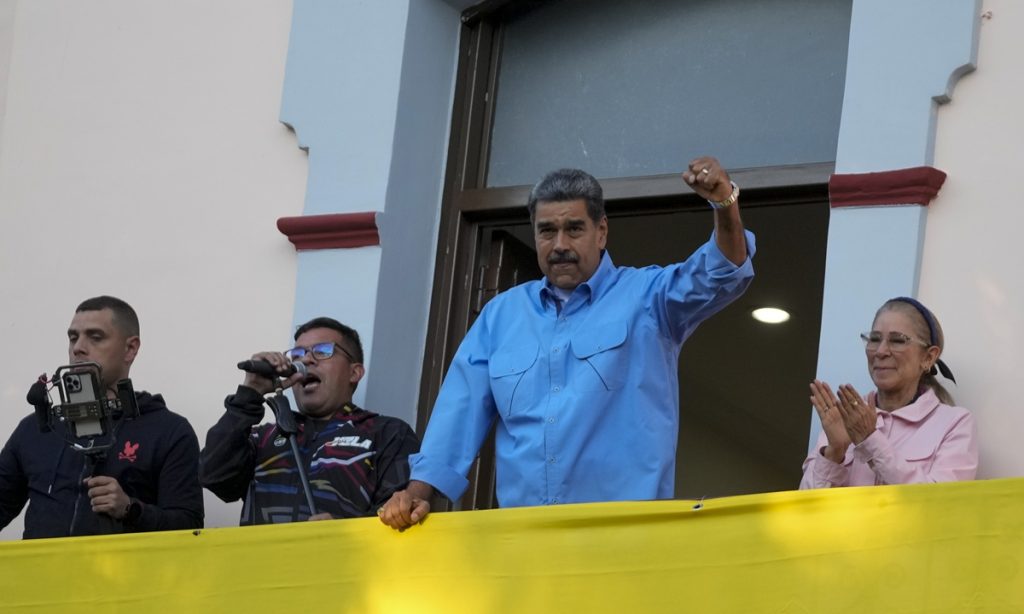
Venezuela has decided to sever diplomatic relations with Peru due to Peruvian Foreign Minister Javier Gonzalez-Olaechea's statement on the presidential election results in Venezuela, Venezuelan Foreign Minister Yvan Gil said on social media X late Tuesday local time.
"We are forced to make this decision after the reckless statements of the Peruvian foreign minister," Gil said on social media platform X, adding that the decision was made based on Article 45 of the Vienna Convention on Diplomatic Relations of 1961.
Before Venezuela's announcement, Peru on Monday refused to recognize the results of the Venezuelan presidential election and announced it had recalled its ambassador to Venezuela. In a post on X on the day, Peru's foreign minister slammed the result as "fraud," and a "violation of the will of Venezuelan people."
The presidential election of July 28 saw Nicolas Maduro secure a third term in office with 50.2 percent of the vote, according to the result presented by Venezuela's electoral council. Leader of the opposition Maria Corina Machado disavowed the results.
Before severing ties with Peru, the Venezuelan government on Monday announced the withdrawal of all diplomatic staff from the embassies of seven countries that questioned the election result - Argentina, Chile, Costa Rica, Peru, Panama, Dominican Republic and Uruguay, and also demanded those countries withdraw their diplomatic representatives from Venezuelan territory.
Meanwhile, Cuba, Honduras and Bolivia congratulated Maduro on his victory. China and Russia also congratulated Maduro on his re-election.
The presidential election is an extremely sensitive topic, and compared with other countries, Peru's questioning of Maduro's re-election is more straightforward and fiercer, which may be the reason for the severing of diplomatic relations between the two countries, said Wang Youming, director of the Institute of Developing Countries at the China Institute of International Studies in Beijing.
The election has sparked protests in Venezuela, with clashes reported between the police and opposition supporters, causing at least 11 deaths, injuries to 48 military and police officers, and hundreds of arrests, media reported.
Zhou Zhiwei, an expert on Latin American studies at the Chinese Academy of Social Sciences, said the controversy and chaos around Venezuela's election, both in the country and across the Latin America, reflects the sharp and intense political polarization of Latin American politics, despite the fact that left-wing governments are in power on a relatively broad scale.
"Not only in Venezuela's election, but also in other Latin American countries, the intensity of political power struggle between left and right wings is really high," Zhou said. "The elections in Brazil in 2022 and in Argentina in 2023 have both shown political rifts and a sense of tearing apart between factions."
According to Zhou, in such an environment of political confrontation, the cohesion of the whole region is weakened, and it is precisely an opportunity for external forces to play games.
US Secretary of State Anthony Blinken said on Monday that the US has "serious concerns" regarding Maduro's reelection. He called for election officials to publish the full results transparently and immediately.
On Tuesday local time, Venezuelan Defense Minister Vladimir Padrino Lopez denounced an alleged coup attempt that was instigated by the opposition and the US amid violent protests, according to media reports.
Over the past two decades, Latin America's joint development, regional integration, and diplomatic diversification have all advanced particularly quickly, coinciding with the "pink wave" of left-wing governance. But one of its spillover effects is to further weaken US hegemony and control in the region, Zhou said.
Washington is certainly attempting to pursue a political ecology that suits its own interests, so it will seek to support the moderate right wing, pro-market forces and pro-American forces throughout the region, he added.
"It does not rule out the option of the US to further expand sanctions against Venezuela, along with further diplomatic isolation and political repression," Wang said, adding that "the US is also very likely to continue to increase its support for the opposition, whether it is financial support, public opinion support and personnel training, all kinds of means of color revolution shall be used."
Wang said the chaotic situation is unlikely to end in the short term, and the unity of Venezuela and Latin America will be tested.
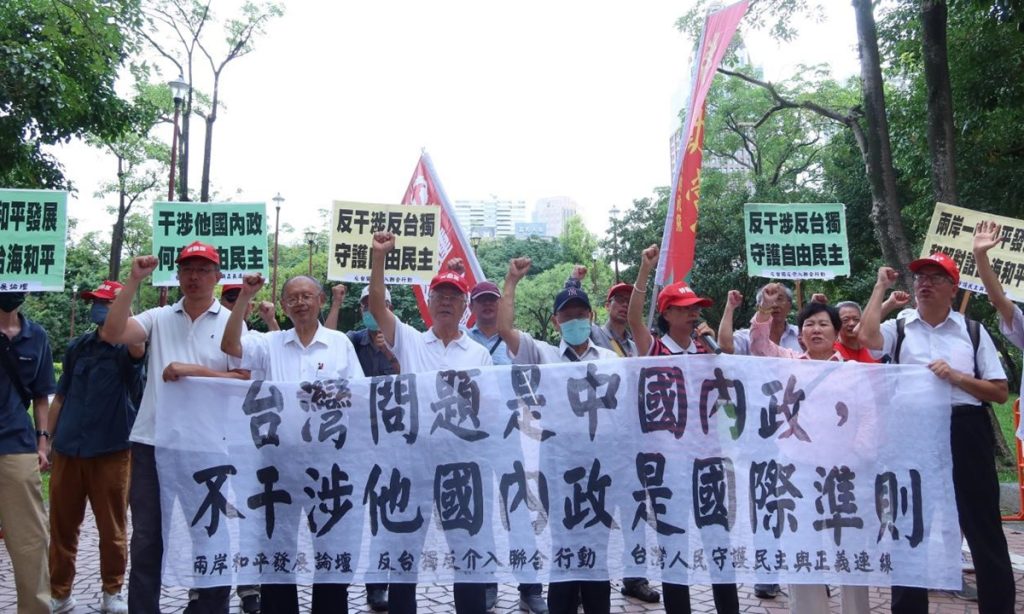
Pro-reunification groups in Taiwan island expressed strong opposition on Tuesday against external interference on the Taiwan question and protested against attempts by the Democratic Progressive Party (DPP) to collude with anti-China forces to destabilize cross-Straits relations as the International Parliamentary Alliance on China (IPAC) held its annual conference in the island on the same day.
Some 48 lawmakers from 24 countries arrived in Taipei on Sunday for the IPAC conference, a cross-country anti-China coalition formed in 2020. According to media reports, this year's annual IPAC meeting will focus on "crafting a coordinated campaign" aimed at maintaining so-called "stability and peace" across the Taiwan Straits.
The so-called coalition is centered on maliciously hyping issues related to China and spreading lies and rumors about China, and has no credibility whatsoever, Chinese Foreign Ministry spokesperson Lin Jian said on Tuesday.
Lin emphasized that there is only one China in the world, and Taiwan is an inseparable part of China's territory. The Taiwan question is purely a matter of China's internal affairs and any external interference will not be tolerated.
Taiwan regional leader Lai Ching-te attended the IPAC meeting on Tuesday and claimed that "a threat from China to any country is a threat to the world." In response, Foreign Ministry spokesperson Lin said that the DPP authorities under Lai are seeking "Taiwan independence" by relying on military force, which is like a mantis trying to stop a chariot.
The one-China principle is a fundamental norm in international relations and a universal consensus of the international community. The DPP authorities under Lai are going against the current, seeking independence and resisting reunification, which is destined to be a dead end, Lin said.
"The Taiwan question is China's internal affair and not interfering with other countries' domestic affairs are international norms. Not allowing foreign forces to interfere with our internal affairs is the basic and shared stance of Taiwan people who are committed in safeguarding cross-Straits peace," a statement sent to the Global Times by the Cross-Straits Peace Forum on Tuesday read.
The Cross-Straits Peace Forum and other pro-reunification political and civil groups in Taiwan island have organized a joint action to oppose foreign interference on the Taiwan question. On Tuesday, they protested against the IPAC conference and the DPP's collusion with anti-China forces and sent the joint statement to Luke de Pulford, the creator and Executive Director of IPAC
Hostility across the Taiwan Straits cannot bring peace. Anti-China and confrontational policies adopted by the DPP authorities and international politicians will not safeguard peace across the Taiwan Straits; instead, they will incite conflict, the statement said.
Wu Jung-yuan, chairman of the Labor Party, who participated in the protest activity on Tuesday, said that as a transnational alliance, IPAC must abide by international law and it should stop interfering in China's internal affairs. IPAC should respect the majority public opinion in Taiwan, which desires peace and stability across the Taiwan Straits.
Chi Chia-Lin, president of the Reunification Alliance Party in Taiwan, said that IPAC is a thoroughly anti-China organization that deceives the world under the guise of a so-called "global parliament." Residents on Taiwan island should resolutely oppose IPAC's illegal interference in Taiwan Straits affairs.
Against the backdrop of the international community's widespread adherence to the one-China principle, the IPAC politicians' political stunts in Taiwan not only waste public resources but are also futile in changing the reality, Wang Wu-lang, secretary-general of the Cross-Straits Peace Forum, told the Global Times on Tuesday.
The DPP authorities' pursuit of "Taiwan independence" is unsustainable and unachievable. More and more people will realize that Taiwan separatism and external interference are the true disruptors of peace and the main sources of instability in the Straits and the region, Wang said.
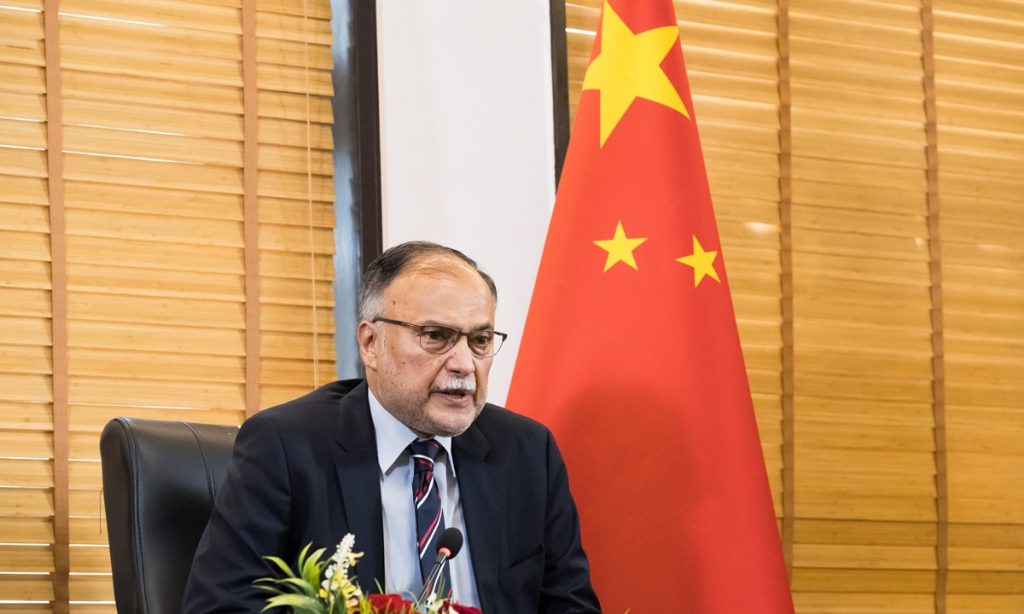
Chinese Foreign Minister Wang Yi met with visiting Deputy Prime Minister and Foreign Minister of Pakistan Mohammad Ishaq Dar on Wednesday. Wang called on the two countries to further enhance and develop their all-weather strategic cooperative partnership during the meeting. Ahead of Dar's visit, Pakistan's Federal Minister for Planning, Development, and Special Initiatives, Prof. Ahsan Iqbal (Iqbal) kicked off a visit to Beijing on May 8. Iqbal's visit is the first high-level visit of a Pakistani official to China since the new government came to power in March. At a press conference on May 9 at the Pakistan Embassy in Beijing, Prof. Iqbal shared his opinions on the relationship and cooperation between China and Pakistan with Global Times reporters Leng Shumei and Xie Wenting (GT). He also shared the new government's expectations for the construction of the second phase of the China-Pakistan Economic Corridor (CPEC). GT: Your visit is the first high-level of a Pakistani official to China under the new government. What is the significance and key objectives of your visit?
Iqbal: It is my great privilege to visit China after the new government was voted into office. This is the first high-level visit to be followed by a visit by the Deputy Prime Minister and Foreign Minister. Then, hopefully very soon the Prime Minister of Pakistan is also likely to visit China.
Pakistan and China have enjoyed a unique relationship and diplomatic history. This is a relationship which is always moved in an upward trajectory. This has never seen any autumn. There has always been spring in this relationship. Every season, the garden of friendship between Pakistan and China has blossomed with new colorful flowers of cooperation and understanding between the people of Pakistan and China and the two ironclad brother countries.
The significance of my visit is that this is a new government after the elections. This is our first engagement with the Chinese leadership at a senior level. In this engagement, we are trying to crystallize and define the parameters of the phase two of the CPEC, on which the Chinese side had indicated its willingness to move forward and Pakistan is also very committed to moving forward. We have discussed some high-priority projects that can be immediately started to give a jump start to kick off the second phase of the CPEC.
We hope that during my visit, with discussions with Chinese leadership, we will be able to work out a road map to implement the second phase of CPEC with the same spirit and momentum, with which we were able to complete the first phase, which had a very big impact on Pakistan.
GT: How has the CPEC benefited Pakistan in the first phase and how does Pakistan plan to enhance cooperation with China in the second phase of the CPEC under the new government?
Iqbal: In 2013, when we kicked off the CPEC, Pakistan was facing severe energy shortages of up to 16 hours per day. And Pakistan's economy and security situation had many challenges. We can never forget that at that time China displayed its trust and confidence in the economy and the people of Pakistan and started a $46 billion project to help Pakistan overcome its difficulties between 2013 and 2018.
Within five years, we were able to harness over $25 billion worth of projects, which helped us establish new power projects of up to 8,000-megawatt capacity, upgrade our logistics and construct new motorways to improve connectivity between Pakistan and China.
Recently we celebrated a decade of the CPEC and we can take a lot of pride in the decade of the CPEC. The CPEC has helped Pakistan transform its energy sector infrastructure sectors and also created over 2 million jobs. It has helped Pakistan acquire new technology as thousands of Pakistani engineers and workers were trained in these projects. It has helped to connect several parts of the country so that the fruits of development can be shared across various regions of Pakistan.
As to how to broaden cooperation from phase one to phase two, particularly, what is important now for us is three aspects. One is the agricultural sector. How do we expand our cooperation to bring new technology into the agricultural sector to enhance productivity of Pakistan? Second is how do we enhance industrial cooperation? Particularly, there is a strong case for relocation of Chinese industries to Pakistan where labor costs in China have increased and Pakistan offers a very attractive environment for relocation to the CPEC that we are setting up. And that will also help us to transform from an agrarian economy to an industrial economy, which is one of the key future goals.
In this industrialization, we also want to focus on exports: How to have an export-led growth in Pakistan. So, there will also be more cooperation at the level of exports to help Pakistan develop its exports and special economic zones.
The third area is technology because China has leadership and many new fourth-generation industrial revolution technologies, particularly artificial intelligence (AI), which is a very important new platform for the future economies and digital economies. So, Pakistan is also preparing its national action plan for the adoption of AI. We will also benefit greatly in this area from China.
Lastly, we also want to expand educational and technical exchange programs. I think close to 27,000 [Pakistani] students are studying in China; China has become a major destination for Pakistani students for higher education and we would like this cooperation to further expand and also to have greater partnership or twinning arrangements between Pakistani universities and Chinese universities so that they can undertake joint research in the areas of cooperation, particularly like agriculture, industrial cooperation, and export development of Pakistan. GT: In March, there was terrorist attack that led to the deaths of Chinese nationals. What measures will Pakistan take to protect the safety of Chinese people and projects in your country?
Iqbal: There are enemies of the CPEC; enemies of Pakistan-China friendship, who are trying to stop the progress of the CPEC. The recent unfortunate terrorist incidents were sponsored by such elements who want to create obstacles in the way of the CPEC's progress.
First of all, I offer my condolences to the families of those Chinese workers who were targets of this terrorist action; the whole Pakistani nation is in mourning. We consider Chinese engineers and workers in Pakistan as our special guests. They are working for the development of Pakistan. So, no Pakistani ever can even dream of causing any harm to any Chinese person on Pakistani soil. These incidents are sponsored from across the border.
I want to assure you that we have taken further measures to enhance security for Chinese people in Pakistan. On the projects where there are large numbers of Chinese workers, we have also tried to minimize their land travel from project sites. We will moving them either by helicopters to give them added security, or we shall also now enhance the security in terms of the support of paramilitary forces, and the police and also strengthen the protocols of securities.
And the message for those who want to put obstacles in the path of our friendship through such dirty tricks is very clear that such attacks cannot stop the progress of the CPEC. It cannot stop the progress of the BRI. It cannot stop progress of friendship between the ironclad brothers Pakistan and China.
GT: What is your comment on the so-called "debt trap" narrative over the BRI?
Iqbal: Pakistan has benefited from financing by China. The whole disinformation about whether the CPEC or the BRI are debt traps has nothing grounding in reality. As a matter of fact, the CPEC has benefited Pakistan's economy immensely.
GT: The capacity of the new energy vehicles (NEVs) is still far from meeting market demand especially in developing countries. How will Pakistan cooperate with China to develop NEVs in the future?
Iqbal: NEVs are China's strength. China is the leader now in electric vehicles. So, we are seeking to transform our transportation sector with the help of China because we also have set up goals to have a greater share in our transport for electric vehicles to reduce pollution in our cities.
During my visit, I'm meeting some Chinese companies, which are interested in setting up plants in Pakistan to manufacture new-energy automobile buses. And, particularly our interest is to have buses that will clear pollution from our cities, which are electric buses. This will be a priority item for us for the future.
GT: When will the visit of the Pakistani Prime Minister take place and what will the highlights of the visit be?
Iqbal: You have to wait for the final declaration at the time of the visit, but I can only say that we are hopeful that this will be a very productive visit because this is not an ordinary visit. This is a visit by the Prime Minister of Pakistan to Pakistan's best and the dearest country that is the most reliable friend. This is happening at a time when the new government has come in and it is dedicated to taking on the CPEC's second phase with full commitment and full momentum. So, there will be happy outcomes from the visit.
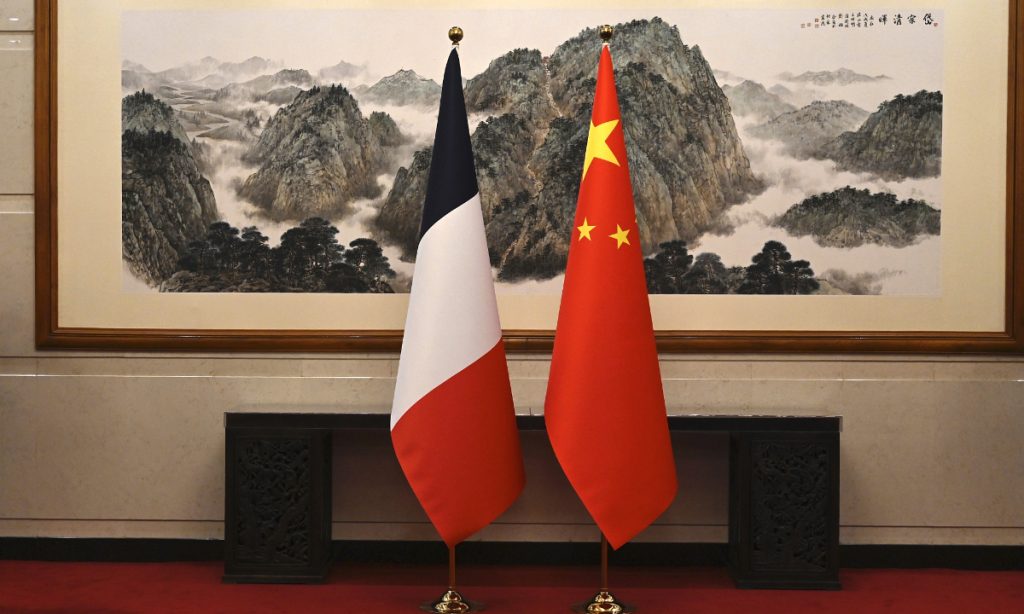
As 2024 marks the 60th anniversary of China-France diplomatic relations, exchanges in core sectors such as aerospace, nuclear energy and trade have already realized fruitful achievements, while the development of emerging fields such as new energy and the digital economy are likely to become new growth engines for propelling bilateral cooperation, French enterprises and Chinese experts said.
Observers also highlighted France's relatively independent policy toward China and China's vast market potential as major advantages in consolidating bilateral exchanges.
Unlike some other European countries, whose economic policies have been strongly influenced by the US, France has a strong level of independence with its policy toward China, as it highly values the world's second-largest economy as a major market and production base for French enterprises, Sun Yanhong, a senior research fellow at the Institute of European Studies of the Chinese Academy of Social Sciences, told the Global Times on Sunday.
In addition, the strong cultural confidence of the two sides and deep people-to-people and cultural exchanges have made China-France relations more stable than in the case of some other European countries, said Cui Hongjian, a professor at the Academy of Regional and Global Governance with Beijing Foreign Studies University.
France is China's third-largest trading partner in the EU while China remains France's fourth-largest global trading partner. In the first quarter of 2024, bilateral trade totaled 127.22 billion yuan ($17.99 billion), according to data from China's General Administration of Customs. From 2019 to 2023, China's trade with France grew 5.9 percent annually.
Specifically, France is China's largest source of agricultural imports from the EU with a total import value of 10 billion yuan and increases in products such as dairy, pork and wine during the first quarter.
China remains a crucial supplier of a wide range of consumer goods for France, as exports of home appliances to France grew 30.6 percent year-on-year while exports of toys increased by 28 percent, official data showed.
Besides the consolidated cooperation in traditional fields, experts expect the rapid development of emerging industries will likely create new growth points to further advance bilateral cooperation.
Sun sees cooperation potential in industries related to the digital economy and green transformation, as Europe has been involved in these sectors, with both advantages and shortcomings that can be made up through collaborating with China.
France has relatively insufficient production capacity, and it has a talent gap in research and development in new energy. China can provide corresponding help and the two countries have complementarity in the sector, Sun said, adding that the green transformation will offer more opportunities for both sides to explore new potential in sectors like agriculture.
French enterprises are also upbeat about continuously deepening cooperation with their Chinese counterparts in emerging sectors with confidence and positive outlook amid the celebration of the 60th anniversary of diplomatic ties between China and France.
"We honor our role in supporting China's strong economic growth and green transition as one of the first multinational environmental services companies in the market," Sabrina Soussan, chairman and CEO of SUEZ, told the Global Times in a recent interview, adding that China remains a key market and strategic partner for the company.
Soussan highlighted significant partnerships signed in the presence of the two countries' leaders, and these projects aimed at transforming waste into renewable energy and pioneering electric vehicle battery recycling. These are critical for China's green transition. "I believe that by collaborating with local partners, we leverage our combined strengths to significantly advance China's green and low-carbon transition," Soussan said.
A think tank report titled "China-EU Cooperation on Environment and Climate: Progress and Prospects" was released globally on Friday. Noting green as the distinctive color of China-EU cooperation, the report said this cooperation not only enriches and develops the bilateral comprehensive strategic partnership, but also directly advances the environmental governance, trade and investment of both sides, benefiting the entire world.
Amid China's efforts to bolster high-quality opening-up, observers said that China will remain a hot destination for investment from Europe, backed up by supportive measures, while suggesting more targeted measures for further expanding cooperation.
For instance, new areas could be explored when it comes to expanding market access, such as developing the economy targeting the elderly, which France and Europe have much experience in, Cui told the Global Times on Sunday.
In the first two months of 2024, France's actual investment in China increased by 585.8 percent year-on-year, according to data from China's Ministry of Commerce.
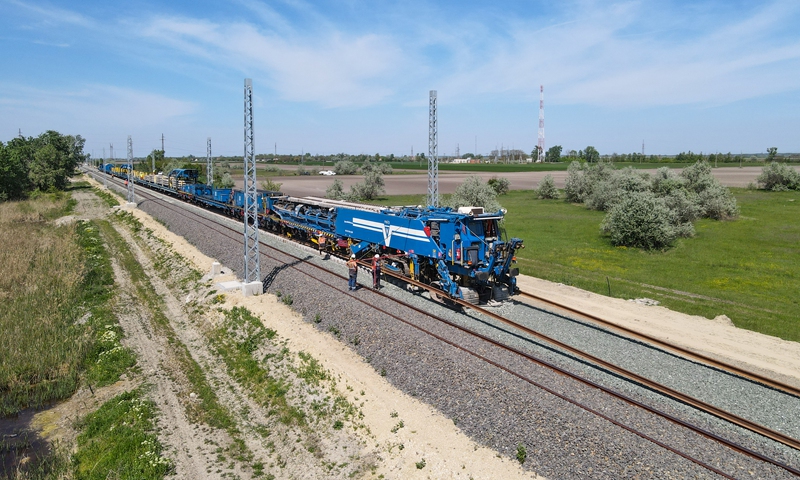
A track-laying machine made a rumbling sound as concrete sleepers are placed on the roadbed. Two-hundred-meter-long rails extend and fall steadily onto the sleepers through a mix of manual labor and high-tech machinery.
This has become a common scene during track-laying construction on the Hungarian section of the Hungary-Serbia railway, the flagship cooperative project under China-proposed Belt and Road Initiative (BRI). Here, extended railway lines are connecting scattered cities into an accessible and dynamic network, linking Hungary and Serbia, two Central and Eastern European (CEE) countries ever closer together.
Engaged in a wide range of fields such as transportation, high-end manufacturing and mining, Chinese companies have been actively promoting economic development in the regional countries. The companies bring with them advanced technology, high-tech equipment, modern management concept, and integrate them to better meet local development needs, contributing to the economic growth and improvement of the people's livelihood there.
As the BRI now enters its second golden decade, this week's state visits by China's top leader chart the course for cooperation between China and the two CEE countries in their respective pursuit of high-quality development.
A number of Chinese companies rooted in Serbia and Hungary for many years have recently shared with the Global Times how they have achieved win-win cooperation and development under the BRI framework. The companies are looking forward to embracing new opportunities for high-quality development in the two countries.
Promotion of synergy
Along a section of the Hungary-Serbia railway in Hungary, which is been built by a Chinese company, track laying work is progressing smoothly. Since the job officially commenced at the end of May last year, about 70 percent of track laying work within the section has been completed, with the overall project completion rate exceeding 55 percent, the Global Times learned from China Railway Hungary-Serbia Railway Project Management Department, the Chinese company participating in the construction of the Hungarian section of the railway project.
By the time of its completion, the regional transportation network will be significantly improved, providing greater convenience for both passengers and cargo delivery across the CEE economies.
The Hungary-Serbia railway could well illustrate how China's BRI projects can help promote the regional economic synergy.
At a heavy equipment manufacturing plant in Ruma, Serbia, excavators and haulage vehicles were seen navigate through the site, accompanied by the rhythmic sounds of welding, cutting, and hammering. Amid this activity, workers diligently carry out tasks such as reinforcing steel bars and pouring foundation concrete, ensuring an organized and efficient work flow.
China Construction First Group has participated in the construction of the new factory project. With a keen focus on meeting the deadline, they aim to complete the prefabricated components during the second half of 2024. Once finished, this facility, owned by the Chinese company Haitian Group, will serve as a pivotal manufacturing hub for equipment like injection molding machines in the European region, the Global Times learned from China Construction First Group.
Chen Shuai, deputy general manager of the Fifth Construction Co, China Construction First Group, told the Global Times that the company is seizing the opportunity presented by the successful execution of the factory project in Serbia, to facilitate the expansion of China's industrial manufacturing capacity overseas.
As the bilateral strategic partnership relations deepen, Chen holds strong expectations for further tapping into the potential for deeper cooperation for Chinese companies in Serbia.
Specifically, they will ramp up efforts to capitalize on the burgeoning development of infrastructure in Serbia, participating in projects spanning roads, bridges, tunnels, and renewable energy production, among other industrial lines, Chen said.
Serbia Zijin Copper DOO in Bor, Serbia, a joint venture between China's Zijin Mining Group and Serbia, sets a good example of how the BRI prompts greater synergy in the regional development. By the end of 2023, the copper mine project in Bor had amassed investments totaling $2.498 billion, nearly double the promised investment of $1.26 billion in 2018, the company told the Global Times.
With a cumulative copper production of 356,000 tons and gold production of 9.8 tons, the project contributed nearly $500 million in taxes and fees and made a social contribution of $850 million, according to the company. Also, it created over 9,000 jobs. In 2023, the company achieved export revenues of around $720 million, significantly promoting the mutual development of stakeholders in Serbia.
Looking ahead, the company plans to add $1.2 billion in new investments in the next three years. The goal is to increase copper production of the copper mine in Bor from currently 120,000 tons per year to 220,000 tons per year by 2030, the company said.
High-quality growth
As the BRI embarks on its new journey after10 years of golden development, more possibilities will emerge in the cooperation between China and the regional countries.
The meetings between the top leaders of China and the regional countries this week have set the tone for deepening the bilateral ties while pushing the cooperation toward high-quality development.
In the joint statement signed on Wednesday between China and Serbia, both sides vowed to take the opportunity of entering a new stage of high-quality development in the joint construction of the BRI. They aim to deepen and expand cooperation in various fields, including trade, investment, technology innovation, digitalization, and telecommunications.
Meanwhile, China and Hungary are also expected to sign multiple cooperation agreements following the important meetings between leaders of the two countries, injecting new momentum into the development of bilateral relations.
In a recent interview with the Global Times, Chinese Ambassador to Hungary Gong Tao said that, in the future, both sides will continue to promote high-quality joint construction of the BRI, focusing on key areas such as digital economy, green development, and information technology.
During recent years, China has actively promoted cooperation with the CEE countries under the BRI. This initiative has yielded tangible benefits for the region, effectively enhancing connectivity between China, Eastern Europe, and the broader European region, Song Wei, a professor from the School of International Relations at Beijing Foreign Studies University, told the Global Times on Thursday, describing China-CEE cooperation as a role model for cross-regional collaboration.
Despite the marked progress, economic development in CEE is still encountering some challenges, including poverty reduction, and how to achieve faster economic modernization in the region, according to Song.
Song emphasized that amid the pursuit of high-quality cooperation and partnership, China will remain committed to further supporting CEE countries in integrating them into the global value chain.
Specifically, Song said that enhancing mutual investment programs, including on setting up joint investment funds, would incentivize more local enterprises in CEE to participate in the BRI.
The countries in the region are eager to draw from China's successful developmental experiences. Therefore, both sides may intensify efforts to collaborate on a series of training programs and exchanges, facilitating mutual learning and development in the future, Song said.
"The commitment aims to foster closer economic and trade ties between China and the CEE economies, assisting the region to better tackle its corresponding challenges in the future," Song said.
"Cognitive Warfare" has become a new form of confrontation between states, and a new security threat. With new technological means, it sets agendas and spreads disinformation, so as to change people's perceptions and thus alter their self-identity. Launching cognitive warfare against China is an important means for Western anti-China forces to attack and discredit the country. Under the manipulation of the US-led West, the "China threat theory" has continued to foment.
Some politicians and media outlets have publicly smeared China's image by propagating false narratives such as the "China economy collapse theory" and "China virus threat theory," in an attempt to incite and provoke dissatisfaction with China among people in certain countries. These means all serve the seemingly peaceful evolution strategy of the US to contain China's rise and maintain its hegemony.
The Global Times is publishing a series of articles to systematically reveal the intrigues of the US-led West's cognitive warfare targeting China, and expose its lies and vicious intentions, in an attempt to show international readers a true, multi-dimensional, and panoramic view of China.
This is the seventh installment in the series. The US' recent escalated tech war against China, which attempted to cut China off from high-end chips, has inadvertently harmed its own chip giants. The US Secretary of Commerce Gina Raimondo attended the annual Reagan National Defense Forum (RNDF) in California on December 2, asserting a need for more funding for her department to stop China from catching up on cutting-edge semiconductors. She also told Bloomberg on Monday that the US will take the "strongest possible" action to protect its national security, when asked how the Commerce Department will respond to a recent "chipmaking breakthrough" in China.
Weeks ago, the US' leading chip designer Nvidia reportedly forecast a "significant drop" in its China sales in the fourth quarter, due to an upgraded US chip ban announced in October.
China has "consistently accounted for approximately 20 to 25 percent of data center revenue," according to the Nikkei. Responding to the tightened controls, which ban Nvidia from exporting its A800 and H800 GPUs to China, Nvidia said it is developing newly compliant chips for the Chinese market. The new chips will comply with the controls but will probably be less competitive, industry insiders pointed out.
The US is waging a long, lose-lose "chip war" against China. Following a raft of controls announced in October 2022 on exports of advanced semiconductor manufacturing equipment to China, the US Commerce Department, in October this year, updated and broadened its export controls to stop China from acquiring advanced computer chips.
Worse still, apart from directly clamping down on Chinese market and chip enterprises, the US has also carried out vicious "public opinion sanctions" against China's semiconductor industry in recent years, so as to tarnish the image of Chinese tech companies, and to diminish China's progress in the chip field through various cognitive warfare tactics, the Global Times found.
An in-depth look at much of the US media's coverage of China's semiconductor industry in the last few years reveals a list of underhanded tactics employed in the US' chip field warfare against China. Defamation
Making groundless Intellectual Property (IP) theft accusations against Chinese tech companies, such as "stealing chip designs" and "stealing manufacturing tech," serve US' defamation attempts against China. With lies and rumors, they try to mislead the public that China's rise in the chip field has mainly been achieved by "stealing" US technology, so as to manufacture a motive to support the US government's chip blockade on China.
In recent years, reports of Western tech companies charging their former Chinese employees for stealing secret chip tech have appeared in US media coverage from time to time, giving readers a false impression of Chinese companies' or employees' frequent theft of technology.
Most of these stories only contained one-sided sources, and lack follow-up reports. No independent investigations were conducted nor was the Chinese side reached for a response, further amplifying the voices attacking China, the Global Times found.
Fox Business, for instance, reported in January 2022 that cutting-edge Dutch semiconductor circuit manufacturer ASML accused one of its former Chinese employees of stealing its technology. Without any balanced sources, the story concluded in a politically loaded sentence: "In recent years, many Chinese nationals living in the US have been accused of stealing business practices and trade secrets on behalf of Beijing."
The Chinese company involved, Dongfang Jingyuan Electron Limited (DJEL), later denied the claim in a statement in February 2022. But none of the US media outlets mentioned the denial in related coverage.
China's scientific and technological achievements are not made through theft or robbery, noted then Chinese Foreign Ministry spokesperson Zhao Lijian in February 2020, responding to a question raised by media sources about China's comment on the US side's accusation of "stealing US scientific achievements."
Statistics showed that between 2009 and 2019, Chinese scientists published 2.6 million papers in international journals, ranking second in the world, mentioned Zhao. He criticized that certain people in the US "have ulterior motives in cooking up China's so-called theft of US scientific and research outcomes."
Belittlement
Sometimes, US media's reports on China's chip industry take on an arrogant tone. They revel in China's high-tech enterprises' seemingly "difficult" situation under the US' sanctions, so as to depict China's "dependence" on imported chips, and dismiss the achievements China has made in the field of cutting-edge technology.
The latest US expansion of export controls on advanced chips "will make it difficult for China to develop in that sector," stated the VOA on October 19.
Chinese industries will "hit a wall" in 2025 or 2026 if they can't get next generation chips or the tools to make their own, the Associated Press quoted a tech industry consultant Handel Jones as saying in an April 4 article. China "will start falling behind significantly," the article claimed, which was later echoed by many other US media outlets.
Some naysayers even maliciously linked China's efforts in chip development with its temporary slowdown in economic growth, trying to portray China as a country that no longer has the strength, at least economically, to break through the US' edge-cutting chip blockade.
Contrary to the gloomy outlook forecasted by some US media outlets, Chinese insiders reached by the Global Times said they are optimistic about the future of the country's chip industry.
And some data may prove their optimism to be well informed. Nearly half of all machinery equipment tenders by Chinese foundries from January to August 2023 were won by local manufacturers, according to an analysis of 182 tenders by Huatai Securities in September, Reuters reported on October 18. It also cited a report by CINNO Research, which showed that equipment-related revenue among China's top 10 domestic equipment manufacturers grew by 39 percent year-on-year for the first half of 2023, representing $2.2 billion in sales.
"There is definitely huge progress happening in the Chinese semiconductor equipment space, as reflected in the strong revenue growth metrics," Reuter quoted a semiconductor analyst as saying.
Fearmongering
Contrary to the previous trick of belittling China's achievements in the chip field, US media and politicians are also accustomed to fear-mongering, exaggerating China's chip development and its impact on the world, especially on the US-led West.
The "China chip threat theory" has become a favorite fearmongering tactic frequently employed by the US government and media sources. They extensively report the rise of China's chip tech, but distort China's international image and frame Chinese high-tech companies as shady operatives, exaggerating the consequences of the loss of the US chip monopoly, while portraying the blocking and suppression of China as reasonable behavior.
For example, according to an article titled "Think tank urges US to get even stricter with China over chips" published in the American Journal of Transportation in October, the Washington-based Silverado Policy Accelerator claimed that China is building up massive production capacity of foundational chips. "Now, Silverado warns, the Asian superpower is showing signs of undercutting prices of its Western competitors in this market."
The Global Times found that the US officials and media sources even intentionally associate chips with the military and defense industry, and politicize the purpose of Chinese chips, calling on their domestic enterprises and other countries to join forces against China.
As early as 2021, the Financial Times reported that the National Security Commission, a US congressionally mandated commission concluded that the country could potentially lose its advantage in the semiconductor industry due to the rapid development of China's chip industry.
According to the Financial Times, the co-chairman of the commission stated that the US currently enjoys a "two-generation lead" over China in terms of semiconductors, but urgent action is needed to prevent the loss of this edge.
The 756-page report issues by the commission outlines how artificial intelligence can assist the US and consumers in various fields but warns that with China's investment in advanced technology, the potential of artificial intelligence is transforming into a "moment of strategic vulnerability."
However, such baseless slander only starkly reveals the ambitions of the US government.
At the RNDF, Raimondo stated that US companies will need to adapt to the priorities of US national security, including in export controls on semiconductors implemented by the US Department of Commerce, the VOA reported.
According to the VOA, previously, after the US Department of Commerce announced plans to restrict exports of more chips designed by companies such as Nvidia to China, Raimondo explained that the new measure is aimed at hindering China's military development. "The updates are specifically designed to control access to computing power, which will significantly slow the PRC's development of next-generation frontier model, and could be leveraged in ways that threaten the US and our allies," she said.
The US media establishment, politicians, and business figures have consistently shown hostility and malice in their statements regarding China's chip industry, Fu Liang, a Beijing-based tech analyst, told the Global Times.
Fu noted that for a long time, there has been much chatter about the threat of Chinese chips to the US economy and technological leadership without concrete evidence, and a flagrant abuse of the concept of "national security" in order to maintain their hegemonic rule.
US pays the piper
"Overly broad, unilateral controls risk harming the US semiconductor ecosystem without advancing national security as they encourage overseas customers to look elsewhere," stated the US Semiconductor Industry Association (SIA) on October 17, in a response to the updated export control.
Just as per the SIA's worries, the US' semiconductor curb targeting China, as well as the cognitive warfare it launched against China in the chip field, has led to more harm to its own chip companies rather than being beneficial, Chinese industry observers told the Global Times.
In the long run, the US itself will have to pay the piper, they noted.
Even though Nvidia will design new chips for the Chinese market, the chips may no longer have an advantage over their Chinese counterparts under the US sanctions, said Xiang Ligang, a veteran analyst in the telecom industry. "We all know that it's not impossible for China to produce its own AI chips," he told the Global Times.
The US' upgraded controls on advanced chips may lead Chinese companies to switch to domestic chips, which will stimulate the development of domestic AI chips, and eventually push the Chinese market away from US exporters, said Xiang.
Since the series of cognitive battles waged by the US have extended to the chip field, Fu noted that it is inevitable for politicians and the media establishment to cooperate with government sanctions in order to safeguard US interests against the current backdrop of China-US technological competition.
"However, this extreme pressure measure has not achieved the desired effect," Fu said.
Observers pointed out that although the US government's suppression of China's semiconductor industry will continue, US companies still value the Chinese market. Only through win-win cooperation in technology can confidence be injected into global development, they said.