China criticizes UK and EU statements on Article 23 legislation, urges UK to abandon colonial illusions
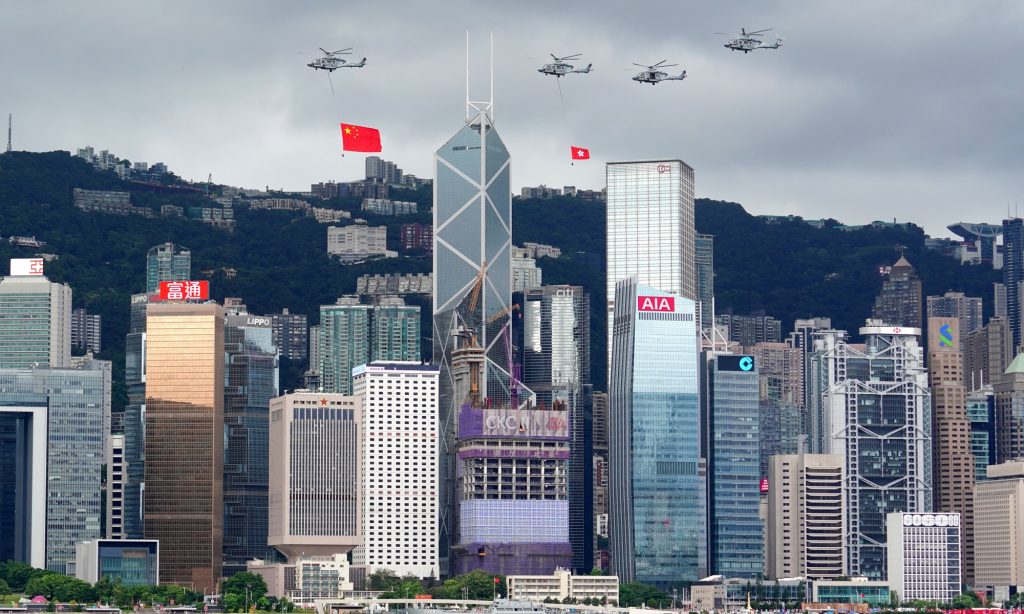
China on refuted the remarks made by some European politicians regarding the passage of the Article 23 legislation in Hong Kong on Tuesday, urging Western powers to stop interfering in Hong Kong's affairs and China's internal affairs.

The UK Foreign Secretary, David Cameron, issued a statement following the passage of the law, claiming that the Article 23 legislation of the Basic Law was "rushed through the legislative process and will damage the rule of law, autonomy, and the rights and freedoms enjoyed in Hong Kong." The Chinese Embassy in the UK said the remarks from the British side are a serious distortion of the facts and constitute grave interference in China's internal affairs.

"We are firmly against this," the embassy stated, noting that the legislative process was rigorous and procedure-based.

The content of the law is sound and reasonable. The definition of criminal elements is clear, and the severity of penalties is appropriate. It is in line with international law and international common practices, it noted.

Hong Kong lawmakers unanimously passed the highly anticipated bill mandated by Article 23 of the Basic Law of Hong Kong on Tuesday. The draft bill of the Safeguarding National Security Ordinance will be gazetted on Saturday and will take effect from then.

"Hong Kong-related affairs are China's internal affairs, in which the UK side has no position to make unwarranted remarks," the embassy said. It urged the UK to cease its baseless accusations regarding the Article 23 legislation and to refrain from interfering in China's internal affairs under any pretext.

The Commissioner's Office of the Ministry of Foreign Affairs in Hong Kong also slammed Cameron's remarks on Wednesday.

The UK has at least 14 laws for maintaining national security, with its new National Security Act introduced in 2023 having many vaguely defined clauses and broad authorizations for law enforcement agencies, the commissioner's office said.

The UK's own human rights record is not commendable, with numerous human rights violations domestically and a notorious record internationally. "It should take a good look at itself in the mirror and put away its hypocritical and double-standard tricks," it noted.

The UK continuously stirs up trouble and makes reckless comments about the situation in Hong Kong, blatantly trampling on the principles of international law and the basic norms of international relations, ultimately due to a deeply ingrained colonial mindset and a patronizing attitude, the commissioner's office noted.

China urges the UK to correct its position, face reality, give up the illusion of extending its colonial influence in Hong Kong, and stop interfering in Hong Kong affairs and China's internal matters in any way, it said.

Besides Cameron, the High Representative on behalf of the European Union also expressed their "concerns" over the legislation.

The law could "exacerbate the erosion of fundamental freedoms and political pluralism in Hong Kong, which could impact EU citizens, organizations, and companies in Hong Kong," the EU said in a statement on Tuesday.

The Commissioner's Office of the Ministry of Foreign Affairs in Hong Kong expressed strong dissatisfaction and firm opposition toward the EU's statement on Wednesday, urging the EU to abandon hypocrisy and double standards and to immediately stop interfering in Hong Kong affairs and China's internal matters.

Improving the legal system, including those laws that safeguard national security, will not diminish Hong Kong's economic freedom, the commissioner's office said.

On the contrary, it will provide a robust legal guarantee for high-quality development and high-level openness in Hong Kong, better protect the property safety of Hong Kong residents, boost the confidence of both local and overseas investors, and create a safer, more convenient, and efficient business environment in Hong Kong.
China's economy starts off the year on strong note, projecting great confidence in trajectory toward 5% GDP goal this year

China's economy starts off 2024 on strong footing, with an array of key indicators in the first two months beating market expectation by a wide margin, fueled by a spending spree in the Spring Festival holidays, ramped-up efforts in building new quality productive forces and the effects of macro policies implementation. Observers said the upbeat data offer an encouraging sign that the world's second-largest economy is not only consolidating the recovery momentum but also picking up pace.

The industrial output grew 7 percent year-on-year in the first two months, according to data released by the National Bureau of Statistics (NBS) on Monday, well above the 5 percent forecast from analysts polled by Reuters. It is also the fastest since March 2023.

The strong start in 2024, which presages a raft of bright spots ranging from high-tech to consumption of this year's growth path, also rebuts squarely recent skepticism and badmouths on Chinese economy hyped by certain Western media. It projects great confidence in China's economic trajectory toward a growth rate of around 5 percent in 2024, a goal set by this year's Government Work Report that Chinese officials believe - albeit faced with external and internal headwinds - will come to fruition "with earnest endeavors."

In January-February period, retail sales expanded 5.5 percent from the same period last year, versus a Reuters forecast of 5.2 percent, while fixed-asset investment also gained 4.2 percent in year-on-year terms, surpassing market estimates of 3.2 percent.

"With the macro policies taking effect, China's national economy has continued to recover and turn for the better in the first two months," NBS spokesperson Liu Aihua said at a press briefing of the State Council Information Office on Monday.

Recovery momentum

"The positive macro-economic indicators reflect that the country's GDP growth rate in the first quarter of this year will be higher than 5 percent, and that the economy is bottoming out after facing constant growth pressure seen in the past 10 years or so," Cao Heping, an economist at Peking University, told the Global Times on Monday.

For the first time in a number of consecutive months, the overall gauges on industrial, service and investment all topped the forecasts and displayed a considerable level of gains. And those headline indexes point to a strengthening recovery momentum that is buoyed by restorative growth and, more importantly, multiple new positive factors beyond, according to analysts.

For example, the 5.5-percent jump in the retail sales in the first two months, which though seem to be a moderate number taking account of last year's high base effect, shed light on the indigenous vigor and potential of China's massive consumer market, particularly in entertainment, tourism, cultural, sports and vehicle categories.

During the eight-day Spring Festival holidays in February, nationwide domestic tourism reached 474 million trips, an increase of 19 percent compared with pre-COVID level in 2019, while total expenditure amounted to 632.7 billion yuan, up 7.7 percent from the same holiday period in 2019.

It is forecasted the spending boost will prevail throughout the year, as more stimulus policies take effect and the "pandemic-scarring effect" continues to diminish. China last week unveiled a plan to promote large-scale renewal of equipment and the trading-in of consumer goods, opening up a market worth trillions of yuan and further giving consumption a leg up.

Tian Yun, a veteran economist based in Beijing, told the Global Times on Monday the economic recovery has also shown signs of tilting toward a more "even and balance" mode at the beginning of the year, especially in the demand side, whose recovery - though still lags behind the supply side - has been in a quick catch-up.

Fixed-asset investment, which grew 4.2-percent in the first two months, has "bottomed out" despite a drag by property sector, according to Tian, while ascribing the turnaround partly to the issuance of additional 1-trillion-yuan special treasury bonds in the fourth quarter.

In January-February period, investment in high-tech industries rose 9.4 percent year-on-year, a drastic rise that aligns with this year's economic blueprint laid out during the two sessions, which put the development of new quality productive forces as a core mission.

To reinforce and fast track the recovery in the demand side, Tian suggested that Chinese policymakers to "frontload" part of special-purpose bonds in the first half of 2024.

The Government Work Report stated that China plans to issue ultra-long special treasury bonds starting this year and over each of the next several years. One trillion yuan ($139 billion) of such bonds will be issued in 2024.

In 2023, fixed-asset investment staged a growth of 3 percent, NBS data showed.

In terms of supply, Liu Aihua said at the press briefing that industrial production will continue to play a ballast role in the national economy. She highlighted new drives from China's elevating innovation capacity amid manufacturing upgrade and transformation, in addition to traditional edges such as a complete industrial chain as well as the sheer size of the market.

Confidence behind the target

Following the set-up of an annual GDP growth target in early March, Chinese doomsayers have been gone to great lengths to raise doubts on the likelihood of the country to achieve a 5-percent goal. So the highly-anticipated economic data at the start of the year also timely draws out an objective and comprehensive picture on China's economic course, proving that the country is running on abundant engines - which certain Western media outlets ignore, that arguably outweigh unfavorable conditions, analysts said.

While acknowledging a bunch of downward pressures including "complex, severe and uncertain external environment and insufficient domestic effective demand," Liu stressed that China has conditions and enough support to hit the around 5-percent GDP growth target, and will realize the goal "through earnest endeavors."

Liu said Chinese authorities attach great importance to the challenges that could pose barriers to development. They also stand with great confidence and maintain strategic focus to cope with difficulties, promote sustained economic recovery, and translate the expected economic development goals into reality.

Han Baojiang, a professor at Party School of the Central Committee of the Communist Party of China, told the Global Times that Chinese policymakers are sober and they have articulated clear approach to economic development. "As long as we improve our economy, enhance people's livelihoods, and ensure employment, it is probably the most effective way to deal with all challenges."

Cao also voiced full confidence that the country will realize this year's GDP growth target of around 5 percent, though he said more effort is needed to focus on high-quality development.

To shield against potential headwinds, Cao suggested that authorities should continue to promote the transition in overall economic structure, focus on developing new quality productive forces, like new industries to be propelled by artificial intelligence.

Analysts warned against the property downturn, which they said is likely to persist for some time this year. In the first two months, China's property investment dived 9 percent year-on-year, NBS data showed.

Also, the increasingly volatile external environment calls for Chinese policymakers to reach more into the toolbox to stabilize and shore up internal demand, according to Tian. Liu said the country's solid economic fundamentals, the accumulation of many positive factors and the government's stimulus measures will continue to propel the economy to rebound and improve.

Tian predicted that China will continue making an "immense" 30 percent contribution to the world economy on condition that the 5-percent GDP growth goal is achieved, making it the second-largest only after the US.

China’s semiconductor export surges 28.6% in first two months, as efforts to shore up tech competitiveness pay off

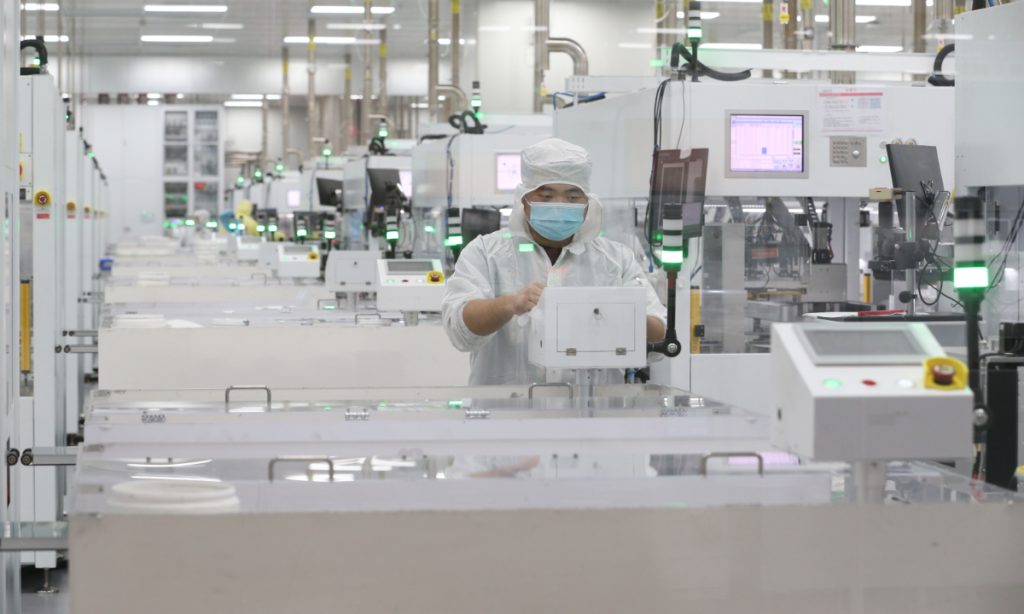
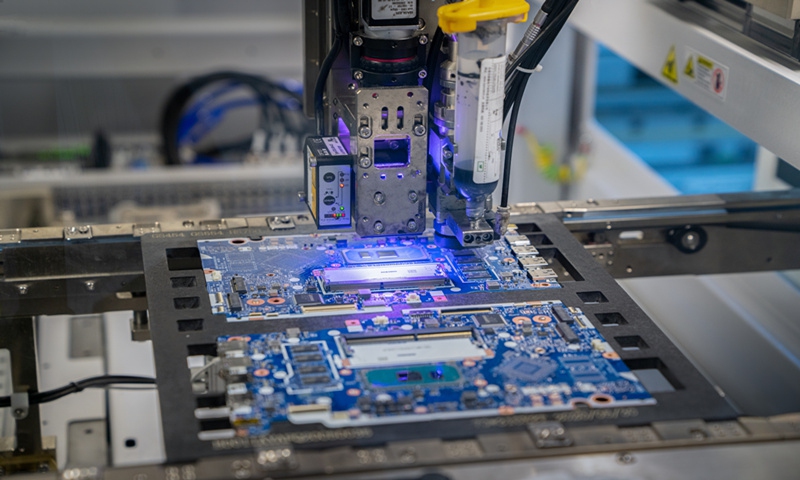
China's integrated circuits (IC) or semiconductor chips export surged by nearly 30 percent in the first two months of 2024 amid the country's efforts to climb up the global technological ladder, despite mounting assaults by the US and its allies to slow down China's technology rise. 

IC exports reached 160.71 billion yuan ($22.33 billion) during the first two months of 2024, with an annual increase of 28.6 percent, data from the General Administration of Customs showed on Thursday. 

IC exports were among a number of high-tech products that have experienced robust growth during the January-February period. 

Beside IC, the exports of automatic data processing equipment increased by 7.3 percent year-on-year to reach 195.45 billion yuan and auto exports soared by 15.8 percent from the same period last year to reach 111.89 billion yuan. 

The robust growth of high-tech products reflect that China's efforts in transforming and upgrading its industries is paying off , and the tech suppression by a number of Western countries have largely failed and have actually boosted China's tech competitiveness as the country put more efforts in achieving self-sufficiency in high-tech products such as chips, analysts said. 

China's chip self-sufficiency rate may increase to 30-35 percent as many domestic chipmakers have expanded manufacturing since the US launched its tech war against China several years ago, said Xiang Ligang, director-general of the Beijing-based Information Consumption Alliance.

Zheng Shanjie, head of the National Development and Reform Commission, the country's top economic planner, said at a press conference held during the ongoing two sessions that China's economy was off to a good start in the first quarter this year, with preliminary economic indicators such as electricity use, exports, and bank loans pointing to a strong recovery of the economy.

Foreign companies still confident in Chinese market; more opportunities expected

Foreign companies still have confidence in China, a view boosted by the release of the Government Work Report on Tuesday, which said China will ramp up efforts to attract foreign investors, including further shortening the "negative list" for foreign investment.

The Chinese economy has demonstrated resilience and delivered growth in recent years, and it has sustained the confidence of multinational companies in the future of the Chinese market.

China has been pursuing a high-level opening-up process, while continuously improving the business environment, which has drawn strong positive responses from foreign companies. Airbus has welcomed recent favorable policies. The company is committed to becoming a model of cooperation in the high-tech aerospace industry between China and Europe, it said in a note shared with the Global Times on Tuesday.

Airbus is not alone in its positive attitude. "China is one of our major markets and plays a strategic role in our global business. With the improved business environment and ongoing pursuit of high-standard opening-up, we continue to invest in China to strengthen our end-to-end capabilities. We remain positive and confident about the future of the China market," said Anna An, president of Henkel Greater China.

The view was echoed by Tetsuro Homma, executive vice president of Panasonic Corporation. The Chinese market has incomparable advantages in terms of innovation speed, market size, intelligentization, ability to absorb and digest new technologies, talent reserves and supply chain, Homma said.

The comments came after the government work report was delivered by Chinese Premier Li Qiang to the annual session of the National People's Congress (NPC) on Tuesday.

China is aiming for economic growth of around 5 percent in 2024, Li said, adding that China will promote alignment with high standard international economic and trade rules, steadily expand institutional opening-up and facilitate interplay between domestic and international markets.

"We will further shorten the negative list for foreign investment. All market access restrictions on foreign investment in manufacturing will be abolished, and market access restrictions in services sectors, such as telecommunications and healthcare, will be reduced," Li said.

The Chinese government's ambitious growth target of about 5 percent means that the government needs to take measures to offset the effect of the sluggish real estate industry, said Maximilian Butek, executive director at the German Chamber of Commerce in China (Shanghai).

He said German companies are very much looking forward to China's measures to stimulate demand, and they believe in the mid- to long-term potential of the Chinese market.

China's economy has been recovering over the past two years, and the country remains a powerful engine of global economic growth. As the world's second-largest economy, China will continue to be a driving force for global manufacturing and trading, and an important stabilizer in the global supply chain, Rio Tinto Chief Commercial Officer Alf Barrios told the Global Times.

The Chinese government has intensified efforts to enhance openness at higher levels across the board and created favorable conditions for foreign companies to innovate, invest, operate and grow in China, making foreign companies a significant driving force and an integral part of China's high-quality economic growth, said Zhou Xiaolan, executive vice-president of the pharmaceuticals division of Bayer AG.

Many foreign companies told the Global Times that China has become an important market for them, and their plans in China are getting bigger. Schneider Electric said it has 29 factories and distribution centers in China, more than 1,600 Chinese suppliers, and five R&D centers. Airbus said the work on expansion of its Tianjin A320 family assembly line in Tianjin is now in full swing.

Henkel said that in January, they opened a new Asia R&D center for consumer business. And Rio Tinto said that in 2023, China was again its largest market globally, with revenue accounting for nearly 60 percent of the company's total.

Last year, Bayer inaugurated an open innovation center in Beijing, the first of its kind in China. Simultaneously, the Beijing plant of Bayer Radiology opened. In addition, the construction of a new supply center in Hangzhou commenced last year. This center is anticipated to become operational within this year.

Even under the difficult circumstances of the epidemic, Panasonic said it still strengthened its investment in China and built 17 new production bases, including three in 2023. There are also multiple investment plans for 2024, and one in Beijing has been confirmed.

The work report also said the Chinese government will strive to modernize the industrial system and develop new quality productive forces at a faster pace. The report listed a series of tasks in this respect, including industrial and supply chain improvement and upgrading, and the cultivation of emerging industries and future-oriented industries such as hydrogen power and new materials.

As the key to achieving high-quality development, new productive forces have received great attention from all industries. Schneider Electric is committed to supporting the growth of the new productive forces with its technological and innovative advantages in digitization and sustainability, said Executive Vice President of China & East Asia Operations Yin Zheng.

With world leading products and solutions in automation and energy management, the company can boost the overall competitiveness and impact of Chinese industries, help to build new productive forces, and accelerate the "dual-carbon" goals, Yin said.

Airbus said 2024 will be a year of opportunities for it to continue developing its business and cooperation in China while maintaining strong impetus in the domestic market. The company remains committed to China, it said, and will continue to invest in the future, jointly promoting high-quality development with Chinese partners.

China verifies new morphing wing structure for future cross-domain aircraft

China recently verified a new morphing wing structure that can help build future cross-domain aircraft, with an expert saying on Tuesday that the cutting-edge technology is expected to undergo flight tests before being applied. 

The Aircraft Strength Research Institute of China, a subsidiary of the state-owned Aviation Industry Corporation of China (AVIC), successfully completed the theory verification on a full lattice distributed morphing wing structure based on mechanical metamaterials last week, AVIC said in an announcement posted on Sina Weibo on Monday.

During the verification, the morphing wing structure achieved distributed active torsional morph control, made breakthroughs in multiple core technologies including performance characterization of the mechanical metamaterials, cellular configuration design, reversible assembly of lattice structures, multi-point morph sensing and collaborative control, according to the announcement.

A video clip attached to the announcement shows a scaling model of a half-hollow lattice distributed wing structure changing its shape dynamically.

Wang Ya'nan, chief editor of Beijing-based Aerospace Knowledge magazine, told the Global Times on Tuesday that morphing wing is cutting-edge technology that enables aircraft to flexibly change form without using rigid rudder structures currently used on aircraft, which can only make limited moves in controlling the aircraft.

Morphing wing is like wings of birds that can make changes without many restrictions, enabling fine tunings, so it can provide better control over the aircraft, Wang said.

The technology can provide support to the design of future cross-domain variable geometry aircraft, AVIC said in the announcement.

A cross-domain aircraft is a type of aircraft designed to fly at very different altitudes, from low altitudes with dense atmosphere to high altitudes with thin air, as well as at very different velocities, from subsonic speeds to hypersonic speeds, Wang said. "This requires the aerodynamic shape of the aircraft to adjust based on the changes of the environment."

To achieve this goal, variable-sweep wing was developed, but it is still a rigid structure with limitations, Wang said, noting that the morphing wing can make flexible changes that can adapt to more flight environments, as long as the requirements of materials and structures are met.

Wang said he does not expect the new technology to be put into application any time soon, as he expects the morphing wing structure to undergo flight tests on demonstrators first, before being put on genuine aircraft for verification.

Chinese investment in Thailand to maintain record high in 2024

Chinese investment in Thailand is set to remain at a high level, reflecting a host of positive factors, after China became Thailand's largest foreign investor in 2023, Chinese and Thai analysts said on Wednesday.

Since December, at least 14 A-share listed companies have announced that they are setting up branches, building new plants, expanding existing facilities or increasing their capital in Thailand, amid an accelerated inflows of Chinese investment into Thailand, according to media reports.

ZYNP Corp, a combustion engine component maker from Central China's Henan Province, said in a stock filing on Wednesday that it is investing 210 million yuan ($29.56 million) to build a production base in Thailand.

Circuit Fabology Microelectronics Equipment Co, a printed circuit board (PCB) company based in East China's Anhui Province, announced on Wednesday that it is investing 100 million yuan in Thailand to set up a branch, buy land and build a plant.

Xu Genluo, vice president of Thailand-based Amata Corp, told the Global Times on Wednesday that the Chinese business community demonstrated an unprecedented passion to invest in Thailand last year and groups after groups of business delegations visited his industrial park.

Chinese and Thai analysts told the Global Times that rising Chinese investment is being driven by the new-energy vehicle (NEV) and electronics industries, with incentives by the Thai government. The world economic landscape, facing anti-globalization headwinds, has helped push this trend.

As the two sides work toward a China-Thailand Community with a Shared Future for Enhanced Stability, Prosperity and Sustainability, along with continued and accelerated growth in China-ASEAN trade and investment, Chinese companies' investment in Thailand will continue to surge, they predicted.

Lei Xiaohua, an ASEAN expert at the Guangxi Academy of Social Sciences in South China's Guangxi Zhuang Autonomous Region, told the Global Times on Wednesday that the Thai government has made economic development its top goal and regards attracting investment from China as one of the most important tools for economic development.

Chinese investors are also being attracted by Thailand's relatively complete supply chains and low-cost advantages, and the benefits and convenience brought by the Regional Comprehensive Economic Partnership trade pact that took effect on January 1, 2022, Lei said.

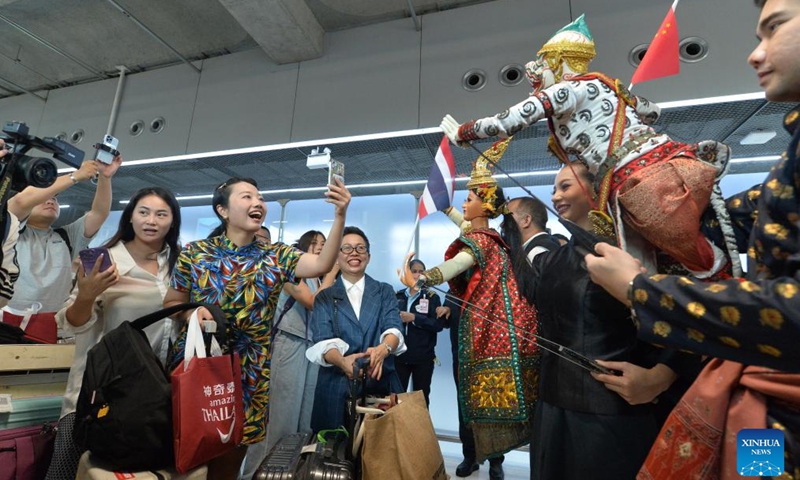
In a move that will boost people-to-people exchanges and commercial ties, Thai Prime Minister Srettha Thavisin announced on Tuesday that Thailand and China will permanently exempt each other's citizens from visa requirements, starting from March, China Media Group reported.

In response, Chinese Foreign Ministry spokesperson Wang Wenbin said that mutual visa exemptions serve the fundamental interests of both peoples, and the government departments responsible for the matter are in close communication on the specifics.

Boosted by the news, searches for the keyword "Bangkok" on Chinese travel platform Mafengwo surged by 200 percent as of Tuesday noon.

Huang Bin, head of the Chinese Department at the Bangkok-based Kasikorn Research Center, told the Global Times on Wednesday that almost all Chinese NEV brands invested in Thailand in 2023 due to incentives offered by the Thai government. Policies such as the EV3.5 program offer subsidies for the purchase of NEVs and aim to promote Thailand as the regional hub for these vehicles. For foreign investors, support policies include zero tariffs for imported used machine tools.

A reshaping of the global semiconductor supply chain also brought a large number of electronics firms, PCB companies in particular, to invest in Thailand, Huang said.

Huang predicted that the mutual visa exemption policy will boost bilateral trade and investment, though in a gradual fashion.

As China became Thailand's largest source of investment last year, the trend is expected to be maintained in 2024, the expert said.

China emerged as the largest source of foreign direct investment (FDI) applications, contributing 24 percent of FDI by value, with total investment pledges of 97.4 billion baht ($2.84 billion) for 264 projects in the first nine months of 2023, according to The Thailand Board of Investment.

In 2024, Thailand, Vietnam and Indonesia will be the highlight for Chinese overseas direct investment, Lei said.

Cold wave sweeps through northern China; many places welcome this winter's first snow

As a cold wave swept across northern China, the Chinese capital welcomed its first snow of the winter on Sunday evening. Traffic in Beijing has also been affected by the snowfall, with heavy congestion during the morning rush hour on Monday.

Following the snowfall, Beijing was covered in a silver-white coat, presenting picturesque scenes at Beihai Park, the watchtowers and the Shenwu Gate of the Forbidden City. The snow covered the buildings of the Forbidden City, making the red walls and golden tiles appear more vibrant, creating a striking contrast with the pristine white snow, resulting in a beautiful and magnificent sight. Coincidentally, the Forbidden City is closed on Mondays, presenting a serene and peaceful atmosphere after the closure.

Different from the Forbidden City, the Universal Studios theme park is bustling as usual.  Many visitors wearing wizard robes headed straight to the Harry Potter's Wizarding World area, checking in at the silver-clad Hogsmeade Village, as if they have "traveled" into the classic snow scenes from the movies.

Netizens were amazed by the snowy scenes and expressed optimism for a prosperous year with auspicious snowfall. Many netizens from the southern regions expressed their envy, saying, "Beijing has already seen the first snow, while in Shenzhen, Guangdong Province, we still need to use electric fans. Southerners who have never seen snow are eager to personally experience it!"

Also enjoying the first snow was the star giant panda Meng Lan, "the 3rd Prince of Xizhimen," who once went viral for "breaking through" the enclosure at the Beijing Zoo. On the snowy day, Meng Lan rolled and happily frolicked in powedery snow. Visitors couldn't help but chuckle at the adorable sight.

From 7 pm on Sunday to 6 am on Monday, the average snowfall in Beijing was 5.1 millimeters, with the urban area averaging 5.8 millimeters. The highest snowfall occurred in Pupuwa, Fangshan district reaching 9.8 millimeters. According to Beijing Public Transport Group, as of 6 am, a total of 172 bus routes had been adjusted due to the snowy weather, including 157 routes that had been suspended, nine routes with adjusted sections, and six routes with detours and skipped stops.

The Beijing Capital International Airport plans to operate 1,100 flights and transport approximately 150,000 passengers on Monday. As of 7 am, 84 flights had been executed and 59 flights had been canceled. At 6 am, the airport initiated targeted de-icing operations, and a total of 22 flights had been de-iced. The overall operation of Beijing Capital International Airport remains normal.

Affected by a strong cold air mass, the meteorological department in East China's Shandong Province issued a blue warning for cold wave and a yellow warning for road icing on Saturday, and continued to issue a yellow warning for strong winds at sea on Sunday. Under the influence of the cold wave, there was also moderate to heavy snow and local blizzards in the northwest and central regions of Shandong. In addition, the city of Yulin in Northwest China's Shaanxi Province experienced significant rain and snow and a drop in temperatures on Sunday. Several local meteorological monitoring stations recorded snowfall at the level of heavy snow, and the average temperature dropped by 6 C to 8 C.

In Zhengzhou and Xinxiang, Central China's Henan Province, primary and secondary schools, as well as kindergartens, had half-day off on Monday.

On Sunday, a significant drop in temperatures occurred across most parts of Northeast China's Heilongjiang Province, with the lowest temperatures expected to reach -25 C to -30 C in some areas from December 10 to December 15. To cope with the cold weather, various measures had been taken to strengthen water and heating supply and other livelihood guarantees. In Fujin city, the local heating company has increased the frequency of inspections on heating equipment such as pipelines and valves to ensure the quality of heating.

To ensure the safety of passengers, the railway departments had suspended 112 passenger trains heading to Beijing, Xiamen, Chengdu, Taiyuan, among other routes, with some trains experiencing delays.

Chinese researchers develop novel dry-powder inhaled vaccine technology; study published in Nature

Researchers from the Institute of Process Engineering (IPE) of the Chinese Academy of Sciences have proposed a new "nano-micro composite" delivery concept for vaccines and developed a single-dose, dry-powder, inhalable vaccine platform. The vaccine made in the laboratory based on the technology is effective in blocking respiratory viral infection and transmission in animal test, showing great promise for combating future emerging and epidemic infectious diseases. This study was published in Nature on Wednesday. 

In recent years, researchers have made significant progress in developing vaccines for infectious respiratory diseases. However, most of these vaccines are administered through intramuscular injection, which primarily induces a humoral immune response and relies on blood antibodies to neutralize the virus. This approach fails to trigger a mucosal immune response and establish a robust immune barrier in the respiratory tract, according to a release from the research group.

The current liquid form of vaccines requires to be stored in strict low-temperature, and the two- or three-dose vaccination schedule also impacts the overall vaccination rate.

In confronting these problems, professor Wei Wei and professor Ma Guanghui from the State Key Laboratory of Biochemical Engineering at IPE, in cross-disciplinary collaboration with professor Wang Hengliang and professor Zhu Li from the State Key Laboratory of Pathogen and Biosecurity, have developed a new vaccine platform.

This platform combines biodegradable microspheres with protein nanoparticles. The surface of these nanoparticles can simultaneously display multiple antigens, thus inducing a broad-spectrum immune response and expanding the range of vaccine protection. The platform also allows for the quick and convenient development of other respiratory virus vaccines due to the flexibility of antigen presentation.

The platform's unique nano-micro composite structure enables an efficient immune response in the lungs by facilitating high-performance delivery. Once antigen-nanoparticles are released, they can be efficiently taken up by antigen-presenting cells. 

Moreover, this dry powder vaccine significantly reduces storage and transportation costs, making it suitable for areas with limited refrigeration facilities, thus improving immunization rates.

The sustained release of antigens in the vaccine induces long-lasting humoral, cellular, and mucosal immunity with just a single inhalation

In cooperation with professor He Zhanlong of the Institute of Medical Biology of the Chinese Academy of Medical Sciences, the researchers developed a model of airborne protection, close contact protection, and airborne transmission blocking, which demonstrated that an inhaled vaccine is highly effective in preventing the virus infection and transmission.

"The components of this nano-micro system used natural proteins and approved polymer materials, and the effectiveness and safety of the vaccine have been systematically studied in non-human primates, indicating its great potential for clinical translation," professor Wei said.

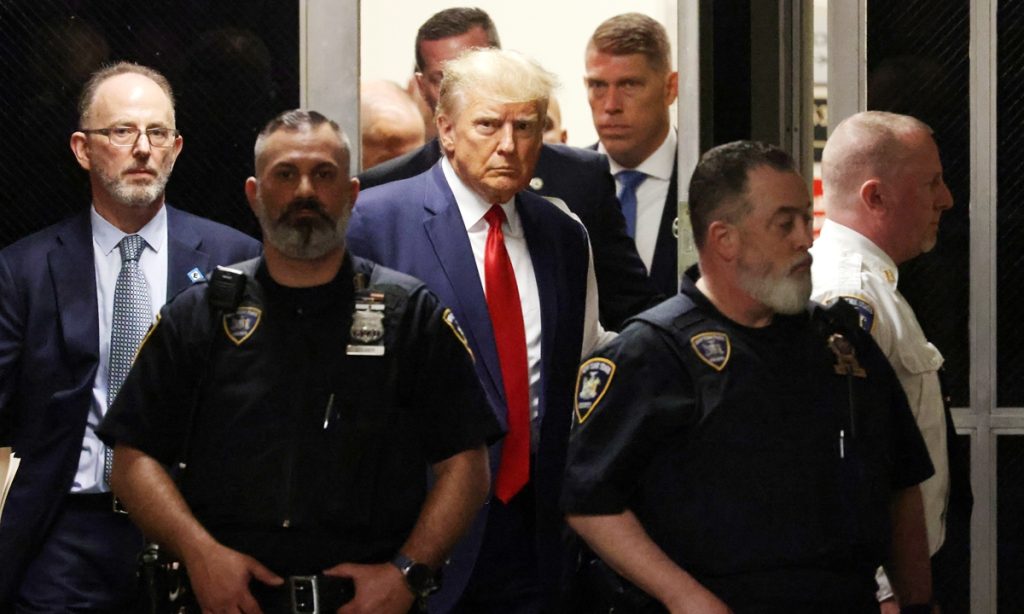
Colorado court disqualifies Trump for returning to presidency

The Colorado Supreme Court's unprecedented ruling to declare former US president Donald Trump disqualified from holding the presidency reflects the chaotic judicial system of the US, as well as Democrats' determination to rule the GOP contender out. However, the ruling has limited impact on Trump's support rate, and may even be used as a boost for his election race, experts said on Wednesday. 

The 4-3 ruling came after the court found that Trump allegedly engaged in insurrection with his actions leading up to the storming of the US Capitol on January 6, 2021. The landmark decision marks the first time in history that the US Constitution's insurrection clause - Section 3 of the 14th Amendment - has been used to disqualify a presidential candidate, according to media reports.

Trump's attorneys promised to appeal immediately to the US Supreme Court, which has the final say about constitutional matters. 

Trump's legal spokesperson Alina Habba said the ruling was "attacking the very heart of the nation's democracy," while GOP House Speaker Mike Johnson railed at it as "nothing but a thinly veiled partisan attack."

The ruling by the Colorado court based on the insurrection clause is "chaotic and troublesome," as cases involving the application of the US Constitution are normally under the jurisdiction of federal law and should be decided by federal courts, not state courts like the Colorado Supreme Court, Lü Xiang, a research fellow at the Chinese Academy of Social Sciences, told the Global Times on Wednesday.

Therefore, Trump could appeal to the Supreme Court, arguing that the Colorado court does not have the authority to make such decisions, Lü noted. 

What's more, even if the court has the right to enforce Section 3 of the 14th Amendment, the clause itself is still vague about whether it applies to the presidency, the expert said. 

The issue marks huge splits within the US judicial system, as some believe the presidency should undoubtedly be included in the broad term "officers of the US," while others disagree and say that the state court overstepped its authority, the New York Times reported on US local time Tuesday. 

The case has grabbed significant attention in the US, as it sets the stage for the Supreme Court to examine whether Trump would be eligible to run for another term as president, observers said.

Li Haidong, a professor at the China Foreign Affairs University, holds a different view. "While a significant number of judges in the Supreme Court were nominated by Trump, these judges are loyal to the Constitution, not to Trump," Li said.

Li told the Global Times on Wednesday that a decisive voice will depend on whether the Supreme Court defines the US Capitol incident as an act of rebellion and whether the incident was influenced directly by Trump. However, if the court's rulings are ambiguous, it could mean that Trump can continue to run for office.

US media reports analyzed that Trump does not need Colorado to win next year's presidential election, but the danger lies in the fact that more courts and election officials will follow Colorado's lead and exclude Trump from must-win states.

Lü noted that this dramatic episode reflects the Democrats' determination to bring down Trump, whatever it takes.

While lawsuits challenging Trump's candidacy have been filed in more than 25 states ahead of the 2024 election, the latest national polls show Trump leading Biden as the latter's approval rating hit an all-time low, the British media Independent reported. 

Commenting on whether the decision of the Colorado court has impacted Trump's support rate, experts believe the impact would be quite small, and may even give him an advantage. 

"The matter has room for interpretation in both the legal and political fronts, and Trump is likely to interpret it from a political perspective. This may further reinforce the perception among his supporters that he [Trump] is a victim, creating a sense of sympathy that strengthens their support for him," Li noted.